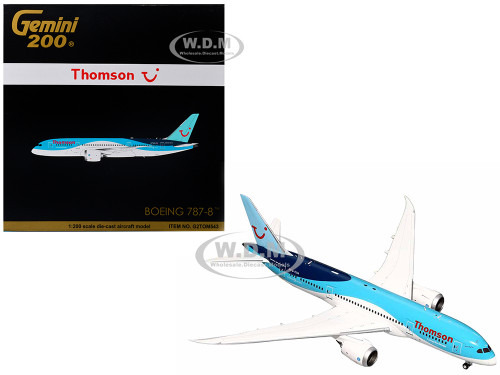
TUI Airways is a major British leisure airline recognized for carrying holidaymakers from the United Kingdom to destinations across Europe, the Mediterranean, the Canary Islands, North Africa, the Caribbean, and beyond. Its aircraft are familiar sights at airports serving popular holiday destinations, and its bright blue branding makes the airline an appealing subject for aviation enthusiasts and airline-model collectors.
TUI Airways diecast airplane models represent the airline's role in modern leisure aviation, combining recognizable aircraft designs with the distinctive livery of one of Europe's best-known holiday travel brands. Whether you collect contemporary passenger jets, British airlines, Boeing aircraft, or colorful airline liveries, TUI models can add a recognizable modern carrier to your display.
This category is intended for shoppers exploring collectible aircraft replicas associated with TUI Airways. Specific aircraft types, liveries, manufacturers, and scales depend on the individual products available. Check each listing for confirmed details before choosing a model for your collection.
The History of TUI Airways
From Britannia Airways to Thomson Airways
TUI Airways has roots in the British package-holiday industry and the development of dedicated leisure airlines. Its history includes Britannia Airways, an airline established in 1962 as Euravia that later adopted the Britannia name. The airline became closely associated with package holidays, flying passengers from British airports to resorts throughout Europe and other holiday regions.
Britannia became part of the wider travel group that eventually developed into TUI. In 2005, Britannia Airways was renamed Thomsonfly, reflecting its place within the Thomson travel business. The airline later became Thomson Airways in 2008.
These changes reflect the close relationship between leisure airlines and tour operators. Unlike carriers whose business models are built primarily around connecting passengers through major hubs, holiday airlines often concentrate on transporting travelers directly from their home airports to resort destinations. Aircraft, route schedules, and seasonal capacity are shaped by demand for package holidays and leisure travel.
The TUI Airways Name
In 2017, Thomson Airways adopted the TUI Airways name as part of the broader integration of TUI's travel businesses under a unified brand. The change brought the airline's identity into line with the group's wider international presence.
For airline collectors, the different names provide several historical themes to explore. Britannia Airways, Thomsonfly, Thomson Airways, and TUI Airways represent successive stages in the development of a leisure airline business. Models bearing these identities can help illustrate changes in branding, aircraft appearance, and the British holiday aviation market over several decades.
When collecting models from different periods, it is useful to distinguish the airline's historical identities rather than treating every aircraft as part of the same livery era. The name and design shown on an individual replica are important clues to the period it represents.
TUI Airways Aircraft: From Short-Haul Jets to Long-Haul Dreamliners
TUI Airways operates aircraft designed for different stages of holiday travel, from shorter flights to European resorts to longer journeys across the Atlantic and to distant vacation destinations. Two Boeing families are especially relevant to collectors exploring the airline's modern identity: the Boeing 737 and the Boeing 787 Dreamliner.
Boeing 737: The Workhorse of Leisure Aviation
The Boeing 737 family is widely used for short- and medium-haul passenger services. Its combination of capacity, range, and suitability for frequent flights makes it a natural fit for leisure airlines serving numerous European destinations.
TUI Airways has operated the Boeing 737-800 and Boeing 737 MAX 8. These aircraft are particularly interesting to collectors who enjoy contemporary narrow-body jets and the familiar sight of holiday aircraft departing from busy UK airports.
The Boeing 737-800 belongs to the Next Generation family, while the 737 MAX 8 is a newer development featuring updated engines and aerodynamic refinements. Although the aircraft share the recognizable 737 design, their details differ, making them worthwhile additions for collectors who enjoy comparing successive generations of commercial aircraft.
When selecting a TUI Airways Boeing 737 model, consider:
-
Aircraft variant: Check whether the model represents a 737-800 or 737 MAX 8.
-
Livery: Compare the branding and markings with the specific airline era represented.
-
Scale: Confirm the listed scale and dimensions to ensure the model fits your display.
-
Construction and detail: Review the product description for materials, landing gear, stand, and other included features.
Boeing 787 Dreamliner: TUI's Long-Haul Aircraft
The Boeing 787 Dreamliner represents the long-haul side of TUI Airways' operations. Designed for intercontinental travel, the 787 combines advanced aerodynamics, a composite-intensive airframe, and modern engines. Its distinctive swept wings and smoothly contoured fuselage give it a recognizable profile.
TUI Airways operates both the Boeing 787-8 and the larger 787-9. The two versions provide useful variation for airline-model collectors. The 787-8 is the shorter member of the pair, while the 787-9 has a longer fuselage and greater passenger capacity in typical airline configurations.
The Dreamliner is closely associated with TUI's long-distance holiday services. It connects the airline's bright blue branding with the image of modern long-haul leisure travel, making it an attractive subject for collectors who focus on contemporary passenger aircraft.
A TUI Airways Boeing 787 diecast model can work as a centerpiece in a display of modern wide-body jets. It can also be paired with a Boeing 737 model to represent the contrast between shorter regional leisure flights and long-distance holiday routes.
As with other aircraft replicas, check the individual listing to confirm the exact Dreamliner variant and scale. A 787-8 and a 787-9 look similar at first glance, but their different fuselage lengths matter to collectors who value aircraft-specific accuracy.
The TUI Livery and Its Collecting Appeal
TUI's modern visual identity is one of its most recognizable features. The bright blue fuselage and red TUI smile logo create a distinctive appearance that stands out among the liveries of European airlines. The design reflects the wider TUI travel brand, connecting its airline operations with its holiday and tourism businesses.
For model collectors, airline branding can be as important as aircraft type. The same Boeing aircraft may appear in several different liveries throughout its service life, and a particular paint scheme can identify the airline, era, or corporate identity represented by a replica.
TUI's branding also creates opportunities to compare aircraft across the broader TUI Airline family. The group operates multiple airlines in different European markets, including TUI Airways in the United Kingdom. These related operations share elements of the wider brand identity, but their individual airline identities and aircraft histories should not be treated as interchangeable.
When shopping, check the operator name and markings on the product. A model in TUI branding may represent TUI Airways or another TUI airline, and the distinction matters if your collection focuses specifically on British aviation.
Building a TUI Airways Aircraft Collection
There are several ways to approach a collection of TUI Airways diecast airplanes, depending on your interests and available display space.
Collect by Aircraft Family
One approach is to focus on Boeing aircraft. A collection featuring different 737 variants alongside the 787-8 and 787-9 can illustrate the range of aircraft designs used in modern passenger aviation. It also offers a way to compare narrow-body and wide-body jets in a consistent airline identity.
Collect by Airline History
Another approach is to explore the airline's changing identity, from Britannia Airways through Thomsonfly and Thomson Airways to TUI Airways. Models from different periods can help illustrate the development of British leisure aviation and the evolution of airline branding.
If you collect across these eras, make sure each model is identified by the correct airline name and livery. A historical Thomson Airways model, for example, represents a different branding period from a modern TUI Airways aircraft.
Collect by Livery
Some collectors focus primarily on airline paint schemes. TUI's blue-and-red branding offers a recognizable visual theme, while earlier airline identities provide contrast for a broader historical display.
A livery-focused collection can include different aircraft types in the same airline colors or compare the same aircraft family across different carriers. This approach is particularly useful for collectors who enjoy airline design and the visual history of commercial aviation.
Choosing the Right Scale and Model Features
Scale is an important consideration when buying diecast airplane models. It determines the replica's approximate size relative to the full-size aircraft and affects how much shelf space the model will occupy.
-
1:200 scale: A larger format that can make exterior markings and surface details easier to appreciate. It may suit collectors who want a prominent individual aircraft in a display.
-
1:400 scale: A compact option for building a larger fleet or displaying multiple airlines and aircraft types together.
-
Other scales: Additional formats may be available depending on the specific product.
These are general collecting guidelines rather than a statement of current TUI Airways inventory. Always check the product listing for the confirmed scale and dimensions.
The construction and features of a model are also worth considering. Depending on the product, a replica may have diecast metal components, plastic parts, printed windows and doors, landing gear, detailed engines, or a display stand. Features vary by manufacturer and product, so review the listing rather than assuming every model has the same configuration.
For collectors seeking historical accuracy, the exact aircraft variant and livery are particularly important. For shoppers choosing a gift, the recipient's preferred scale, aircraft type, and available display space may be the most practical deciding factors.
Displaying and Caring for TUI Airways Models
TUI Airways aircraft models can be displayed individually or incorporated into a larger collection of commercial jets. A Boeing 787 can serve as a focal point in a modern wide-body display, while a Boeing 737 can complement models of other short- and medium-haul aircraft.
For a collection that tells a broader story, consider grouping models by aircraft family, airline identity, or historical period. Pairing TUI Airways with other British airline models can highlight the diversity of the UK's commercial aviation market, while displaying different TUI aircraft together emphasizes the airline's role in leisure travel.
To help preserve your models:
-
Keep them away from prolonged direct sunlight to protect printed markings and finishes.
-
Place them on a stable surface or use the supplied display stand when included.
-
Remove dust carefully with a soft brush or microfiber cloth.
-
Handle small components such as landing gear and antennas gently.
-
Keep original packaging when practical, particularly if you collect boxed models.
Whether you're an experienced aircraft-model collector, a TUI enthusiast, or shopping for someone who loves commercial aviation, a TUI Airways replica can bring a recognizable modern airline into your display. Browse the available TUI Airways diecast airplane models at DiecastModelsWholesale.com to find an aircraft that fits your collection.