
Nash
Discover Nash diecast model cars inspired by an influential American automobile manufacturer known for distinctive styling, practical engineering, and innovations in passenger-car design. From the streamlined postwar Nash Ambassador and compact Nash Rambler to the unusual Metropolitan and Anglo-American Nash-Healey sports car, Nash produced vehicles that stood apart from many of their contemporary competitors.
The Nash category at Diecast Models Wholesale is intended for collectors, classic-car enthusiasts, and hobbyists interested in miniature replicas of historic Nash automobiles. Depending on current product availability, models may represent vintage American sedans, compact cars, classic convertibles, distinctive fastbacks, and specialized sports cars.
Nash vehicles are especially recognizable for their aerodynamic styling, rounded bodywork, enclosed front-wheel fenders on certain models, and unusual proportions. The company's later cars also illustrate the growing American interest in compact vehicles during the 1950s, when manufacturers began exploring alternatives to increasingly large domestic automobiles.
Whether you collect classic American cars, enjoy unusual automotive designs, or are building a collection of vehicles from the 1930s through the 1950s, Nash diecast model cars offer a distinctive way to explore an important chapter in American automotive history.
The History of Nash Motors
Nash Motors was founded in 1916 by Charles W. Nash, a former president of General Motors. Based in Kenosha, Wisconsin, the company built on the manufacturing operations of the Thomas B. Jeffery Company and developed a reputation for producing automobiles that combined practical engineering with attention to comfort and value.
During its early years, Nash produced a range of passenger cars with different engine configurations, body styles, and equipment levels. The company gradually established its identity in the American automobile market, competing with larger manufacturers while developing its own engineering and design approaches.
In 1937, Nash Motors combined with the Kelvinator Corporation, a manufacturer of household appliances, to form Nash-Kelvinator Corporation. The merger brought together automobile manufacturing and appliance expertise under one corporate organization.
Nash became particularly notable during the late 1930s and 1940s for innovations in vehicle construction, occupant comfort, and aerodynamic styling. The company introduced unit-body construction on the Nash 600 for the 1941 model year and later developed the distinctive Airflyte designs that became a hallmark of its postwar lineup.
After World War II, Nash continued to develop full-size passenger cars while also exploring smaller and more economical vehicles. Models such as the Rambler and Metropolitan helped broaden the company's appeal beyond traditional large American sedans.
In 1954, Nash-Kelvinator merged with Hudson Motor Car Company to establish American Motors Corporation, commonly known as AMC. Nash-branded passenger cars continued for several years, with the final Nash models sold for the 1957 model year. The Rambler name continued under AMC and eventually became the company's principal passenger-car brand.
For diecast collectors, this history offers several distinct periods to explore: early luxury and family cars, distinctive postwar Airflyte models, compact Rambler vehicles, and specialized sports cars.
Nash Ambassador Diecast Models
The Nash Ambassador was one of the company's best-known nameplates and served as a flagship model during much of Nash's history. Produced in several generations and configurations, the Ambassador represented the company's efforts to combine comfort, performance, and distinctive styling in a full-size American automobile.
Early Ambassadors were offered in different body styles and engine configurations. Following World War II, the model became especially recognizable for its rounded bodywork and integrated fenders, which distinguished it from many conventional American cars with more separate-looking front fenders.
Nash Ambassador Airflyte
Introduced for the 1949 model year, the postwar Nash Airflyte design marked a significant change in the company's styling direction. Its rounded body, enclosed front-wheel fenders, and streamlined profile created a distinctive appearance often associated with late-1940s and early-1950s American automobile design.
The Ambassador Airflyte represented the more upscale side of the Nash passenger-car lineup. Its styling emphasized smooth body contours and an integrated appearance rather than the separate fender shapes common on earlier automobiles.
For collectors, an Ambassador Airflyte diecast model is an interesting choice because its design is immediately recognizable. The covered front wheels, substantial body proportions, broad grille, and period trim make it visually different from many other classic American sedans.
When comparing Ambassador models, consider the year represented, body style, trim level, exterior color, and bumper or grille details. These features can vary between model years and help distinguish one version from another.
Nash Ambassador Pinin Farina Models
Nash collaborated with the Italian design firm Pinin Farina during the early 1950s to develop new styling for its larger cars. The resulting Ambassador models combined Nash engineering with Italian design influence.
The 1952 Nash Ambassador is a notable example of this collaboration. Its exterior retained the characteristic Nash proportions while presenting revised styling details that distinguished it from earlier Airflyte models.
For diecast collectors, these cars illustrate how American automobile manufacturers increasingly looked to independent designers and international styling influences during the postwar era.
A Pinin Farina-styled Nash Ambassador can complement a display of classic American sedans or serve as an example of the international exchange of ideas that influenced mid-century automotive design.
Nash Ambassador Convertibles and Special Versions
Nash also produced distinctive open-top and specialty versions during its history. These vehicles can be particularly interesting to collectors because they differ from the more familiar standard sedans.
Depending on the particular model represented, a miniature may feature convertible bodywork, unique trim, special paint combinations, or other details associated with a particular production period.
Collectors should check the exact vehicle identification and model year to distinguish a standard Ambassador from a special or coachbuilt version.
Nash Statesman Diecast Model Cars
The Nash Statesman occupied a position below the Ambassador in the company's postwar passenger-car lineup. Produced for the 1950 through 1956 model years, it offered a more moderately positioned alternative while retaining the distinctive styling associated with Nash.
Like the Ambassador, the Statesman received the Airflyte treatment, with rounded bodywork and enclosed front-wheel fenders that helped distinguish Nash automobiles from other American cars of the period.
The Statesman was available in different body styles and configurations over its production life. Its proportions and exterior details evolved as Nash refined its postwar vehicles.
For diecast collectors, the Statesman offers a useful counterpart to the Ambassador. Displaying the two together highlights the differences between Nash's model lines and demonstrates how manufacturers offered related styling across different price and equipment levels.
When choosing a Nash Statesman miniature, review the year, body style, grille, trim, and wheel details. These characteristics can help identify the specific generation and configuration represented by the model.
Nash 600: A Milestone in American Car Construction
The Nash 600 was introduced for the 1941 model year and became notable for its unit-body construction, which integrated the car's body and structural framework rather than relying on a conventional separate frame.
This engineering approach helped reduce weight and contributed to a design philosophy that would become increasingly common in passenger cars. The Nash 600 also reflected the company's interest in efficiency, practicality, and modern automotive engineering.
The model name referred to Nash's marketing claims about the vehicle's fuel range, reinforcing its emphasis on economical motoring.
For collectors, the Nash 600 represents a significant point in the company's development. Its early unit-body construction and prewar styling make it distinct from the rounded Airflyte models that followed.
A miniature Nash 600 can be a valuable addition to a collection focused on automotive engineering history or American vehicles from the early 1940s.
Nash Rambler: The Beginning of an American Compact-Car Tradition
The Nash Rambler was introduced in 1950 and became one of the company's most important postwar vehicles. At a time when many American automobiles were growing larger, the Rambler offered a more compact alternative with a distinctive design and practical interior.
Early Rambler models included convertible and hardtop configurations. Their smaller dimensions and individual styling helped establish the car as an alternative for drivers who wanted something different from a conventional full-size sedan.
The Rambler also played a role in the development of the American compact-car market. Following the Nash-Hudson merger, the Rambler name continued under AMC and ultimately became central to the company's identity.
Nash Rambler Convertibles
The early Rambler convertible models are especially recognizable for their compact bodies and open-top styling. Their proportions differ considerably from the larger Ambassador, making them interesting subjects for miniature car collectors.
A Nash Rambler convertible diecast model can complement a collection of 1950s American automobiles while representing the growing interest in smaller cars during that period.
When comparing Rambler replicas, review the model year and body style. Early Nash Rambler models should also be distinguished from the later vehicles sold under the Rambler name by AMC.
Nash Rambler Country Club
The Nash Rambler Country Club hardtop is another notable body style associated with the early Rambler range. Its fixed roof and clean side profile give it a different appearance from the convertible.
For collectors, a Country Club model offers an opportunity to explore the variety Nash offered within the Rambler nameplate. Different body styles can make a display more representative of the original model range.
Nash Metropolitan: A Distinctive Small American-Market Car
The Nash Metropolitan is one of the most recognizable small cars associated with the Nash name. Introduced in 1954, it was developed as an economical vehicle suited to American drivers who wanted a smaller second car or a compact alternative to larger domestic automobiles.
The Metropolitan was designed for the American market and manufactured in Britain by Austin and its suppliers. It combined British mechanical components with styling and marketing tailored to American buyers.
Its rounded bodywork, short overhangs, compact proportions, and distinctive two-tone paint schemes made the Metropolitan visually different from the larger Nash sedans of the period.
Why Collect Nash Metropolitan Models?
The Metropolitan is an appealing subject for diecast collectors because of its unusual position in American automotive history. While many domestic vehicles emphasized size and power, the Metropolitan offered a smaller, more economical alternative.
Its exterior design also makes it especially recognizable in miniature form. The short bonnet, compact cabin, rounded fenders, and contrasting paint colors create a memorable display piece.
Metropolitan models may represent hardtop coupes or convertibles, depending on the product. Collectors should confirm the body style, color scheme, and model year when choosing a replica.
The Metropolitan is also a good choice for collections focused on compact cars, unusual American-market vehicles, or postwar automotive design.
Nash-Healey: An Anglo-American Sports Car
The Nash-Healey is one of the most unusual vehicles associated with Nash Motors. Developed through a collaboration between Nash and British racing-car designer Donald Healey, it combined American powertrain components with British chassis engineering and, in later versions, Italian styling.
Introduced in 1951, the Nash-Healey was a two-seat sports car intended to compete in the growing market for performance-oriented automobiles. Nash supplied the powertrain components, while Healey handled important aspects of chassis development and assembly.
Early examples used bodywork produced in Britain. For 1952, Pinin Farina redesigned the car's body, giving it a more elegant and contemporary Italian appearance.
The Nash-Healey also participated in international motorsport, including the 24 Hours of Le Mans. Its competition history distinguished it from conventional Nash passenger cars and demonstrated the company's interest in performance and international collaboration.
Nash-Healey Diecast Models for Collectors
The Nash-Healey appeals to collectors because it combines several automotive traditions in one car: American engineering, British sports-car development, and Italian styling.
A Nash-Healey miniature can add variety to a collection of classic American cars or European sports cars. It also provides a useful comparison with more conventional Nash models such as the Ambassador and Statesman.
When choosing a Nash-Healey replica, check whether it depicts an early body style or the later Pinin Farina design. The two versions have noticeably different appearances.
Competition-inspired versions may also appeal to collectors who focus on historic racing cars and endurance-racing heritage.
Nash LaFayette and Earlier Classic Cars
The LaFayette name was used by Nash for a lower-priced line during the 1930s. The models offered an alternative to the company's more expensive cars while retaining recognizable Nash styling and engineering.
Earlier Nash vehicles featured the upright grilles, traditional body proportions, and decorative details associated with American cars of the prewar period. These designs differ substantially from the rounded Airflyte models that Nash introduced after World War II.
For diecast collectors, earlier Nash and LaFayette models provide an opportunity to explore the company's development before its most recognizable postwar styling became established.
They can also serve as useful additions to collections organized around prewar American automobiles, vintage sedans, or the evolution of passenger-car design.
Why Collect Nash Diecast Model Cars?
Nash models appeal to collectors for several reasons:
-
Distinctive styling: Airflyte bodywork, enclosed front-wheel fenders, and unusual proportions make many Nash cars instantly recognizable.
-
American automotive history: Nash represents an important period of independent automobile manufacturing in the United States.
-
Engineering innovation: Models such as the Nash 600 illustrate early adoption of unit-body construction in American passenger cars.
-
Compact-car heritage: The Rambler and Metropolitan reflect a different approach from the large American cars of the 1950s.
-
International design: The Nash-Healey and Pinin Farina-styled models demonstrate collaboration across American, British, and Italian automotive traditions.
-
Generational variety: Collectors can compare prewar vehicles with postwar sedans, compact cars, convertibles, and sports cars.
A Nash collection can focus on one particular model, such as the Metropolitan or Ambassador, or span several decades to show how the company's vehicles changed over time.
Choosing the Right Nash Diecast Model
Identify the Vehicle and Model Year
Start by deciding which Nash vehicle interests you most. The Ambassador and Statesman represent the company's traditional postwar passenger-car lineup, while the Rambler and Metropolitan offer compact-car alternatives. The Nash-Healey is suited to collectors who prefer specialist sports cars.
Check the model year and specific version in the product description. Similar names may cover multiple generations, and exterior details can differ significantly between them.
Choose a Scale That Fits Your Display
Nash diecast models may be available in different scales depending on the manufacturer and product selection.
-
1:12 scale: A large model suited to a prominent display, where available.
-
1:18 scale: A popular choice for collectors who want a substantial replica with a strong display presence.
-
1:24 scale: A practical middle ground between detail and display space.
-
1:43 scale: A compact option for collections containing many different vehicles.
These are general scale considerations, not a guarantee that every Nash model will be offered in each size. Check the product's listed dimensions before purchasing.
Review Finish, Construction, and Features
When comparing Nash models, review the exterior color, body style, grille, bumpers, wheel design, and trim. These details can help distinguish different production periods and versions.
Construction materials, opening components, interior details, display accessories, and packaging vary by manufacturer and product. Individual product descriptions provide the best way to confirm the features included with a specific model.
Product availability may change, so check the current listing for accurate specifications.
Nash Diecast Cars for Collectors and Gift Buyers
Nash diecast model cars can appeal to classic American-car enthusiasts, vintage vehicle collectors, and anyone interested in unusual automotive design.
A Nash Ambassador may suit a collector who appreciates full-size American sedans, while a Metropolitan is an interesting choice for someone who enjoys compact and distinctive vehicles. The Nash-Healey can be particularly suitable for sports-car and motorsport enthusiasts.
These models can also make thoughtful gifts for people with an interest in vintage automobiles or the history of American manufacturing. Choosing a specific model or era that matches the recipient's interests can make the miniature more meaningful.
Explore Nash Diecast Model Cars
From the streamlined Ambassador Airflyte and practical Statesman to the compact Rambler, distinctive Metropolitan, and Anglo-American Nash-Healey, Nash produced a remarkable variety of vehicles during its decades in the American automobile industry.
Browse the Nash category at Diecast Models Wholesale to explore available miniature cars, compare model styles and scales, and find a distinctive addition to your diecast collection.
Filter
2 Items
-
Oxford Diecast
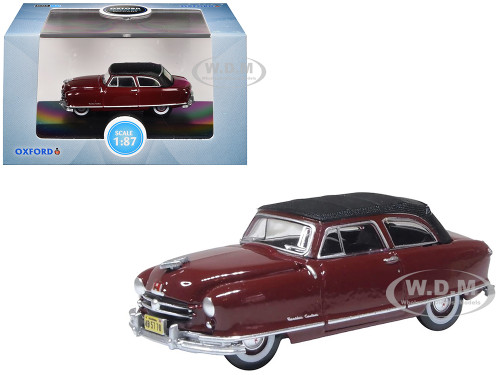
1950 Nash Rambler Custom Landau Convertible (Closed) Sunset Maroon with Black Top 1/87 (HO) Scale Diecast Model Car by Oxford Diecast
$18.99WasAdd to Cart The item has been added$18.99WasAdd to Cart The item has been added -

Oxford Diecast
1950 Nash Rambler Custom Landau Convertible (Open) Champagne Ivory 1/87 (HO) Scale Diecast Model Car by Oxford Diecast
$18.99WasAdd to Cart The item has been added$18.99WasAdd to Cart The item has been added