Batman is one of the most enduring superheroes in popular culture, recognized for his dark costume, detective skills, advanced technology, and legendary vehicles. Since his comic-book debut in 1939, the Dark Knight has appeared in comic books, television series, animated productions, blockbuster films, video games, and countless collectibles. His world combines crime-fighting, futuristic inventions, distinctive vehicles, and unforgettable characters, making Batman especially appealing to collectors of diecast cars, movie vehicles, and superhero memorabilia.
The Batman category at DiecastModelsWholesale.com is for fans who enjoy the vehicles and visual designs associated with Gotham City's legendary crime fighter. Depending on current availability, the selection may include Batmobile models, movie-inspired vehicles, and other Batman-themed collectibles. From classic television designs to modern cinematic interpretations, Batman's vehicles offer a fascinating look at how automotive styling and superhero storytelling have evolved together.
Whether you're a longtime Batman fan, a diecast car enthusiast, a collector of movie memorabilia, or shopping for a gift, Batman collectibles can bring a recognizable piece of DC Comics history to your display.
The History of Batman
Batman's Comic-Book Debut
Batman first appeared in Detective Comics #27 in 1939. Created by artist Bob Kane and writer Bill Finger, the character introduced a different kind of superhero: a highly trained detective who relies on intelligence, discipline, physical ability, specialized equipment, and careful planning rather than superhuman powers.
Behind the Batman identity is Bruce Wayne, a wealthy Gotham City resident who dedicates himself to fighting crime after the murder of his parents. His personal history, detective work, and commitment to protecting Gotham have remained central to the character across generations of stories.
Unlike many superheroes, Batman's effectiveness often depends on technology and preparation. His specialized equipment, underground Batcave, and collection of vehicles support investigations, rescues, and confrontations with Gotham's criminals. These elements have helped make the Batman universe particularly attractive to collectors interested in miniature vehicles and mechanical designs.
From Comics to Television and Film
Batman expanded beyond comic books through radio, film serials, television, animation, and eventually major theatrical productions. Each adaptation introduced its own visual interpretation of Gotham City, Batman's costume, and the technology he uses.
The 1960s television series starring Adam West presented a colorful, stylized version of the character and introduced a distinctive Batmobile that remains a favorite among classic television fans. Later film adaptations explored darker settings, more dramatic vehicle designs, and increasingly elaborate automotive technology.
The variety of interpretations is a major part of Batman's collecting appeal. A classic television Batmobile looks very different from the armored vehicle seen in modern films, and both differ from the sleek, futuristic designs created for animated productions. Collectors can focus on a particular era or bring together multiple versions to illustrate the character's evolution.
The Batmobile: Batman's Most Iconic Vehicle
Why the Batmobile Matters to Collectors
The Batmobile is much more than transportation. It is one of the defining symbols of Batman, combining automotive design with fictional crime-fighting technology. Across different versions of the franchise, the vehicle has taken the form of a customized roadster, a futuristic concept car, a low-profile performance machine, and a heavily armored tactical vehicle.
Unlike a conventional production car, the Batmobile is designed around the requirements of a fictional character and story. Its appearance may emphasize speed, maneuverability, protection, specialized equipment, or an intimidating presence. Designers reinterpret these priorities to match the tone of each Batman adaptation.
For diecast and movie-car collectors, the Batmobile offers several distinct attractions:
-
Recognizable designs: Many versions are instantly associated with a specific television series, film, or animated production.
-
Distinctive bodywork: Long silhouettes, unusual front ends, oversized tires, and specialized armor distinguish the Batmobile from ordinary road cars.
-
Technological details: Fictional turbines, exhaust systems, cockpit layouts, and equipment add visual interest.
-
Nostalgic value: Different Batmobiles connect collectors with the Batman stories they remember from childhood or adulthood.
-
Display versatility: Models can be displayed individually or alongside other movie vehicles and DC Comics collectibles.
When shopping for a Batmobile model, identifying the version is especially important. Two vehicles may both carry the Batmobile name while having entirely different proportions, equipment, and visual details.
The Classic 1966 Batmobile
The Batmobile from the 1960s Batman television series is one of the most recognizable designs in the character's history. Based on a customized 1955 Lincoln Futura concept car, the television Batmobile was created by automotive customizer George Barris for the series starring Adam West and Burt Ward.
Its long, flowing body, prominent bat-inspired details, red accent lines, and distinctive bubble-style cockpit made it stand apart from conventional automobiles. The design reflected the colorful, theatrical tone of the television series and became an automotive icon in its own right.
For collectors, the 1966 Batmobile represents a particularly nostalgic era of Batman. Its classic styling contrasts sharply with the heavily armored vehicles featured in later adaptations. A model inspired by this version can appeal to classic television fans, custom-car enthusiasts, and collectors who appreciate automotive history as well as superhero memorabilia.
The 1989 Batmobile
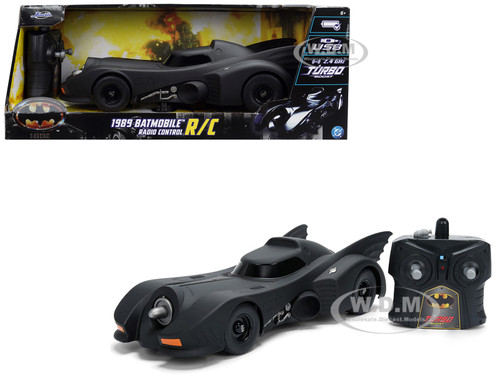
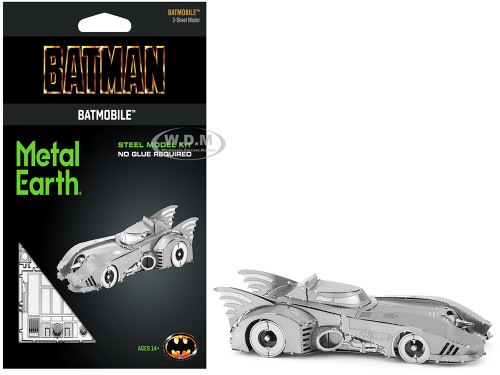
The Batmobile featured in Tim Burton's Batman (1989) introduced a darker, more dramatic interpretation of the vehicle. Its elongated body, sculpted fenders, turbine-inspired styling, and low profile complemented the film's gothic version of Gotham City.
The design continued into Batman Returns (1992), creating a recognizable visual connection between the two films. Compared with the 1966 television car, the 1989 Batmobile has a more imposing and futuristic appearance, emphasizing sleekness and menace rather than colorful gadgetry.
Collectors often appreciate this version for its distinctive silhouette and strong association with late-1980s and early-1990s cinema. When comparing models, look for the specific film-era design, because the vehicles used across different Batman productions can have substantially different bodywork and details.
The Tumbler from The Dark Knight Trilogy
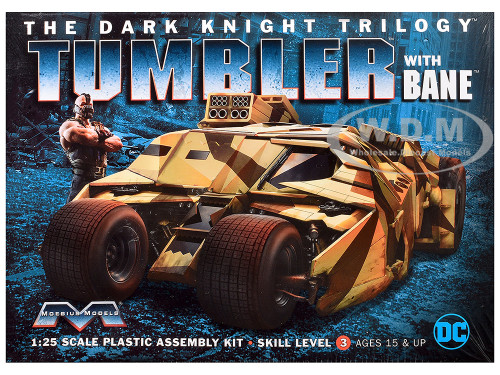
Christopher Nolan's Batman films introduced the Tumbler, a radical departure from the traditional Batmobile. Appearing in Batman Begins (2005), The Dark Knight (2008), and The Dark Knight Rises (2012), the Tumbler resembles a combination of an armored tactical vehicle and an extreme off-road machine.
Its broad stance, large exposed tires, angular bodywork, and military-inspired appearance emphasize durability and capability. The design reflects the more grounded, technology-focused interpretation of Batman used in Nolan's trilogy.
The Tumbler is especially interesting to collectors because it does not resemble a conventional sports car. Its proportions, wheels, and armored surfaces create a very different display presence from the sleek Batmobiles of earlier films. Fans of modern Batman cinema may prefer this version, while collectors of military-inspired vehicles may appreciate its rugged design.
The Batmobile in Batman v Superman and Justice League
The Batmobile designed for Batman v Superman: Dawn of Justice (2016) and associated DC Extended Universe appearances uses a low, aggressive profile combined with prominent tires, armor-like surfaces, and tactical styling.
This version reflects a Batman who operates in a more physically imposing and technologically advanced environment. Its appearance differs from both the 1989 vehicle and the Tumbler, providing collectors with another interpretation of how the Batmobile can be designed around a particular film's tone.
When selecting a model from this era, check the exact film or version represented. Similar-looking vehicles from different productions may have differences in body panels, equipment, proportions, and other features that matter to collectors seeking a screen-accurate miniature.
Batman: The Animated Series Batmobile
Batman: The Animated Series, which debuted in 1992, introduced an animated Batmobile with a distinctive art deco appearance. Its long body, rounded forms, dark finish, and futuristic details complemented the series' stylized version of Gotham City.
This design became closely associated with the show's visual identity and remains popular among animation fans. It also demonstrates how a fictional vehicle can be memorable without copying the proportions of a real production car.
For collectors, the animated Batmobile offers an alternative to live-action movie vehicles. Its simplified yet distinctive shape can stand out in a display featuring more realistic automotive models, and it provides a connection to one of the most celebrated animated interpretations of Batman.
Other Batmobile Designs
Batman has appeared in numerous other adaptations, each with its own interpretation of the Batmobile. Batman Forever (1995) and Batman & Robin (1997) introduced more elaborate, stylized designs, while later animated series and films developed additional versions.
The Batmobile from The Batman (2022), starring Robert Pattinson, takes a different approach. It resembles a heavily modified muscle car, with a powerful, aggressive appearance that feels more grounded in real-world automotive customization than some of the franchise's more futuristic designs.
These variations give collectors many ways to explore Batman's automotive history. Depending on current availability, a category may include vehicles from particular films or television adaptations, but individual designs should always be confirmed in the product listing.
Beyond the Batmobile: Batman's Other Vehicles
Although the Batmobile is the best-known vehicle associated with Batman, the wider franchise features a range of specialized transportation.
Batcycle and Batpod
The Batcycle is Batman's motorcycle, appearing in different forms across comics, television, animation, and film. Motorcycle-based designs offer a more compact alternative to the Batmobile and often emphasize agility and maneuverability.
The Batpod, introduced in The Dark Knight, is a distinctive motorcycle-style vehicle associated with the Tumbler. Its unusual proportions, wide tires, and futuristic construction make it visually different from conventional motorcycles.
For collectors who enjoy two-wheeled vehicles, Batman's motorcycle designs offer another dimension to the franchise's automotive appeal. As with Batmobiles, designs can vary substantially between adaptations, so it is important to identify the specific version represented by a model.
Batwing and Other Fictional Vehicles
Batman also uses aircraft and other specialized vehicles in various stories. The Batwing is among the most recognizable, appearing in different forms across comics, animation, and live-action films. Its designs range from sleek aircraft to futuristic flying machines tailored to the setting of a particular production.
These vehicles can appeal to collectors interested in aviation, science-fiction-inspired designs, and the broader range of Batman technology. The franchise's vehicle universe is not limited to cars, even though the Batmobile remains its most iconic automotive creation.
Choosing Batman Diecast Models and Collectibles
Identify the Film, Series, or Design
When choosing a Batman collectible, start by identifying the version you want. The 1966 television Batmobile, the 1989 movie car, the Tumbler, and the animated-series vehicle differ significantly in appearance and historical context.
Consider the following questions:
-
Which Batman film, television series, or animation do you enjoy most?
-
Are you looking for a specific Batmobile, Batcycle, Batpod, or other vehicle?
-
Do you prefer classic styling, futuristic designs, or rugged tactical vehicles?
-
Is screen accuracy more important to you than general Batman branding?
-
Are you building a Batman-focused display or adding a single vehicle to a broader movie-car collection?
These preferences can help narrow your search and make it easier to identify a collectible that matches your interests.
Compare Scale and Dimensions
Scale indicates the relationship between a model and its full-size counterpart. Common scales in the diecast and collectible vehicle hobby include 1:18, 1:24, 1:43, and 1:64, although not every Batman vehicle is produced in every scale.
-
1:18 scale: Larger models that can provide a strong display presence and room for visible details.
-
1:24 scale: A useful option for collectors who want a substantial model without requiring as much space as many larger examples.
-
1:43 scale: Compact models that work well on shelves and in collections featuring multiple vehicles.
-
1:64 scale: Small models suited to limited display space and collections of miniature vehicles.
These are general scale examples, not a guarantee of current Batman inventory. Check each product listing for its stated scale and dimensions. Because fictional vehicles can be much larger or differently proportioned than ordinary cars, models in the same scale may still vary considerably in overall size.
Look for Details That Matter to Collectors
The visual features of a Batman vehicle can be just as important as its scale. Depending on the design, collectors may pay attention to the shape of the body, wheel design, cockpit, exterior finish, armor, spoilers, turbine details, and other recognizable elements.
Construction and functionality also vary by product. Some models combine metal bodies with plastic components, while others use different materials. Certain collectibles may have opening doors or other movable features; others are designed primarily for display.
Review the product photographs and description carefully to understand what is included. If you are seeking a specific movie vehicle, confirm that the model corresponds to the correct production rather than relying only on the general Batmobile name.
Building a Batman Collection
Batman collectibles can be organized in several ways, depending on your interests and available display space.
Collect by movie era. Focus on one cinematic interpretation, such as the Burton films, Nolan's Dark Knight trilogy, or more recent Batman productions.
Collect different Batmobiles. Compare the changing designs from the 1966 television series through modern cinema and animation.
Build a wider DC Comics display. Combine Batman-related vehicles with other characters and collectibles from Gotham City and the larger DC universe.
Explore different vehicle types. Include motorcycles, aircraft, and other specialized vehicles alongside Batmobiles when suitable products are available.
Collect by scale. Choose models in a consistent scale if you prefer a coordinated display, or mix sizes when the main goal is to represent different versions of the character.
A collection does not need to be extensive to be meaningful. A single Batmobile associated with a favorite film can be a centerpiece, while several different versions can illustrate the evolution of Batman's visual world over time.
Batman Collectibles for Gifts and Display
Batman merchandise appeals to a wide range of fans, from longtime comic-book readers to movie enthusiasts and diecast collectors. A Batmobile model can be a particularly fitting gift because it combines the character's recognizable identity with the design of a memorable fictional vehicle.
For a gift, consider the recipient's favorite Batman actor, film, television series, or animated adaptation. Fans of classic television may appreciate the 1966 Batmobile, while admirers of modern action films may prefer the Tumbler or a newer cinematic design.
Collectors who keep their models boxed may also want to consider packaging condition and available display space. Before ordering, check the product description for scale, dimensions, materials, included accessories, and any age or handling recommendations.
Whether you're interested in the history of the Batmobile, the technology of Batman's fictional vehicles, or the character's place in DC Comics, explore the available Batman collectibles at DiecastModelsWholesale.com. Browse the current selection to find a model or collectible that suits your favorite era of the Dark Knight and your personal collection.





 $14.49Was $18.99Save 23%


 $14.49Was $18.99Save 23%

