Fendt is a German agricultural machinery manufacturer best known for its tractors, harvesting equipment, and innovative agricultural technology. With roots in Marktoberdorf, Bavaria, Fendt has developed a long history of tractor engineering, beginning with the Dieselross in the 1930s and continuing through today's Vario tractor families and other agricultural machines. The brand is now part of AGCO Corporation, but Fendt remains closely associated with German agricultural engineering and its distinctive green machinery.
For collectors, Fendt diecast models provide a way to bring detailed examples of German agricultural machinery into a farm, construction, or vehicle collection. Depending on availability, this category can include Fendt tractors from different generations, Vario models, specialty tractors, tracked tractors, harvesting equipment, and other agricultural machinery.
Fendt Tractor History
The Fendt story began in the agricultural community of Marktoberdorf. The Fendt family had experience with mechanical engineering, and brothers Hermann and Xaver Fendt developed the early tractor concept that became the Dieselross. Fendt identifies 1930 as the beginning of its tractor production, when the 6-horsepower Dieselross was introduced with equipment including a mower and mounted plow.
The Dieselross name, meaning roughly "Diesel horse," became an important part of Fendt's early identity. During the following decades, Fendt expanded its tractor range and introduced a series of technical developments aimed at making agricultural work more efficient.
The company introduced the Fendt implement carrier in the 1950s, while the Favorit series became an important part of Fendt's development during the late 1950s and 1960s. The Farmer series followed as Fendt continued to develop tractors for different farm applications.
The Fendt Dieselross
The Fendt Dieselross is one of the most historically interesting subjects for collectors. It represents the beginning of Fendt's tractor-production history and provides a strong contrast with the large, technologically advanced tractors represented by modern Fendt models.
Early Dieselross tractors were relatively compact machines designed to replace or reduce dependence on animal power and improve the efficiency of farm work. Later Dieselross models included tractors such as the F15, F18, F22, F25, F28, F40, and F237.
A Dieselross model can make an excellent centerpiece for a collection focused on the history of agricultural machinery because it shows how dramatically tractor design changed from the 1930s to the modern era.
Fendt Favorit and Farmer Tractors
As Fendt's tractor range expanded, names such as Favorit and Farmer became closely associated with the company.
The Favorit 1, introduced in 1958, represented an important step forward in Fendt tractor design. It featured a 40-horsepower engine and a multi-speed transmission, reflecting the company's emphasis on combining practical agricultural performance with engineering development.
The Farmer family subsequently became another important part of Fendt's product history. These tractors represented different power levels and applications and helped establish Fendt as a manufacturer capable of serving a wide range of agricultural operations.
For collectors, older Favorit and Farmer models can provide an interesting historical comparison with modern Fendt Vario tractors.
Fendt Vario
One of the most important developments in modern Fendt history was the introduction of the Vario continuously variable transmission.
Fendt unveiled the Favorit 926 Vario at Agritechnica in 1995. The company describes it as the world's first high-horsepower tractor equipped with its stepless Vario transmission. The technology subsequently became a defining feature of Fendt's tractor range.
The Vario name now appears across numerous Fendt tractor families. For collectors, this means that a Fendt Vario model can represent anything from a relatively compact tractor to one of the company's largest high-horsepower machines.
Fendt 200 Vario
The Fendt 200 Vario family represents the smaller end of the company's modern tractor range. Specialized versions have been developed for vineyards, orchards, plantations, and other applications where a compact tractor is important. Fendt introduced the 200 V/F/P Vario series for specialist agricultural applications in 2009.
Fendt 300 Vario
The 300 Vario series occupies an important position among Fendt's versatile agricultural tractors. Models in this family are suitable for a variety of farm applications and provide collectors with a smaller-scale representation of modern Fendt design.
Fendt 500 Vario
The 500 Vario series adds a higher-performance tractor to a collection while retaining the recognizable Fendt styling and Vario technology. The range was introduced as part of Fendt's expansion of its Vario tractor families during the early 21st century.
Fendt 700 Vario
The 700 Vario is one of the best-known Fendt tractor families and has developed through multiple generations. Fendt launched the first 700 Vario range in 1998 and later introduced new generations with updated cabs, controls, and technology.
Fendt 800 and 900 Vario
The 800 Vario and 900 Vario represent larger agricultural tractors designed for demanding applications. Fendt introduced successive generations with increasing power and updated technology, making these series particularly appealing to collectors who prefer large modern farm equipment.
Fendt 1000 Vario
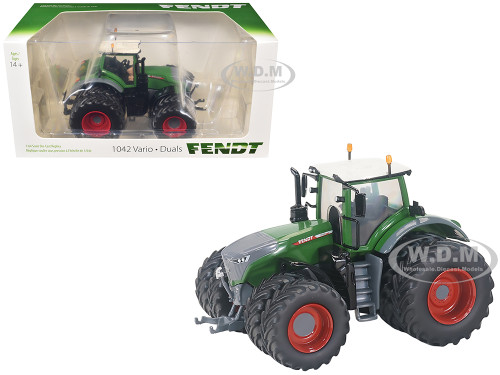
The 1000 Vario represents Fendt's high-horsepower tractor range. Its large dimensions and distinctive proportions make it especially impressive as a scale model.
For collectors, a Fendt 1000 Vario model can provide a useful contrast with smaller Fendt tractors such as the 200 or 300 series.
Fendt Specialty and Tracked Tractors
Fendt's product history extends beyond conventional field tractors.
The company has developed specialist tractors for applications such as vineyards and orchards. The 200 V/F/P series is particularly associated with these narrow-gauge applications, where compact dimensions and maneuverability are important.
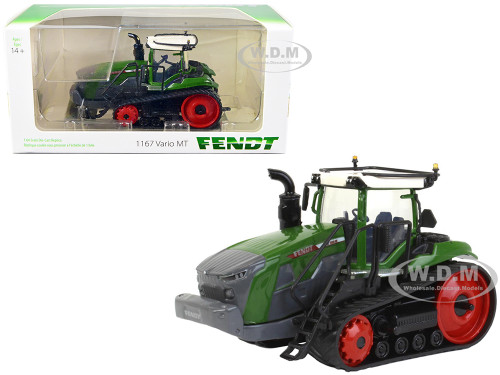
Fendt also produces tracked agricultural tractors. The Fendt 900 Vario MT and 1100 Vario MT families demonstrate the company's approach to high-horsepower tracked machinery. These tractors are particularly distinctive in a diecast collection because their track systems give them a very different appearance from conventional wheeled tractors.
Fendt Harvesting Equipment
Although Fendt is strongly identified with tractors, the company has also expanded into agricultural harvesting machinery.
Its product history includes combine harvesters, forage harvesters, balers, and other equipment. Fendt expanded its harvesting portfolio during the 2000s, including combine and baling equipment, and later introduced the Katana forage harvester.
For collectors, agricultural machinery models can add variety to a display. A Fendt tractor paired with a matching implement, trailer, baler, or harvesting machine can create a more complete farm-equipment scene.
Collecting Fendt Diecast Models
Fendt models appeal to collectors interested in farm toys, agricultural machinery, German engineering, tractors, and detailed scale vehicles. They can also fit naturally into larger collections containing John Deere, CLAAS, Massey Ferguson, New Holland, Case IH, Valtra, and other agricultural machinery.
Collectors can organize a Fendt collection around several themes:
- Early Dieselross tractors
- Classic Favorit and Farmer tractors
- Modern Vario tractors
- Fendt 200, 300, 500 and 700 series
- Fendt 800, 900 and 1000 series
- Tracked Vario MT tractors
- Specialist vineyard and orchard tractors
- Fendt combines and harvesting equipment
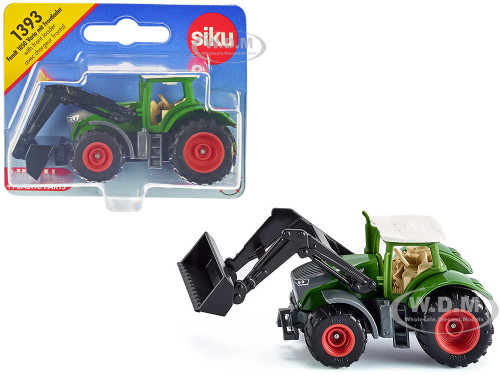
- Fendt tractors with agricultural implements
- Classic versus modern Fendt machinery
This approach makes it possible to build a collection around the evolution of Fendt rather than simply collecting individual models.
Choosing the Right Fendt Scale Model
Agricultural machinery is produced in several popular model scales, and the correct scale depends on the size of the machinery and the type of collection.
1/32 scale is particularly popular for agricultural machinery because it provides a good balance between realistic detail and manageable display size. It is also useful when building a collection of tractors and implements that can be displayed together.
1/16 scale offers a larger presentation and can provide additional room for details such as tires, cab interiors, engine areas, hitches, and implements.
1/50 scale is another useful choice for collectors who prefer compact agricultural equipment displays or want to combine farm machinery with construction and commercial vehicle models.
Other scales may be available depending on the specific Fendt model and manufacturer. Always check the individual product listing for the exact scale, dimensions, materials, moving parts, and accessories.
Details to Consider When Buying a Fendt Model
Two Fendt tractor models can represent very different periods and applications, so collectors should consider several details before purchasing:
- Model series: Dieselross, Favorit, Farmer, Vario, or another Fendt family
- Generation: Different generations can have substantially different styling and equipment
- Scale: Make sure the model fits your existing collection
- Wheels or tracks: Particularly important for comparing conventional and Vario MT tractors
- Implements: Some models may include or be designed to work with agricultural equipment
- Cab and exterior detail: Useful when comparing models from different manufacturers
- Era: Decide whether your collection focuses on classic or modern Fendt machinery
- Display dimensions: Large tractor models can require considerable shelf space
The combination of distinctive green-and-black styling, recognizable model families, and a long history of agricultural engineering makes Fendt particularly suitable for collectors who want their farm-equipment display to tell a story.
Fendt Models for Farm and Agricultural Collections
A Fendt diecast tractor can stand alone as a detailed agricultural collectible, but it can also become part of a larger farm scene. Pairing a tractor with implements or other agricultural machinery can help recreate the working environment for which the full-size equipment was designed.
A chronological Fendt display can be even more compelling. An early Dieselross can represent the company's beginnings, while a Favorit or Farmer illustrates the development of postwar tractors, and a modern Vario or 1000 Vario demonstrates the transition to today's high-horsepower agricultural machinery.
From the Dieselross of the 1930s to today's Vario tractors, Fendt offers collectors a broad range of subjects covering more than nine decades of agricultural equipment development.
Browse the Fendt diecast models available at DiecastModelsWholesale.com to explore tractors and agricultural machinery from different generations, scales, and configurations, and find a Fendt model that fits your collection.




 $6.99Was $7.99Save 12%