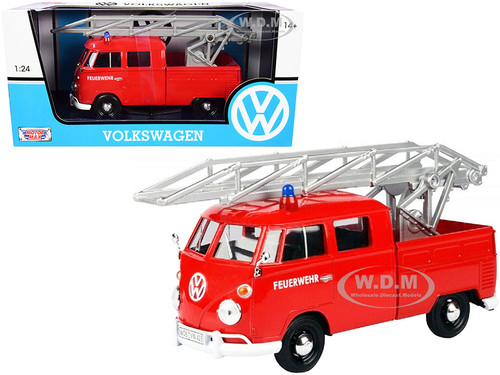
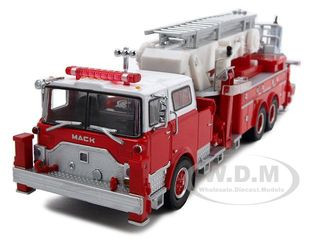
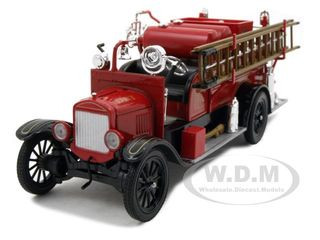
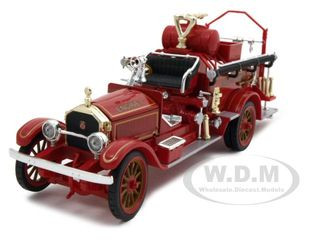
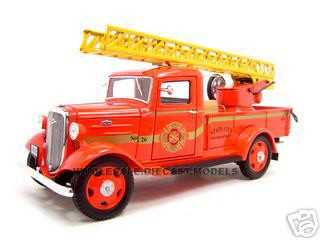
Fire trucks are among the most recognizable specialized vehicles on the road. Built to transport firefighters, water, hose, rescue equipment, ladders, and other tools to emergencies, modern fire apparatus combines a heavy-duty truck chassis with highly specialized equipment. Fire Diecast Models capture this distinctive combination of transportation, engineering, emergency-service history, and detailed vehicle design.
The Fire category is part of the broader Truck vehicle type and focuses on fire-service trucks and apparatus represented as scale models. Depending on the model, collectors may find fire engines, pumpers, ladder trucks, rescue apparatus, utility vehicles, and other specialized emergency trucks. These models can appeal to fire-service enthusiasts, diecast collectors, emergency-vehicle collectors, and hobbyists creating realistic fire station or emergency-response displays.
What Are Fire Trucks?
The term fire truck can describe a wide range of emergency apparatus. A basic fire engine or pumper is generally designed to carry firefighters and firefighting equipment while providing a pump and water tank for fire suppression. Other apparatus are designed around aerial ladders, rescue equipment, water supply, hazardous-material response, wildland firefighting, or specialized operations.
A fire apparatus may include:
- Pump and water tank
- Fire hose and hose connections
- Ground ladders
- Aerial ladder or aerial platform
- Compartments for tools and equipment
- Emergency lights and sirens
- SCBA and firefighter equipment
- Rescue and extrication tools
- Generator and electrical equipment
- Command or communications equipment
- Specialized firefighting systems
The equipment carried by a particular truck depends on the department, vehicle type, and intended mission. This variety is one of the reasons fire truck diecast models offer such a broad collecting subject.
A Brief History of Fire Trucks
The history of fire apparatus stretches back centuries, long before the modern motorized fire engine. Early firefighting equipment included hand-operated pumps and manually powered fire engines. In colonial America, organized bucket brigades and hand-pumped apparatus were important parts of community fire protection.
Steam-powered fire engines represented a major technological step. Cincinnati's fire department history identifies the practical steam fire engine developed by Abel Shawk, Alexander Bonner Latta, and Miles Greenwood in 1852 as an important milestone. Cincinnati subsequently established the first professional, fully paid fire department in the United States in 1853.
During the late 19th and early 20th centuries, fire departments transitioned from hand-powered and horse-drawn apparatus toward motorized vehicles. Gasoline-powered trucks eventually replaced horses and steam propulsion, allowing fire apparatus to travel under their own power while also providing increasingly sophisticated pumping and equipment-carrying capabilities. The New York City Fire Museum's collection illustrates this transition with horse-drawn steam apparatus, a gasoline-powered tractor-steamer, and later gasoline-powered pumpers.
Standardization also became increasingly important as motorized apparatus developed. The National Fire Protection Association traces formal fire-apparatus guidance to a 1906 report by its Committee on Fire Engines, followed by NFPA 19, adopted in 1914 as the first national specification for municipal fire apparatus.
This evolution can be seen clearly in fire diecast models. Early apparatus have open seating, exposed equipment, and mechanical details associated with their period, while modern fire trucks feature enclosed crew cabs, sophisticated pumping systems, extensive compartmentation, emergency lighting, and specialized equipment.
Types of Fire Diecast Models
Fire Engines and Pumpers
The fire engine, often called a pumper, is one of the most familiar forms of fire apparatus. It typically carries firefighters, hose, water, and firefighting equipment while providing a pump for delivering water through attack lines.
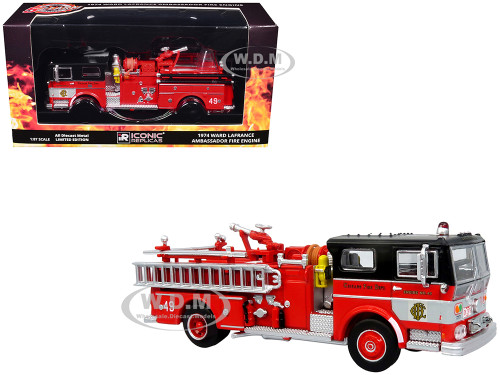
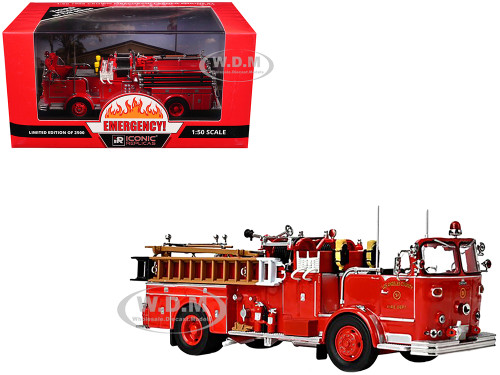
Fire engine diecast models can feature pump panels, hose beds, ladders, storage compartments, water tanks, and department markings. These details make pumpers particularly recognizable subjects for collectors.
Ladder Trucks
Ladder trucks are designed to provide firefighters with elevated access and may carry aerial ladders or aerial platforms. Depending on the apparatus, the ladder can be mounted on a rear or midship turntable and may extend to considerable heights.
Scale ladder truck models can be especially impressive because the aerial equipment adds considerable visual detail. Aerial ladders, stabilizers, turntables, tool compartments, and crew areas all contribute to the model's appearance.
Rescue Trucks
Rescue apparatus carry specialized equipment for emergencies that may extend beyond conventional fire suppression. Depending on the department and vehicle, equipment can include hydraulic rescue tools, generators, lighting, medical supplies, ropes, breathing apparatus, and technical-rescue equipment.
These trucks can look very different from traditional fire engines, making them useful additions to collections focused on emergency-service variety.
Wildland Fire Trucks
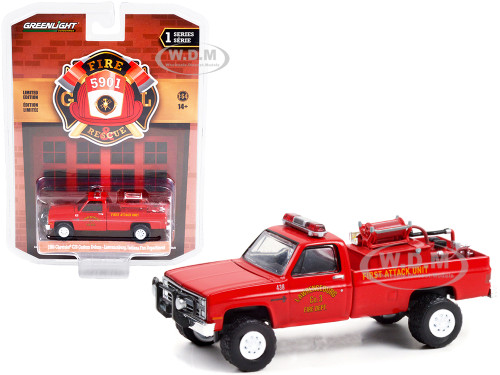
Wildland or brush fire apparatus are designed to operate in areas where paved roads may be limited and terrain can be challenging. Their equipment and chassis are selected for off-road operation, water delivery, and firefighting in vegetation.
NFPA maintains a dedicated standard for wildland fire apparatus, reflecting the specialized demands of this type of emergency vehicle.
Wildland fire truck models can be especially interesting when displayed with off-road vehicles, forestry equipment, or rural fire-station scenes.
Specialty Fire Apparatus
Fire departments also use specialized vehicles for particular situations. These can include airport crash trucks, hazardous-material units, foam apparatus, command vehicles, heavy rescue trucks, water tenders, and other specialized equipment.
For collectors, specialty apparatus provide an opportunity to move beyond the familiar red pumper or ladder truck and explore the many different roles performed by modern fire departments.
Fire Truck Details That Collectors Appreciate
Fire apparatus are packed with equipment, which gives model manufacturers many opportunities to reproduce fine details.
Pumps and Hose Equipment
On a pumper, the pump panel is one of the most recognizable features. Hose connections, valves, gauges, hose beds, and supply lines can all contribute to the appearance of a detailed scale model.
Ladders and Aerial Equipment
Ladder trucks offer some of the most visually distinctive features in the category. Aerial ladders, platforms, outriggers, turntables, and hydraulic components can dramatically change the silhouette of the vehicle.
Emergency Lighting
Light bars, warning beacons, headlights, spotlights, and other emergency lighting are important parts of modern apparatus. Depending on the model, these may be represented through molded details, transparent components, or other miniature features.
Compartments and Tools
Fire trucks are designed to carry a large amount of equipment in organized compartments. Scale models may reproduce compartment doors, handles, tools, hose reels, and other equipment-storage details.
Department Markings
Fire apparatus are often strongly associated with the departments that operate them. Station names, engine numbers, city names, logos, striping, badges, and other markings can make a particular model especially meaningful to collectors.
Fire Trucks and Fire Department Apparatus
Although "fire truck" is commonly used as a general term, fire-service apparatus can be classified by its primary function. A pumper, aerial ladder, rescue unit, water tender, wildland apparatus, and airport crash truck may all serve the same fire department while performing very different jobs.
This distinction is useful when collecting. Someone interested in traditional municipal fire engines may focus on pumpers and ladder trucks, while another collector may specialize in rescue apparatus, vintage equipment, or a particular city's fleet.
The broader Fire Department category can also be useful for collectors who want to explore fire-service vehicles beyond the truck configurations represented here.
Collecting Fire Diecast Models
Fire trucks have a particularly strong appeal as collectible vehicles because they combine recognizable truck design with local history and specialized equipment.
Collect by Fire Department
One of the most rewarding approaches is collecting apparatus from particular cities, counties, municipalities, or fire departments. Department markings can turn an otherwise generic fire truck into a representation of a specific real-world vehicle.
Collect by Manufacturer
Collectors may also focus on apparatus built on chassis from manufacturers such as American LaFrance, Seagrave, Pierce, E-One, KME, Mack, Ford, International, Freightliner, Peterbilt, or other manufacturers, depending on the specific vehicle.
Collect by Era
Vintage fire apparatus can show how firefighting technology changed over time. Open-cab engines, polished metal equipment, wooden ladders, and early motorized apparatus have a very different appearance from today's enclosed-cab emergency vehicles.
Modern fire trucks, meanwhile, can feature large crew cabs, advanced aerial systems, extensive compartmentation, LED warning lights, and sophisticated pump and water-delivery equipment.
Collect by Apparatus Type
Another approach is to assemble a collection around different functions:
- Engine or pumper
- Ladder truck
- Rescue truck
- Aerial platform
- Wildland apparatus
- Water tender
- Airport crash truck
- Command vehicle
- Specialty apparatus
This creates a miniature representation of the range of vehicles used by a modern fire department.
Choosing the Right Scale
Fire diecast models are produced in several scales depending on the manufacturer and individual apparatus. Common scales encountered in fire and emergency vehicle collecting include 1/18, 1/24, 1/32, 1/43, 1/50, and 1/64.
Larger scales can provide more room for detailed ladders, compartments, hose equipment, interiors, and chassis components. Smaller models can be useful for collectors who want to build a larger fleet or create a complete fire-station scene.
Scale consistency is particularly important for dioramas. A 1/50 fire engine will generally work best alongside other 1/50 construction and emergency equipment, while a 1/64 collection can accommodate a much larger number of vehicles in a smaller display area.
Building a Fire Station or Emergency Display
Fire trucks naturally lend themselves to dioramas and themed displays. A collection might recreate a traditional fire station with engines, ladder trucks, rescue units, and support vehicles.
Fire apparatus can also be combined with other emergency-service models. Police Department vehicles and Ambulance models can help create a broader emergency-response scene, while construction vehicles can represent incidents requiring technical rescue or specialized response.
For historical displays, collectors can combine vintage fire apparatus with period-correct cars, trucks, buildings, and accessories to represent a particular decade.
Why Fire Trucks Make Great Diecast Collectibles
Fire trucks combine several qualities that make them compelling scale-model subjects: distinctive styling, specialized equipment, strong visual identity, and a connection to real-world history.
The vehicles themselves also tell a story about changing firefighting technology. Comparing a hand-era or early motorized apparatus with a modern pumper or aerial ladder reveals how fire departments have adapted vehicles to carry more equipment, improve crew safety, increase pumping capability, and respond to increasingly diverse emergencies.
Whether your interest is vintage fire apparatus, modern emergency vehicles, municipal history, detailed truck engineering, or realistic dioramas, Fire Diecast Models provide a broad and highly recognizable collecting subject.
Browse the Fire Diecast Models category at DiecastModelsWholesale.com to explore fire engines, emergency trucks, and specialized apparatus and find models that fit your collection or fire-service display.


 $8.99
$8.99