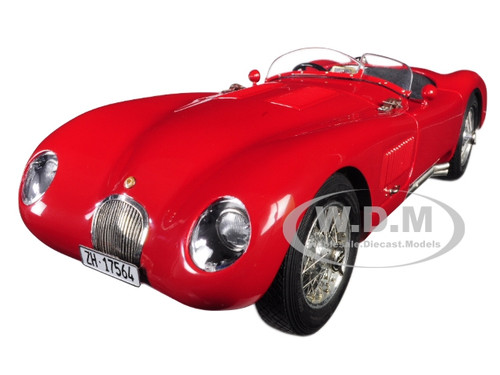
Jaguar diecast model cars bring the style, engineering, and motorsport heritage of one of Britain's most recognizable automotive marques into miniature form. From elegant prewar automobiles and classic grand touring cars to legendary sports cars, luxury sedans, and modern performance vehicles, Jaguar offers a diverse range of subjects for diecast collectors.
At Diecast Models Wholesale, the Jaguar category is intended for collectors, automotive enthusiasts, and shoppers looking for miniature representations of Jaguar vehicles. Depending on current product availability, the selection may include classic Jaguar sports cars, racing legends, luxury saloons, and more recent performance models in collectible scales such as 1:18, 1:24, 1:12, and 1:43. Each product listing provides the details needed to identify the specific vehicle, scale, finish, and manufacturer.
Jaguar models appeal to several types of collectors. Some focus on the marque's racing history and endurance victories, while others prefer the long, flowing lines of its classic road cars or the understated character of its luxury sedans. Whether you are building a British sports car collection, recreating a motorsport display, or searching for a gift for a Jaguar enthusiast, this category offers a starting point for exploring the marque in miniature.
The History of Jaguar
From Swallow Sidecar Company to Jaguar
Jaguar's story began in 1922, when William Lyons and William Walmsley established the Swallow Sidecar Company in Blackpool, England. The business initially produced motorcycle sidecars before moving into automobile bodywork and complete vehicles. In 1935, the company introduced the SS Jaguar name on a range of passenger cars, including the SS Jaguar 2.5-litre saloon and sports models.
After World War II, the company adopted the Jaguar Cars name in 1945. The change distinguished the brand from the wartime-era initials and established the name that would become internationally associated with British luxury, sporting performance, and distinctive automotive design.
Jaguar's postwar development helped define its identity. The company combined attractive bodywork with capable engines and chassis engineering, producing cars that could serve as comfortable road vehicles while also competing successfully in motorsport.
The Classic Jaguar Era
Jaguar became especially famous during the 1950s and 1960s. Models such as the XK120, XK140, XK150, Mark 2, and E-Type helped establish the brand's reputation for combining performance with elegant styling.
The XK120, introduced in 1948, was an important milestone in Jaguar's postwar history. Its sleek body and six-cylinder engine made it a standout sports car, and the XK family continued with the XK140 and XK150.
The Jaguar Mark 2, introduced in 1959, became one of the marque's best-known sporting sedans. Its combination of compact proportions, performance, and refined interior made it popular with drivers who wanted a practical four-door car with sporting character.
The E-Type, launched in 1961, became one of Jaguar's most recognizable designs. Its long bonnet, curved bodywork, and performance-oriented engineering made it a defining sports car of the 1960s. Both coupe and roadster versions have remained popular subjects for automotive collectors and model manufacturers.
These classic cars are particularly appealing in diecast form because their distinctive proportions, chrome details, wheels, grilles, and body lines can be appreciated on a display shelf.
Jaguar and Endurance Racing
Motorsport is central to Jaguar's history. The marque achieved major success at the 24 Hours of Le Mans, where its competition cars demonstrated both speed and endurance.
Jaguar's C-Type helped establish its postwar racing reputation, winning Le Mans in 1951 and 1953. The D-Type followed with victories in 1955, 1956, and 1957. Its aerodynamic body and innovative construction made it one of the most memorable racing cars of its era.
Later competition programs brought further recognition. The XJR-9 won Le Mans in 1988, while the XJR-12 won in 1990. Jaguar's racing history also includes the XJR-14, a technologically advanced sports prototype associated with the early 1990s.
For collectors, these racing cars offer a different side of Jaguar from its luxury road vehicles. Competition liveries, racing numbers, sponsor graphics, aerodynamic bodywork, and period-specific details can make motorsport versions especially distinctive.
Popular Jaguar Models for Diecast Collectors
Jaguar XK Series
The XK family represents Jaguar's early postwar sports car identity. The XK120, XK140, and XK150 each have their own styling details, making them useful subjects for collectors who appreciate the evolution of classic British sports cars.
When comparing Jaguar XK diecast models, look for differences in body style, exterior color, wire-wheel design, bumpers, and interior finish. Coupe, fixed-head coupe, and open-top versions can create variety within a collection.
Jaguar E-Type
The E-Type is one of the most recognizable Jaguar models and a natural centerpiece for a classic British car collection. It was produced in several series and body configurations, including roadsters and fixed-head coupes.
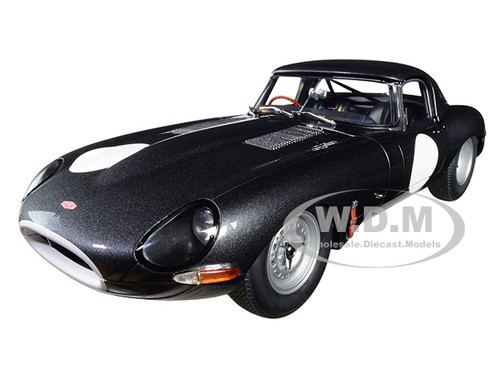
Collectors may encounter early Series 1 cars, later Series 2 and Series 3 examples, and special performance-oriented variants such as the lightweight racing cars. The Series 1 is particularly recognizable for its covered headlamps on many early examples, while later versions introduced changes to lighting, bumpers, engines, and other details.
A Jaguar E-Type diecast model can complement other classic sports cars from the 1960s or form the foundation of a collection focused specifically on Jaguar's heritage.
Jaguar D-Type and C-Type
The C-Type and D-Type represent Jaguar's most celebrated early endurance-racing designs.
The C-Type is associated with Jaguar's first major postwar Le Mans successes, while the D-Type is known for its distinctive fin behind the driver and its aerodynamic shape. D-Type models may represent different racing years, teams, and competition configurations.
These vehicles are worth considering for collectors who prefer historic motorsport subjects. When choosing a racing replica, check the product details for the represented car, racing number, event, and livery, as these features distinguish one release from another.
Jaguar XJ Luxury Sedans
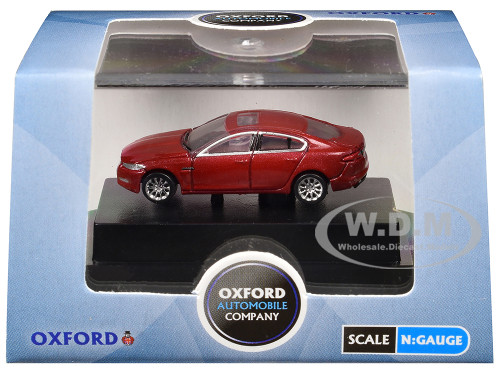
The Jaguar XJ family represents the brand's long-standing role in the luxury-sedan market. Introduced in 1968, the original XJ helped establish the design language and character that defined Jaguar's flagship sedans for decades.
Successive generations evolved in size, styling, technology, and performance. Depending on available releases, collectors may encounter classic XJ6 and XJ12 models, later XJ sedans, and high-performance variants.
XJ diecast models are especially suitable for collections focused on British luxury cars. Their restrained styling contrasts with the dramatic proportions of Jaguar's sports cars, giving a display greater variety.
Jaguar XJ-S and XK Grand Touring Cars
Introduced in 1975, the Jaguar XJ-S—later renamed XJS—combined long-distance comfort with V12-powered performance in selected versions. Its distinctive rear-quarter styling and long body made it quite different from the E-Type it followed.
The later XK sports car, introduced in 1996, brought a modern interpretation of Jaguar's grand touring tradition. The XK8 and subsequent XKR versions combined flowing bodywork with powerful engines, while later XK models introduced a more contemporary design.
These cars appeal to collectors interested in Jaguar's transition from classic British grand tourers to modern performance-oriented road cars.
Jaguar F-Type
The F-Type revived Jaguar's two-seat sports-car focus when it arrived in 2013. Available as a convertible and coupe, it combined a compact sports-car format with modern styling and a range of performance options.
Different F-Type versions can be distinguished by their engines, exhaust arrangements, wheels, body details, and performance designations. Diecast examples can be a good choice for collectors who prefer contemporary sports cars or want to pair newer Jaguar models with classics such as the E-Type.
Jaguar Racing and Performance Cars
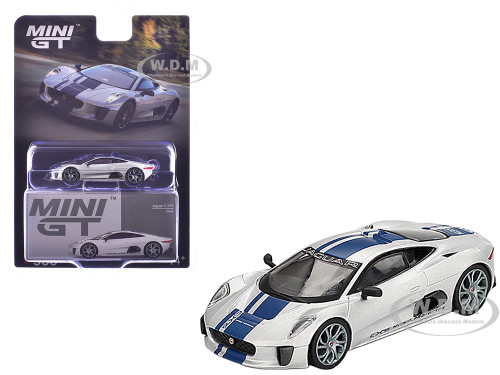
Beyond its historic Le Mans winners, Jaguar has produced several notable racing and high-performance vehicles. Depending on product availability, collectors may find models associated with touring-car racing, sports prototypes, GT competition, or other motorsport programs.
The Jaguar XJR-9 and XJR-12 are particularly significant endurance-racing subjects, while road-going performance models offer a connection to the marque's production-car engineering.
When selecting a racing model, consider whether you want a historic competition car, a road-going performance vehicle, or a replica representing a particular race or team. Those distinctions help organize a collection around a specific period of Jaguar history.
Jaguar Diecast Models in Different Scales
Scale determines the approximate size of a miniature compared with the real vehicle. The same Jaguar can look quite different as a large display model or a compact collectible.
-
1:12 scale: Larger models that can make a striking display centerpiece. Their size may allow more room for visible detailing, depending on the manufacturer and release.
-
1:18 scale: A popular choice for collectors who want to appreciate exterior proportions and interior details. This scale works well for classic E-Types, racing cars, and modern sports cars.
-
1:24 scale: A practical middle-sized option for displaying several vehicles without needing as much shelf space as larger models.
-
1:43 scale: Compact models suited to collections covering many vehicles, historical periods, or racing liveries.
Not every Jaguar model is produced in every scale. Availability, construction, opening parts, and detail levels vary by individual release, so check the listing before purchasing.
How to Choose a Jaguar Model Car
Choose by Era and Vehicle Type
Start with the part of Jaguar history that interests you most. Classic-car enthusiasts may prefer the XK series, E-Type, or Mark 2. Motorsport collectors may gravitate toward the C-Type, D-Type, XJR-9, or XJR-12. Those who prefer contemporary vehicles may look for the F-Type and later performance models.
Compare Color and Livery
Exterior color can have a major effect on the appearance of a diecast model. Classic road cars may feature period-inspired paint finishes, while racing models often use competition liveries, numbers, and sponsor graphics.
If you are collecting several versions of the same vehicle, compare the photographs and descriptions carefully to identify the specific finish and configuration.
Consider Construction and Features
Diecast models vary in their materials, level of detail, and moving parts. Some have opening doors, bonnets, or boots, while others prioritize a clean exterior presentation. Racing models may emphasize body graphics and competition details.
Read the individual product description to determine which features are included rather than assuming all models of the same scale have the same construction.
Build a Collection Around a Theme
A Jaguar collection can follow several approaches:
-
Classic sports cars: XK120, XK140, XK150, and E-Type models.
-
Endurance racing: C-Type, D-Type, XJR-9, and XJR-12 competition cars.
-
British luxury: Mark 2, XJ6, XJ12, and other Jaguar saloons.
-
Modern performance: XK, XKR, and F-Type models.
-
Scale-focused collecting: Jaguar vehicles in a preferred scale, such as 1:18 or 1:43.
-
Automotive history: Examples from different decades to show how Jaguar design evolved.
A focused theme makes it easier to select models that complement one another and gives a display a clear historical or visual direction.
Jaguar Diecast Cars for Gifts
Jaguar diecast model cars can make thoughtful gifts for British automotive enthusiasts, sports-car fans, motorsport followers, and collectors of classic luxury vehicles.
For someone who admires iconic designs, an E-Type or D-Type may be a suitable choice if available. A collector interested in endurance racing may appreciate a competition version, while a fan of modern performance cars may prefer an F-Type model.
If you are buying a gift, consider the recipient's favorite Jaguar, preferred scale, display space, and whether they collect road cars or racing vehicles. Checking the product details will help ensure that the model matches their interests.
Shop Jaguar Diecast Model Cars at Diecast Models Wholesale
From the timeless E-Type and classic XK sports cars to legendary Le Mans racers, elegant XJ sedans, and modern F-Type performance cars, Jaguar offers plenty of possibilities for a distinctive diecast collection.
Browse the Jaguar category at Diecast Models Wholesale to explore available collectible model cars in different scales and styles. Compare the individual listings, find a Jaguar that suits your interests, and add a piece of British automotive history to your collection.



 $289.99




 $24.99

 $607.99