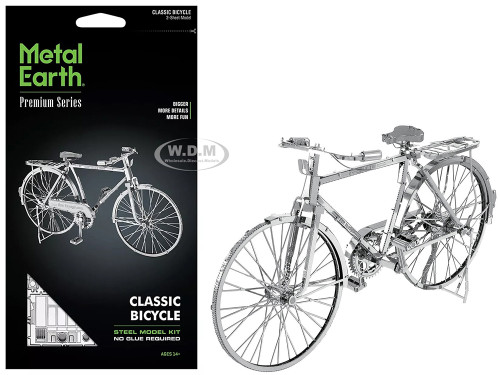
Bicycle Diecast Models
Explore bicycle diecast models and miniature bicycle collectibles representing one of the world's most recognizable forms of personal transportation. From classic road bicycles and vintage designs to racing-inspired and recreational models, bicycle miniatures offer collectors an opportunity to add a different type of vehicle to an automotive, transportation, sports, or historical display.
The Bicycle category at DiecastModelsWholesale.com features collectible bicycle models in a variety of designs and scales, depending on the individual product. These miniatures can complement collections of cars, motorcycles, racing vehicles, and other forms of transportation while also appealing to enthusiasts interested specifically in cycling history and bicycle design.
Unlike larger diecast vehicles, bicycle models focus on the fine structure of the frame, wheels, handlebars, seat, pedals, and other components that define a bicycle. This makes them interesting display pieces even at relatively small sizes.
A Brief History of the Bicycle
The bicycle developed through several distinct stages before reaching the familiar two-wheel configuration used today. Early human-powered cycles included the velocipede and other experimental designs, followed by the high-wheel bicycle that became widely recognizable during the late 19th century.
By the 1870s, high-wheel bicycles with large front wheels and smaller rear wheels were increasingly popular. James Starley's Ariel, introduced in 1871, was an influential high-wheel design, while American manufacturers soon began producing their own bicycles. The Pope Manufacturing Company, for example, manufactured bicycles under the Columbia name beginning in the late 1870s.
High-wheel bicycles were relatively light and fast for their time, but the rider sat high above the ground. Obstacles could cause the front wheel to stop suddenly and send the rider over the handlebars. The limitations of the high-wheel design encouraged the development of safer alternatives.
The Safety Bicycle
The safety bicycle was a major step toward the bicycle configuration familiar today. Safety bicycles used two wheels of approximately equal size, a chain drive, and a lower riding position. Improvements to pneumatic tires and braking systems during the late 19th century further improved the practicality of the design.
By the 1890s, the safety bicycle had become an important part of the bicycle boom. The Smithsonian notes that bicycle use in the United States grew dramatically during this period, when bicycles provided affordable individual transportation before automobiles became widespread.
This period is particularly interesting for collectors because both high-wheel and early safety bicycles have distinctive silhouettes that can be represented in miniature form.
Bicycle Models and Collecting Themes
Bicycle diecast models can represent a variety of styles and historical periods. Depending on the product, collectors may find models inspired by:
- Classic road bicycles
- Vintage bicycles
- High-wheel or penny-farthing bicycles
- Safety bicycles
- Racing bicycles
- Mountain bikes
- Recreational bicycles
- City and commuter bicycles
- Touring bicycles
- BMX-style bicycles
- Historic bicycle designs
The category can therefore appeal to collectors with very different interests. Someone interested in transportation history might prefer an early bicycle design, while a motorsports enthusiast might choose a racing bicycle to complement a cycling or competition display.
Vintage and Historic Bicycle Models
Vintage bicycle miniatures can capture important stages in bicycle development. High-wheel bicycles, for example, are immediately recognizable because of their dramatically different wheel sizes. Safety bicycles from the late 19th and early 20th centuries are closer to modern bicycles and can illustrate the transition toward the standard bicycle layout.
The Smithsonian's National Museum of American History collection includes examples ranging from high-wheel bicycles of the 1880s to safety bicycles from the late 19th and early 20th centuries. Its collection also documents how bicycle design continued to evolve throughout the 20th century.
For collectors, historic bicycle models can be valuable additions to displays organized around technological development, transportation history, or the evolution of personal mobility.
The Bicycle and the Development of Transportation
Bicycles played an important role in transportation history before the automobile became dominant. During the late 19th century, bicycles provided relatively inexpensive personal transportation and allowed riders to travel independently for work, recreation, touring, and other activities.
Bicycle technology also influenced later transportation development. The Smithsonian notes that bicycle manufacturing helped advance the use of components and materials such as ball bearings, steel tubing, wire wheels, pneumatic tires, and other technologies that were later used in automobiles. Several early automobile and aviation pioneers also had connections to bicycle manufacturing, including Wilbur and Orville Wright.
This connection makes bicycle models relevant to collectors who are interested in the broader history of transportation rather than bicycles alone.
Bicycle Models by Style and Design
Different bicycle designs can create very different appearances in a miniature collection.
Road and Racing Bicycles
Road and racing bicycles are generally characterized by lightweight frames, narrow tires, drop handlebars, and designs intended for efficient riding. Racing-inspired bicycle miniatures can work particularly well in sports-themed displays or alongside models representing cycling events and professional competition.
Mountain Bikes
Mountain bikes are designed for off-road riding and typically feature wider tires, more robust frames, and components suited to uneven terrain. Their recognizable proportions make them a distinct subject for bicycle collectors.
Vintage Bicycles
Vintage bicycles can represent earlier styles of transportation and recreation. Depending on the era, details may include traditional frame construction, fenders, chain guards, lamps, baskets, or other period-specific equipment.
High-Wheel Bicycles
High-wheel bicycles, also called Ordinaries or commonly known as penny-farthings, are among the most distinctive bicycle designs. Their large front wheel and small rear wheel make them instantly recognizable and particularly interesting as historical miniatures. The Smithsonian identifies the high-wheel bicycle as an important stage in the development of personal mechanical transportation.
Details to Look For in Bicycle Diecast Models
Although bicycles are much smaller than automobiles, their open construction creates opportunities for highly visible miniature detail. Depending on the manufacturer and scale, a bicycle model may reproduce features such as:
- Frame geometry
- Spoked wheels
- Tires
- Handlebars
- Saddle
- Pedals and crankset
- Chain and drivetrain
- Fenders
- Baskets or racks
- Racing equipment
- Period-specific accessories
- Manufacturer graphics or markings
Because many of these components are exposed rather than enclosed within a body shell, the proportions and finish of the frame, wheels, and components can have a significant effect on the overall appearance of the model.
Bicycle Diecast Models and Scale
Scale is an important consideration when selecting a bicycle model, particularly when displaying it with cars, motorcycles, or other vehicles.
Bicycle miniatures may be produced in a variety of scales depending on the manufacturer and subject. Smaller scales can work well for transportation scenes and larger collections, while larger-scale bicycle models can provide more room for visible frame, wheel, and component detail.
When shopping, compare the stated scale and dimensions of each product rather than assuming that every bicycle model will be the same size. A bicycle intended to accompany a 1/18-scale automotive display, for example, should be evaluated for scale compatibility with the other models in that display.
Building a Bicycle-Themed Collection
Bicycle models can be collected independently or incorporated into a broader transportation collection. Some collectors may organize bicycles according to historical period, while others may prefer a particular style or manufacturer.
Possible collecting themes include:
- Bicycle history – early, vintage, and modern designs
- High-wheel bicycles – historic penny-farthing and Ordinary designs
- Classic bicycles – traditional road and recreational styles
- Racing bicycles – competition and cycling-sport themes
- Off-road bicycles – mountain and recreational designs
- Transportation displays – bicycles alongside cars, buses, and other vehicles
- Scale collections – bicycles selected to complement a particular diecast scale
- Sports collections – bicycles displayed with other sporting subjects
The compact size of bicycle models also makes them useful for creating larger transportation scenes without requiring as much display space as full-size diecast cars or trucks.
Bicycles Alongside Motorcycle and Vehicle Collections
Bicycles occupy an interesting place within a broader vehicle collection. They are human-powered rather than motorized, but their development is closely connected to the history of personal transportation and later motorcycles and automobiles.
The Smithsonian notes that many early automobile pioneers had experience in bicycle manufacturing, while Wilbur and Orville Wright were bicycle manufacturers before turning their attention to aviation.
Collectors interested in this progression can combine bicycle models with motorcycles, cars, aircraft, and other transportation subjects. Browse related Motorcycle diecast models to explore another important branch of two-wheeled vehicle history.
Bicycle Models for Collectors and Enthusiasts
A bicycle miniature can represent much more than a simple two-wheeled vehicle. Historic bicycle designs document changes in engineering and personal transportation, while modern styles reflect the continuing development of cycling for recreation, sport, commuting, and other uses.
When selecting a bicycle model, consider the style, historical period, scale, manufacturer, construction, and level of detail. These factors can help determine how well a particular model fits an existing collection or display.
Whether your interest is in vintage transportation, high-wheel bicycles, racing, recreational cycling, or simply adding a different type of vehicle to a diecast display, bicycle models offer a compact and distinctive collecting subject.
Explore Bicycle Diecast Models
Browse the Bicycle category at DiecastModelsWholesale.com to explore available bicycle scale models and collectible designs. Compare the available styles and details to find a bicycle model that complements your transportation, sports, motorcycle, or diecast collection.