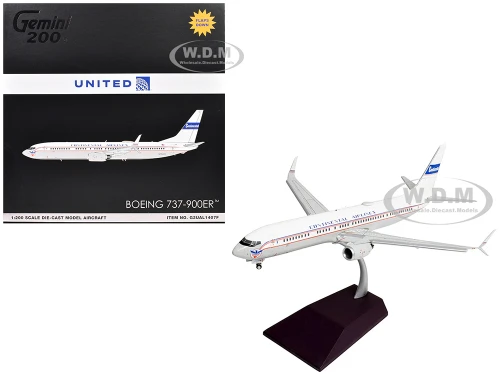
Continental Express was the regional airline brand associated with Continental Airlines, connecting smaller cities and regional airports with the larger airline's domestic network. Its aircraft played an important role in helping passengers travel between communities and major connecting hubs, making Continental Express a distinctive subject for collectors interested in American regional aviation.
Continental Express Airlines diecast aircraft models appeal to enthusiasts who collect historic U.S. airline liveries, regional passenger aircraft, and models representing the development of feeder airline networks. Unlike collections focused entirely on large Boeing and Airbus jetliners, Continental Express models can highlight the smaller aircraft that connected regional communities to long-distance domestic and international flights.
Depending on the products available, this category may include scale replicas representing aircraft operated under the Continental Express name. The aircraft type, scale, livery, registration, and product features should be confirmed in each individual listing. Historical fleet information provides useful context for collectors, but it does not guarantee that a model of every aircraft type is currently available.
Whether you are building a collection of regional airliners, documenting the history of Continental Airlines, or looking for an aviation-themed gift, Continental Express models offer a way to preserve the memory of an important part of U.S. commercial aviation.
The History of Continental Express
Continental Express developed as a regional airline operation serving the network of Continental Airlines. Its purpose was to connect smaller markets with the larger airline's hubs, allowing passengers from regional communities to transfer to Continental's broader network.
Regional airline services became increasingly important as major carriers sought to serve more cities without operating large mainline aircraft on every route. Smaller turboprops and regional jets could provide more appropriately sized service on routes where passenger demand did not justify a larger aircraft.
Continental Express became closely associated with Houston Intercontinental Airport, where regional flights helped feed passengers into Continental's domestic and international services. The airline also served other markets during its history, with routes and operating arrangements changing as the regional airline industry evolved.
The Continental Express name appeared on aircraft operated through different regional airline arrangements over time. ExpressJet became a particularly important operator of Continental Express services, while other regional operators also flew under the brand during various periods. This distinction matters to collectors because the airline name on an aircraft does not always identify the company that physically operated it.
Continental Airlines later merged with United Airlines, with the merger completed in 2012. The Continental Express identity subsequently disappeared as the combined airline reorganized its regional operations and branding.
For collectors, Continental Express represents an era when regional airline brands were an integral part of the major carriers' networks. Its aircraft help tell the story of how smaller communities were connected to larger transportation hubs and how the regional airline industry changed over several decades.
Notable Continental Express Aircraft
Continental Express operated a variety of regional aircraft over its history. The fleet evolved from turboprop commuter aircraft to regional jets, reflecting changes in passenger expectations and the airline industry's approach to connecting smaller cities with major hubs.
Embraer ERJ-145 and ERJ-135
The Embraer ERJ-145 became one of the aircraft most closely associated with Continental Express during the regional jet era. Introduced into Continental Express service in 1997, the ERJ-145 offered a faster alternative to turboprop aircraft while retaining the smaller passenger capacity suited to regional routes.
The ERJ-135 is a shorter member of the same aircraft family. Although it shares the ERJ-145's general design, its shorter fuselage makes it visually distinct. Both types helped Continental Express serve regional markets with jet aircraft, particularly on routes linking smaller cities to major hubs.
For collectors, these Embraer aircraft are especially relevant because they represent a recognizable period in American regional aviation. Their long, narrow fuselages, rear-mounted engines, and T-tail configuration distinguish them from larger mainline passenger jets.
A Continental Express ERJ-145 or ERJ-135 model may appeal to collectors interested in:
-
Regional jets operated in the United States during the late 1990s and 2000s.
-
Embraer aircraft and the development of the ERJ family.
-
Historic Continental Airlines branding.
-
Aircraft that connected smaller cities with major airline hubs.
Embraer EMB-120 Brasilia
Before regional jets became central to its operations, Continental Express used turboprop aircraft such as the Embraer EMB-120 Brasilia. This twin-engine aircraft was designed for regional passenger service and featured a relatively slender fuselage and propeller-driven engines.
The Brasilia illustrates an earlier stage of regional aviation, when turboprops provided economical service on shorter routes. It can be an interesting subject for collectors who want to document the transition from propeller aircraft to regional jets.
ATR 42 and ATR 72
Continental Express also operated ATR turboprops during its earlier years. The ATR 42 and ATR 72 are high-wing regional aircraft with twin turboprop engines, designed to serve short- and medium-distance routes.
The ATR 42 is the smaller member of the family, while the ATR 72 has a stretched fuselage and greater passenger capacity. Their distinctive high-wing layout and large propellers make them easy to distinguish from regional jets.
For aviation enthusiasts, these aircraft add variety to a Continental Express collection and represent the important role turboprops played in connecting smaller communities to the wider airline network.
Beechcraft 1900
The Beechcraft 1900 was another aircraft associated with Continental Express's regional operations. This compact twin-engine turboprop was designed for commuter airline service and could serve smaller markets where larger aircraft were not necessary.
Compared with the ERJ-145, the Beechcraft 1900 represents a very different approach to regional travel. Its smaller proportions and propeller-driven design make it a useful subject for collections covering the development of commuter aviation.
Other Regional Aircraft
Across the broader history of Continental Express and its predecessor operations, other aircraft included the de Havilland Canada Dash 7 and various commuter turboprops. The specific aircraft operated depended on the period, regional operator, and route network.
The Continental Express name was used across different operating arrangements, so collectors researching a particular aircraft should distinguish between the brand displayed on the aircraft and the company operating it. This distinction is especially useful when comparing registrations, historical photographs, and model releases.
Continental Express Livery and Collecting Appeal
Continental Express aircraft carried branding associated with Continental Airlines, connecting the regional operation visually with the mainline carrier. The precise appearance varied by aircraft and period, making the individual livery an important part of identifying a collectible model.
The Continental name and globe-inspired logo are familiar elements of the broader airline's history. Regional aircraft wearing Continental Express titles brought that identity to smaller airports and routes that were served by aircraft much smaller than the mainline fleet.
Collectors may find Continental Express models particularly interesting when they are building displays around:
-
Historic American airlines: Preserve the identity of a regional brand that is no longer used in its original form.
-
Continental Airlines history: Show how regional flights supported a major carrier's route network.
-
Regional aircraft: Compare turboprops with later-generation regional jets.
-
Embraer collections: Display the ERJ-135 and ERJ-145 alongside other aircraft from the Brazilian manufacturer.
-
Aircraft registrations and liveries: Focus on the markings of specific aircraft and periods.
A regional aircraft can also provide useful contrast in a display of larger passenger jets. The difference in size, engine placement, and fuselage shape helps illustrate the variety of aircraft needed to serve an airline network.
Choosing a Continental Express Scale Aircraft Model
Scale is an important consideration when selecting a Continental Express model. It affects the aircraft's overall dimensions and how well it fits into an existing display. The scales offered vary by individual product, so always check the product listing for the confirmed scale and dimensions.
Smaller Scale Models
Smaller-scale aircraft are useful for collectors who want to display many airlines and aircraft types in a limited space. They can be especially suitable for a collection organized around regional airlines, historical liveries, or aircraft families.
Larger Scale Models
Larger-scale aircraft can make a model's shape and markings easier to appreciate and may be suitable for a more prominent display. However, the required space varies considerably between aircraft types. A larger regional jet and a smaller turboprop can have very different dimensions, even when represented at the same scale.
Product Details to Review
Before purchasing a Continental Express model, consider the following:
-
Aircraft type: Confirm whether the model represents an ERJ-145, ERJ-135, EMB-120, ATR, Beechcraft 1900, or another aircraft.
-
Scale and dimensions: Check the model's size and whether it fits your display.
-
Livery and markings: Review the Continental Express titles, tail design, and registration.
-
Manufacturer: Product details can help distinguish different releases representing the same aircraft.
-
Construction and finish: Materials and detailing can vary between models.
-
Display configuration: Check whether landing gear, a display stand, or other accessories are included.
-
Packaging: If you collect boxed models, consider the condition and presentation of the packaging as well as the aircraft.
Historical aircraft types are useful for research and collecting inspiration, but not every type will necessarily have a corresponding model available. Confirm the specifications and current availability shown in each listing.
Continental Express Models for Collectors and Gifts
Continental Express models can appeal to aviation enthusiasts who remember traveling on regional flights, collectors documenting Continental Airlines history, and hobbyists interested in the development of American regional aviation.
They can also make thoughtful gifts for former airline employees, aviation students, and collectors who enjoy less commonly represented aircraft. A regional turboprop or early regional jet can offer something different from the large commercial airliners that dominate many aircraft displays.
When choosing a gift, consider whether the recipient prefers turboprops or jets, collects a particular aircraft manufacturer, or focuses on a specific period of airline history. The aircraft variant and livery are often as important as the airline name itself.
Continental Express played an important role in connecting regional communities with the wider Continental Airlines network. Browse the available Continental Express Airlines models to explore the aircraft, liveries, and product details offered, and find a collectible that complements your aviation collection.