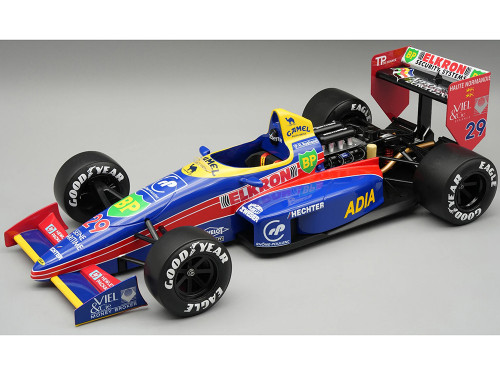
Lola Diecast Models
Lola is a historic British motorsport marque known for designing and building racing cars that competed in major international championships, including endurance racing, sports car racing, and open-wheel competition. For motorsport enthusiasts and diecast collectors, Lola race car models represent decades of competition-focused engineering, distinctive racing designs, and the pursuit of speed on some of the world's most demanding circuits.
The Lola category at Diecast Models Wholesale is for collectors interested in miniature replicas of Lola racing cars and the motorsport history behind them. Depending on current product availability, this category may include sports prototype racers, endurance racing cars, and other competition vehicles associated with the Lola name. These models can appeal to fans of historic racing, endurance events, classic motorsport liveries, and the engineering that distinguishes purpose-built race cars from road-going vehicles.
Lola models can be displayed individually as a favorite racing car or incorporated into a larger collection organized by manufacturer, racing series, era, or event. Their appeal often lies in the combination of aerodynamic bodywork, racing numbers, sponsor graphics, and technical details that capture the character of a particular competition car.
The History of Lola in Motorsport
The Origins of Lola Cars
Lola Cars was founded in the United Kingdom in 1958 by Eric Broadley. The company developed a reputation for building competitive racing chassis and working with teams and manufacturers across several forms of motorsport.
From its early years, Lola focused on specialized competition cars rather than ordinary road vehicles. Its engineering work covered a broad range of racing categories, helping establish the marque as a familiar name among teams competing in international events.
Lola's history is especially relevant to collectors because the company's cars appeared in different forms across several decades. Early racing designs, powerful sports prototypes, and later high-performance competition cars each reflect changing approaches to chassis construction, aerodynamics, and racing technology.
A Presence Across Different Racing Categories
Lola became known for producing cars for a wide variety of racing disciplines. Its designs competed in sports car and endurance racing, Formula 1, Formula 2, Formula 3000, Indy car racing, and other categories.
This breadth gives Lola an interesting place in motorsport collecting. Unlike a marque associated with only one type of racing vehicle, Lola's legacy includes open-wheel single-seaters as well as enclosed sports prototypes designed for long-distance competition.
The differences between these cars are easy to appreciate in miniature. Open-wheel racers feature exposed wheels and compact bodywork, while sports prototypes use enclosed cockpits and sculpted bodies designed to manage airflow and accommodate endurance-racing requirements.
Lola and Endurance Racing
Endurance racing has been an important part of Lola's motorsport story. These events challenge cars and teams to maintain speed and reliability over extended periods, often across changing light, weather, and track conditions.
Sports prototypes are purpose-built racing machines designed around performance, aerodynamics, chassis balance, and efficient packaging. Depending on the era and class, they may feature closed or open cockpits, prominent rear wings, low bodywork, and distinctive front-end designs.
For diecast collectors, endurance racing cars are particularly attractive because of their striking proportions and event-specific liveries. Racing numbers, team colors, sponsor markings, and details associated with a particular competition can help distinguish one model from another.
Notable Lola Racing Cars for Collectors
Lola T70
The Lola T70 is one of the marque's best-known sports racing cars. Introduced in the 1960s, it became closely associated with the Can-Am series and endurance racing. Its powerful V8 engine configurations, low stance, and broad bodywork gave it a distinctive appearance.
The T70 was produced in several versions, including open-top Spyder models and closed-cockpit coupés. This variety makes the T70 especially interesting to collectors, as different versions can look substantially different despite sharing the same model family.
The car's racing history includes a notable victory at the 1969 24 Hours of Daytona with drivers Mark Donohue and Chuck Parsons for Team Penske. A Lola T70 diecast model can be a centerpiece for a collection devoted to classic sports prototypes and the golden era of endurance racing.
Lola T600
The Lola T600 helped establish the marque in the ground-effect era of sports car racing in the early 1980s. Designed for IMSA GTP competition, it featured low bodywork and aerodynamic engineering intended to improve performance at speed.
Its wedge-shaped profile and long, low silhouette distinguish it from the rounded sports prototypes of earlier decades. The T600 is a compelling subject for collectors interested in the development of racing aerodynamics and the evolution of North American sports car competition.
Lola T290 and Related Sports Prototypes
Lola's T290 family and related sports prototypes competed in smaller-displacement sports car categories. Their compact proportions and open or low-profile bodywork offer a contrast to the larger endurance prototypes that followed.
Models representing these cars can suit collectors who want to explore racing beyond the best-known headline events. They also provide an opportunity to build a collection around a particular period, class, or style of sports prototype.
Lola Formula Racing Cars
Lola also built open-wheel racing cars for multiple formula categories. These single-seaters differ considerably from the company's enclosed sports prototypes, with exposed wheels, narrow cockpits, and bodywork designed around the requirements of circuit racing.
For collectors, Lola Formula racing models can complement sports car replicas and help represent the breadth of the marque's engineering work. When choosing a model, look for the specific chassis or racing series in the product description, since the Lola name covers a wide range of designs.
What to Consider When Buying Lola Diecast Models
A few practical details can help you choose a Lola model that suits your collection.
Racing Livery and Competition History
Lola race cars often appeared in distinctive team colors and sponsor liveries. The paint scheme may represent a specific team, driver, championship, or race entry.
If you collect models associated with particular motorsport events, compare the vehicle name, racing number, team markings, and year listed in the product details. Similar-looking cars can represent different versions or competition histories.
Scale and Display Space
Scale determines the approximate size of a miniature relative to the full-size vehicle. Diecast racing cars are available in different scales depending on the manufacturer and release. Common collectible car scales include 1:18, 1:24, 1:43, and 1:64, although not every Lola model will be offered in each scale.
A larger model can make bodywork and exterior details easier to appreciate, while smaller models make it practical to display multiple cars together. If you want to create a consistent grid of endurance racers or a lineup of historic competition cars, choosing a common scale can help the collection look cohesive.
Always check the listed scale and product dimensions when available, particularly if you are purchasing a model for a specific display cabinet or shelf.
Model Details and Construction
Features vary by manufacturer and individual release. Depending on the model, details may include painted racing numbers, sponsor graphics, cockpit elements, wheels, and other exterior features.
Review the product description to understand what is included and how the model is presented. Some models are designed primarily for display, so delicate components should be handled carefully.
Building a Themed Racing Collection
Lola models work well in several collecting themes:
-
Classic sports prototypes: Focus on cars such as the Lola T70 and other racers from the 1960s and 1970s.
-
Endurance racing: Collect sports prototypes associated with long-distance events and different racing eras.
-
IMSA and GTP history: Explore the evolution of purpose-built North American sports racing cars, including the Lola T600.
-
Open-wheel competition: Combine Lola single-seaters from different formula categories.
-
Team liveries and drivers: Choose models based on recognizable competition colors, racing numbers, or specific drivers.
These approaches can help collectors make informed choices and create a display with a clear theme rather than simply accumulating unrelated models.
Caring for Your Lola Diecast Collection
To preserve the finish and small details of a Lola diecast model, display it on a stable surface away from direct sunlight and excessive humidity. Dust gently with a soft brush or cloth, paying attention to wings, mirrors, wheel details, and other delicate parts.
Avoid lifting a model by its rear wing, mirrors, or other fragile components. If the model includes a stand or special packaging, follow the product's handling instructions. Retaining the original box can also be useful for storage and protection when moving or reorganizing your collection.
For a multi-car display, consider arranging models by racing era, scale, or competition category. The contrast between a classic Lola T70 and a later aerodynamic prototype can help tell the story of changing motorsport design.
Explore Lola Diecast Models at Diecast Models Wholesale
From the legendary Lola T70 to later sports prototypes and open-wheel racers, Lola's motorsport heritage offers plenty of inspiration for racing enthusiasts. These models can add character to a collection focused on endurance racing, historic competition cars, or the engineering evolution of motorsport.
Browse the Lola category at Diecast Models Wholesale to discover available models and find a racing car that fits your interests. Check each product's description for its scale, model designation, racing livery, and other details to choose the right addition to your collection.