Dallara diecast models represent the work of one of Italy's most important modern racing-car constructors and engineering companies. Founded in 1972 by Giampaolo Dallara, the company grew from a small operation in Varano de' Melegari, Italy, into a major force in open-wheel racing, endurance racing, automotive engineering, and high-performance road cars.
The Dallara category at DiecastModelsWholesale.com is intended for collectors looking for Dallara scale model cars, including racing prototypes, open-wheel single-seaters, Indy cars, Formula cars, and road-going Dallara automobiles. Depending on the available models, collectors may encounter subjects associated with Formula 3, Formula 2, IndyCar, Indy NXT, Super Formula, Le Mans endurance racing, and the Dallara Stradale.
Dallara is particularly interesting to motorsport collectors because its name is often found on the cars themselves rather than simply being associated with an engine supplier or technical partner. The company has designed and built complete racing chassis for many of the world's most important racing categories.
Giampaolo Dallara and the Beginning of Dallara Automobili
The story of Dallara begins with Giampaolo Dallara, an aeronautical engineer who developed his interest in race-car design while working for some of Italy's most famous automotive manufacturers. He began his professional career at Ferrari in 1959 before later working at Maserati and Lamborghini. In 1972, he founded his own company, Dallara Automobili.
The company's first vehicle was the SP1000, a three-seat car with a steel monocoque and central driving position. Although the company would become far better known for racing cars, its origins demonstrate the engineering philosophy that continues throughout Dallara's history: combining structural efficiency, aerodynamics, vehicle dynamics, and lightweight construction.
For collectors, this early history provides useful context for understanding why Dallara models tend to be associated so strongly with competition cars and advanced chassis engineering.
Dallara and Formula 3
One of Dallara's earliest major successes came in Formula 3. The company's Dallara 378 was introduced in 1978 and became an important step in establishing Dallara as a specialist constructor in open-wheel racing.
Over the following decades, Dallara became deeply involved in junior single-seater racing. Its Formula 3 chassis became widely used internationally, helping young drivers progress through the racing ladder.
This makes Dallara Formula 3 diecast models particularly appealing to collectors interested in driver development and the history of single-seater racing. A Dallara F3 model can also represent a specific championship, team, driver, or racing season, making the livery and race number important parts of the model's identity.
Dallara Formula 2 and the Road to Formula 1
Dallara's expertise in single-seater construction eventually extended into higher levels of open-wheel racing. Today, Dallara is the sole chassis constructor for Formula 2 and Formula 3, as well as IndyCar, Indy NXT, and Super Formula.
Formula 2 occupies a particularly important position in the modern racing ladder because it provides drivers with experience in high-performance cars before many progress toward Formula 1.
Dallara also has a direct connection with Formula 1. The company engineered and constructed cars for Haas F1 Team, demonstrating how its expertise in aerodynamics, composites, vehicle dynamics, and race-car construction extends into the highest level of international single-seater racing.
For collectors, Dallara Formula cars offer an opportunity to follow the evolution of open-wheel technology across multiple levels of competition.
Dallara IndyCar Models
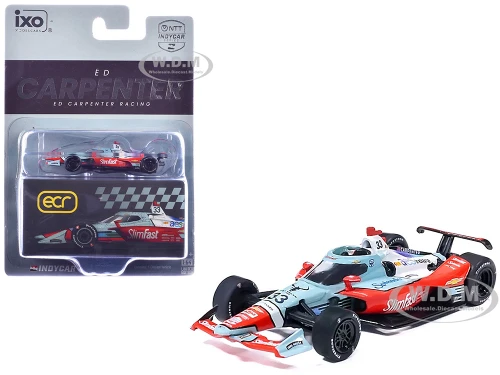
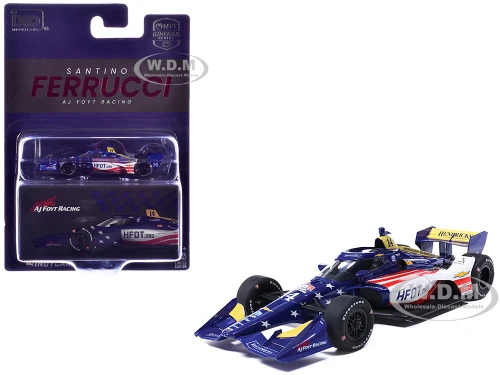
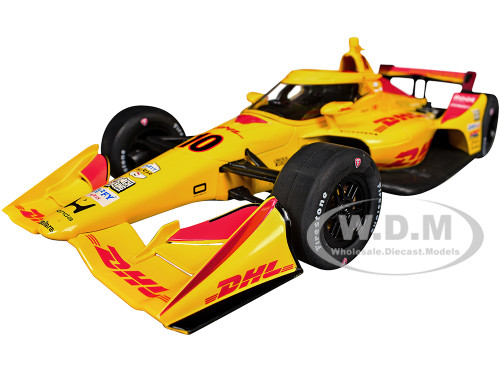
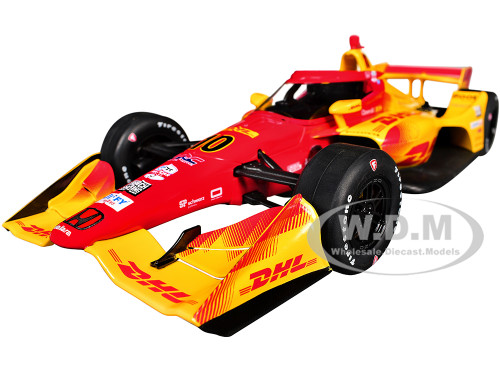
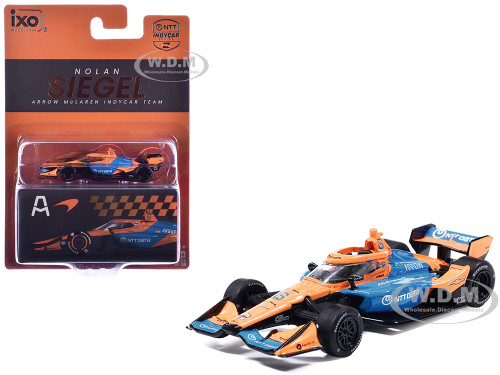
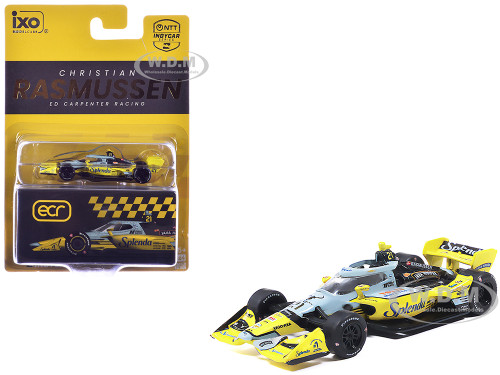
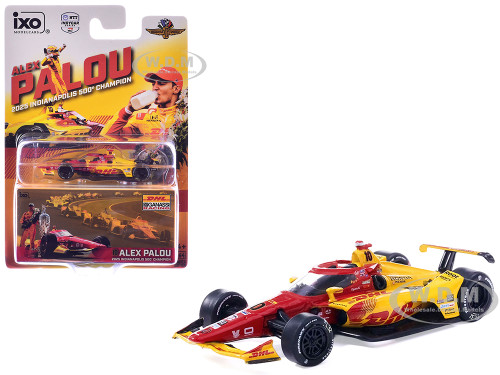
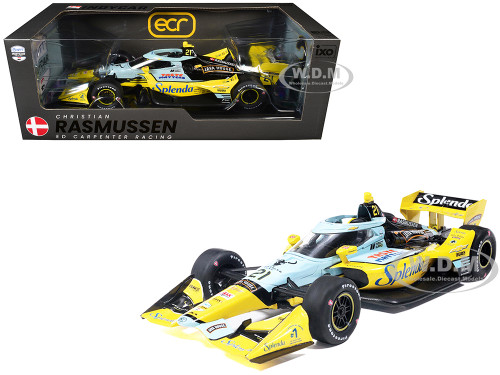
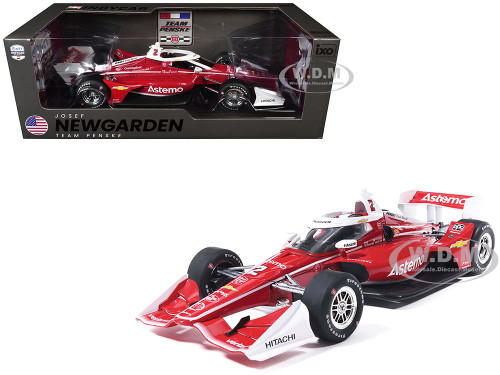
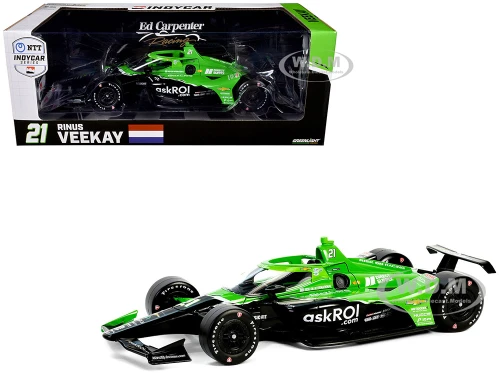
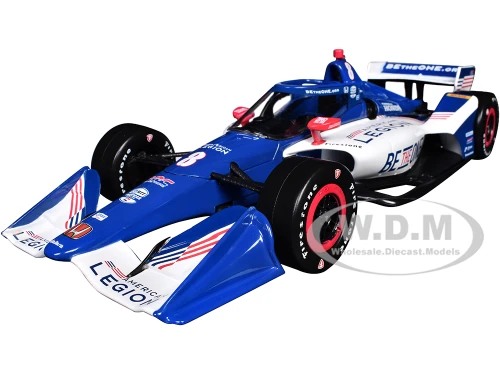
Dallara has an especially important place in American open-wheel racing. The company became the sole chassis supplier for the IndyCar Series, and Dallara-built cars have competed in the Indianapolis 500 and the wider IndyCar championship for decades.
Dallara's first Indianapolis 500 victory came in 1998, an important milestone in the company's international expansion. The manufacturer subsequently became one of the most successful constructors in the history of the race.
The company's relationship with American racing also led to the establishment of the Dallara IndyCar Factory in Indianapolis, where Indy cars are assembled and where visitors can learn about the engineering and construction of racing vehicles.
Collecting Dallara Indy Cars
Dallara IndyCar models can be especially interesting when collected by:
- Indianapolis 500 year
- Driver
- Racing team
- Car number
- IndyCar generation
- Championship season
- Race-winning livery
- Specific Indianapolis 500 entry
A model representing a particular Indy 500-winning car can become a centerpiece in a collection of American open-wheel racing models.
Dallara and Endurance Racing
Dallara's expertise is not limited to open-wheel cars. The company has also been involved in endurance racing and Le Mans prototypes, contributing to some of the most technically sophisticated racing cars in modern motorsport. Dallara's own history highlights its work on Le Mans prototypes alongside its Formula and IndyCar programs.
Dallara's racing activities have included the 24 Hours of Le Mans, 24 Hours of Daytona, 12 Hours of Sebring, and other major endurance events.
This part of the company's history is particularly attractive to collectors who prefer closed-cockpit prototypes and endurance racing rather than traditional open-wheel cars.
Dallara-related endurance models can also be displayed with other Le Mans prototypes to create a race-specific collection representing the technical diversity of endurance racing.
Dallara and Advanced Composite Technology
A major part of Dallara's success has been its use of lightweight composite materials and advanced aerodynamic engineering.
In 1985, the Dallara F385 became the company's first carbon-fiber monocoque. Carbon-fiber construction had already been used by some Formula 1 teams, but its adoption by Dallara helped establish the company's reputation for advanced lightweight racing structures.
Dallara also invested heavily in wind-tunnel technology. The company built its first moving-belt wind tunnel in 1984 and later developed additional facilities capable of testing scale models at increasingly sophisticated levels.
These developments are useful for collectors because they help explain the distinctive appearance of many Dallara racing cars: extremely low bodywork, exposed aerodynamic surfaces, compact cockpits, wings, diffusers, and carefully shaped aerodynamic components.
Dallara Stradale
While Dallara is primarily associated with racing, the company eventually applied its motorsport experience to a road-legal sports car.
The Dallara Stradale was introduced in 2017 as a road-approved performance car that brought together the company's experience in aerodynamics, vehicle dynamics, and composite materials.
Unlike a conventional grand touring sports car, the Stradale was designed around the philosophy of a lightweight, highly focused driver's car. Its carbon-fiber structure and aerodynamic design reflect Dallara's racing background.
The Stradale is offered in different configurations, including coupe, spider, and barchetta-style forms. The current model uses a turbocharged four-cylinder engine and can be configured with different aerodynamic packages.
Why the Dallara Stradale Is Important to Collectors
The Stradale is an especially interesting subject for a Dallara model collection because it represents the transition from race-car constructor to road-car manufacturer.
Collectors interested in the Stradale may want to look for models representing:
- Dallara Stradale
- Stradale Coupe
- Stradale Spider
- Stradale Barchetta
- Stradale with aerodynamic packages
- Dallara EXP
The road car also provides a visual contrast to Dallara's open-wheel and endurance prototypes.
Dallara EXP
The Dallara EXP takes the Stradale concept further toward track-focused performance. It incorporates a carbon-fiber chassis, barchetta bodywork, advanced aerodynamics, and a more powerful engine configuration. Dallara describes the EXP as an extreme evolution of the Stradale designed around racing-derived performance.
For collectors, an EXP model can therefore complement a Stradale while showing how Dallara's road-car program remains closely connected to its racing expertise.
What to Look for When Collecting Dallara Models
Dallara models can represent very different periods and types of motorsport, so identifying the exact car is important.
Collectors may want to look for:
- Dallara Formula 3 cars — representing junior single-seater racing
- Dallara Formula 2 cars — modern international open-wheel competition
- Dallara IndyCar models — Indianapolis 500 and IndyCar history
- Dallara Indy NXT cars — the development series for future IndyCar drivers
- Dallara Super Formula cars — Japanese top-level single-seater racing
- Dallara Le Mans prototypes — endurance-racing history
- Dallara Stradale — Dallara's road-going sports car
- Dallara EXP — an extreme track-focused evolution of the Stradale
- Specific driver and team liveries — useful for race-season collections
Race number, driver, team, championship, and season can all be important when comparing similar-looking Dallara models.
Scale and Display Considerations
Dallara models are produced in a variety of scales depending on the racing category and manufacturer. Collectors may encounter 1/18, 1/43, and 1/64 models, among other scales.
1/18 scale is particularly effective for collectors who want to appreciate the aerodynamic details of an IndyCar, Formula car, or Dallara Stradale. Larger models can showcase wings, suspension components, cockpit details, wheels, and bodywork more clearly.
1/43 scale is a practical choice for collectors building larger motorsport displays. It allows multiple cars from different championships or racing seasons to be displayed together without requiring excessive space.
When purchasing a Dallara model, check the individual product specifications for:
- Exact Dallara model or chassis
- Racing category
- Season or year
- Driver
- Team
- Car number
- Scale
- Manufacturer
- Materials
- Dimensions
- Display stand or accessories
This information is particularly important for race cars because a single chassis design may have been used by numerous teams and drivers with completely different liveries.
Building a Dallara Motorsport Collection
Dallara offers collectors an opportunity to build a collection around the development of modern race-car engineering.
One approach is to collect by racing category, such as IndyCar, Formula 2, Formula 3, or endurance racing. Another is to follow a particular driver's career through different Dallara-built cars.
A chronological display can also be effective, beginning with early Dallara Formula 3 cars and progressing through later carbon-fiber single-seaters, IndyCar and endurance prototypes, and finally the Dallara Stradale.
Because Dallara has participated in so many forms of motorsport, the models can also be displayed alongside Ferrari, Lamborghini, Porsche, Honda, Toyota, Cadillac, BMW, and other manufacturers whose racing programs have intersected with Dallara engineering.
Find Dallara Diecast Models
From its beginnings in a small Italian workshop to its role in IndyCar, Formula 2, Formula 3, Super Formula, endurance racing, and high-performance road cars, Dallara has built a distinctive place in motorsport history.
Browse the Dallara diecast collection at DiecastModelsWholesale.com to explore available scale models and find a Dallara racing car or road car for your collection, whether your interests center on the Indianapolis 500, open-wheel racing, Le Mans, or Italian performance-car engineering.










 $74.99


