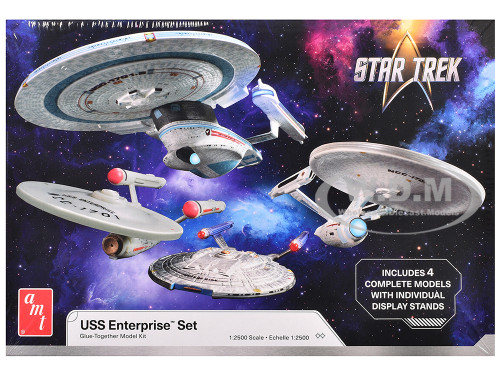
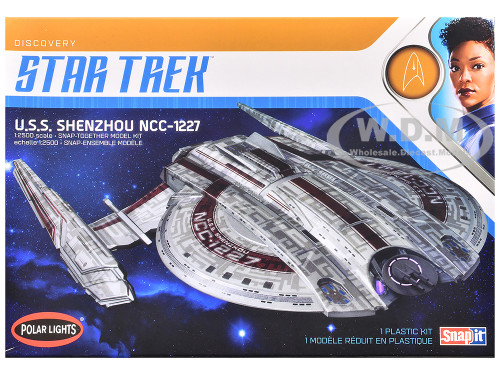
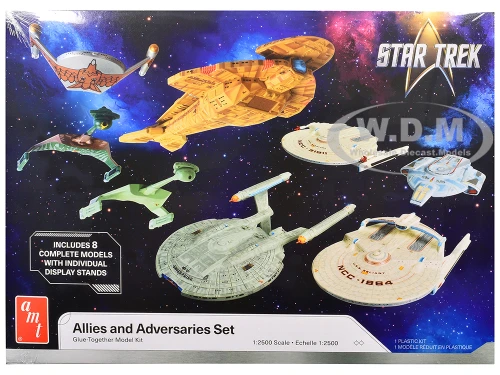
1/2500 scale diecast models are highly compact scale collectibles designed to represent large real-world subjects in a very small display format. At a ratio of 1:2500, every 2,500 units of the real prototype are represented by one unit on the model. This makes 1/2500 particularly useful for large ships, aircraft, transportation subjects, and other sizable prototypes where collectors want to minimize display space.
At this scale, a 2,500-foot prototype would measure approximately 12 inches on the model. A 1,000-foot vessel would be about 4.8 inches, while a 500-foot prototype would be approximately 2.4 inches long. The result is a specialized miniature format that allows collectors to represent very large subjects as compact display pieces.
Understanding 1/2500 Scale
Scale is the proportional relationship between a model and its full-size prototype. A 1/2500 model is one twenty-five-hundredth of the prototype's corresponding dimensions.
The scale is particularly effective for large subjects. An aircraft carrier, ocean liner, large commercial vessel, or other substantial prototype can be represented in only a few inches, making it possible to display subjects that would require considerably more room in larger scales.
Approximate length examples include:
| Prototype Length | Approximate 1/2500 Model Length |
|---|
| 2,500 feet |
12 inches |
| 2,000 feet |
9.6 inches |
| 1,500 feet |
7.2 inches |
| 1,250 feet |
6 inches |
| 1,000 feet |
4.8 inches |
| 800 feet |
3.8 inches |
| 700 feet |
3.4 inches |
| 600 feet |
2.9 inches |
| 500 feet |
2.4 inches |
| 300 feet |
1.4 inches |
| 200 feet |
1 inch |
| 100 feet |
0.5 inch |
These measurements are approximate and refer to prototype length rather than the exact finished dimensions of an individual model.
What You May Find in the 1/2500 Category
The 1/2500 scale is uncommon and specialized, so available subjects can vary. Depending on current product availability, shoppers may find miniature representations of:
- Large ships and vessels
- Aircraft carriers
- Naval and military subjects
- Commercial and passenger ships
- Ocean liners
- Large aircraft
- Aviation and transportation subjects
- Historical prototypes
- Other specialized large-scale subjects
Because 1/2500 is not a mainstream diecast ratio across every vehicle category, the specific products available are an important part of the appeal. Collectors should review individual product specifications for the exact subject, dimensions, material, manufacturer, and included display accessories.
Why Use Such a Small Scale?
The main advantage of 1/2500 scale is display efficiency.
Large ships and aircraft can become difficult to accommodate in larger scales. At 1/700, for example, a 1,000-foot prototype would be approximately 17.1 inches long. At 1/2500, that same prototype would be only about 4.8 inches.
This difference can have a major impact on a collection.
A collector interested in fleets, multiple ships, different aircraft types, or historical subjects can potentially display many models in the space that would otherwise be required for just a few larger models.
The scale can therefore be particularly appealing to collectors who:
- Have limited shelf or cabinet space
- Prefer collections with many subjects
- Collect fleets or groups of related prototypes
- Focus on large ships or aircraft
- Enjoy miniature displays
- Collect unusual or specialized scales
1/2500 Ship and Maritime Models
Large ships are a natural application for extremely compact scales. At 1/2500, even substantial vessels can be reduced to manageable display sizes.
Depending on current availability, maritime subjects may include aircraft carriers, battleships, cruisers, destroyers, submarines, passenger ships, ocean liners, commercial vessels, or historical ships.
A collection can be organized around:
- Individual navies
- Historical periods
- Ship classes
- Aircraft carriers
- Major warships
- Commercial shipping
- Ocean liners
- Passenger vessels
- Maritime history
- Specific countries or fleets
The scale is especially useful when the goal is to show a large number of ships together. A collector can potentially create a fleet-style display without requiring the extensive shelf space associated with larger ship-model scales.
Naval and Military Collecting
For military collectors, compact ship models can provide a practical way to represent an entire fleet or compare different classes of vessels.
A collection might include an aircraft carrier alongside cruisers, destroyers, submarines, amphibious ships, and support vessels. Keeping the models at a consistent scale allows the relative size of the different prototypes to remain meaningful.
At this scale, the overall silhouette and major features become particularly important. Collectors should not expect the same level of visible fine detail found on many larger-scale models. Instead, 1/2500 emphasizes compact representation, recognizable design, and the ability to display multiple subjects together.
Commercial Ships and Ocean Liners
The appeal of 1/2500 is not limited to military subjects.
Large passenger ships, ocean liners, cargo vessels, tankers, and other commercial ships can also make interesting compact collectibles. A collector interested in maritime transportation can use the scale to represent different generations of vessels without dedicating substantial display space to each model.
For ocean-liner collections, a compact scale can be particularly practical. Famous vessels can be displayed together, making it easier to compare their relative sizes and designs.
A commercial maritime collection can also be organized by shipping company, vessel type, historical era, or individual ship.
1/2500 Aircraft Models
Although 1/2500 is especially useful for large ships, highly compact scales can also represent aircraft and other large transportation subjects depending on product availability.
For aviation collectors, the scale can provide an opportunity to display large aircraft without the footprint of larger aircraft scales. This can be useful for collections focused on airline fleets, military aviation, transport aircraft, or historically significant aircraft.
Because aircraft dimensions vary significantly by type, shoppers should check the listed product dimensions rather than assuming that all 1/2500 aircraft will have the same physical size.
Comparing 1/2500 With Other Scales
Scale comparisons are particularly important when working with uncommon compact scales.
A 1/2000 model is 25% larger linearly than a 1/2500 model. A 1/1200 model is approximately 108.3% larger, meaning it is slightly more than twice the linear dimensions of a 1/2500 model.
Other comparisons are even more substantial:
- 1/1000 is 150% larger linearly than 1/2500.
- 1/700 is approximately 257% larger linearly.
- 1/500 is 400% larger linearly.
- 1/400 is 525% larger linearly.
For a 1,000-foot prototype:
| Scale | Approximate Model Length |
|---|
| 1/2500 |
4.8 inches |
| 1/2000 |
6 inches |
| 1/1250 |
9.6 inches |
| 1/1200 |
10 inches |
| 1/1000 |
12 inches |
| 1/700 |
17.1 inches |
| 1/500 |
24 inches |
| 1/400 |
30 inches |
This illustrates why 1/2500 can be valuable for very large prototypes and space-conscious displays.
Building a 1/2500 Collection
Because 1/2500 is an uncommon scale, collectors should pay particular attention to product specifications when expanding a collection.
Verify the Exact Scale
Always confirm the listed ratio before purchasing. A model described simply as a "small scale" collectible may not be 1/2500.
Consider the Prototype
The real-world dimensions of the subject are the best starting point for estimating the model's physical size. A 1/2500 model of a large ship can still be substantially longer than a model representing a much smaller vessel.
Plan the Display
The compact nature of the scale makes it possible to create broad collections, but models should still have enough space around them for safe handling and viewing.
Maintain Scale Consistency
If the goal is a dedicated 1/2500 collection, maintaining the same scale provides the most accurate visual comparison. Collectors primarily interested in particular subjects may choose to combine nearby scales when a desired prototype is unavailable in 1/2500.
Displaying 1/2500 Scale Models
The extremely small footprint of 1/2500 models makes them suitable for a variety of display arrangements.
A maritime collection can be arranged as a fleet, grouped by navy, ship class, or historical era. Commercial vessels can be organized by shipping line or vessel type. Aircraft can be grouped by airline, aircraft family, or period.
For larger collections, a display case with multiple levels can help separate groups while allowing many models to remain visible. Smaller models can also be useful for creating miniature fleet scenes or transportation displays.
Because highly compact models can contain delicate components, collectors should take care when moving and cleaning them. Fine details may include masts, antennas, aircraft, landing gear, radar equipment, or other small features depending on the subject.
1/2500 Scale for Collectors
The appeal of 1/2500 scale is less about maximum physical detail and more about compact representation and collection-building potential.
It allows very large prototypes to become manageable miniatures and makes it possible to display many subjects together. This can be particularly valuable for collectors who enjoy fleets, aviation groups, maritime history, or specialized scale collecting.
For collectors who have limited space but want a broad representation of large ships and other substantial prototypes, 1/2500 provides an interesting alternative to larger display scales.
Find 1/2500 Scale Diecast Models
Whether you are building a miniature fleet, collecting large ships, exploring aviation and transportation subjects, or simply looking for highly compact scale collectibles, 1/2500 offers a distinctive approach to collecting.
Browse the available 1/2500 scale diecast models at DiecastModelsWholesale.com and discover compact collectibles that can bring large real-world subjects into your display.