Explore Thunderbirds collectibles inspired by the classic British science-fiction television series created by Gerry and Sylvia Anderson. First broadcast in 1965, Thunderbirds introduced audiences to International Rescue, a secret organization that uses advanced vehicles and technology to save people from dangerous situations around the world. Combining futuristic engineering, daring rescue missions, and distinctive vehicle designs, the series became a lasting favorite among science-fiction fans, model collectors, and generations of television viewers.
The Thunderbirds category at Diecast Models Wholesale is for collectors and fans looking for merchandise inspired by the series and its memorable machines. The program is especially well known for its futuristic aircraft, spacecraft, rescue vehicles, and specialized equipment. Depending on current availability, collectibles may include miniature vehicles or other items connected to the Thunderbirds universe. Check individual product listings for confirmed details about the manufacturer, scale, materials, features, and included accessories.
Whether you grew up watching the original television series, discovered its vehicles through later adaptations, or enjoy collecting science-fiction models, Thunderbirds offers a distinctive combination of retro-futuristic design, imaginative technology, and classic television history.
The History of Thunderbirds
The original television series
Thunderbirds premiered in 1965 and was produced by Gerry Anderson and Sylvia Anderson. It used Supermarionation, a distinctive production technique developed for Anderson's television programs that combined detailed puppet characters with elaborate miniature sets, vehicles, and special effects.
The series follows the Tracy family, whose members operate International Rescue from a secret base. When disasters occur, the organization deploys specialized machines designed for particular missions, from transporting personnel and equipment to reaching people trapped in dangerous environments.
The original series is remembered for its ambitious action sequences, intricate miniature models, futuristic machinery, and stories built around rescue operations. Rather than relying exclusively on conventional superhero battles, Thunderbirds often focused on engineering, teamwork, problem-solving, and the challenges of responding to emergencies.
These elements have helped the series retain its appeal long after its original broadcast. For collectors, the vehicles are among its most enduring features, combining fictional technology with design details that evoke the optimism and futuristic imagination of the 1960s.
A lasting science-fiction legacy
Thunderbirds has continued through feature films, later television productions, revivals, merchandise, and anniversary-related releases. The franchise's recognizable vehicles have become important parts of its identity, often appealing to fans even when they are unfamiliar with every episode.
Collectors may be interested in several aspects of the franchise:
-
Classic television nostalgia: Memorabilia connected to the original 1960s series.
-
Science-fiction vehicles: Distinctive fictional aircraft, spacecraft, and rescue machines.
-
Miniature engineering: Detailed models inspired by the show's practical effects and elaborate vehicle designs.
-
Television history: Collectibles associated with an influential British science-fiction production.
-
Retro-futuristic design: Machines that reflect the period's imaginative vision of future technology.
These different interests make Thunderbirds a versatile collecting theme for fans of classic television, aviation-inspired design, science fiction, and miniature vehicles.
The Iconic Thunderbirds Vehicles
One of the main attractions of the franchise is its collection of specialized machines. Each Thunderbird serves a different purpose, giving the series a varied assortment of memorable designs. For model collectors, this creates opportunities to focus on a favorite vehicle or assemble a broader representation of International Rescue.
Thunderbird 1: Rapid Response Aircraft
Thunderbird 1 is a sleek, supersonic aircraft piloted by Scott Tracy. It is designed to reach emergencies quickly, assess the situation, and coordinate the arrival of additional International Rescue resources.
Its long, streamlined fuselage and pointed profile distinguish it from the larger rescue craft in the series. Thunderbird 1 is frequently associated with the beginning of a mission, as it arrives first to investigate the emergency and establish what assistance is needed.
For collectors, Thunderbird 1 represents the high-speed aviation side of the franchise. Its futuristic proportions make it recognizable even when reproduced as a small-scale display model.
Thunderbird 2: Heavy Transport Aircraft
Thunderbird 2 is piloted by Virgil Tracy and serves as International Rescue's primary transport aircraft. Its large body and interchangeable equipment pods allow it to carry specialized vehicles and tools to the scene of an emergency.
The aircraft's distinctive shape and green color scheme make it one of the franchise's best-known designs. Its role also makes it particularly interesting to collectors who appreciate transport aircraft, fictional engineering, and vehicles designed around practical missions.
Thunderbird 2 often carries the equipment required for a rescue, emphasizing the series' focus on teamwork and specialized technology. A model of this aircraft can be a natural centerpiece in a Thunderbirds collection because of its recognizable design and importance to the stories.
Thunderbird 3: Space Rescue Vehicle
Thunderbird 3 is a spacecraft piloted primarily by Alan Tracy, with other Tracy brothers participating in space missions. Its tall, rocket-like shape reflects its role in transporting personnel into space and supporting operations beyond Earth.
The spacecraft adds a different dimension to the franchise's vehicle lineup. While Thunderbird 1 and Thunderbird 2 are associated with atmospheric flight and terrestrial rescue operations, Thunderbird 3 represents the series' imaginative approach to space exploration.
For science-fiction collectors, Thunderbird 3 is an appealing example of retro-futuristic spacecraft design. Its unusual proportions also make it visually distinct when displayed alongside the franchise's aircraft and ground vehicles.
Thunderbird 4: Underwater Rescue Submarine
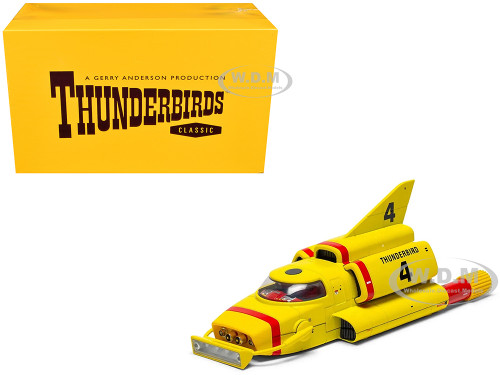
Thunderbird 4 is a compact yellow submarine piloted by Gordon Tracy. It is designed for underwater rescue operations and other missions requiring access beneath the surface.
Its bright color and compact shape contrast with the larger aircraft in the series. Thunderbird 4 demonstrates how International Rescue's equipment is tailored to different environments, including the ocean.
Collectors interested in submarines, underwater exploration, and specialized rescue equipment may find this vehicle particularly appealing. Its compact design also offers a different display option from the franchise's larger aircraft.
Thunderbird 5: Space Monitoring Station
Thunderbird 5 is an orbital space station operated primarily by John Tracy, with Alan also taking on monitoring duties in the series. Its main function is to monitor communications and detect emergencies around the world, helping International Rescue respond to requests for assistance.
Unlike the mobile rescue craft, Thunderbird 5 is a space-based monitoring facility. It represents the communications and coordination side of the organization, reminding viewers that successful rescue operations depend on information as well as advanced vehicles.
For collectors, Thunderbird 5 expands the theme beyond conventional vehicles to include space technology and fictional infrastructure.
Other Machines and Equipment in the Thunderbirds Universe
In addition to the five primary Thunderbirds, the series features an assortment of support vehicles, specialized equipment, and machines designed for individual rescue missions. These designs help create the impression of a fully developed technological world.
The franchise includes vehicles associated with land transport, construction, exploration, and emergency response. Their functions often depend on the challenge facing International Rescue, with equipment selected to reach difficult locations or carry out a specialized task.
This variety can be especially appealing to collectors who enjoy more than aircraft or spacecraft. A Thunderbirds display can include different vehicle types and highlight the range of engineering ideas represented in the series.
Availability varies, so do not assume that every Thunderbird, support vehicle, or piece of equipment is currently offered. Review the current category listings to identify the specific designs available for purchase.
Why Thunderbirds Models Appeal to Collectors
Thunderbirds models bring together several collecting interests: classic television, science-fiction design, aviation, spacecraft, and miniature engineering. The vehicles are fictional, but their designs often communicate a clear function through their shapes, equipment, and proportions.
Distinctive vehicle designs
Each Thunderbird has a recognizable silhouette and role. This makes the vehicles easy to distinguish in a collection and gives fans a reason to collect more than one. Their designs also provide visual variety, from streamlined aircraft to heavy transport machines and compact submarines.
Nostalgia and television history
For viewers who remember the original series, Thunderbirds models can recall favorite episodes, rescue missions, and memorable scenes. For newer fans, the vehicles offer a way to explore a classic science-fiction franchise through its most recognizable designs.
Science-fiction and engineering themes
The series imagines machines built to address specific challenges. Collectors who appreciate futuristic technology can enjoy examining how each vehicle's design reflects its fictional purpose. This interest can complement collections of spacecraft, aircraft, military-inspired miniatures, and other science-fiction vehicles.
Display and collection building
Thunderbirds collectibles can be displayed individually or as part of a larger themed arrangement. Some collectors focus on their favorite vehicle, while others aim to represent the entire International Rescue lineup.
Before purchasing, consider the available shelf space and the size of the item. If you want several vehicles to sit together, comparing their dimensions and scales can help create a balanced display.
Choosing Thunderbirds Diecast Models and Collectibles
When shopping for Thunderbirds models, review the individual product details rather than relying solely on the vehicle name or a general franchise description.
Scale and dimensions
Scale describes the relationship between a model's size and the size of the object it represents. For example, a 1:64 scale model is smaller than a 1:32 scale version of the same vehicle.
Thunderbirds vehicles have different fictional dimensions, so models of the various craft will not necessarily share the same physical size even when produced at the same scale. Check both the stated scale and the actual product dimensions when planning a display.
Not every vehicle is available in every scale, and a product's scale should be confirmed in its listing.
Construction and detail
Depending on the specific item, construction may include diecast metal, plastic, or a combination of materials. The level of detail can vary, from simple display models to more elaborate miniatures.
Collectors may wish to examine:
-
Exterior paint and color accuracy.
-
Shape and proportions of the vehicle.
-
Molded or separately fitted components.
-
Landing gear, stands, or other display features, when included.
-
Packaging and any accompanying accessories.
Product photographs and descriptions should be used to establish the features of the particular item. Do not assume that a model has moving parts, lights, sound, or other functions unless the listing explicitly confirms them.
Packaging and condition
Collectors who preserve items in their original packaging may want to consider the box design and how the product is presented. Other fans prefer to display models outside their boxes so the vehicles can be viewed from different angles.
If packaging or included accessories are important to your purchase, review the product details and photographs carefully. Features can vary across releases and manufacturers.
Thunderbirds Collectibles as Gifts
Thunderbirds merchandise can make a thoughtful gift for fans of classic British television, science fiction, aviation, and imaginative vehicle design. Its combination of nostalgia and distinctive machines appeals to both longtime viewers and collectors who appreciate retro-futuristic models.
When choosing a gift, consider the recipient's favorite Thunderbird or the type of collectible they enjoy most. Someone interested in aircraft may gravitate toward Thunderbird 1 or Thunderbird 2, while a science-fiction enthusiast may prefer Thunderbird 3 or the orbital setting of Thunderbird 5. These are themes to consider rather than a guarantee that every vehicle is currently available.
It is also worth checking the item's dimensions, materials, and packaging. If the recipient already owns Thunderbirds models, comparing the product details with their collection can help you select a compatible addition.
Build Your Thunderbirds Collection
The enduring appeal of Thunderbirds lies in its combination of memorable rescue stories, inventive machinery, and a distinctive vision of the future. From Thunderbird 1's rapid-response missions to Thunderbird 2's transport capabilities, Thunderbird 3's space travel, Thunderbird 4's underwater operations, and Thunderbird 5's orbital monitoring role, each machine contributes something different to the fictional world of International Rescue.
Explore the available Thunderbirds collectibles at Diecast Models Wholesale to find models and memorabilia inspired by this classic science-fiction franchise. Review each product listing for confirmed specifications, scale, and included features, then choose the items that best suit your interests, display plans, or gift-giving needs.