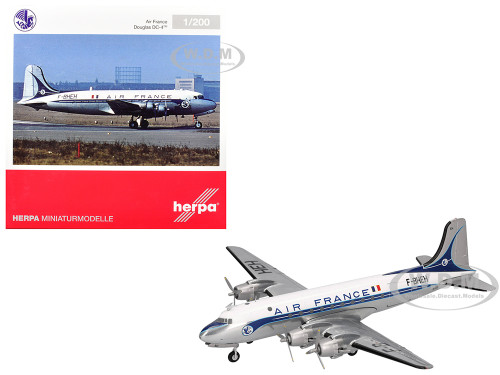
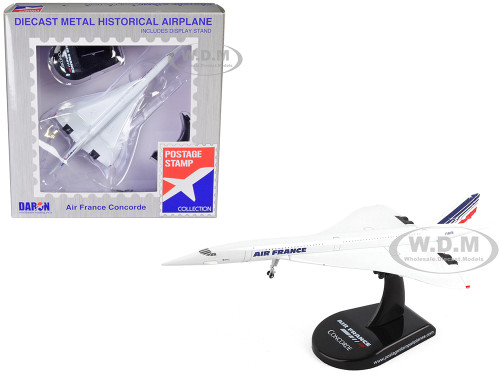
Air France is one of the world's most recognizable airlines, known for its French identity, international route network, and long association with the development of commercial aviation. Its aircraft have connected Paris with destinations across Europe, the Americas, Asia, Africa, and beyond, making the airline a significant subject for aviation enthusiasts and collectors of airline memorabilia.
Air France Airlines diecast models allow collectors to celebrate the carrier's history through miniature representations of passenger aircraft and its distinctive liveries. Depending on current availability, this category may include scale airplane models depicting different aircraft types, eras, and Air France paint schemes. Product selection can change, so shoppers should review each listing for the exact aircraft, scale, materials, finish, and included accessories.
Whether you collect modern passenger jets, classic airliners, European airline liveries, or historically significant aircraft, Air France models can add a recognizable French carrier to your display. They can also make thoughtful gifts for aviation enthusiasts, travelers, and collectors with an interest in French history or international air travel.
The History of Air France
Air France was established in 1933 through the consolidation of several French aviation companies. The new airline brought together existing routes, aircraft, and operating experience at a time when commercial aviation was expanding and air travel was becoming increasingly important for international communication and transportation.
Paris became the airline's central hub, linking France with destinations across Europe and other parts of the world. In its early decades, Air France operated a variety of aircraft as aviation progressed from propeller-driven passenger planes to larger and faster airliners. Advances in aircraft engineering, navigation, and airport infrastructure gradually made longer journeys more practical and helped airlines serve growing numbers of passengers.
The introduction of jet aircraft transformed Air France's operations. The Boeing 707 became part of the airline's jet-era development, while later fleets included aircraft such as the Boeing 747, Airbus A300, Airbus A320 family, Airbus A330, and Boeing 777. These aircraft represented different stages in commercial aviation, from the expansion of intercontinental jet travel to the development of modern, more efficient passenger aircraft.
Air France also played a major role in supersonic passenger aviation. The airline was one of the two commercial operators of Concorde, alongside British Airways. Concorde entered scheduled passenger service in 1976, offering a distinctive high-speed travel experience on selected routes. Its delta-wing design, slender fuselage, and association with premium transatlantic travel have made it one of the most celebrated aircraft in aviation history.
In 2004, Air France and KLM combined their businesses under the Air France-KLM group while continuing to operate as separate airline brands. Air France subsequently continued developing its international network and fleet, with Paris Charles de Gaulle serving as its principal hub. The airline is also a founding member of the SkyTeam airline alliance, established in 2000.
For collectors, Air France's long history provides opportunities to explore several generations of aircraft and airline branding. A display that includes classic jetliners, iconic supersonic aircraft, and contemporary passenger jets can illustrate the changing technology and style of international aviation.
Air France's Distinctive Airline Livery
Air France aircraft are recognizable for their elegant branding and long-standing association with French national identity. The airline's liveries have evolved over the decades, but blue, white, and red elements have remained important to its visual identity.
The modern livery features a predominantly white fuselage, dark blue lettering, and a red accent near the tail. The blue, white, and red palette reflects the colors of the French flag, while the stylized Air France wordmark gives the aircraft a clean, contemporary appearance. Earlier liveries used different arrangements of stripes, tail colors, and lettering, making historical versions particularly interesting to airline model collectors.
For collectors, livery is more than decoration. It helps identify an aircraft's airline, approximate era, and sometimes the special occasion or partnership it represents. Air France models can therefore be collected by aircraft type, historical period, or paint scheme.
When choosing an Air France scale airplane, consider:
-
Livery and branding: Examine the tail design, lettering, logo placement, and colors.
-
Aircraft variant: Check the exact model designation, particularly when choosing among different versions of the same aircraft family.
-
Historical accuracy: If you are recreating a particular period, compare the aircraft type and livery with the era you want to represent.
-
Scale and dimensions: Make sure the model will fit your display and work with other aircraft in your collection.
-
Materials and construction: Check whether the model is made primarily from diecast metal, plastic, or a combination of materials.
-
Included accessories: Confirm whether a display stand, landing gear, or other components are included.
Not every Air France model represents the same period or configuration. If you collect aircraft by registration, historical livery, or specific variant, rely on the individual product description and images to confirm the details.
Notable Air France Aircraft for Collectors
Air France has operated aircraft from several major manufacturers throughout its history. Each type represents a different stage in commercial aviation and offers a distinctive subject for a scale model collection.
Concorde
Concorde is one of the most iconic aircraft associated with Air France. Developed through a British-French collaboration, it was designed for supersonic passenger transport and became famous for its slender fuselage, pointed nose, and delta-shaped wings.
Air France operated Concorde from 1976 until the type's retirement in 2003. Its limited period of commercial service, distinctive appearance, and place in aviation history have made Concorde a particularly significant subject for collectors.
A Concorde model can serve as a centerpiece in a collection of historic passenger aircraft. It also provides a striking contrast with conventional airliners, highlighting how differently an aircraft can be designed when supersonic performance is a priority.
Sud Aviation Caravelle
The Sud Aviation Caravelle was an early European jetliner that helped establish the role of jet aircraft on shorter and medium-distance passenger routes. Its engines were mounted at the rear of the fuselage, giving it a distinctive appearance compared with many later airliners.
Air France operated Caravelle aircraft during the early jet age. For collectors interested in European aviation history, a Caravelle model represents an important period when French aerospace engineering was making a mark on commercial passenger travel.
Boeing 747
The Boeing 747, widely known as the jumbo jet, became an enduring symbol of long-distance air travel. Its large fuselage and distinctive upper deck allowed airlines to carry substantial numbers of passengers on major international routes.
Air France operated several versions of the 747, including the 747-100, 747-200, and later variants. The aircraft served the airline during a period when wide-body jets helped transform international passenger capacity.
A model of an Air France Boeing 747 can complement a collection of classic long-haul aircraft. Its recognizable profile also makes it a useful comparison with newer twin-engine wide-body jets.
Airbus A380
The Airbus A380 is a full-length double-deck passenger aircraft designed for high-capacity routes. Air France operated the A380 from 2009 until 2020, when the airline retired the type from its fleet.
The aircraft's enormous size and two full passenger decks make it visually distinctive among commercial airliners. An Air France A380 model can appeal to collectors interested in modern aviation engineering, large passenger aircraft, or the history of high-capacity international travel.
Because the A380 is no longer part of Air France's active fleet, it can also represent a particular chapter in the airline's history. Any model's exact configuration and livery should be confirmed from its product listing.
Airbus A320 Family
Air France uses members of the Airbus A320 family on domestic, European, and other shorter routes. These single-aisle aircraft are an important part of the airline's short- and medium-haul operations.
For collectors, an A320-family model offers a different scale and silhouette from wide-body aircraft such as the Boeing 777 or Airbus A350. It can be a useful addition to a display covering the full range of aircraft used by a major international airline.
Boeing 777 and Airbus A350
The Boeing 777 and Airbus A350 are important aircraft in Air France's long-haul operations. Both are twin-engine wide-body airliners designed for long-distance passenger service, but they differ in their fuselage proportions, wing design, and other technical characteristics.
An Air France Boeing 777 model may appeal to collectors who follow the development of modern long-range aircraft, while an A350 model represents a newer generation of wide-body design. Displaying both types can help illustrate how aircraft manufacturers approach the demands of international travel.
Boeing 787 Dreamliner and Airbus A220
The Boeing 787 Dreamliner and Airbus A220 represent additional chapters in Air France's more recent fleet development. The 787 is a wide-body aircraft designed for long-distance operations, while the A220 is a smaller passenger jet suited to shorter and medium-distance routes.
These aircraft can be interesting subjects for collectors building a display of contemporary airline fleets. However, the fact that Air France has operated a particular aircraft type does not guarantee that a corresponding model is currently available in this category.
Why Collect Air France Scale Airplanes?
Air France models appeal to collectors with a range of interests, from classic aircraft and airline liveries to French aviation history and modern international travel.
French Aviation and Heritage
Air France provides a natural focus for collections about French commercial aviation. Its history spans the early development of scheduled airline services, the arrival of jet aircraft, the era of supersonic passenger travel, and the growth of today's international networks.
A collection spanning several decades can illustrate the evolution of aircraft design and the changing identity of a major national airline. Models representing Air France's historical and contemporary fleets can be displayed together to tell that story.
Classic and Historic Airliners
Collectors interested in earlier generations of passenger aircraft may be drawn to the Caravelle, Concorde, or Boeing 747. Each aircraft represents a distinct period in aviation, and each has a recognizable design that makes it stand out in a display.
Historical collecting can involve more than choosing a favorite aircraft. Enthusiasts may also consider whether the livery, aircraft variant, and markings match a particular period in the airline's history.
Modern Commercial Aviation
Modern Air France models can complement collections focused on current passenger aircraft and international airline networks. Wide-body jets and single-aisle aircraft demonstrate how airlines use different aircraft types to serve routes of varying distances and passenger demand.
A collection of modern aircraft from multiple airlines also allows enthusiasts to compare liveries on similar airframes and see how carriers establish their own visual identities.
Airline Livery Collections
Air France's recognizable branding makes it a useful addition to a collection organized by airline rather than aircraft manufacturer. Collectors may group Air France models with other European carriers or place them alongside international airlines operating similar aircraft types.
Some enthusiasts also collect multiple liveries from the same airline. Historical paint schemes can offer an additional collecting dimension, although the availability of particular versions varies.
Gifts for Aviation Enthusiasts
An Air France scale airplane can be a thoughtful gift for aircraft enthusiasts, frequent travelers, collectors of European aviation, or anyone fascinated by Concorde and the history of passenger flight.
If the model is intended as a gift, consider the recipient's favorite aircraft, preferred scale, and available display space. Checking the product details also helps establish whether the model includes a stand and what materials are used.
Choosing the Right Scale Air France Model
Scale indicates the size of a model relative to the real aircraft. A 1:200 scale model is approximately one two-hundredth of the aircraft's actual dimensions in linear measurement, while a 1:400 model is smaller.
Available scales depend on current product selection. Check each listing for the exact scale and physical dimensions rather than assuming all Air France aircraft models are offered in the same sizes.
Consider these factors when choosing a scale:
-
Display space: Larger models need more room, particularly when representing wide-body aircraft.
-
Collection size: Smaller scales can make it easier to display many airlines and aircraft in a limited area.
-
Consistency: Models in a common scale generally look more proportionate when displayed together.
-
Aircraft dimensions: Even at the same scale, a model of a Boeing 747 will be considerably larger than one of a smaller single-aisle aircraft.
-
Construction and detail: Materials, landing gear, engine details, and display stands vary by product.
Scale alone does not determine the level of detail or construction quality. Review the product specifications and photographs to understand the particular model you are considering.
Displaying and Caring for Air France Models
Air France aircraft can be displayed individually or as part of a broader collection of commercial airliners. A display organized by historical era, aircraft type, or airline can highlight the differences between classic jetliners and contemporary passenger aircraft.
To help maintain your models:
-
Place them on a stable, level surface.
-
Keep them away from direct sunlight, excessive heat, and damp conditions.
-
Dust gently with a soft brush or suitable cloth.
-
Handle small components, including landing gear, antennas, and winglets, with care.
-
Check that any included display stand is stable and properly fitted.
-
Retain the original packaging when practical for storage or transport.
For a multi-aircraft display, allow enough space to appreciate the wings, tail markings, and fuselage design of each model. This is especially helpful when displaying aircraft of very different sizes, such as Concorde, a jumbo jet, and a smaller regional aircraft.
Explore the Air France Airlines category at DiecastModelsWholesale.com to browse the available scale airplane models and airline collectibles. Whether your interest is classic aviation, Concorde, modern passenger jets, or the distinctive French airline livery, find an Air France model to complement your collection.