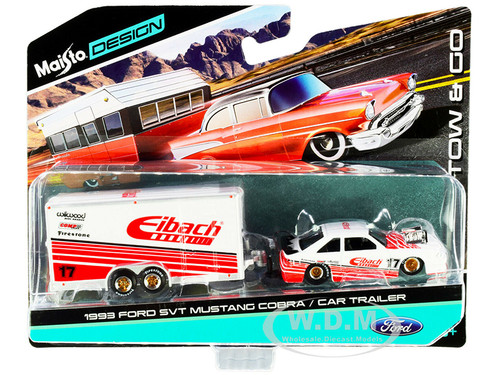
Enclosed Car Trailer Diecast Models
Enclosed car trailers are specialized transport trailers designed to protect automobiles during towing, storage, and transportation. Unlike open car haulers, an enclosed car trailer surrounds the vehicle with a roof and side walls, helping shield the car from weather, road debris, and other exposure. They are commonly associated with motorsports, automotive enthusiasts, dealerships, collectors, restoration projects, and professional vehicle transport.
For diecast collectors, enclosed car trailers are especially interesting because they add another level of realism to a scale vehicle display. A trailer can turn a single model car into a more complete transportation scene, whether the setting is a race weekend, a restoration shop, a dealership, a private garage, or a highway journey.
What Are Enclosed Car Trailers?
An enclosed car trailer is a trailer with a fully enclosed cargo compartment large enough to transport one or more automobiles. Depending on the design, the trailer may feature a rear ramp or lift-style door for loading the vehicle, side access doors, interior tie-down equipment, and a dedicated chassis designed to support the weight of the automobile.
Enclosed trailers vary considerably in size and configuration. Smaller examples may be designed to carry a single passenger car, sports car, race car, or specialty vehicle. Larger enclosed car transport trailers can accommodate multiple vehicles and may incorporate additional equipment or storage space.
In the diecast world, the term enclosed car trailer can cover a variety of scale trailers representing these real-world transport and motorsport applications. Some models emphasize the trailer itself, while others are paired with a tow vehicle or include a car inside the trailer.
Common Features
Depending on the model and prototype, collectors may find details such as:
- Fully enclosed cargo body
- Rear loading ramp or door
- Side access doors
- Interior wheel wells and floor
- Tie-down or securing equipment
- Tandem or multiple axles
- Fenders and detailed wheels
- Hitch and trailer tongue
- Exterior graphics or racing liveries
- Windows or service openings on specialty trailers
- Interior storage or equipment areas
These details can make an enclosed trailer substantially more visually interesting than a simple open platform. When displayed with the correct tow vehicle, the combination can create a convincing miniature transportation rig.
Enclosed Car Trailers for Motorsports
One of the most recognizable uses for enclosed car trailers is motorsports. Race teams and private competitors use enclosed trailers to transport race cars and the equipment needed to support them at events. An enclosed trailer can provide protection for the vehicle while also creating a secure space for tools, spare parts, wheels, tires, and other equipment.
This connection makes enclosed car trailers particularly appealing to racing collectors. A scale race car displayed beside an enclosed trailer can suggest an entire race-team operation without requiring a large display area.
Collectors interested in racing-themed displays can also explore related Racing Models, NASCAR, and other automotive categories to build a more complete scene.
Enclosed Trailers for Car Collectors and Enthusiasts
Enclosed car trailers are not limited to professional racing. Car enthusiasts and collectors may use enclosed trailers to transport valuable, restored, customized, classic, or specialty automobiles.
The enclosed design is particularly useful when the vehicle being transported needs additional protection from the environment. For a collector, the trailer can represent an important part of the ownership experience: moving a prized vehicle between a home garage, restoration facility, show, auction, or event.
This makes enclosed car trailer diecast models useful for displays featuring classic cars, muscle cars, sports cars, modern performance vehicles, and custom automobiles.
A Brief History of Enclosed Vehicle Transport
The development of enclosed vehicle transport followed the broader evolution of road transportation and trailer design. Early automobiles were often transported using relatively simple open platforms because vehicle dimensions and towing equipment were limited. As automobiles became more valuable and specialized, the need for safer and more protected transportation increased.
Enclosed trailers became increasingly useful for applications where weather protection, security, and equipment storage were important. Motorsports played a significant role in making enclosed car transport trailers familiar to enthusiasts, particularly as organized racing became more professional and teams needed to move increasingly specialized vehicles and equipment between events.
Trailer construction also evolved through improvements in chassis design, braking systems, suspension, materials, loading ramps, and towing equipment. Modern enclosed car trailers can range from compact single-car units to large professional transporters designed around specific vehicle and support requirements.
For diecast collectors, this history adds context to what might otherwise look like a simple accessory. An enclosed trailer represents an important part of the infrastructure surrounding automobiles and motorsports.
Enclosed Car Trailer vs. Open Car Trailer
One of the easiest ways to understand this category is to compare enclosed and open car transporters.
Enclosed car trailers provide a roof and enclosed sides around the vehicle. Their primary advantages include protection from weather and road debris, greater privacy, and additional enclosed storage possibilities.
Open car trailers use an exposed platform or framework. They are generally more open and provide easy visual access to the vehicle, but they do not provide the same level of environmental protection.
Both designs have a place in automotive transportation, and both can be valuable additions to a diecast collection. The right choice for a display depends on the type of vehicle, setting, and story the collector wants to create.
Choosing an Enclosed Car Trailer Diecast Model
When shopping for an enclosed car trailer model, scale is one of the first considerations. The trailer should ideally be compatible with the scale of the vehicle and tow vehicle in the display.
Common scales for vehicle and trailer models can include 1/18, 1/24, 1/32, 1/43, 1/50, and 1/64, although availability varies by manufacturer and prototype.
Consider the following details when selecting a model:
Scale Compatibility
A correctly matched trailer and tow vehicle creates a much more convincing display. A large 1/18 scale trailer paired with a tiny 1/64 vehicle will not have the same visual relationship as models produced to the same scale.
Trailer Configuration
Look at the number of axles, overall length, wheel arrangement, loading door, roofline, and body shape. These details can help determine whether the trailer resembles a compact enthusiast trailer, a race-team transporter, or a larger professional vehicle carrier.
Exterior Graphics
Some enclosed trailers are visually understated, while others feature bold racing graphics, company markings, or specialty liveries. Graphics can be particularly important when recreating a specific motorsports or automotive scene.
Tow Vehicle Compatibility
An enclosed car trailer is often most effective as part of a complete combination. Depending on the model, it may be paired with a pickup truck, SUV, or heavy-duty truck. Explore Pickup Trucks and UTV & SUV models when building a towing-focused display.
Display Ideas for Collectors
An enclosed car trailer can serve as more than a standalone model. It can become the centerpiece of a small automotive diorama.
Try displaying an enclosed trailer with:
- A sports car or race car being transported to an event
- A pickup truck preparing to tow the trailer
- A classic car outside a garage
- Racing equipment, tools, and spare wheels
- A restoration or workshop setting
- A roadside transportation scene
- A dealership or vehicle delivery display
Collectors who prefer larger-scale models can emphasize the mechanical details of the trailer, including the hitch, axles, wheels, doors, and chassis. Smaller-scale collectors can use several vehicles and trailers to create a broader transportation scene.
Why Collect Enclosed Car Trailers?
Cars are usually the focal point of an automotive diecast collection, but supporting equipment can provide important context. An enclosed car trailer explains how a vehicle gets from one location to another and helps tell a more complete story.
For racing enthusiasts, it can represent the journey to the track. For classic-car collectors, it can suggest transportation to a show or restoration facility. For general automotive displays, it adds another realistic element that helps connect individual vehicles into a larger scene.
Enclosed trailers can also appeal to collectors who enjoy commercial vehicles and transportation equipment. They bridge the gap between passenger-car models and the broader world of trucks and trailers.
Explore Enclosed Car Trailer Diecast Models
Whether you are building a motorsports display, creating a realistic towing scene, or looking for a specialized trailer to complement your automotive collection, an enclosed car trailer model can add considerable character and context.
Browse the Enclosed Car Trailer category at DiecastModelsWholesale.com to discover available scale models and find a trailer that fits your collection, display, and favorite vehicles.