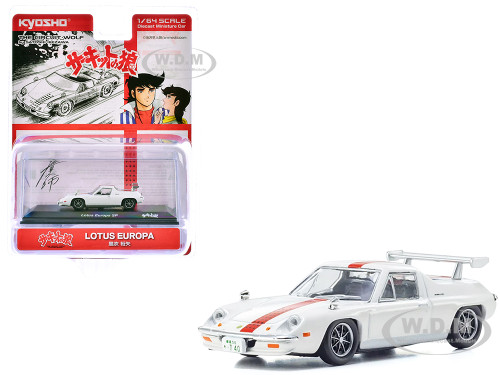
The Circuit Wolf is associated with Circuit no Ōkami (also translated as Circuit Wolf), a landmark Japanese motorsports manga created by Satoshi Ikezawa. First serialized in the 1970s, the series helped capture the excitement of Japanese street racing, sports cars, and circuit competition at a time when performance driving was becoming an important part of automotive popular culture.
The story follows young driver Yūya Fubuki and his ambition to become a skilled racer. Through intense rivalries, driving challenges, and a deep interest in performance machines, Circuit Wolf helped inspire enthusiasm for sports cars and racing among Japanese readers. Its influence is often discussed alongside the broader rise of Japanese performance-car culture and the popularity of manga and anime centered on automobiles.
For diecast collectors and Japanese car enthusiasts, The Circuit Wolf theme connects classic automotive designs with the world of motorsports storytelling. Collectibles associated with the series may appeal to fans of vintage Japanese sports cars, racing-inspired vehicles, manga memorabilia, and the history of enthusiast car culture. Product selection can change, so check each listing to confirm the vehicle, manufacturer, scale, and any specific connection to the series.
The Iconic Cars of The Circuit Wolf
One of the defining features of The Circuit Wolf is its use of recognizable real-world sports cars. Rather than relying on fictional vehicles, the manga brought legendary European and Japanese automobiles into its racing storylines, helping readers become familiar with marques and models that were otherwise difficult to encounter in everyday life.
Lotus Europa
The Lotus Europa is closely associated with protagonist Yūya Fubuki, whose car and driving ability help establish his reputation as a determined, independent racer. With its low-slung body, lightweight construction, and mid-engine layout, the Europa represents a different approach to performance from the larger, more powerful sports cars of its era.
Lotus built its reputation around lightweight engineering and handling, qualities that made the Europa distinctive among 1970s performance cars. For collectors, a Lotus Europa model offers a connection to the manga's central character as well as an opportunity to appreciate an unusual and historically significant sports-car design.
Porsche 911 Carrera RS
The Porsche 911 is another important car associated with The Circuit Wolf. Rival driver Sakon Hayase is known for driving a Porsche 911 Carrera RS, a model admired for its distinctive silhouette and motorsports heritage.
The 911 Carrera RS 2.7, introduced in the early 1970s, became particularly famous for combining road-car usability with engineering developed for performance driving. Its recognizable shape, rear-engine configuration, and racing-inspired character make it a popular subject among diecast collectors.
A Porsche model inspired by The Circuit Wolf may be especially appealing to fans who want to represent the rivalry between the manga's drivers. Check individual listings to distinguish a standard Porsche 911 model from a specifically decorated or series-related collectible.
Ferrari and Dino Sports Cars
Ferrari and Dino models contribute to the series' celebration of exotic performance automobiles. The Dino 246 GT, with its compact proportions and flowing Italian styling, is among the notable cars associated with the story.
The Dino name is particularly interesting to automotive enthusiasts because these cars occupy a distinctive place in Ferrari's history. Their styling differs from many larger, more powerful grand touring cars, giving them a character of their own.
For diecast collectors, Ferrari and Dino models can complement a Lotus or Porsche display, illustrating the diversity of European sports-car design during the period that inspired The Circuit Wolf.
Lamborghini Miura and Countach
Lamborghini's mid-engine supercars are another part of the series' appeal. The Miura is celebrated for its curving bodywork and influential design, while the Countach became famous for its dramatic, angular shape.
These two cars represent different expressions of the supercar concept. The Miura is associated with flowing, sculptural styling, whereas the Countach became an emblem of futuristic wedge-shaped design. Both are attractive subjects for collectors interested in the cars that helped define the supercar era.
A Lamborghini diecast model can add visual contrast to a collection of classic racing and road cars. If you are specifically collecting The Circuit Wolf vehicles, verify whether the listed model represents the exact version associated with the series.
Toyota 2000GT and Other Japanese Performance Cars
Although European supercars are prominent in the series, Japanese automobiles are also important to the broader story of performance-car culture. The Toyota 2000GT, for example, is remembered as a landmark Japanese sports car, combining elegant styling with sophisticated engineering for its time.
The model represents an important period in which Japanese manufacturers demonstrated their ability to build distinctive, internationally admired performance automobiles. Collectors interested in The Circuit Wolf may appreciate pairing Japanese classics with the European cars that feature prominently in the manga.
Other vehicles associated with the series include the Lancia Stratos, Ferrari 308 GTB, Maserati Bora, and Mazda Cosmo Sport. Their varied layouts, styling, and engineering illustrate why the manga remains relevant to collectors with broad automotive interests.
How The Circuit Wolf Influenced Supercar Culture
The Circuit Wolf arrived during a period when interest in exotic sports cars was growing rapidly in Japan. Its detailed depictions of recognizable vehicles helped bring automotive design and performance into popular entertainment, introducing readers to cars that many had previously encountered only in magazines or photographs.
The manga's popularity contributed to the Japanese supercar boom of the 1970s. Children and adults became fascinated by the shapes, specifications, and identities of European performance cars, and the vehicles became subjects of model collecting, miniature toys, and enthusiast discussion.
Its influence can also be understood through the relationship between storytelling and collecting. A reader who admired a particular car in the manga could seek out information about the real vehicle, compare its appearance with other models, or begin collecting miniatures that represented favorite cars and characters.
For modern collectors, The Circuit Wolf offers a link between classic manga, automotive history, and the growth of Japanese enthusiasm for international sports cars. It is particularly meaningful to enthusiasts who remember the original supercar boom, as well as newer collectors discovering the series through its famous vehicles.
Choosing Circuit Wolf-Inspired Diecast Models
When shopping for collectibles associated with The Circuit Wolf, it helps to decide whether your main interest is the manga, the real cars, or a combination of both.
Consider these points when comparing models:
-
Exact vehicle: Confirm the make, model, and variant. A Lotus Europa, Porsche 911 Carrera RS, or Lamborghini Miura may be represented in several different configurations.
-
Series-specific details: If you want a collectible that reproduces a car as depicted in the manga, look for a product description that explicitly identifies the series connection or special livery.
-
Scale: Common diecast scales include 1:18, 1:24, 1:43, and 1:64. Availability varies, and not every vehicle is produced in every scale.
-
Construction and features: Materials, interior detailing, opening components, wheels, and steering functions depend on the particular model.
-
Display plans: Larger models can showcase fine details, while smaller vehicles allow you to display more cars in the same space.
-
Packaging and presentation: Collectors who preserve original packaging should review the product information and inspect the condition of the item and its box upon arrival.
A model of the correct real-world car is not automatically an officially licensed Circuit Wolf collectible. For collectors who value authenticity to the manga, that distinction is important.
Building a Japanese and European Supercar Collection
The Circuit Wolf theme can serve as the foundation for a wider collection of classic performance vehicles. Pairing cars from the series with other historically significant sports cars creates opportunities to explore how different manufacturers approached speed, handling, and design.
You might organize your collection around the manga's main characters, focus on European supercars from the 1970s, or compare Japanese performance cars with their European counterparts. Another approach is to display different generations of a particular model, such as the Porsche 911, to show how an established design evolved.
Collectors can also use the series as a starting point for exploring other automotive manga and motorsports-inspired collectibles. The key is to choose a theme that reflects your interests while checking each product's specifications carefully.
Whether you are a longtime fan of The Circuit Wolf, a Japanese car enthusiast, or a collector of classic exotic vehicles, these models can connect automotive history with the enduring appeal of illustrated racing stories.
Browse the available products in The Circuit Wolf category at Diecast Models Wholesale to explore collectibles inspired by this influential manga and its memorable cars. Review each listing for the confirmed vehicle, scale, manufacturer, and series-specific details before making your selection.