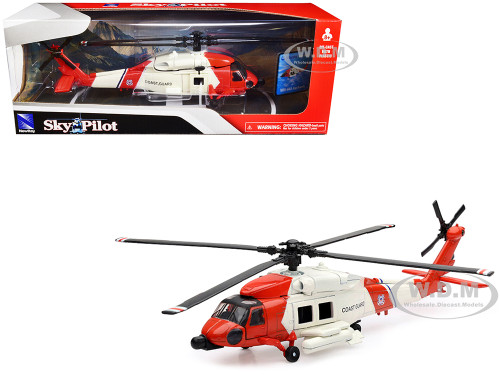
1/60 Scale Diecast Models
Explore 1/60 scale diecast models for collectors looking for compact vehicle replicas and an alternative to more common diecast scales. In 1/60 scale, the model represents the real vehicle at approximately one-sixtieth of its original dimensions, creating a relatively small collectible that can work well in space-conscious displays.
The 1/60 scale is less standardized across the diecast market than popular scales such as 1/18, 1/24, 1/32, 1/43, 1/50, and 1/64. As a result, available products can be more specialized, with selection varying according to manufacturer, vehicle type, and current production.
For collectors, this can make 1/60 scale diecast models especially interesting. A particular vehicle may be available in 1/60 when it is difficult to find in another preferred scale, while the compact dimensions can make it practical for larger collections.
What Does 1/60 Scale Mean?
The 1/60 scale designation describes the proportional relationship between a model and the full-size vehicle it represents. One unit of measurement on the model corresponds to 60 units on the actual vehicle.
For example, a real vehicle measuring 20 feet long would theoretically be represented by a model approximately 4 inches long in 1/60 scale. A 30-foot vehicle would correspond to a model approximately 6 inches long.
These examples illustrate the scale relationship rather than guaranteeing a specific product dimension. Actual model size depends on the dimensions and configuration of the real vehicle.
A 1/60 scale truck will naturally be larger than a 1/60 scale compact car because the full-size truck is larger. Scale determines the proportion, not a fixed physical size.
Why Collect 1/60 Scale Diecast Models?
The compact footprint of 1/60 diecast models makes them appealing to collectors who want to represent multiple vehicles without requiring as much display space as larger scales.
The scale can also appeal to enthusiasts who enjoy collecting unusual or less-common diecast sizes. While mainstream scales offer a broad selection, uncommon scales can provide opportunities to find particular vehicles that might otherwise be overlooked.
For some collectors, the subject is the primary consideration. If a desired vehicle is produced in 1/60, the scale can be a perfectly practical choice for adding it to a collection.
Compact Models for Larger Displays
Depending on the full-size vehicle represented, 1/60 models can work well in:
- Display cabinets
- Shelves
- Desks and offices
- Multi-vehicle collections
- Transportation displays
- Compact dioramas
- Manufacturer-themed collections
- Selective mixed-scale displays
Even at 1/60, large real-world vehicles can result in sizeable models. Check the individual product dimensions when display space is limited.
What Can You Expect to Find in 1/60 Scale?
The selection of 1/60 scale vehicles is generally more specialized than the selection available in major diecast scales. Manufacturers use different scales for different subjects, and availability can change as individual models are introduced or discontinued.
Depending on current inventory, shoppers may encounter cars, trucks, commercial vehicles, specialty vehicles, or other collectible subjects.
Because 1/60 is not a universal scale across all vehicle categories, it is best to focus on the specific products currently available rather than expecting every type of vehicle to be represented.
Cars and Passenger Vehicles
Compact automobile replicas can make practical 1/60 scale collectibles. Their relatively small dimensions allow collectors to represent multiple vehicles while conserving shelf space.
Depending on availability, subjects may include different automotive eras, manufacturers, body styles, and vehicle types. When shopping for a specific car, check the product information carefully to confirm the exact model being reproduced.
Trucks and Commercial Vehicles
A 1/60 scale truck model can retain the recognizable characteristics of a full-size commercial vehicle while remaining compact enough for a space-conscious display.
Details such as cab styling, wheels, chassis proportions, cargo bodies, graphics, and specialized equipment can distinguish one model from another.
Commercial vehicles can also be combined into transportation-themed displays or collections organized around particular manufacturers and vehicle families.
Specialty Vehicles
Uncommon scales can be particularly appealing for collectors interested in specialized vehicles. Depending on current availability, products may include commercial, industrial, emergency, or other purpose-built subjects.
A specialty model can add variety to a collection, especially when the real-world vehicle is unusual or difficult to find in more common scales.
1/60 Scale Compared With Nearby Scales
Understanding nearby scales can help you determine how a 1/60 model will relate to other models in your collection.
- 1/50 — Larger than 1/60 and particularly popular for trucks, construction equipment, cranes, and commercial vehicles.
- 1/52 — Larger than 1/60 and another less-common compact scale.
- 1/54 — Larger than 1/60.
- 1/55 — Larger than 1/60.
- 1/58 — Slightly larger than 1/60.
- 1/59 — Slightly larger than 1/60.
- 1/60 — A less-common compact scale with selection dependent on manufacturer and subject.
- 1/64 — Smaller than 1/60 and one of the best-known compact diecast scales.
- 1/43 — Significantly larger than 1/60 and a well-established scale for automotive and transportation models.
A 1/60 model is approximately 16.7% shorter in each linear dimension than an equivalent 1/50 model. Compared with 1/64, a 1/60 model is approximately 6.7% larger in each linear dimension.
These differences can be useful when planning displays where scale consistency matters.
1/50 vs. 1/60: What's the Difference?
Although both scales can be used for compact commercial and specialty vehicle models, 1/50 and 1/60 are distinct scales.
A 1/50 model represents the real vehicle at one-fiftieth of its dimensions, while a 1/60 model represents it at one-sixtieth. An equivalent 1/60 model is therefore smaller.
For casual collecting, nearby scales may sometimes be displayed together successfully. Collectors creating precise dioramas or scale-specific fleets may prefer to keep models within their exact scale groups.
The size of the real vehicle also remains important. A large 1/60 truck can be considerably larger than a compact 1/60 automobile.
Choosing a 1/60 Diecast Model
When shopping for a 1/60 scale collectible, consider the specific subject, dimensions, features, and how it will fit into your collection.
Confirm the Exact Vehicle
If you are looking for a particular vehicle, check its manufacturer, model name, generation, body configuration, and other identifying characteristics.
For commercial and specialty vehicles, equipment and configuration can significantly change the appearance of the model.
Check the Model Dimensions
The scale tells you the relationship between the model and the real vehicle, but it does not tell you the exact physical size.
A 1/60 compact car may take up very little space, while a 1/60 heavy truck or specialized vehicle may have a substantially larger footprint.
Use the dimensions provided with the individual product when determining whether it will fit your display.
Review Features and Construction
Diecast models can vary considerably in their construction and features. Depending on the product, you may find detailed interiors, wheels, graphics, chassis components, equipment, or moving parts.
Features should always be confirmed on the individual product listing rather than assumed from the scale alone.
Building a 1/60 Scale Collection
There are many ways to build a 1/60 scale diecast collection.
A manufacturer-focused collection can bring together different vehicles from one brand. A transportation-themed collection can include trucks and commercial vehicles, while an automotive collection can focus on particular manufacturers, generations, or vehicle styles.
Another approach is to collect unusual vehicles regardless of manufacturer. For enthusiasts who enjoy discovering uncommon subjects, 1/60 can become an interesting part of a broader collection of less-common scales.
If you already own 1/58, 1/59, 1/64, or 1/50 models, you can decide whether to combine them with your 1/60 models or create a dedicated 1/60 display. Your choice depends on whether exact scale consistency or a broader visual collection is more important.
Displaying 1/60 Scale Models
The compact size of many 1/60 models provides flexibility when planning a display.
Several vehicles can be arranged together on a shelf or inside a cabinet while leaving room to appreciate individual models. Collections can be organized by manufacturer, vehicle type, era, color, or another theme.
Diorama builders can create compact roads, parking areas, industrial settings, transportation facilities, and other scenes suited to the vehicle subjects.
Accessories deserve particular attention. Figures, buildings, signs, and other scenery should be reasonably compatible with the scale if you want a cohesive, realistic display.
The Appeal of Less-Common Scale Collecting
Collecting does not always have to center on the most widely produced scales. For many enthusiasts, finding a particular subject is more important than following the most common scale conventions.
A 1/60 scale diecast model can be appealing because it represents a vehicle you specifically want, fits your available display space, or adds an unusual dimension to an existing collection.
Less-common scales can also encourage collectors to compare model proportions and dimensions more carefully, especially when products from different manufacturers are displayed together.
Find 1/60 Scale Diecast Models
Whether you are searching for a specific vehicle or exploring compact and less-common scale collectibles, 1/60 scale diecast models offer an interesting option for collectors, hobbyists, and enthusiasts.
Browse the available 1/60 scale models at DiecastModelsWholesale.com to explore current products and find a collectible vehicle that fits your collection, display space, and collecting interests.

 $24.95