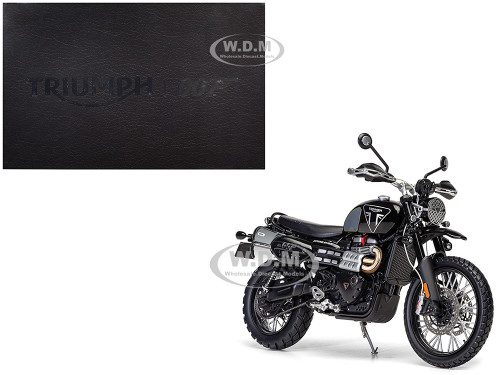
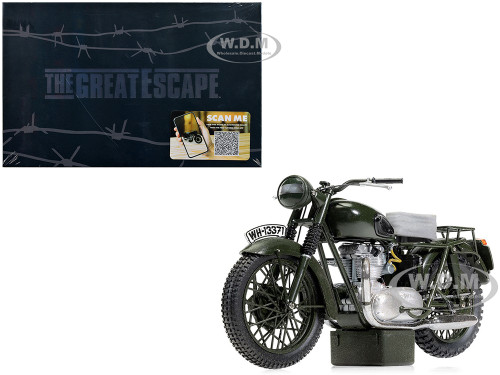
Triumph diecast models bring the distinctive character of one of Britain’s most recognizable motorcycle marques to the collector’s shelf. Known for a combination of classic British styling, performance, racing heritage, and modern engineering, Triumph motorcycles have inspired generations of riders. This category features Triumph motorcycle diecast models created for collectors, motorcycle enthusiasts, and anyone looking for a detailed scale representation of a legendary British bike.
Whether you prefer the timeless appearance of a classic Bonneville, the aggressive character of a modern Street Triple, the adventure-focused Tiger, or the performance of a Daytona, Triumph offers a wide range of motorcycles with strong identities. Scale models allow collectors to appreciate those designs in a compact format, with details such as bodywork, wheels, exhaust systems, seats, handlebars, engines, and distinctive Triumph styling reproduced at miniature scale.
The History of Triumph Motorcycles
Triumph's motorcycle story began in Britain in the early 20th century. The company produced its first motorcycles in the early 1900s, establishing a reputation that would eventually make the Triumph name synonymous with British motorcycles. Early Triumph machines helped establish the company in a rapidly developing motorcycle market, while competition and racing pushed the engineering of the brand forward.
After World War II, Triumph became particularly influential in the development of the modern British motorcycle. Lightweight and relatively compact motorcycles such as the Speed Twin helped establish a formula combining performance with everyday usability. The Speed Twin, introduced in 1937, was especially significant because its parallel-twin engine layout became an important part of Triumph's identity and influenced the appearance and engineering of many later models.
The Bonneville became one of Triumph's most famous names. Introduced in 1959, the Bonneville T120 combined a 650cc parallel-twin engine with styling and performance that appealed to riders on both sides of the Atlantic. The name was inspired by the Bonneville Salt Flats in Utah, where Triumph motorcycles had established a connection with high-speed record attempts. The Bonneville subsequently became an enduring symbol of classic British motorcycling.
Triumph motorcycles also developed a strong presence in popular culture during the 1950s and 1960s. The brand became associated with the image of high-performance British motorcycles, and Triumph machines appeared in films, television, and celebrity collections. This cultural history has helped make classic Triumph motorcycles particularly appealing to diecast collectors.
Triumph Racing and Performance Heritage
Racing has played an important role in Triumph's history. Triumph motorcycles competed in road racing, endurance events, and other forms of motorcycle competition, helping the company develop its reputation for performance.
The brand's racing heritage continued into the modern era with motorcycles such as the Daytona, a name associated with Triumph's sportbike lineup. The Daytona 675 became particularly well known for its three-cylinder engine and sharp handling, giving Triumph a distinctive alternative to the four-cylinder sportbikes common in its class.
Triumph's modern racing presence has also expanded into off-road competition. The company entered the motocross and enduro market with dedicated competition motorcycles, bringing the Triumph name into new areas of motorcycle sport.
For collectors, racing motorcycles are especially interesting because competition machines often have distinctive graphics, sponsor liveries, aerodynamic bodywork, and specialized equipment. A Triumph racing diecast model can therefore complement both a general motorcycle collection and a motorsports-focused display.
Iconic Triumph Motorcycles
Triumph Bonneville
The Bonneville is arguably the most recognizable name in Triumph's history. Its classic parallel-twin configuration, rounded fuel tank, wire-spoke wheels, chrome details, and traditional proportions have made it an especially popular subject for scale models.
Collectors may encounter diecast representations of different Bonneville generations, ranging from classic motorcycles to modern interpretations that preserve the visual character of the original while incorporating contemporary technology.
Triumph Speed Twin
The Speed Twin has historical importance dating back to the prewar era and remains an important part of Triumph's modern lineup. Its parallel-twin heritage and roadster proportions make it a natural choice for collectors who appreciate traditional British motorcycle design.
Triumph Thruxton
The Thruxton draws heavily from Triumph's café-racer heritage. Its low-profile riding position, sculpted fuel tank, streamlined bodywork, and performance-oriented styling give it a distinctive appearance among modern classic motorcycles.
A Thruxton scale model can be particularly effective in a display focused on café racers, British motorcycles, or motorcycles from different eras of Triumph's history.
Triumph Daytona
The Daytona represents Triumph's sportbike heritage. With aerodynamic fairings, a compact riding position, and a performance-focused appearance, Daytona models look very different from the company's classic Bonneville family.
The Daytona 675 is especially recognizable to motorcycle enthusiasts because of its three-cylinder engine and distinctive styling.
Triumph Street Triple and Speed Triple
Triumph's Speed Triple and Street Triple helped establish the brand as a major presence in the modern naked-bike market. Their exposed mechanical components, aggressive stance, and minimalist bodywork provide a strong contrast with Triumph's traditional motorcycles.
These models are appealing to collectors who want contemporary Triumph designs rather than only classic British motorcycles.
Triumph Tiger
The Tiger family represents Triumph's adventure and touring heritage. Built for long-distance riding and varied terrain, Tiger motorcycles have a taller stance, larger bodywork, and adventure-oriented equipment.
A Triumph Tiger diecast model can add useful variety to a motorcycle collection that otherwise focuses primarily on sportbikes and classic road motorcycles.
What to Look for in Triumph Diecast Models
When selecting a Triumph scale motorcycle, consider the model's scale, level of detail, motorcycle generation, and display purpose.
Important details to compare include:
- Motorcycle model: Bonneville, Speed Twin, Thruxton, Daytona, Speed Triple, Street Triple, Tiger, and other Triumph models
- Era: classic British Triumph motorcycles or modern-generation machines
- Scale: smaller models are useful for larger collections, while larger scales generally provide more room for visible details
- Bodywork: examine the accuracy of the fuel tank, fairings, fenders, and side panels
- Mechanical details: engines, exhaust systems, brakes, suspension, and other components can add realism
- Wheels and tires: spoke wheels, sportbike wheels, and tire profiles contribute significantly to the appearance of a motorcycle model
- Color and graphics: factory-inspired finishes and racing-style graphics can make certain versions particularly distinctive
- Display compatibility: consider how the model will fit with other motorcycles in your collection
Triumph diecast motorcycles can be displayed individually as focal pieces or arranged alongside other British motorcycle models to show the evolution of motorcycle design.
Choosing the Right Scale
Scale is an important consideration when building a diecast motorcycle collection. Common motorcycle scales include 1/12, 1/18, 1/24, 1/32, 1/43, and 1/64, although availability varies by model and manufacturer.
1/12 scale is particularly attractive for collectors who want a larger display model with room for substantial body and mechanical detailing. It works well as a centerpiece alongside other premium motorcycles.
1/18 and 1/24 scale models offer a balance between size, detail, and display space. They are useful for collectors who want recognizable motorcycles without requiring a large amount of shelf space.
Smaller scales such as 1/32, 1/43, and 1/64 are well suited to compact displays and collections containing many different motorcycles. They can also make it easier to create displays showing several Triumph models alongside motorcycles from other manufacturers.
Remember that scale is a proportional measurement, so two models in the same scale can still have noticeably different physical dimensions because the actual motorcycles themselves vary in size.
Building a Triumph Motorcycle Collection
A Triumph collection can be organized in several ways. Some collectors concentrate on a particular motorcycle family, such as the Bonneville, while others use Triumph models to document the transition from classic British motorcycles to modern performance and adventure machines.
A chronological display can be especially effective. A classic Bonneville or Speed Twin can represent Triumph's historic era, while a modern Bonneville, Thruxton, Street Triple, Daytona, or Tiger can demonstrate how the brand's design language has evolved.
Collectors can also combine Triumph models with motorcycles from other manufacturers through the Motorcycle category. This makes it possible to build displays around themes such as British motorcycles, classic motorcycles, sportbikes, adventure motorcycles, café racers, or modern naked bikes.
For a more detailed display, consider pairing motorcycle models with miniature garages, workshops, racing scenes, road environments, or other appropriately scaled vehicles. Keeping models at compatible scales helps create a more convincing overall presentation.
Why Collect Triumph Scale Motorcycles?
Triumph offers an unusually broad collecting story. Its motorcycles connect classic British engineering with modern performance, while individual models have recognizable shapes that translate well into scale form.
A Triumph diecast model can appeal to several types of collectors:
- British motorcycle enthusiasts
- Triumph owners and fans
- Classic motorcycle collectors
- Sportbike enthusiasts
- Café-racer collectors
- Adventure motorcycle collectors
- Motorsports and racing collectors
- Diecast model collectors building manufacturer-based displays
For many collectors, the appeal is not simply the motorcycle itself but the opportunity to preserve a particular era, model, color scheme, or design in miniature.
Browse the Triumph diecast models available at DiecastModelsWholesale.com and explore the selection to find a scale Triumph motorcycle that fits your collection, display theme, and appreciation for British motorcycle history.