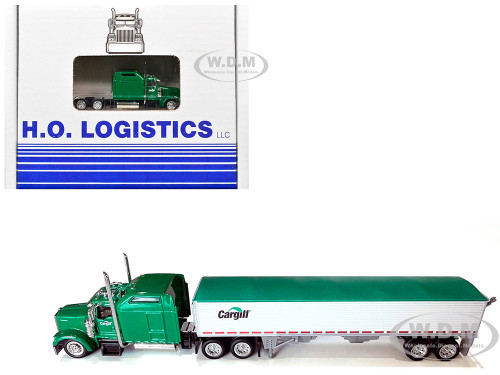
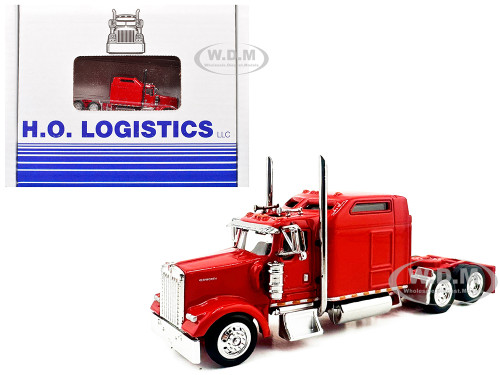
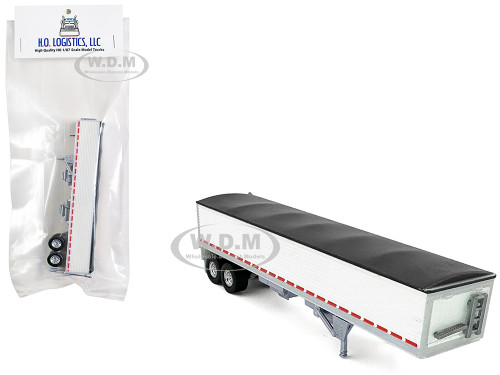
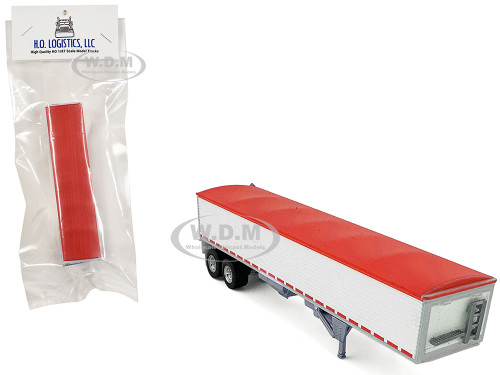
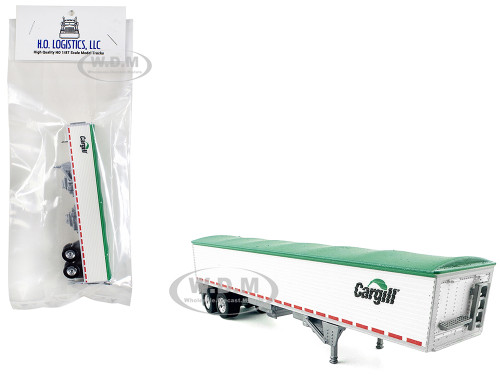
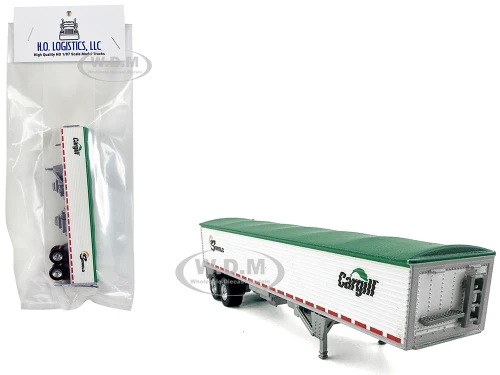
Grain Trailer Diecast Models
Grain trailers are specialized agricultural trailers designed to transport harvested grain and other bulk agricultural commodities from fields to storage facilities, grain elevators, processing facilities, and other destinations. Their design emphasizes efficient loading, high-volume hauling, and rapid unloading, making them an important part of the agricultural transportation cycle.
For diecast collectors, grain trailer models provide an opportunity to represent the equipment that connects harvesting operations with the next stage of the agricultural supply chain. A scale grain trailer can be displayed behind a tractor, truck, or truck tractor and combined with other agricultural equipment to create a realistic farm or harvest scene.
The Grain category at DiecastModelsWholesale.com is intended for collectors, farmers, agricultural enthusiasts, and anyone interested in detailed scale models of equipment used to move harvested crops.
What Is a Grain Trailer?
A grain trailer is a trailer designed primarily for hauling loose grain and similar bulk agricultural products. Unlike a conventional enclosed cargo trailer, its body is specifically configured to make loading and unloading agricultural commodities practical.
Many grain trailers use a high-sided body to provide substantial volume while remaining suitable for highway transportation. Depending on the design, unloading may take place through a rear opening, bottom discharge system, or another specialized arrangement.
Grain trailers can be used with agricultural tractors or road-going truck tractors depending on their configuration and intended application. The exact design varies considerably, from farm-oriented trailers used close to the field to larger commercial grain trailers designed for transportation between agricultural facilities.
Common Grain Trailer Features
Depending on the real-world trailer represented by a diecast model, collectors may find details such as:
- High-sided grain body
- Reinforced trailer frame
- Rear discharge gate
- Bottom unloading doors or hoppers
- Multiple axles
- Agricultural or highway tires
- Fenders and mudguards
- Landing gear
- Tarp or roll-cover system
- Hinged gates and access points
- Detailed chassis and suspension
These features distinguish grain trailers from general-purpose cargo trailers and help make them recognizable in a scale agricultural display.
How Grain Trailers Are Used
Grain transportation is an essential part of harvesting. Once crops are harvested, they must be moved efficiently from the field to storage, processing, or transportation facilities.
A typical harvest operation may involve a combine harvester collecting the crop while another vehicle transports the harvested grain away from the field. Depending on the operation, grain may be moved by a grain cart, farm trailer, semi-trailer, or other specialized equipment.
Field-to-Storage Transportation
During harvest, grain trailers can move crops from the field to on-farm storage bins or other collection points. This keeps harvesting equipment operating while the harvested material is transported separately.
A diecast grain trailer paired with a combine or agricultural tractor can therefore represent one of the most recognizable activities of harvest season.
Collectors can explore the Tractor category to find agricultural tractors that can complement an agricultural transportation display.
Commercial Grain Hauling
Larger grain trailers can transport harvested commodities over public roads to grain elevators, mills, processing plants, terminals, and other facilities.
These trailers are designed around the practical requirements of bulk agricultural transportation. High-volume bodies allow substantial quantities of material to be moved efficiently, while specialized discharge systems help reduce unloading time.
What Crops Can Be Transported?
The term "grain" covers a broad range of harvested crops. Depending on the trailer and agricultural operation, bulk trailers may be used to transport commodities such as:
- Corn
- Wheat
- Soybeans
- Barley
- Oats
- Sorghum
- Other harvested grains and agricultural commodities
The precise commodities carried depend on the farm, region, equipment, and intended use.
For diecast collectors, the important distinction is the trailer's design for bulk agricultural hauling, rather than a specific crop represented by the miniature model.
Grain Trailers and Harvest Equipment
Grain transportation is closely connected to harvesting equipment. A combine harvester removes the crop from the field and collects the harvested material, while trailers and grain carts provide the transportation link.
This creates excellent opportunities for agricultural dioramas. A collector might display a combine alongside a grain trailer, tractor, grain cart, and farm structures to recreate a busy harvest operation.
Other equipment can also be incorporated into the scene, including loaders and agricultural implements. The result is a display that shows not just individual machines but how they work together.
A Brief History of Grain Transportation
The transportation of harvested grain has been an essential agricultural task for centuries. Before mechanized farming, farmers relied heavily on animal-drawn wagons, carts, sacks, and other relatively simple methods to move harvested crops.
The development of agricultural machinery and motorized tractors transformed farm transportation. As farms became increasingly mechanized, trailers and wagons evolved to carry larger quantities of grain and other crops with less manual handling.
The spread of tractors, improved road networks, and larger-scale agricultural production encouraged the development of increasingly specialized grain-handling equipment. Modern grain trailers reflect this evolution through higher-capacity bodies, stronger chassis, improved unloading mechanisms, and specialized covers and gates.
Commercial trucking also became increasingly important to agriculture as harvested commodities needed to travel farther between farms, elevators, processors, terminals, and markets. Grain-specific semi-trailers and other bulk-hauling equipment became an important part of this transportation network.
For collectors, agricultural trailer models provide a miniature representation of this transition from traditional farm transport to modern mechanized agriculture.
Grain Trailer vs. General Cargo Trailer
A grain trailer may resemble other open or bulk-hauling trailers at first glance, but its intended cargo and design are different.
A grain trailer is designed around the requirements of loose agricultural commodities. Its high-sided body and unloading arrangement make it suitable for bulk grain transportation.
A general cargo trailer is intended for a much broader range of freight and may use an enclosed body, flat deck, or other configuration.
A dump trailer can also carry loose material and may resemble some agricultural trailers, but an end dump trailer raises its body to discharge cargo from the rear. Grain trailers can use different unloading systems, including gravity-fed or bottom-discharge arrangements.
Understanding these distinctions is useful when selecting a scale trailer for an agricultural collection.
Choosing a Grain Trailer Diecast Model
When selecting a grain trailer model, consider the scale, configuration, level of detail, and other agricultural equipment already in your collection.
Match the Scale
Agricultural diecast models are commonly produced in scales such as 1/16, 1/32, and 1/64, while some truck and trailer models may be available in other scales depending on the manufacturer and prototype.
Matching the grain trailer with the scale of the tractor, truck, or harvesting equipment is important for creating a convincing display.
Consider the Trailer Configuration
Look at the body shape, side height, axle arrangement, unloading system, wheels, and overall proportions. These details can help determine whether the model represents a farm trailer, commercial grain trailer, or another bulk agricultural configuration.
Look for Agricultural Detail
Collectors who appreciate working machinery may want to examine features such as:
- Grain body construction
- Rear doors
- Hopper or discharge areas
- Roll tarp or cover
- Chassis
- Axles and suspension
- Wheels and tires
- Hitch or fifth-wheel connection
- Agricultural or commercial markings
These elements add visual interest and help communicate the trailer's intended role.
Grain Trailers in Agricultural Dioramas
A grain trailer can be one of the most useful supporting models in a farm display. Rather than showing a tractor or combine by itself, the trailer helps illustrate what happens to the crop after it has been harvested.
Consider building scenes around:
- A combine unloading harvested grain
- A tractor pulling a loaded grain trailer
- Grain trailers waiting near a field
- A farm storage facility
- A grain elevator or agricultural loading area
- Harvest equipment traveling between fields
- Multiple trailers representing a busy harvest operation
The open or specialized body of a grain trailer can also make the model visually distinct from standard transportation equipment.
Collecting Agricultural Trailer Models
Agricultural diecast collecting often focuses on tractors and combines, but trailers and implements can add considerable depth to a collection. Grain trailers are particularly valuable from a display perspective because they help connect harvesting equipment with transportation and storage.
Collectors may also choose models based on the manufacturer, historical era, trailer configuration, scale, or compatibility with a particular tractor. A period-correct combination of tractor and trailer can be especially appealing when recreating a specific agricultural setting.
Smaller scales such as 1/64 make it possible to create larger farm scenes with several vehicles and pieces of equipment, while larger models provide more room for detailed examination of the trailer's construction.
Build a Complete Farm and Harvest Display
A grain trailer can serve as the link between several categories of agricultural equipment. Combine it with a tractor, combine harvester, loader, farm implement, or other machinery to create a miniature representation of harvest operations.
The most effective displays do not necessarily require dozens of models. A carefully selected tractor, grain trailer, and harvesting machine can already communicate a complete agricultural story.
Whether you prefer modern farm machinery or classic agricultural equipment, a grain trailer provides a practical and recognizable addition to the scene.
Shop Grain Trailer Diecast Models
Whether you collect farm machinery, agricultural vehicles, construction equipment, or commercial transportation models, a grain trailer diecast model adds an important piece of the harvest and agricultural transportation story.
Browse the Grain category at DiecastModelsWholesale.com to explore available scale grain trailers and find a model that complements your tractors, harvesting equipment, and agricultural displays.