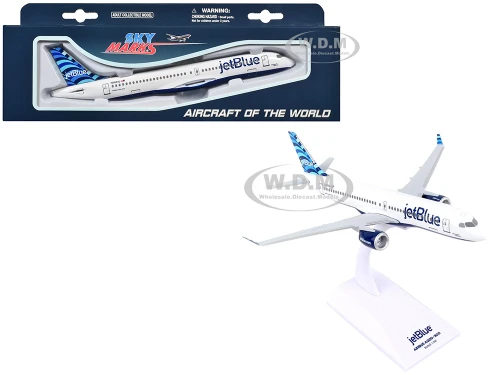
JetBlue Airways is one of the most recognizable names in modern American commercial aviation. Known for its distinctive blue aircraft liveries, customer-focused approach, and extensive domestic network, the airline has developed a strong identity since entering the airline industry in the early 2000s. For aviation enthusiasts and airline memorabilia collectors, JetBlue aircraft offer an appealing subject for diecast airplane models, bringing the look of contemporary passenger jets into a collection, display cabinet, or aviation-themed workspace.
The JetBlue Airways category at Diecast Models Wholesale is dedicated to collectors and shoppers interested in miniature aircraft featuring the airline's branding and liveries. Depending on available inventory, this category may include model airliners representing different aircraft types, paint schemes, and periods in the airline's development. Each model offers a way to appreciate the design of a commercial aircraft alongside the visual identity of the airline that operates it.
Whether you collect modern passenger aircraft, focus on U.S. airlines, or are looking for an aviation-themed gift, JetBlue Airways model airplanes can add a distinctive contemporary subject to your collection.
The History and Identity of JetBlue Airways
JetBlue Airways was founded in 1998 and began passenger operations in February 2000. The airline launched with a focus on affordable fares, a modern fleet, and a passenger experience designed to distinguish it from other low-cost carriers. Its first flights operated from New York's John F. Kennedy International Airport, and the airline gradually expanded its route network to serve destinations across the United States, the Caribbean, and Latin America.
JetBlue became particularly associated with its deep-blue aircraft branding and bold tail designs. While many airlines use relatively restrained paint schemes, JetBlue developed a recognizable visual identity through blue fuselages, prominent lettering, and tail patterns incorporating different shades of blue and other colors. These details make aircraft in JetBlue colors especially interesting to collectors who appreciate airline liveries as much as aircraft design.
Over time, the airline expanded its fleet and operations, introducing aircraft suited to different route lengths and passenger markets. Its aircraft have served short domestic sectors, longer transcontinental flights, and international routes. This combination of fleet variety and distinctive branding gives JetBlue a place in collections devoted to modern commercial aviation.
JetBlue Aircraft and Fleet Recognition
JetBlue has operated several aircraft types during its history. The specific aircraft represented in a diecast collection will depend on the models produced by manufacturers and the products currently available.
Airbus A320 Family
The Airbus A320 family has played a central role in JetBlue's fleet. The airline built much of its network around the Airbus A320, using the aircraft on domestic routes and other services suited to a single-aisle passenger jet. The family is widely recognized for its twin-engine configuration, relatively short-to-medium-haul mission, and distinctive cockpit and fuselage proportions.
For diecast collectors, Airbus A320 models provide a useful representation of the aircraft that helped establish JetBlue's early operations. Their familiar shape and airline-specific markings make them a natural fit for collections focused on commercial airline fleets or the development of American aviation.
Airbus A321
The Airbus A321, a larger member of the A320 family, has also been important to JetBlue. Its longer fuselage provides additional passenger capacity, making it suitable for busy routes and longer domestic services. JetBlue has used A321 variants on prominent routes, including transcontinental services.
A JetBlue A321 model can complement smaller single-aisle aircraft in a collection, showing how one airline uses different aircraft sizes to serve different markets. Differences in fuselage length, engine presentation, and livery details can also make models of related aircraft interesting to compare side by side.
Embraer E190
JetBlue also operated the Embraer E190, a smaller regional jet that helped the airline serve routes where a larger aircraft was not always necessary. The E190 has a different overall profile from the Airbus A320 family, with a shorter fuselage and a distinct wing and engine arrangement.
For collectors, an E190 in JetBlue livery represents another chapter in the airline's fleet history. It can add variety to a display that otherwise focuses on larger mainline passenger aircraft.
Newer-Generation Airbus Aircraft
JetBlue has incorporated newer-generation aircraft, including the Airbus A321neo, as part of its fleet development. The A321neo builds on the A321 design with updated engines and other improvements intended to increase efficiency. Aircraft from this generation represent the ongoing evolution of commercial aviation and the airline's efforts to modernize its operations.
When selecting a model, check the product listing for the exact aircraft variant. Aircraft in the same family can have similar silhouettes while representing different generations, engine configurations, or operational periods.
JetBlue Liveries and Aircraft Details
One of the main attractions of JetBlue Airways airplane models is the airline's distinctive livery. Its aircraft are commonly associated with blue fuselages, large JetBlue lettering, and tail designs featuring geometric patterns and contrasting colors. These elements make the airline recognizable even in miniature.
JetBlue has also introduced special liveries and aircraft designs connected with destinations, partnerships, and themed branding. Special paint schemes can be particularly appealing to collectors because they provide a visual alternative to the airline's standard appearance. Depending on the aircraft and model release, a miniature may reproduce a regular fleet livery or a more unusual design.
When choosing a JetBlue diecast airplane, collectors may want to look closely at several details:
-
Aircraft type: Confirm whether the model represents an Airbus A320, A321, Embraer E190, or another aircraft variant.
-
Livery: Compare the fuselage color, tail pattern, airline lettering, and any special markings.
-
Aircraft registration: Where provided, the registration can help identify the real aircraft represented by the miniature.
-
Scale and dimensions: Scale determines the model's approximate size and how it will fit alongside other aircraft in a display.
-
Construction and presentation: Check the listing for information about diecast metal components, plastic parts, landing gear, display stands, and packaging.
Not every model includes the same features. Construction materials, moving parts, landing gear, stands, and packaging vary by manufacturer and product, so consult each individual listing for confirmed details.
Understanding Diecast Airplane Scales
Scale is an important consideration when building an airline model collection. It describes the relationship between the miniature and the full-size aircraft. For example, a 1:200 scale model is approximately one two-hundredth the length of the real aircraft, while a 1:400 model is approximately one four-hundredth its length.
A larger scale generally produces a physically larger model of the same aircraft, although actual dimensions depend on the aircraft type. Collectors often choose a scale based on available display space, the level of detail they prefer, and the scales used by the rest of their collection.
Common considerations include:
-
Larger-scale aircraft models: These are often suited to collectors who want the aircraft to serve as a prominent display piece.
-
Smaller-scale aircraft models: These can be practical for collections featuring many airlines and aircraft types in a limited space.
-
Consistent scale collections: Collecting aircraft in the same scale can make it easier to compare their relative sizes and create a coordinated display.
Available scales depend on the manufacturer and individual product. Do not assume that every JetBlue aircraft or livery is produced in every scale. Check the product details for the scale and dimensions before purchasing, especially if you intend to display the model beside aircraft you already own.
Building a JetBlue Airways Airline Collection
JetBlue aircraft models can be collected in several ways. Some enthusiasts concentrate on a single airline, while others use individual models to represent a broader history of commercial aviation.
Collecting by Aircraft Type
One approach is to collect different aircraft operated by JetBlue. An Airbus A320, A321, and Embraer E190, for example, represent different aircraft designs and capacities from the airline's fleet history. Collecting across aircraft types provides a more varied display and highlights how airlines use different planes to serve their networks.
Collecting by Livery
Another option is to focus on the airline's visual identity. Standard liveries and special paint schemes can create variety even when the models depict the same aircraft family. Collectors who enjoy airline branding may appreciate comparing tail designs, fuselage markings, and special schemes across different releases.
Collecting Modern U.S. Airlines
JetBlue can also form part of a wider collection of American passenger airlines. Displaying it alongside aircraft from other U.S. carriers creates an opportunity to compare airline liveries, aircraft families, and fleet choices. This approach works well for collectors interested in the broader story of domestic and international passenger aviation.
Displaying and Protecting Models
Before buying, consider where the aircraft will be displayed and how much space it requires. Compare the model's listed dimensions with the available shelf or cabinet space. A display stand can be useful for presenting an aircraft in flight, while models with landing gear may suit a runway or airport-themed arrangement if the product includes those features.
Diecast aircraft are collectible display items, and small details can be vulnerable to damage. Handle models carefully, avoid putting pressure on wings or other delicate parts, and retain the original packaging when practical. Packaging can be especially useful for storage, moving, or protecting a collection when models are not on display.
JetBlue Airplane Models for Gifts
A JetBlue Airways diecast airplane can make a thoughtful gift for an aviation enthusiast, airline memorabilia collector, model aircraft hobbyist, or traveler with an interest in the carrier. Its recognizable branding gives the model a clear connection to a real airline, while the aircraft itself appeals to people interested in commercial aviation and aircraft design.
If you are shopping for someone else, consider their existing collection before selecting a model. Matching their preferred scale can help the new aircraft fit into their display. If they collect a particular JetBlue aircraft type or livery, checking those details can make the gift more meaningful. For a newer collector, a model of a recognizable aircraft in the airline's familiar colors may be a straightforward starting point.
As with all collectible models, availability, scale, features, and packaging vary by release. Review the individual product listing to confirm exactly what is included and whether the aircraft matches the recipient's interests.
Shop JetBlue Airways Diecast Airplanes
JetBlue Airways combines a recognizable modern airline identity with a fleet that includes several notable commercial aircraft types. For collectors, its models offer a way to represent the airline's history, distinctive blue liveries, and place in contemporary passenger aviation.
Browse the available JetBlue Airways diecast airplane models at Diecast Models Wholesale to explore the aircraft and liveries currently offered. Compare the scale, aircraft type, and product details to find a model that suits your collection, display, or aviation-themed gift.