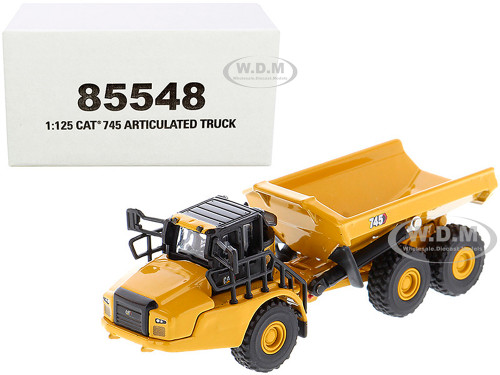
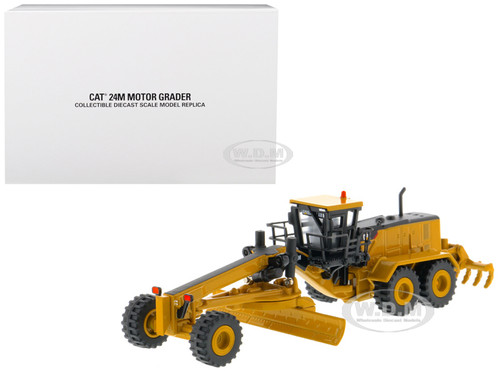
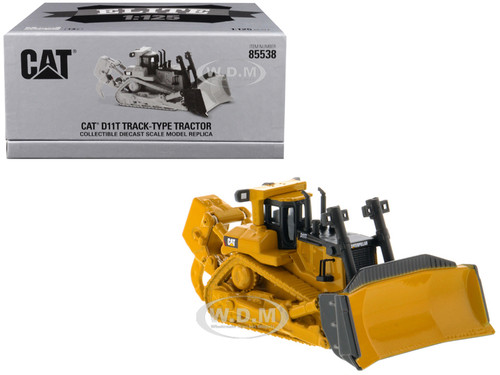
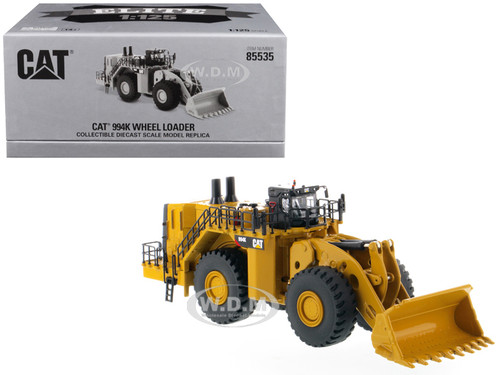
1/125 scale diecast models are collectible vehicles and transportation models produced at one one-hundred-twenty-fifth the size of their real-world counterparts. This is an uncommon scale, making it a useful option for collectors searching for specialized subjects or a particular compact display format.
At 1/125 scale, every 125 units of measurement on the original vehicle are represented by one unit on the model. The finished size depends on the dimensions of the full-size subject. A large aircraft, for example, will produce a substantially larger model than a compact automobile even though both use the same 1/125 scale.
Because 1/125 is a specialized scale, product availability can vary by subject, manufacturer, and production run. Shoppers should review the specifications for each individual model to confirm the exact subject, dimensions, construction, markings, and included display accessories.
What Does 1/125 Scale Mean?
Scale describes the proportional relationship between a model and the original object. A 1/125 scale model has linear dimensions approximately 1/125 the size of the real vehicle.
For example, an aircraft measuring 50 feet from nose to tail would produce a model approximately 4.8 inches long at 1/125 scale. An aircraft with a 75-foot wingspan would have a model wingspan of approximately 7.2 inches.
This compact scale can be particularly practical for large real-world subjects. Collectors can represent substantial aircraft and transportation equipment without requiring the display space associated with larger scales.
It is also important to remember that scale and physical model size are not the same thing. Two 1/125 models can have very different dimensions because their full-size subjects may differ considerably in size.
What Can You Expect to Find in 1/125 Scale?
1/125 is an uncommon diecast scale, so shoppers should expect a more specialized selection than they would find in major scales such as 1/18, 1/24, 1/43, or 1/64. The actual selection depends on current availability.
Potential subjects can include:
- Aircraft and aviation collectibles
- Military aircraft and vehicles
- Passenger and transportation vehicles
- Commercial vehicles
- Historic vehicles
- Specialty transportation subjects
- Other compact diecast models
Aircraft are a natural fit for compact scales because their full-size dimensions can make larger models difficult to display. A 1/125 aircraft can provide a recognizable representation while taking up considerably less room than the same aircraft in a larger scale.
Always refer to the individual product listing for the exact subject and specifications.
Why Collect 1/125 Scale Diecast Models?
Compact Display Size
The relatively small format of 1/125 models is one of their main attractions. Collectors can represent large real-world subjects without using as much shelf or cabinet space.
This can be particularly useful for aviation enthusiasts who want to display multiple aircraft together.
Specialized Scale Collecting
Not every collector chooses the most common scale. Some enthusiasts specifically search for uncommon scales because they are looking for a particular subject, manufacturer, or display format.
A 1/125 model can also be an important addition to an existing collection when maintaining a particular scale is a priority.
More Subjects in Less Space
Compact models can make it easier to build a broader collection. Instead of dedicating a large amount of space to only a handful of models, collectors can potentially display a larger number of related subjects.
This works especially well for collections organized around historical periods, aircraft families, military services, transportation companies, or other themes.
1/125 Scale Aircraft and Aviation Models
Aviation is an especially interesting area for compact diecast scales. Full-size aircraft can have substantial fuselage lengths and wingspans, making larger-scale models physically demanding to display.
At 1/125 scale, the same aircraft can be represented in a more manageable format. The model remains large enough to appreciate its overall silhouette, proportions, livery, and major exterior features while requiring less room than a comparable 1/72 or 1/48 aircraft.
Depending on current availability, aviation collectors may find models representing different aircraft types, historical periods, military subjects, or civilian transportation.
A compact aviation collection can be arranged chronologically, by aircraft type, by operator, or by country. Collectors can also use the scale to create a broader historical display without requiring an especially large cabinet.
When planning an aircraft display, remember to account for wingspan as well as fuselage length. Wings can determine the amount of shelf width required.
1/125 Compared With Nearby Scales
Comparing 1/125 with nearby scales can help collectors decide how a model will fit into an existing collection.
- 1/100 — Larger than 1/125. An equivalent subject is approximately 25% larger in linear dimensions.
- 1/120 — Larger than 1/125 by about 4.2% linearly.
- 1/121 — Larger than 1/125 by about 3.3% linearly.
- 1/122 — Larger than 1/125 by about 2.5% linearly.
- 1/125 — A specialized compact scale suited to collectors seeking particular models or a specific display format.
- 1/144 — Smaller than 1/125, providing an even more compact equivalent model.
- 1/200 — Considerably smaller than 1/125 and useful for highly space-efficient aviation displays.
- 1/400 — Much smaller and commonly selected when displaying numerous aircraft in a limited area.
The differences between some neighboring scales can be relatively small. For collectors who want precise scale consistency, however, it is best to follow the scale specified by the manufacturer rather than treating nearby ratios as interchangeable.
Choosing a 1/125 Diecast Model
Because 1/125 is an uncommon scale, shoppers should look beyond the scale designation when selecting a model.
Confirm the Exact Subject
Make sure the model represents the specific aircraft, vehicle, variant, or configuration you are looking for. Similar subjects may have different dimensions, equipment, and markings.
Check the Model Dimensions
Review the listed length, width, height, and wingspan when available. This gives you a much better idea of how the finished model will fit your display.
Consider Your Display Space
Think about where the model will be placed before ordering. Aircraft require sufficient room for their wingspan, while ground vehicles may require more consideration of length and height.
Review Construction and Features
Depending on the product, a model may include a display stand, landing gear, moving components, detailed exterior features, painted markings, or other manufacturer-specific details.
Match Existing Models
If the model will be displayed with other collectibles, consider whether those models are also 1/125. Maintaining a common scale can create a more consistent appearance, particularly when several models represent similar-sized real-world subjects.
Building a 1/125 Scale Collection
An uncommon scale can provide a strong foundation for a focused collection.
Aviation by Era
A chronological display can show the development of aircraft from one period to another. Collectors can arrange models according to historical era, aircraft generation, or technological development.
Military Aviation
Military aircraft can be organized by country, service branch, aircraft type, or period. The compact format makes it possible to display several related aircraft together.
Civilian Transportation
Where appropriate models are available, collectors can create displays centered on civilian aviation or transportation subjects.
Subject-Specific Collections
Collectors may also focus on a particular aircraft family, vehicle type, operator, manufacturer, or historical theme.
The flexibility of compact models makes it possible to approach collecting from many different directions.
Displaying 1/125 Scale Models
The compact dimensions of 1/125 scale models provide plenty of flexibility when planning a display.
For aircraft, leave enough space around the wings, tail, and fuselage so that the model's shape remains easy to appreciate. Chronological displays can emphasize changes in aircraft design, while country- or operator-based arrangements can create a more focused theme.
A clean display can also benefit from keeping similar scales together. If 1/125 models are mixed with 1/120, 1/122, 1/144, or other nearby scales, grouping models thoughtfully can prevent the display from appearing inconsistent.
Also consider the footprint of a supplied display stand. The stand may require more space than the aircraft's basic length and wingspan suggest.
The Appeal of an Uncommon Scale
The appeal of 1/125 scale comes partly from its specialized nature. Collectors who search for less-common scales may be interested in particular subjects that are unavailable in their preferred mainstream scale.
The compact format also offers a practical advantage. Large aircraft and transportation subjects can become difficult to accommodate in larger scales, while a 1/125 model can provide a substantial representation without occupying as much space.
For collectors, the most important consideration is ultimately the individual model. Scale, subject accuracy, dimensions, construction, markings, features, and display requirements all contribute to whether a collectible is right for the collection.
Find 1/125 Scale Diecast Models
Whether you are building a compact aviation display, collecting uncommon scales, or searching for a specific transportation subject, 1/125 scale offers an interesting format for diecast enthusiasts.
Browse the 1/125 scale diecast models at DiecastModelsWholesale.com to explore the current selection and find a collectible that fits your interests, collection, and available display space.