Livestock trailers are specialized agricultural trailers designed to transport live animals safely and securely between farms, ranches, livestock markets, feedlots, shows, and other agricultural destinations. Unlike general cargo trailers, livestock trailers are built around the needs of animals, with enclosed or partially enclosed bodies, ventilation, protective sides, appropriate access doors, and durable flooring and construction.
For diecast collectors, Livestock trailer models offer an interesting combination of agricultural equipment and transportation detail. These trailers can be displayed with farm trucks, pickup trucks, tractors, and other agricultural vehicles to create realistic ranch, farm, livestock-market, or rural transportation scenes.
What Is a Livestock Trailer?
A livestock trailer is a purpose-built trailer used to move cattle and other farm animals. Depending on its design, it may be used for cattle, horses, sheep, goats, pigs, or other livestock. The trailer body is generally designed to provide adequate ventilation while preventing animals from escaping and protecting them from unnecessary exposure to surrounding traffic and environmental conditions.
Livestock trailers vary considerably in size and configuration. Smaller trailers may be pulled by pickups and used by individual farmers or ranchers, while larger livestock trailers are designed for heavier commercial transportation and may be pulled by truck tractors.
The trailer's open or ventilated construction is one of its most recognizable characteristics. Side panels, rails, slats, vents, partitions, and rear gates allow airflow while creating a secure enclosure. Interior dividers can also help separate animals or organize the available space.
For collectors, these features make livestock trailers visually different from flatbeds, enclosed cargo trailers, and other agricultural hauling equipment.
Common Types of Livestock Trailers
Livestock trailers can be designed for different animals, hauling distances, and towing vehicles. While individual models vary, several configurations are commonly encountered.
Cattle Trailers
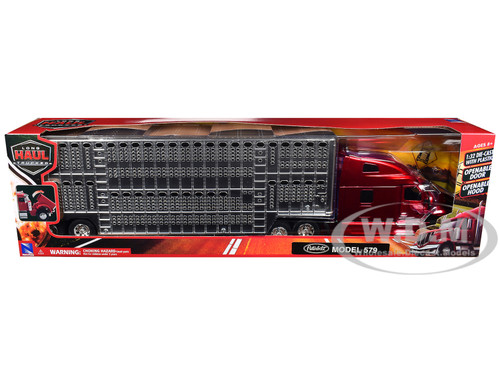
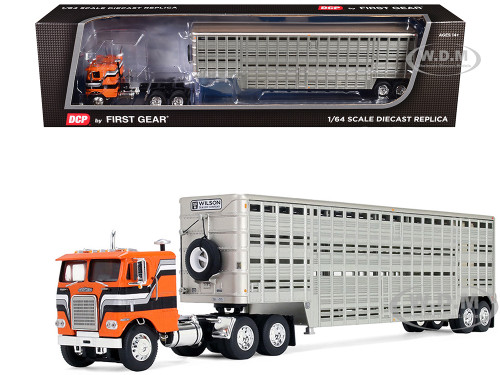
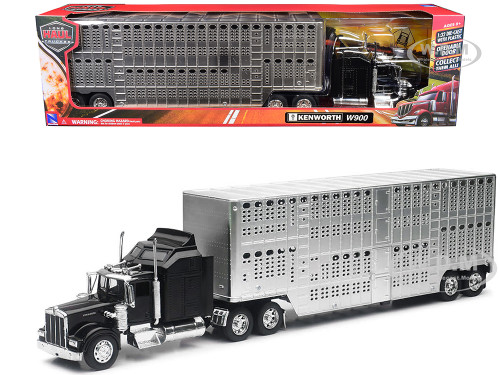
Cattle trailers are designed primarily for transporting cattle. They typically feature tall sides, ventilation openings, secure gates, and a durable floor. Larger commercial cattle trailers may have multiple compartments or levels depending on their intended use.
A scale cattle trailer can make a particularly effective companion to agricultural trucks and ranch equipment in a farm-themed collection.
Horse Trailers
Horse trailers are designed around the specific requirements of transporting horses. They can include individual stalls, partitions, rear ramps or doors, and specialized interior arrangements. Some are relatively compact trailers suitable for pickup towing, while others are larger multi-horse configurations.
Multi-Purpose Livestock Trailers
Some trailers are designed to accommodate more than one type of livestock. These may use adjustable partitions or flexible interior arrangements so the trailer can be adapted for different agricultural applications.
When shopping for a diecast model, collectors should pay attention to the trailer's configuration and proportions because different livestock trailers can have substantially different appearances.
Features Found on Livestock Trailer Models
The most interesting livestock trailer diecast models often reproduce the functional features that distinguish these trailers from ordinary cargo equipment.
Depending on the particular model, collectors may find details such as:
- Ventilated side panels or rails
- Enclosed or partially enclosed bodywork
- Rear loading gates
- Side access doors
- Interior dividers or partitions
- Wheel wells and fenders
- Multiple axles
- Agricultural tires and wheels
- Trailer frame and suspension details
- Safety lighting
- Hitch and towing components
- Manufacturer or livestock-hauling graphics
The combination of open sections and solid structural elements can give livestock trailers a particularly detailed appearance at smaller scales.
Livestock Trailers and Agricultural Transportation
Livestock transportation has long been an important part of agriculture. Animals often need to be moved between pasture and farm facilities, transported to livestock markets, taken to veterinary or agricultural facilities, or moved between farms and ranches.
Before modern motor vehicles, livestock was moved primarily by driving animals overland or using wagons and other animal-drawn conveyances. The development of motorized trucks and trailers made it possible to transport larger numbers of animals more efficiently and over greater distances.
As trucking became increasingly important to agriculture during the 20th century, specialized livestock bodies and trailers developed alongside other agricultural transportation equipment. Improvements in trailer construction, ventilation, flooring, gates, partitions, and loading systems allowed livestock transportation to become increasingly specialized.
Modern livestock trailers continue to reflect this purpose-built approach. Their design must balance durability and efficient loading with ventilation, animal handling, and secure containment.
Livestock Trailers in Diecast Collections
Agricultural diecast collecting extends well beyond tractors. Trailers are an important part of the equipment ecosystem because they show how agricultural machinery, animals, feed, crops, and other materials move around the farm and beyond it.
A livestock trailer can therefore add context to an agricultural display. Instead of showing a tractor or truck by itself, collectors can create a more complete scene featuring a towing vehicle and trailer.
A livestock-themed display might include:
- A pickup towing a smaller livestock trailer
- A farm truck with a larger livestock trailer
- Cattle or horse models positioned around a ranch scene
- Agricultural buildings and fencing
- A tractor or loader working nearby
- A livestock-market transportation scene
- A rural highway hauling scene
These combinations can make a collection feel more like a working farm or ranch rather than simply a group of individual vehicles.
Choosing the Right Scale
Scale is an important consideration when purchasing livestock trailer diecast models. Agricultural trailers are produced in different scales, and compatibility with the rest of a collection can make a significant difference in the appearance of a display.
Common agricultural model scales include 1/16, 1/32, and 1/64, although other scales may be available depending on the manufacturer and specific product.
1/16 Scale
Large 1/16 scale agricultural models are often favored by collectors who want highly visible equipment and substantial farm displays. A livestock trailer in this scale can work particularly well with larger farm tractors and agricultural vehicles.
1/32 Scale
1/32 is a popular scale for agricultural models because it offers a useful balance between physical size and detail. Livestock trailers in this scale can be paired with many farm tractors, trucks, and other agricultural equipment.
1/64 Scale
1/64 scale is especially convenient for collectors building larger farm scenes or collections with many vehicles and implements. A livestock trailer can be combined with tractors, pickups, trucks, livestock, buildings, and accessories without requiring a large amount of display space.
Always check the individual product specifications because the available scale and exact trailer dimensions can vary between manufacturers and models.
Livestock Trailer vs. Other Agricultural Trailers
The intended cargo is the easiest way to distinguish livestock trailers from other agricultural trailer categories.
A grain trailer is designed to carry bulk agricultural commodities such as corn, wheat, soybeans, and other grain products. Livestock trailers, by contrast, are designed around the safe containment and transportation of live animals.
A flatbed trailer provides an open platform for machinery, materials, or other cargo, while a livestock trailer has sides, gates, rails, or enclosure features intended to contain animals.
A utility trailer is a general-purpose hauling platform and normally lacks the specialized ventilation and containment features associated with livestock transportation.
These distinctions are useful for collectors because choosing the correct trailer type can help create a more authentic agricultural display.
What Collectors Should Look For
When selecting a livestock trailer model, consider how it will fit with the rest of your collection. The towing vehicle, scale, trailer configuration, and overall styling should work together.
Important details to consider include:
Towing Compatibility
Think about whether the trailer is intended to be displayed behind a pickup, farm truck, or larger truck tractor. The hitch arrangement and overall proportions can help determine the most appropriate combination.
Trailer Construction
Look at the side rails, gates, body panels, frame, axles, and wheel configuration. These details help communicate the purpose of the model even at smaller scales.
Agricultural Styling
Brand markings, paint schemes, mudguards, wheels, and other details can give a livestock trailer a distinctive farm or ranch appearance.
Display Size
Consider the available display space. A large livestock trailer can become a focal point in a farm scene, while a 1/64 model can be incorporated into a much larger agricultural layout.
Building a Farm or Ranch Diorama
Livestock trailers are particularly useful for collectors who enjoy dioramas. Their purpose naturally connects them to farms, ranches, livestock markets, barns, pastures, and rural roads.
Pairing a livestock trailer with models from the Tractor category can create a classic agricultural setting. A pickup or Truck can provide the towing vehicle, while additional agricultural equipment can show different stages of farm operations.
A trailer positioned near a barn or loading area can represent animals being prepared for transportation. Alternatively, a truck and livestock trailer on a rural road can create a simple but recognizable agricultural transportation scene.
Because livestock trailers have distinctive side rails and loading gates, they remain recognizable even when displayed as part of a larger scene.
Collect Livestock Trailer Diecast Models
Livestock trailers bring an important agricultural transportation element to diecast collections. Their specialized construction, ventilated bodies, loading gates, and distinctive proportions make them different from ordinary cargo and utility trailers.
Whether you collect farm equipment, agricultural vehicles, trucks, or rural-themed models, a livestock trailer diecast model can provide an effective way to expand a collection and create a more complete farm or ranch display.
Browse the Livestock category at DiecastModelsWholesale.com to explore available scale trailer models and find the right agricultural transporter for your collection or diorama.






 $19.99Was $21.99Save 9%


