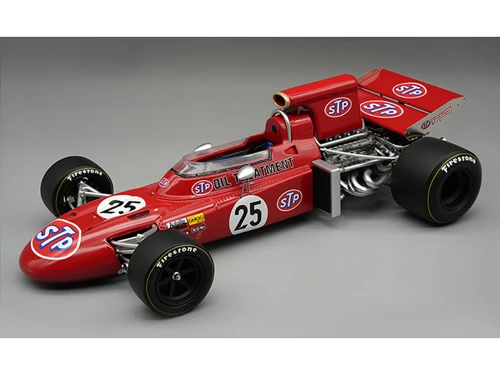
March Diecast Models
March is a historic British motorsport marque best known for its Formula One race cars and contributions to open-wheel racing. Founded in 1969, March Engineering became an important name in international motorsport, producing competition cars for Formula One, Formula Two, Formula Three, IndyCar racing, and other racing categories. For diecast collectors, March models offer a way to celebrate a distinctive era of racing engineering and the teams, drivers, and championship battles that shaped the sport.
The March diecast models category at Diecast Models Wholesale is intended for motorsport enthusiasts, Formula One fans, and collectors of miniature racing cars. Depending on current availability, March collectibles may represent historic single-seater race cars and other competition vehicles associated with the marque.
March cars are particularly interesting to collectors who appreciate the technical development of racing machinery. Their designs reflect changes in aerodynamics, chassis construction, engine packaging, and racing regulations across different decades. A March model can stand alone as a display piece or become part of a larger collection of classic Formula One cars and historic motorsport vehicles.
Whether you collect Formula One cars by decade, follow the history of British racing constructors, or are looking for a distinctive addition to a motorsport display, March diecast models connect miniature collecting with the engineering and competition of professional racing.
The History of March Engineering
March Engineering was founded in 1969 in Bicester, England, by Max Mosley, Alan Rees, Graham Coaker, and Robin Herd. The company's name was formed from the initials of its founders' surnames, with the additional letter coming from Coaker's surname. The organization entered motorsport at a time when specialist constructors played a major role in developing cars for different racing categories.
March quickly established itself as a versatile racing constructor. Rather than concentrating exclusively on one championship, the company built cars for multiple levels of single-seater competition. This broad approach helped make March a familiar name among teams and drivers seeking competitive machinery.
March in Formula One
March entered Formula One in 1970, an important period in the evolution of Grand Prix racing. Its early Formula One program attracted attention with the March 701, which was driven by notable competitors including Jackie Stewart, Jo Siffert, and Chris Amon in the car's early season.
March's Formula One history included several generations of cars developed in response to changing regulations, aerodynamic concepts, and competitive demands. The marque participated as both a constructor and a supplier of chassis to other teams, giving its cars a presence beyond a single factory entry.
For collectors, March Formula One models can represent different stages of Grand Prix engineering. Differences in bodywork, wings, air intakes, sponsor liveries, and chassis proportions help distinguish one season and car design from another.
Notable March Racing Cars
March produced a wide variety of racing cars, with several models becoming recognizable examples of particular periods in motorsport history.
March 701
The March 701 was the company's first Formula One car, introduced for the 1970 season. It helped establish March as a serious competitor almost immediately. Jackie Stewart won the Spanish Grand Prix in a 701, while the car was also driven by other prominent racers during the season.
The 701 is an interesting subject for collectors because it represents the beginning of March's Formula One story. Its simple, purposeful design reflects the engineering priorities of Grand Prix racing at the start of the 1970s.
March 761
The March 761 competed in Formula One during the mid-1970s. Its appearance reflects a period when racing cars increasingly relied on aerodynamic wings and carefully developed bodywork to improve performance.
For collectors of classic Formula One models, the 761 represents the look and technical character of Grand Prix racing during this era. Period racing liveries and driver-specific versions can also make models from this generation appealing display pieces.
March 811
The March 811 competed in Formula One in 1981. It belongs to a period when ground-effect aerodynamics and changing technical regulations strongly influenced Formula One car development.
A miniature representing the 811 can complement collections focused on early-1980s racing, offering a contrast to the more straightforward designs of earlier decades and the more refined aerodynamic forms that followed.
March 881
The March 881 was one of the marque's most memorable Formula One designs. Developed for the 1988 season, it was designed under the direction of Adrian Newey and driven by Ivan Capelli and Maurício Gugelmin for the March team.
The car earned attention for its competitive performance against better-funded rivals. Capelli achieved a second-place finish at the Portuguese Grand Prix, and the 881 later became a notable part of Newey's career as a racing car designer.
For diecast collectors, the 881 represents an important period in late-1980s Formula One, when aerodynamic design and engineering ingenuity were becoming increasingly central to performance.
March Indy Cars
March was not limited to Formula One. The company also became a major supplier of chassis for American open-wheel racing, including the Indianapolis 500 and CART competition.
March chassis were widely used in Indy car racing during the 1980s and into the following decade. Their presence in American motorsport gives collectors another direction to explore beyond European Grand Prix racing.
An Indy car model can add variety to a collection of open-wheel racers, particularly when displayed alongside Formula One cars from the same period. The differences in bodywork, aerodynamic requirements, and race configuration illustrate how cars were adapted to different circuits and competition formats.
Why Collect March Diecast Racing Cars?
March models appeal to several types of motorsport collectors. Their value as display pieces often comes from the racing history and engineering ideas represented by each car.
-
Formula One history: March cars represent multiple generations of Grand Prix competition, from the 1970 debut to the team's later appearances.
-
British racing engineering: The marque is an important part of the history of independent British racing constructors.
-
Distinctive designs: Differences in wings, bodywork, air intakes, and chassis proportions make March cars visually interesting across different periods.
-
Driver and team connections: Particular cars can be associated with recognizable drivers, teams, and memorable race weekends.
-
American open-wheel racing: March's Indy car involvement broadens its appeal beyond Formula One.
-
Motorsport display collections: March miniatures can be combined with models from other constructors to represent a season, decade, or racing category.
Collectors may focus on one particular car, such as the 701 or 881, or build a broader selection showing the marque's development across different championships.
Choosing a March Diecast Model
When selecting a March racing car model, consider the specific vehicle, the represented season, and the level of detail that matters most to you.
Identify the Car and Racing Season
March competed across multiple racing categories and produced cars that could look quite different from one year to the next. Check the product description for the model designation, year, driver, and racing series where these details are provided.
This is especially important if you collect cars associated with a particular Grand Prix, driver, or championship season.
Compare Racing Liveries
Racing liveries are an important part of a model's identity. Sponsor graphics, team colors, race numbers, and driver markings can distinguish cars that otherwise share a similar design.
If you are collecting a specific historical car, compare the miniature's livery with the version you want to represent. Cars sometimes appeared in different configurations throughout a season, so the exact race or specification can matter to dedicated collectors.
Examine the Model's Details
Depending on the product, useful details may include:
-
Front and rear wing designs.
-
Bodywork and air intake shapes.
-
Wheels and tires.
-
Cockpit and driver figure.
-
Sponsor markings and race numbers.
-
Base, display stand, and packaging.
Not every model includes all these features, and the level of detail varies by manufacturer and release. Check the individual product information to understand what is included.
Consider Scale and Display Space
Racing car miniatures are produced in different scales, and the best choice depends on your display plans and existing collection. Smaller models allow you to display more cars in a limited space, while larger models can make individual design details easier to appreciate.
If you are collecting several March cars, choosing a consistent scale can help create a more unified display. If you are purchasing a single model as a centerpiece, you may prefer a larger format when available.
Building a Historic Formula One Collection
March models can play an important role in a collection focused on the evolution of Formula One. Pairing an early car such as the 701 with a later design such as the 881 highlights how Grand Prix engineering changed over nearly two decades.
A broader constructor-focused display might include March alongside other British racing marques. Comparing the cars can reveal differences in aerodynamic philosophy, bodywork, sponsorship, and the ways smaller constructors competed against larger organizations.
Collectors interested in American motorsport can also explore March's Indy car history. Including open-wheel cars from different championships helps demonstrate how similar engineering principles were adapted for different tracks and race formats.
For a historically organized display, consider grouping cars by season or decade and identifying each model by its car designation, driver, and competition. These details can give a collection more context and make the story behind each miniature easier to appreciate.
Shop March Diecast Models at Diecast Models Wholesale
March occupies a distinctive place in motorsport history as a British constructor that competed in Formula One and supplied cars for other major racing categories. From the pioneering 701 to the technically significant 881 and March's Indy car designs, the marque offers plenty of interest for collectors of historic racing machinery.
Explore the March category at Diecast Models Wholesale to discover available racing car miniatures, compare their details, and find a model that suits your collection. Whether you are a Formula One enthusiast, a fan of classic British constructors, or a collector of historic open-wheel racing cars, a March model can add a meaningful piece of motorsport history to your display.


 $299.99