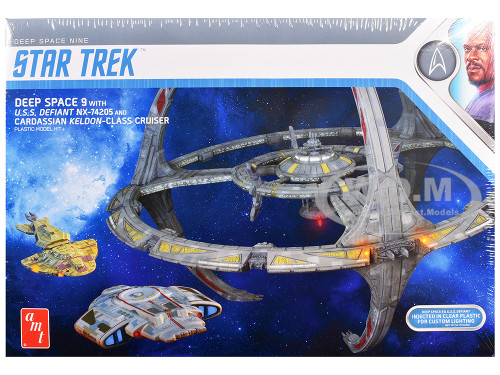
1/3300 scale diecast models are extremely compact scale collectibles designed to represent large real-world subjects in miniature. At a ratio of 1:3300, every 3,300 units of the full-size prototype are represented by one unit on the model. This makes the scale particularly useful for very large ships, aircraft, transportation subjects, and other prototypes where minimizing display space is a priority.
At 1/3300 scale, a 3,300-foot prototype would measure approximately 12 inches on the model. A 2,000-foot prototype would be about 7.3 inches, while a 1,000-foot prototype would measure approximately 3.6 inches. Large real-world subjects can therefore become remarkably compact display pieces.
Because 1/3300 is an uncommon and highly specialized scale, the products available in this category may represent particular subjects rather than a broad selection across every type of vehicle. Shoppers should review individual listings for the exact prototype, dimensions, material, manufacturer, and included display accessories.
Understanding 1/3300 Scale
Scale modeling expresses the relationship between a miniature and its full-size prototype. In a 1/3300 model, one unit on the model represents 3,300 of the same units on the original.
This makes 1/3300 especially suitable for very large prototypes. The scale can reduce ships, aircraft, and other large transportation subjects to a size that is much easier to display.
Some approximate examples:
| Prototype Length | Approximate 1/3300 Model Length |
|---|
| 3,300 feet |
12 inches |
| 2,500 feet |
9.1 inches |
| 2,000 feet |
7.3 inches |
| 1,500 feet |
5.5 inches |
| 1,250 feet |
4.5 inches |
| 1,000 feet |
3.6 inches |
| 800 feet |
2.9 inches |
| 700 feet |
2.5 inches |
| 600 feet |
2.2 inches |
| 500 feet |
1.8 inches |
| 300 feet |
1.1 inches |
| 200 feet |
0.7 inch |
| 100 feet |
0.36 inch |
These calculations are useful for estimating the general length of a model, but actual product dimensions can vary according to the shape and configuration of the prototype.
What to Expect in the 1/3300 Category
1/3300 is a specialized compact scale, so availability can differ considerably from more common diecast scales. Depending on current products, shoppers may find subjects such as:
- Large ships and maritime vessels
- Aircraft carriers and naval subjects
- Commercial and passenger ships
- Ocean liners
- Military vessels
- Large aircraft
- Aviation subjects
- Transportation prototypes
- Historical subjects
- Other specialized large prototypes
The exact selection should always be confirmed through the individual product listing. Scale alone does not determine what subjects will be available.
1/3300 Ships and Maritime Models
Large ships are particularly well suited to extremely compact scales. At 1/3300, a vessel that would occupy many inches or even feet at a larger scale can become a small display model.
Depending on availability, maritime subjects may include aircraft carriers, major warships, commercial vessels, passenger ships, ocean liners, submarines, or other historically significant ships.
The compact format can be especially useful for collectors who want to display multiple vessels together. Instead of dedicating substantial shelf space to individual ships, a collector can potentially create a fleet-style arrangement with numerous subjects.
A maritime collection can be organized by:
- Navy or country
- Historical era
- Ship class
- Individual vessel
- Aircraft carrier groups
- Commercial shipping
- Ocean liners
- Passenger vessels
- Maritime history
- Modern or historical fleets
Naval and Military Collecting
For naval collectors, 1/3300 offers an opportunity to represent large fleets in a very small area. Aircraft carriers, battleships, cruisers, destroyers, submarines, and support vessels can be grouped together when products are available in a consistent scale.
At this size, the model's overall proportions, silhouette, colors, markings, and major structural features can be more important visually than the tiny mechanical details found on larger models.
Collectors interested in historical fleets can also use compact models to create displays covering different eras. A collection might focus on a particular navy, war, ship class, or period of naval development.
Commercial Ships and Ocean Liners
1/3300 can also appeal to collectors interested in commercial maritime history.
Large ocean liners, passenger ships, cargo vessels, tankers, and other commercial prototypes can be represented in a highly compact format. This allows collectors to display several famous vessels together without requiring a large cabinet.
An ocean-liner collection can be arranged chronologically or by shipping company, while a broader maritime collection can combine passenger vessels with commercial and naval subjects.
For collectors primarily interested in the historical significance of individual ships, 1/3300 provides a way to represent the vessel without making physical size the dominant feature of the display.
1/3300 Aircraft Models
Although the scale is particularly useful for very large maritime subjects, its compact dimensions can also be suitable for aircraft and other large transportation prototypes when products are manufactured in this ratio.
Large commercial aircraft can become very small at 1/3300. For example, a 250-foot aircraft would measure less than one inch in length. This can make the scale useful for collectors who want to represent large aircraft fleets without occupying the space required by larger aviation scales.
Depending on current availability, aviation collectors may encounter commercial, airline, military, transport, or other specialized aircraft.
Because aircraft vary considerably in length and wingspan, shoppers should use the product's listed dimensions rather than estimating size from scale alone.
Why Collectors Choose Extremely Compact Scales
The principal advantage of 1/3300 is space efficiency.
Large prototypes can be difficult to display at larger scales. A 1,000-foot ship would be approximately 17.1 inches at 1/700, 12 inches at 1/1000, 10 inches at 1/1200, and only about 3.6 inches at 1/3300.
That difference can dramatically change how many models fit into a display.
A compact scale can be particularly attractive to collectors who:
- Have limited display space
- Prefer fleet or group collections
- Collect very large ships
- Want to represent many prototypes
- Enjoy miniature transportation displays
- Collect unusual or specialized scales
Comparing 1/3300 With Other Scales
Because 1/3300 is an uncommon scale, comparison with nearby ratios can help collectors understand the difference.
A 1/2500 model is 32% larger linearly than a 1/3300 model. A 1/2000 model is 65% larger, while a 1/1250 model is 164% larger.
The differences become even more pronounced with common ship-modeling scales:
- 1/1000 is 230% larger linearly than 1/3300.
- 1/700 is approximately 371% larger.
- 1/500 is 560% larger.
- 1/400 is 725% larger.
For a 1,000-foot prototype, the approximate model lengths are:
| Scale | Approximate Model Length |
|---|
| 1/3300 |
3.6 inches |
| 1/2500 |
4.8 inches |
| 1/2000 |
6 inches |
| 1/1250 |
9.6 inches |
| 1/1000 |
12 inches |
| 1/700 |
17.1 inches |
| 1/500 |
24 inches |
| 1/400 |
30 inches |
This illustrates the considerable space savings available with 1/3300.
Building a 1/3300 Collection
Since 1/3300 is highly specialized, collectors should pay close attention to individual product information.
Verify the Scale
Confirm that the model is specifically listed as 1/3300. Nearby compact scales can look similar, but their dimensions can differ substantially.
Check the Prototype
The actual size of the original aircraft, ship, or vehicle will determine the approximate size of the finished model.
Consider Display Space
The scale is naturally suited to compact displays, but large prototypes can still produce models several inches long. Plan the display according to the dimensions of each individual product.
Decide on Collection Consistency
Collectors creating a dedicated 1/3300 display should maintain the same scale whenever possible. Those collecting by subject may choose to combine 1/3300 with nearby scales when a desired prototype is unavailable in the preferred ratio.
Displaying 1/3300 Scale Models
The extremely small footprint of 1/3300 models allows collectors to experiment with larger group displays.
A maritime collection can be arranged as a fleet, harbor, historical lineup, or collection of famous vessels. Aircraft can be grouped by airline, aircraft family, military service, or historical era.
A multi-level display case can help organize numerous compact models while keeping individual subjects visible. For especially small models, a protected case is useful for reducing dust and accidental contact with delicate components.
Because the amount of visible detail can be limited by the very small scale, good lighting and a clear display environment can help viewers appreciate the model's silhouette, markings, and overall design.
Choosing a 1/3300 Model
When shopping for a 1/3300 scale diecast model, consider more than the ratio alone.
Look at:
- Prototype: Identify the exact aircraft, ship, or vehicle represented.
- Dimensions: Confirm the listed finished model size.
- Material: Check whether the product is diecast metal, plastic, or another material.
- Display accessories: Determine whether a stand or other display component is included.
- Features: Review the listing for any special features or separately supplied components.
- Collection compatibility: Consider how the model will fit with your existing subjects and scales.
These details are especially important for uncommon scales where individual products may have very different applications.
1/3300 Scale for Collectors
1/3300 scale is best suited to collectors who value compact representation, large prototypes, and efficient displays. It can turn enormous ships and other transportation subjects into manageable miniatures while allowing many models to occupy a relatively small area.
The scale is also appealing to collectors who enjoy specialized and unusual ratios. Instead of choosing a model solely because it is available in a common scale, a collector can use 1/3300 when the subject, size, and display requirements make the ratio a good fit.
For fleet collectors in particular, the ability to represent many large prototypes together can be one of the scale's greatest advantages.
Find 1/3300 Scale Diecast Models
Whether you are interested in miniature ships, naval subjects, large aircraft, maritime history, transportation, or specialized collectibles, 1/3300 offers an exceptionally compact approach to scale collecting.
Browse the available 1/3300 scale diecast models at DiecastModelsWholesale.com and discover miniature representations of large real-world subjects for your collection and display.