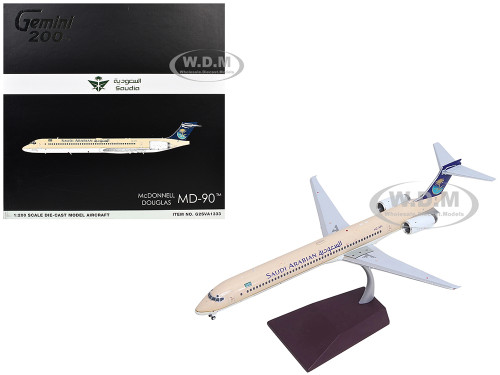
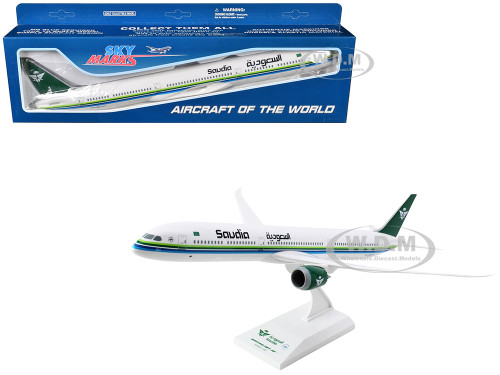
Discover the history of Saudia Airlines through collectible diecast airplane models inspired by Saudi Arabia’s national airline. Also known historically as Saudi Arabian Airlines, Saudia has played an important role in connecting the Kingdom of Saudi Arabia with destinations across the Middle East, Asia, Europe, Africa, and North America. Its aircraft reflect decades of commercial aviation development, from early propeller-driven airliners to the wide-body jets used on long-distance international routes.
Saudia Airlines diecast airplane models appeal to commercial aviation enthusiasts, airline memorabilia collectors, and hobbyists who appreciate recognizable airline liveries and historically significant aircraft. Depending on the products available, this category may include models representing different periods of the airline’s development, aircraft families, and paint schemes.
Whether you collect aircraft from national flag carriers, focus on Boeing and Airbus airliners, or are building a display of international airline liveries, Saudia offers a distinctive subject with a strong connection to the development of modern aviation in the Middle East.
The History of Saudia Airlines
From an Early Douglas DC-3 to an International Airline
Saudia’s history began in 1945, when U.S. President Franklin D. Roosevelt presented a Douglas DC-3 aircraft to Saudi Arabia’s founder, King Abdulaziz Al Saud. The aircraft helped establish the foundation for the country’s developing commercial aviation services. As air travel became increasingly important for domestic transportation and international connections, the airline expanded its operations and fleet.
Early services connected important Saudi cities, including Jeddah, Riyadh, and Dhahran. These routes supported passenger travel and helped strengthen links between the Kingdom’s growing urban centers. The airline subsequently expanded its international network, serving destinations throughout the region and beyond.
The Douglas DC-3 represents an important chapter in Saudia’s early development. Its role in the growth of commercial aviation makes it an appealing subject for collectors interested in the origins of national airlines and the aircraft that helped establish their route networks.
Entering the Jet Age
The introduction of jet aircraft marked a major turning point for Saudia. The airline added the Boeing 720B in 1962, becoming one of the early Middle Eastern carriers to operate commercial jetliners. Jet aircraft offered greater speed and improved the airline’s ability to serve longer routes efficiently.
Saudia continued to modernize its fleet with larger and more capable aircraft. Boeing 707s supported the expansion of international services, while later Boeing 747s helped accommodate demand on high-capacity routes. These aircraft also reflected the broader transformation of global aviation as jet travel became increasingly accessible.
For collectors, models representing Saudia’s earlier Boeing fleet provide a way to explore the transition from the first generation of commercial jets to the wide-body aircraft that reshaped international passenger travel.
Modernization and Global Connectivity
As international air travel developed, Saudia introduced newer aircraft designed for different route lengths and passenger requirements. Airbus narrow-body aircraft support shorter and medium-haul services, while larger Airbus and Boeing aircraft have served longer international routes.
The airline’s fleet history includes several recognizable commercial aircraft families, making Saudia relevant to collectors who specialize in particular manufacturers, aircraft generations, or airline liveries. The evolution of its fleet also provides a useful theme for building a display that traces commercial aviation from the mid-20th century into the modern era.
Notable Saudia Aircraft for Collectors
The following aircraft types are associated with different periods of Saudia’s history. Their inclusion provides historical context and does not guarantee that a corresponding diecast model is currently available.
Douglas DC-3
The Douglas DC-3 is closely connected to the origins of Saudia. Widely used by airlines around the world, the DC-3 helped establish reliable scheduled air services during the early development of commercial aviation.
Collectors interested in historic aircraft may appreciate a Saudia DC-3 model as part of a display featuring pioneering passenger aircraft, early national airlines, or the beginnings of aviation in the Middle East.
Boeing 707
The Boeing 707 represents the arrival of the jet age at Saudia. With its four-engine configuration and long, swept wings, the 707 became one of the defining airliners of early international jet travel.
A model representing Saudia’s Boeing 707 era can complement collections focused on classic jetliners, the development of long-haul routes, or the early expansion of Middle Eastern airlines.
Boeing 747
The Boeing 747, often recognized by its distinctive upper-deck profile, became one of the most iconic wide-body airliners in commercial aviation. Its large passenger capacity made it well suited to high-demand international routes.
For airline model collectors, Saudia-liveried 747s represent an important chapter in the growth of high-capacity international air travel. They can also be displayed alongside 747 models from other national carriers to compare airline branding and aircraft variations.
Airbus A320 and A321
The Airbus A320 family is designed for short- and medium-haul operations. Its single-aisle configuration and widespread use among airlines make it a popular subject for commercial aircraft model collections.
Saudia’s Airbus narrow-body aircraft provide an opportunity to explore the airline’s domestic and regional operations. Collectors comparing A320-family models from different airlines can examine differences in livery, tail design, and aircraft presentation.
Airbus A330
The Airbus A330 is a twin-engine wide-body aircraft used on medium- and long-distance routes. It has served a variety of airlines in passenger and other commercial configurations.
A Saudia A330 model, when available, may appeal to collectors who focus on modern wide-body aircraft or want to represent a different stage of the airline’s fleet development.
Boeing 777
The Boeing 777 has been an important part of long-haul commercial aviation, with a wide fuselage, twin-engine design, and configurations suited to international passenger services. Saudia has operated variants including the 777-200ER and 777-300ER.
The aircraft’s recognizable shape and international significance make it a strong subject for collectors of modern airline models. Different variants can also add variety to a display devoted to Boeing wide-body aircraft.
Boeing 787 Dreamliner
The Boeing 787 Dreamliner represents a newer generation of commercial aircraft. Its twin-engine design, distinctive nose profile, and advanced aerodynamic features make it readily recognizable among modern passenger jets.
Saudia’s 787 fleet includes the 787-9 and 787-10. Collectors interested in contemporary aviation may look for models representing these aircraft, particularly when comparing the airline’s modern livery across different aircraft types.
Saudia’s Airline Livery and Collecting Appeal
Saudia’s traditional blue-and-white branding is an important part of its visual identity. Its aircraft have carried national airline markings that distinguish them from other Middle Eastern carriers and make them recognizable in collections of commercial aircraft.
Livery-focused collectors often select models based on more than the aircraft type alone. Details such as the airline name, tail design, national markings, registration, and era-specific paint scheme can determine how a model fits into a collection.
When comparing Saudia airplane models, consider:
-
Aircraft type: Choose between historic propeller aircraft, classic jetliners, and modern narrow-body or wide-body jets.
-
Livery and era: Look for paint schemes that correspond to the period or fleet you want to represent.
-
Scale: Consider how the model’s dimensions will fit your available display space and existing collection.
-
Manufacturer and finish: Depending on the specific product, models may differ in detailing, materials, landing gear, display stands, and presentation.
-
Collection theme: Saudia models can complement collections devoted to national flag carriers, Middle Eastern aviation, Boeing aircraft, Airbus aircraft, or the history of international air travel.
Not every Saudia aircraft type or historical paint scheme will necessarily be represented in the available selection. Check each product listing for the exact aircraft variant, scale, livery, and included features before purchasing.
Choosing a Saudia Diecast Airplane Model
Understanding Aircraft Model Scales
Scale indicates how much smaller a model is than the real aircraft. For example, a 1:200-scale model represents an aircraft at one two-hundredth of its full-size dimensions. The most suitable scale depends on the size of the aircraft, your display space, and the models you already own.
-
1:200 scale: A useful option for collectors who want a relatively large display model with visible exterior details.
-
1:400 scale: A popular format for building airline fleets and airport scenes without requiring as much shelf space.
-
1:500 scale: Suitable for compact displays and collectors who want to represent many airlines or aircraft types in a limited area.
These are general scale considerations, not a guarantee that Saudia models are available in every scale. Always check the individual listing for its specified scale and dimensions.
Building an International Airline Collection
Saudia can serve as a centerpiece for a collection of Middle Eastern airlines or as part of a broader display of international aviation. Pairing aircraft from different periods can illustrate how commercial air travel has changed over time, from early propeller aircraft and first-generation jets to modern twin-engine wide-body airliners.
Another approach is to focus on aircraft manufacturers. A collector interested in Boeing aircraft might display Saudia models alongside other airlines’ 707s, 747s, 777s, and 787s. An Airbus-focused collection could compare Saudia aircraft with A320-family, A330, and other Airbus models operated by carriers around the world.
Before adding a model, consider whether you are collecting by airline, aircraft type, scale, historical period, or livery. A clear theme can help create a more consistent and meaningful display.
Saudia Airline Models for Collectors and Gifts
A Saudia diecast airplane model can make a thoughtful gift for aviation enthusiasts, airline memorabilia collectors, frequent travelers, and anyone with an interest in Saudi Arabia or the history of international air travel.
For an experienced collector, a particular aircraft variant or historical livery may fill a gap in an established fleet display. For a newer hobbyist, a model of a recognizable commercial airliner can be a starting point for exploring aircraft design, airline histories, and the development of global aviation networks.
When choosing a gift, verify the scale, dimensions, model details, and packaging information in the product listing. These details help ensure that the model suits the recipient’s display space and collecting preferences.
Explore the available Saudia Airlines diecast airplane models at Diecast Models Wholesale and find an aircraft that fits your collection, whether your interest lies in classic airline history, iconic Boeing jets, modern Airbus aircraft, or the distinctive identity of Saudi Arabia’s national carrier.