British Airways is one of the world's best-known airlines, with a history shaped by the development of commercial aviation in the United Kingdom. Recognized for its distinctive tail designs, blue-and-white branding, and long-haul passenger aircraft, the airline is an important subject for aviation enthusiasts and collectors of scale model airplanes.
British Airways diecast airplane models offer collectors a way to represent the airline's aircraft, liveries, and place in modern aviation history. Depending on the models available, this category may appeal to shoppers looking for aircraft associated with British Airways' short-haul European network, long-distance international routes, or earlier periods of the airline's development.
Whether you collect modern passenger jets, classic airliners, or aircraft from airlines around the world, British Airways model airplanes can provide a distinctive addition to an aviation display. Individual listings should be checked for the aircraft type, scale, manufacturer, registration, construction, and included accessories, as availability and specifications vary by product.
The History of British Airways
British Airways was formed in 1974 through the merger of British Overseas Airways Corporation (BOAC) and British European Airways (BEA), bringing together two major parts of the United Kingdom's state-owned airline industry. Its heritage also includes earlier British aviation organizations, including Imperial Airways, which was established in 1924 to develop long-distance air services.
BOAC became closely associated with Britain's international air routes, while BEA served domestic and European destinations. Their combination created a national airline with an extensive network and a broad range of aircraft operations. British Airways later became a major international carrier serving destinations across Europe, North America, Asia, Africa, and other regions.
A significant turning point came in 1987, when British Airways was privatized. The airline continued to develop its international network, update its fleet, and establish a more prominent commercial identity. In 2011, British Airways merged with Iberia under the parent company International Airlines Group (IAG), while continuing to operate under its own brand.
For collectors, this history provides several eras to explore. Earlier British Airways aircraft represent the development of the airline during the late twentieth century, while more recent models can reflect its modern fleet and current visual identity. Collecting models from different periods can help illustrate changes in aircraft design, airline branding, and the evolution of international passenger travel.
Iconic British Airways Aircraft to Collect
British Airways has operated a wide range of aircraft, from early jetliners and supersonic passenger planes to modern long-haul aircraft. These aircraft provide collectors with many different subjects to explore, depending on their interest in aviation history, aircraft design, or particular British Airways liveries.
Concorde: The Supersonic Icon
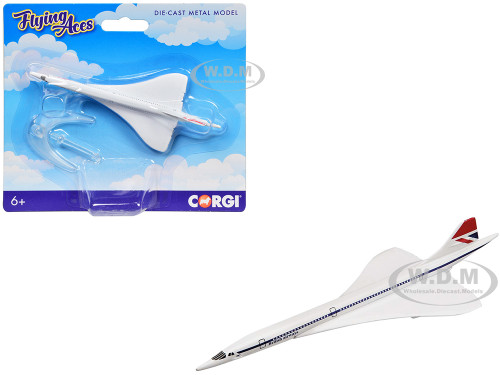
Concorde is one of the most famous aircraft associated with British Airways. Developed through a British-French partnership, the supersonic airliner entered commercial service with British Airways in 1976 and operated until its retirement in 2003.
With its slender fuselage, sharply swept delta wings, pointed nose, and four engines, Concorde has a silhouette unlike that of conventional passenger aircraft. Its ability to cruise at more than twice the speed of sound made it a landmark in commercial aviation.
British Airways Concorde models are particularly appealing to collectors interested in historic aircraft, technological milestones, and iconic airline memorabilia. The aircraft's distinctive shape also makes it stand out in a display of conventional airliners.
When comparing Concorde models, consider the scale, nose position, landing gear configuration, British Airways markings, and whether the model represents a particular aircraft registration. These details can vary between releases.
Boeing 747: The Queen of the Skies
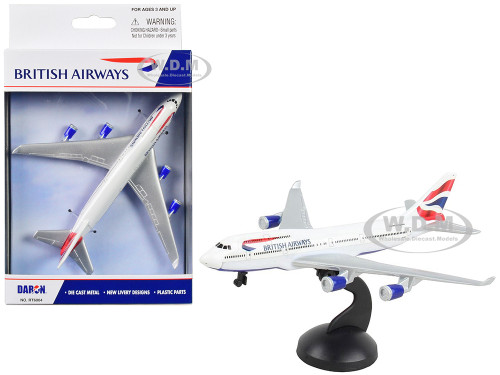
The Boeing 747 played a major role in British Airways' long-haul operations for decades. Its distinctive upper-deck profile, four engines, and wide fuselage made it one of the most recognizable passenger aircraft in the world.
British Airways operated several versions of the 747, including the 747-400. The airline retired its remaining 747s in 2020, ending a significant chapter in its fleet history.
For collectors, British Airways Boeing 747 models offer opportunities to explore different eras of the airline's branding. The aircraft appeared in several well-known liveries, including the Negus and Landor schemes, as well as heritage designs that commemorated earlier periods of British aviation.
A 747 model can also make a striking centerpiece in an airline collection because of its size and distinctive shape. Before purchasing, check the exact variant, scale, registration, and livery shown in the product listing.
Boeing 777
The Boeing 777 became an important part of British Airways' long-haul fleet, serving international destinations with a twin-engine wide-body design. Its large wings, powerful engines, and long fuselage make it a recognizable subject for modern commercial aircraft collectors.
British Airways has operated the 777-200 and 777-300 variants. Models representing these aircraft can complement collections featuring other wide-body airliners, including the Boeing 747 and 787.
Collectors comparing British Airways 777 models should pay attention to the variant represented, since the 777-200 and 777-300 differ in length. Livery period, registration, and scale are also useful factors when selecting a model.
Boeing 787 Dreamliner
The Boeing 787 Dreamliner represents a newer generation of long-haul aircraft. Its design incorporates advanced materials, modern engines, and aerodynamic refinements intended to improve operational efficiency.
British Airways operates the 787-8, 787-9, and 787-10 variants. Their differing sizes and configurations provide several possible subjects for collectors interested in contemporary passenger aviation.
A British Airways Boeing 787 model can add a modern aircraft to a collection of classic airliners. The Dreamliner's distinctive engine nacelles, swept wings, and smoothly contoured fuselage also make it visually different from earlier jetliners.
Airbus A380 and A350
British Airways has also operated major Airbus wide-body aircraft, including the A380-800 and A350-1000.
The Airbus A380 is a full-length double-deck airliner designed for high-capacity passenger operations. Its enormous fuselage and four engines give it a distinctive presence in any aircraft display.
The Airbus A350-1000 represents a newer generation of long-haul aircraft, with a twin-engine configuration, advanced aerodynamic design, and a long composite fuselage. Collectors interested in modern fleets may appreciate comparing it with British Airways' Boeing 787 and 777 aircraft.
These aircraft offer different collecting possibilities, from the exceptionally large A380 to the more streamlined A350. Product availability and scale vary, so confirm the specific model details before ordering.
British Airways Liveries and Their Collecting Appeal
British Airways' visual identity has changed over time, creating a range of aircraft liveries that appeal to collectors. Each design reflects a different period in the airline's history and can help distinguish models even when they represent the same aircraft type.
BOAC Heritage Livery
Before British Airways was formed, British Overseas Airways Corporation (BOAC) operated many of Britain's international air services. Its blue-and-gold identity, including the Speedbird symbol, remains strongly associated with the history of long-distance British aviation.
British Airways has commemorated this heritage through aircraft painted in BOAC-inspired colors. Such models may appeal to collectors interested in the airline's predecessors and the origins of its international operations.
Negus Livery
When British Airways was formed in 1974, its aircraft received a new corporate identity designed by Negus & Negus. The scheme combined a predominantly white fuselage with blue and red elements and a Union Flag-inspired tail design.
The Negus livery represents the airline's early years under the British Airways name. Collectors interested in the 1970s and early 1980s may find models representing this period particularly relevant.
Landor Livery
Introduced in 1984, the Landor livery gave British Airways a more formal and refined appearance. Its dark blue and gray tones, red accent, and distinctive crest reflected the airline's repositioning during the years leading up to privatization.
The design remained in use for more than a decade and became closely associated with British Airways' international expansion during the late twentieth century. Models featuring this livery are attractive to collectors who prefer classic jet-age branding.
World Tails and Later Designs
In 1997, British Airways introduced a new corporate identity featuring a variety of artistic tail-fin designs inspired by different cultures and regions. This initiative, often referred to as World Tails, created a more varied appearance across the fleet.
The experiment was later phased out in favor of a more consistent Union Flag-inspired design. The current Chatham Dockyard-style tail identity developed from this period of branding evolution.
For collectors, these changing liveries offer a way to build a collection around British Airways' visual history rather than aircraft type alone. A single aircraft family may be represented in multiple designs, allowing side-by-side comparisons of the airline's branding across different decades.
When shopping, verify the exact livery shown in the product images and description. Heritage paint schemes, special commemorative designs, and standard fleet liveries should not be assumed to be interchangeable.
Choosing a British Airways Model Airplane
The right British Airways diecast airplane model depends on the aircraft you prefer, the scale of your existing collection, and how you intend to display it.
Understanding Aircraft Scales
Scale indicates how much smaller a model is than the full-size aircraft. For example, a 1:400 scale airplane is approximately one four-hundredth the length of the real aircraft.
Common scales for commercial aircraft models include:
-
1:400 scale: A compact choice for collectors displaying multiple airlines or building miniature airport scenes.
-
1:200 scale: A larger format that provides a stronger display presence and makes many exterior details easier to see.
-
Other scales: Availability depends on the particular aircraft, manufacturer, and release.
These are general examples of scales used for airline collectibles, not a guarantee that every British Airways aircraft is offered in each size. Always check the product listing for the actual scale and dimensions.
Details Worth Comparing
Before choosing a model, consider the following:
-
Aircraft variant: Identify whether the model represents a Concorde, Boeing 747-400, Boeing 777, Boeing 787, Airbus A380, Airbus A350, or another aircraft.
-
Livery: Confirm the paint scheme and period represented.
-
Registration: If you collect specific aircraft, check whether the listing identifies the registration.
-
Materials: Diecast aircraft may combine metal and plastic components, while other models may be constructed primarily from plastic.
-
Display accessories: Check whether a stand or other accessories are included.
-
Packaging: Consider packaging condition if the model is intended as a gift or will remain in its original box.
Model construction, detail, and accessories vary by manufacturer and release. Product-specific descriptions are the best guide to what you will receive.
British Airways Models for Collectors and Gift Shoppers
British Airways airplane models can appeal to a broad range of aviation enthusiasts. Some collectors focus on particular aircraft families, while others build collections around airline history, historic liveries, or international carriers.
A Concorde model may suit someone fascinated by supersonic flight, while a Boeing 747 can represent the era of large four-engine passenger jets. Collectors interested in modern aviation may prefer the Airbus A350 or Boeing 787. A heritage-livery model may be especially meaningful to someone who remembers a particular period of British Airways history.
These models can also make thoughtful gifts for aviation enthusiasts, frequent travelers, airline memorabilia collectors, and people with a connection to British aviation. If purchasing a gift, check the scale and dimensions to ensure the model suits the recipient's available display space.
Explore the available British Airways diecast airplane models to discover collectible representations of the airline's aircraft, distinctive liveries, and aviation heritage. Review individual listings to find a model that matches your preferred aircraft, era, and collection.