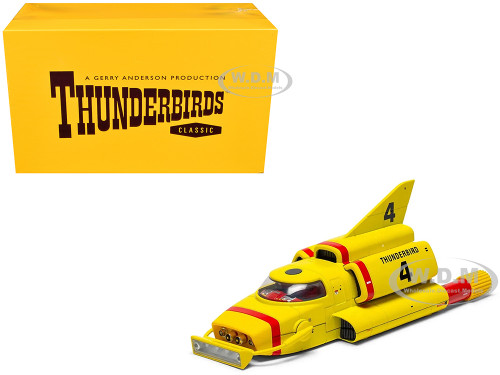
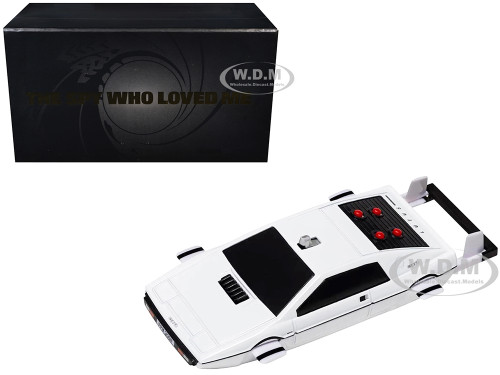
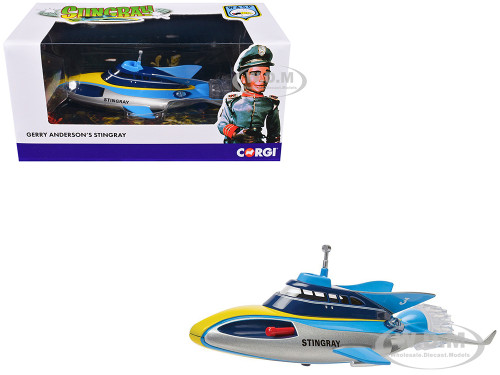
Submarine models bring the history of underwater exploration, naval technology, military service, and science-fiction vehicles into a compact collectible format. At DiecastModelsWholesale.com, the Submarine category includes scale submarines and submarine-themed models ranging from historically significant naval vessels to fictional vehicles from television and film. Current offerings include the German U-Boat Type XXI, USS Nautilus (SSN-571), Thunderbird 4 from Thunderbirds, Stingray from Gerry Anderson's Stingray, and the Lotus Esprit S1 submarine from the James Bond film The Spy Who Loved Me.
The category is therefore useful for several types of collectors. Military history enthusiasts can focus on real submarines and important classes, while science-fiction and movie collectors can find fictional underwater craft. Model-building enthusiasts can also choose from construction kits rather than finished diecast replicas.
Explore Submarine Models
Submarines are distinctive subjects for scale modeling because their streamlined hulls, conning towers, periscopes, diving planes, propellers, rudders, and external equipment create recognizable silhouettes even at relatively small sizes.
Depending on current availability, shoppers can find:
- Military submarine models
- Historic submarine replicas
- World War II U-Boat models
- Nuclear-powered submarine models
- Modern naval submarine subjects
- Science-fiction submarines
- Movie and television submarine vehicles
- Diecast submarine models
- Steel and plastic model kits
- Display-oriented submarine collectibles
The current DMW category includes both real naval subjects and fictional designs. For example, the Metal Earth assortment includes a German U-Boat Type XXI and USS Nautilus, while Corgi offerings include Thunderbird 4, Stingray, and the James Bond Lotus Esprit S1 submarine.
Collectors interested in a broader selection of naval subjects can also explore the Maritime & Naval collection, which includes submarines alongside battleships, aircraft carriers, cruisers, and other vessels.
A Brief History of Submarines
The history of submarines stretches back well before the modern naval submarine. During the American Revolution, David Bushnell's Turtle represented one of the earliest American attempts to create a practical underwater fighting craft. The U.S. Navy's Naval History and Heritage Command identifies Turtle as the beginning of the long American submarine story.
During the 19th century, inventors continued experimenting with underwater propulsion and navigation. The H.L. Hunley, built during the American Civil War, became historically significant as the first submarine to sink an enemy warship in combat. These early craft were extremely different from the submarines collectors recognize today, but they established important concepts for underwater warfare.
Practical submarine development accelerated toward the end of the 19th century. John Philip Holland and Simon Lake were among the inventors who developed increasingly capable submersible designs. Holland's work eventually led to the U.S. Navy purchasing USS Holland (SS-1) in 1900, marking the traditional beginning of the U.S. Navy Submarine Force.
World War I and World War II Submarines
Early submarines were often designed to operate on the surface much of the time and submerge when necessary. Their propulsion systems and limited underwater endurance meant they were quite different from the nuclear-powered submarines that would emerge decades later.
World War I demonstrated the strategic importance of submarines, while World War II transformed them into major instruments of naval warfare. U.S. fleet submarines played a particularly important role in the Pacific, where their long-range operations targeted Japanese naval and merchant shipping.
The German U-Boat became one of the most recognizable submarine types of World War II. Later German designs, particularly the Type XXI, introduced technological developments that influenced postwar submarine design. The Smithsonian notes that captured German submarines and their advanced features helped inspire major changes in submarine hull design, underwater speed, and endurance after World War II.
The Metal Earth German U-Boat Type XXI model currently offered by DMW gives collectors an opportunity to build a representation of this important stage in submarine development.
The Nuclear Submarine Revolution
One of the biggest changes in submarine history came with nuclear propulsion.
The USS Nautilus (SSN-571) became the world's first nuclear-powered submarine. Construction began in 1952, and Nautilus was commissioned by the U.S. Navy on September 30, 1954. On January 17, 1955, it began operating under nuclear power.
Nuclear propulsion fundamentally changed what a submarine could do. Instead of relying on conventional propulsion systems with limited submerged endurance, nuclear-powered submarines could remain underwater for extended periods while maintaining high speeds and long-range capability. The technology helped transform the submarine from a vessel that periodically hid underwater into a true long-duration underwater ship.
Nautilus also made history in 1958 when it completed a submerged journey beneath the North Pole during Operation Sunshine.
The USS Nautilus remains an especially interesting subject for collectors because it represents both naval history and a major technological transition. DMW's Metal Earth USS Nautilus model is a challenging steel model kit with 182 parts and an included display stand. The completed model measures approximately 11.2 inches long.
Submarines of the Cold War
The postwar period produced several distinct categories of military submarines. The development of nuclear propulsion was accompanied by major changes in hull design, sensors, weapons, and underwater performance.
Two important categories were attack submarines and ballistic missile submarines. Fast attack submarines were designed for missions including tracking other submarines and surface vessels, while ballistic missile submarines provided a strategic nuclear deterrent. The Smithsonian's submarine history collection describes these developments as part of the transformation of submarine design between the late 1940s and 1960s.
This history gives collectors another way to organize submarine models: by technological era, submarine class, country, mission, or historical conflict.
The Smithsonian's National Museum of American History also maintains submarine models representing vessels such as the George Washington-class ballistic missile submarine and a Russian Alfa-class submarine, demonstrating the value of scale models as historical representations of naval technology.
Fictional Submarines and Pop Culture
Not every submarine model represents a real naval vessel. Fictional submarines have been an important part of television, film, and popular culture.
Thunderbird 4
Thunderbird 4 is the compact rescue submarine operated by International Rescue in Thunderbirds. Its bright yellow design makes it immediately recognizable, and the Corgi model captures the distinctive appearance of the television vehicle.
Stingray
Corgi also produces a model of Stingray, the futuristic submarine from Gerry Anderson's 1964 television series Stingray. Its blue-and-silver body with yellow markings gives it a very different visual identity from conventional military submarines.
James Bond Lotus Esprit
The Lotus Esprit S1 submarine from the 1977 James Bond film The Spy Who Loved Me is another unusual subject. Based on the Lotus Esprit, the fictional vehicle could operate underwater and became one of the most recognizable vehicles associated with the Bond series. DMW currently lists a Corgi diecast version in the Submarine category.
These fictional subjects are particularly useful for collectors who combine military models with movie and television vehicles. They also demonstrate why a submarine collection does not have to be limited to strictly historical naval subjects.
Choosing a Submarine Model
When selecting a submarine model, consider the subject as well as the way you want to display it.
Historical Subject
Collectors interested in naval history may want to focus on a particular conflict or technological period, such as:
- Early American submarines
- World War I submarines
- World War II U-Boats
- World War II U.S. fleet submarines
- Cold War submarines
- Nuclear-powered attack submarines
- Ballistic missile submarines
- Modern naval submarines
Fictional Subject
For entertainment-focused collections, look for submarines connected with:
- Thunderbirds
- Stingray
- James Bond
- Other science-fiction films and television series
Finished Model or Kit
A finished diecast submarine can be displayed immediately, while a model kit offers a more hands-on experience. The Metal Earth Nautilus, for example, is assembled from steel parts without requiring glue or paint, although tweezers or similar tools are recommended.
Scale and Display Considerations
Submarines vary dramatically in real-world size, so model manufacturers use different scales depending on the subject and intended display size. Unlike diecast automobiles, there is no single dominant scale for submarine models.
For that reason, it is important to check the individual product specifications rather than assuming that two submarine models will have the same scale. Some submarine kits may be categorized by dimensions or as "Other" rather than using a conventional vehicle scale; the current Metal Earth USS Nautilus listing, for example, specifies its assembled dimensions instead of a conventional scale designation.
For collectors building a display around a particular scale, dimensions can be especially useful when deciding whether a new submarine will fit alongside existing ships, aircraft, or military vehicles.
Building a Naval Collection
Submarine models can form a focused collection by themselves or become part of a larger maritime display. A collector might group models by historical period, country, naval force, submarine class, or technology.
Submarines also pair naturally with other naval subjects. A collection featuring battleships, aircraft carriers, cruisers, and submarines can illustrate how different types of naval vessels performed different roles. DMW's Ships & Boats collection provides another place to explore maritime subjects.
For military collectors, submarines can also complement aircraft and other military vehicles from the same period or service. The combination can create a broader representation of naval aviation, surface fleets, and undersea operations.
Collecting Submarine Models
A good submarine collection does not have to follow one theme. Some collectors may prefer historically important vessels such as USS Nautilus, while others may concentrate on World War II U-Boats or fictional vehicles such as Thunderbird 4.
When comparing models, pay attention to:
- Prototype or fictional subject
- Historical period
- Submarine class or name
- Country or naval service
- Manufacturer
- Scale or completed dimensions
- Diecast, steel, or plastic construction
- Finished model versus model kit
- Display stand and presentation features
- Movie or television connection
From early experimental submarines to nuclear-powered vessels and imaginative vehicles from popular culture, submarine models offer a compact way to explore an unusually rich area of transportation and military history.
Browse the Submarine collection at DiecastModelsWholesale.com to discover historical submarines, detailed model kits, and memorable fictional underwater vehicles for your collection or display.