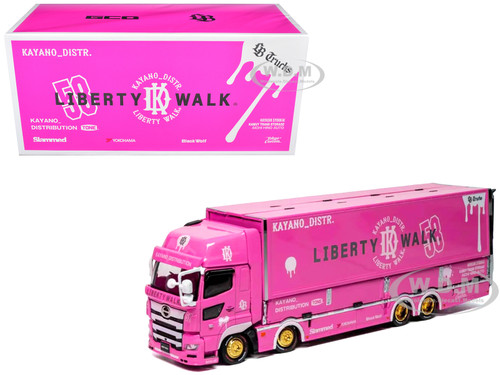
Hino diecast models are collectible replicas of vehicles from Hino Motors, the Japanese manufacturer best known for commercial trucks, buses, and heavy-duty transportation vehicles. Hino has a long history of developing vehicles for freight transportation, construction, public transit, and other demanding commercial applications, making Hino models an excellent choice for collectors interested in Japanese trucks and buses.
At DiecastModelsWholesale.com, the Hino category is designed for collectors, truck enthusiasts, and hobbyists looking for miniature representations of Hino's distinctive commercial vehicles. Depending on the individual product, shoppers may find Hino trucks, buses, and other Hino-branded vehicles in a variety of scales, configurations, and liveries.
The History of Hino
Hino's roots extend back to 1910, when Tokyo Gas Industry Co., Ltd. was established. The company's automotive history developed rapidly, and in 1917 it successfully produced the TGE-A, an early domestically designed and manufactured Japanese truck. Hino subsequently expanded its work in trucks and buses, establishing an important foundation for Japan's commercial-vehicle industry.
In 1942, the Hino plant of Diesel Motor Industry Co., Ltd. became an independent company known as Hino Heavy Industries. Following World War II, Hino concentrated heavily on diesel-powered commercial vehicles and transportation equipment. The company developed heavy-duty trailer trucks and buses as Japan rebuilt its transportation infrastructure.
The postwar period also saw Hino become an important bus manufacturer. In 1953, Hino introduced the Blue Ribbon bus, along with an under-floor-engine design that represented an important development in Japanese bus engineering. Hino also produced trolley buses and other vehicles designed for urban and long-distance passenger transportation.
Hino entered a technical relationship with Renault during the 1950s and produced the Renault 4CV under license, giving the company experience in passenger automobiles as well as its core commercial-vehicle business. Hino's long-term focus, however, remained trucks and buses.
In 1966, Hino formed a business alliance with Toyota Motor Corporation, an important development in the company's later history. Hino eventually became part of the Toyota Group and continued developing light-, medium-, and heavy-duty commercial vehicles for markets around the world.
Hino Trucks and Commercial Vehicles
Hino's greatest significance to collectors comes from its extensive range of commercial trucks. The company has produced vehicles covering everything from compact delivery trucks to heavy-duty highway and construction vehicles.
Important Hino truck families and names include:
- Hino Ranger medium-duty trucks
- Hino Dutro light-duty trucks
- Hino 300 series
- Hino 500 series
- Hino 600 series for the North American market
- Hino Profia heavy-duty trucks
- Earlier Hino T-series and HS-series commercial vehicles
- Specialized dump, cargo, tractor, and construction configurations
The Ranger is particularly important to Hino's history. Introduced as a medium-duty truck family, it became one of the company's best-known commercial vehicle names and evolved through multiple generations and markets.
The Dutro, introduced in 1999, represented Hino's modern light-duty truck range. Depending on the market, related vehicles have been sold under different series names, including the Hino 300 designation.
For collectors, these different generations provide opportunities to build displays showing how Japanese commercial truck design changed over several decades.
Hino Buses
Hino has also played an important role in bus manufacturing. The company introduced buses early in its history and continued producing vehicles for city transportation, intercity service, and tourism.
The Hino Blue Ribbon is one of the most recognizable names in Hino bus history. Introduced in the 1950s, the Blue Ribbon name has continued through multiple generations and configurations.
Other historically significant Hino buses include the Rainbow, Selega, Liesse, and various models developed for international markets.
Hino bus models can be particularly appealing to collectors who specialize in Japanese transportation history, public transit vehicles, or commercial vehicles. Different liveries and operating companies can also make similar bus designs substantially different collectibles.
Hino and Dakar Rally
Hino's history is not limited to conventional road transportation. The company has also developed a strong reputation in long-distance truck competition, particularly the Dakar Rally.
Hino first entered Dakar in 1991, using specially prepared trucks to compete in the demanding desert rally. The program became particularly successful during the 1990s, and in 1997 Hino trucks finished first, second, and third in their class.
This racing heritage adds another dimension to Hino collectibles. A Hino Dakar rally truck can appeal to both commercial-vehicle collectors and motorsport enthusiasts, particularly when displayed alongside other racing trucks and rally vehicles.
What Makes Hino Diecast Models Collectible?
Hino models offer something different from the passenger cars that dominate many diecast collections. Their emphasis on commercial transportation gives collectors the opportunity to build displays around real-world working vehicles.
Hino diecast models can be especially interesting for collectors focused on:
- Japanese trucks and commercial vehicles
- Asian transportation history
- Heavy-duty and medium-duty trucks
- Delivery and vocational trucks
- Construction and dump trucks
- Japanese buses
- Public transportation
- Dakar Rally and truck racing
- Toyota Group commercial vehicles
- Historic and modern Hino designs
Their practical, purpose-built appearance also makes Hino trucks excellent additions to larger commercial-vehicle collections.
Choosing the Right Hino Model
When shopping for a Hino diecast model, several details can help determine which vehicle is best suited to your collection.
Truck Series and Generation
Hino has used numerous model names and series designations over the decades. Ranger, Dutro, Profia, and other Hino families can look substantially different depending on their generation and market.
Collectors interested in historical accuracy should pay attention to the specific model, generation, cab design, and body configuration listed for each product.
Body Configuration
Commercial Hino vehicles can be equipped for very different jobs. Depending on the model, collectors may encounter cargo trucks, dump trucks, tractor units, buses, or other specialized configurations.
A specialized body can make a model especially useful for creating a realistic transportation or industrial display.
Livery and Operator
The paint scheme and markings can be just as important as the underlying vehicle. Hino trucks and buses have operated for transportation companies, businesses, public agencies, and racing teams around the world.
For collectors who enjoy creating realistic scenes, an operator-specific livery can provide additional historical and visual context.
Scale
Hino models are produced in different scales depending on the manufacturer and vehicle. Common commercial-vehicle scales include 1/18, 1/24, 1/32, 1/43, 1/50, and 1/64, although availability varies by individual model.
Always check the specific product listing for its exact scale, dimensions, and features before purchasing. Matching scale is especially useful when combining Hino models with other Japanese trucks, buses, trailers, or construction equipment.
Hino Models for Japanese Truck Collections
A Hino collection can be built around a particular period, vehicle type, or theme. For example, a collector might focus on classic Hino trucks from the postwar period, while another may prefer modern Ranger, Dutro, or Profia vehicles.
Hino models can also be combined with other Japanese commercial-vehicle manufacturers to create a broader collection representing the development of Japanese trucking. Comparing different manufacturers by cab design, vehicle size, body configuration, and era can make a commercial-vehicle display especially interesting.
For bus collectors, Hino models can complement displays featuring Japanese city buses, coaches, and other public transportation vehicles. For motorsport enthusiasts, Hino Dakar trucks provide a connection between commercial truck engineering and international competition.
Collecting Hino Diecast Models
Collectors often choose Hino models not simply because they are miniature vehicles, but because they represent a particular period, industry, or transportation system.
A classic Hino truck can document an era of Japanese industrial development, while a modern Hino commercial vehicle demonstrates how the company's designs evolved for contemporary transportation needs. Bus models can represent the development of public transit, and Dakar trucks provide a connection to competitive off-road motorsport.
When comparing models, consider the vehicle type, Hino series, production era, scale, body style, livery, and level of detail. These factors can help you choose models that complement the rest of your collection rather than simply selecting vehicles based on appearance alone.
Find Hino Diecast Models
Whether you collect Japanese trucks, commercial vehicles, buses, transportation models, or Dakar Rally trucks, Hino offers a distinctive range of subjects with a long and important history.
Browse the Hino diecast models at DiecastModelsWholesale.com to explore available trucks, buses, racing vehicles, and other Hino collectibles. Compare the available scales and configurations to find a Hino model that fits your collection, display, or transportation-themed lineup.