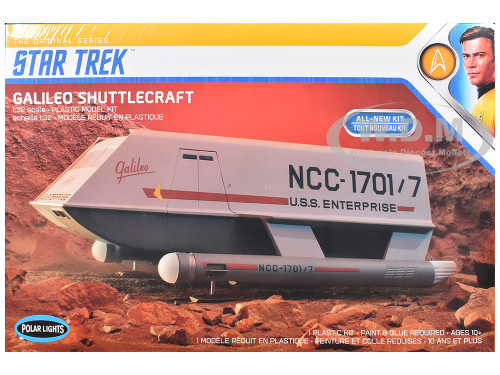
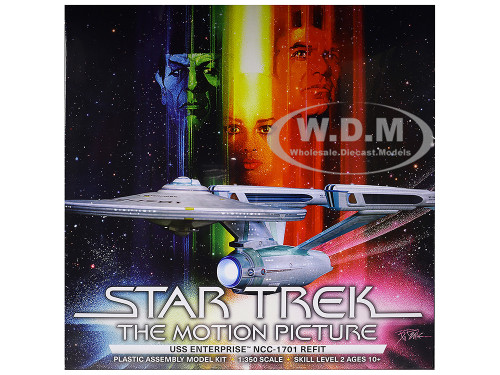
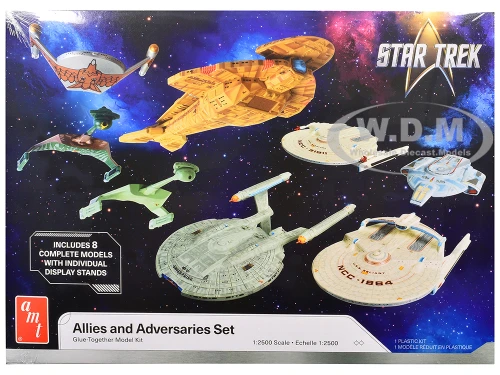
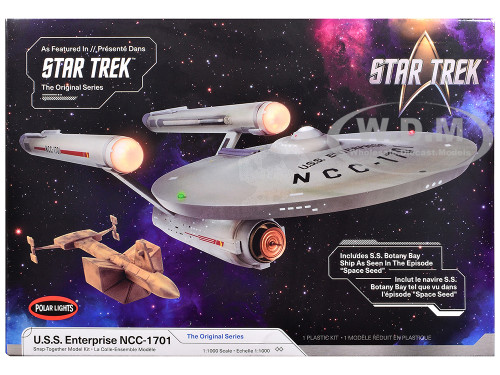
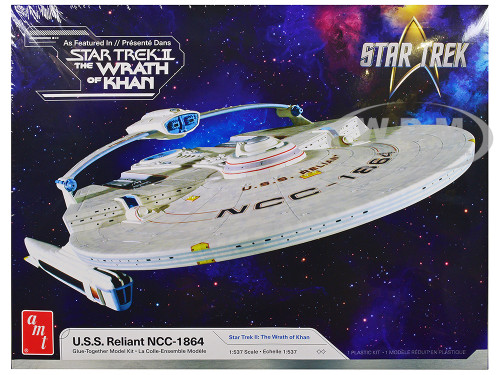
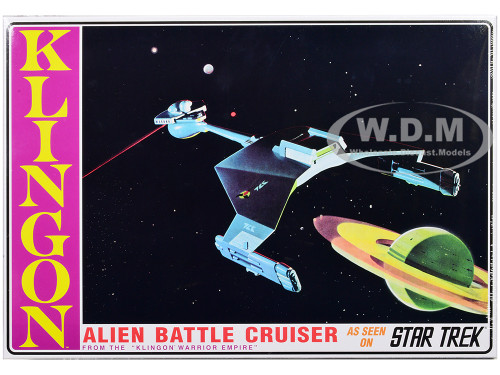
Star Trek is one of the most influential science-fiction franchises in entertainment history, inspiring generations of fans with its vision of space exploration, advanced technology, alien civilizations, and the future of humanity. Since the original television series premiered in 1966, the franchise has expanded into multiple television series, feature films, animated adventures, novels, games, and a wide range of collectibles.
The Star Trek category at DiecastModelsWholesale.com is for fans and collectors interested in merchandise inspired by this enduring science-fiction universe. Depending on available inventory, Star Trek collectibles may include spacecraft models, starship replicas, and other items connected to the franchise's memorable vessels, characters, and stories. Product selection can vary, so review individual listings to confirm the exact item, scale, materials, dimensions, and features.
Star Trek has a particularly strong connection to model collecting because its fictional spacecraft are central to the stories. From the iconic USS Enterprise to the formidable Klingon Bird-of-Prey and the distinctive USS Voyager, these vessels represent different eras, technologies, and civilizations within the franchise. Their recognizable designs make them appealing display pieces for science-fiction enthusiasts, model collectors, and longtime fans.
Whether you are expanding a starship collection, looking for a gift for a Star Trek fan, or celebrating a favorite series or film, this category offers a starting point for exploring collectibles inspired by the final frontier.
The History of Star Trek
Star Trek began with the original television series created by Gene Roddenberry, which premiered in 1966. Set in the 23rd century, the series followed the crew of the USS Enterprise on a mission to explore unfamiliar worlds, encounter new civilizations, and expand humanity's understanding of the galaxy.
The original series featured William Shatner as Captain James T. Kirk, Leonard Nimoy as Spock, and DeForest Kelley as Dr. Leonard “Bones” McCoy. Their relationships helped establish the franchise's enduring combination of exploration, scientific curiosity, moral questions, and character-driven storytelling.
Although the original series ran for only three seasons, its influence continued through reruns, an animated series, feature films, and subsequent television productions. Star Trek: The Next Generation, which premiered in 1987, introduced a new crew aboard the USS Enterprise-D and helped bring the franchise to another generation of viewers. Additional series expanded the universe with different crews, ships, historical periods, and perspectives on life in space.
Star Trek's enduring appeal comes from its ability to combine imaginative science fiction with questions about cooperation, identity, diplomacy, technology, and the responsibilities that accompany discovery. Its spacecraft are more than futuristic machines: they are the settings for many of the franchise's most memorable stories and symbols of the ideals represented by their crews.
For collectors, this long history creates numerous themes to explore. Some focus on the original series, while others prefer the ships of The Next Generation, the darker conflicts of Deep Space Nine, the exploration themes of Voyager, or the newer interpretations presented in modern Star Trek productions.
Iconic Star Trek Starships
Starships are among the franchise's most recognizable designs and a major attraction for collectors. Each vessel reflects the fictional technology, mission, and visual style of its era.
USS Enterprise
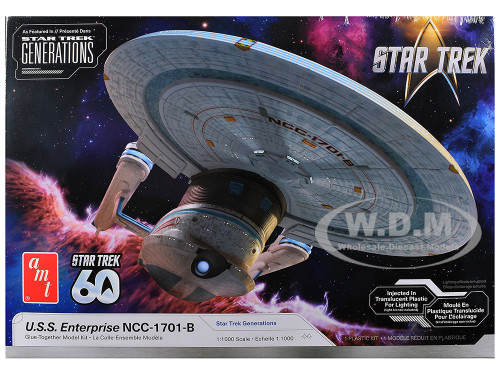
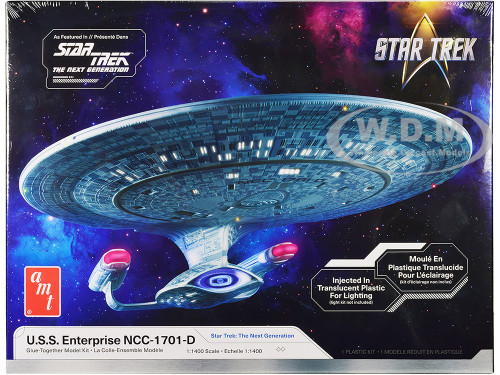
The USS Enterprise is the best-known starship in Star Trek. Several vessels have carried the name across the franchise, including the original Constitution-class Enterprise commanded by Captain Kirk and the Galaxy-class USS Enterprise-D commanded by Captain Jean-Luc Picard.
The original Enterprise established the visual foundation for many later Federation starships, with its saucer-shaped primary hull, engineering section, and twin warp nacelles. Its design became an enduring symbol of space exploration and science-fiction television.
The Enterprise-D introduced in Star Trek: The Next Generation featured a larger, more spacious design suited to the series' vision of a future in which exploration, diplomacy, and scientific research were central Federation priorities.
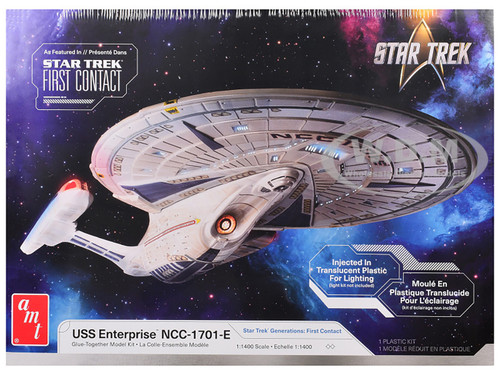
Other Enterprise incarnations, including the Enterprise-E and the Constitution III-class Enterprise-G, represent later chapters in the franchise. Collectors may enjoy comparing these ships to see how their designs evolved while retaining recognizable Starfleet characteristics.
USS Voyager
The USS Voyager is the central starship in Star Trek: Voyager, which premiered in 1995. Commanded by Captain Kathryn Janeway, Voyager becomes stranded far from Federation space and must find its way home across a largely unfamiliar region of the galaxy.
Voyager's compact Intrepid-class design differs from the larger Enterprise vessels. Its sleek profile, distinctive nacelles, and streamlined hull make it one of the franchise's most recognizable starships.
For fans of the series, Voyager represents exploration under difficult circumstances, resourcefulness, and the determination of a crew separated from home. A model of the ship can serve as a centerpiece for a collection devoted to the series or to Starfleet vessels more broadly.
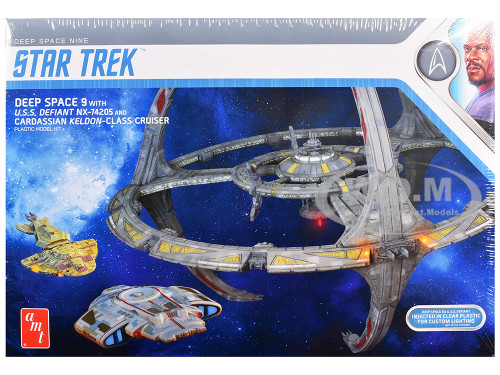
Deep Space Nine and the USS Defiant
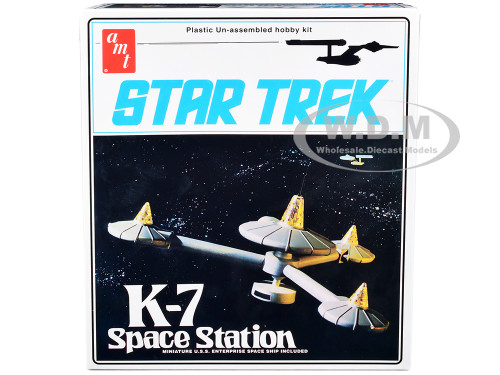
Star Trek: Deep Space Nine introduced a different setting from the franchise's traditional starship-led adventures. Much of the series takes place aboard a space station near the planet Bajor, where political tensions, diplomacy, and the strategic importance of the nearby wormhole drive the story.
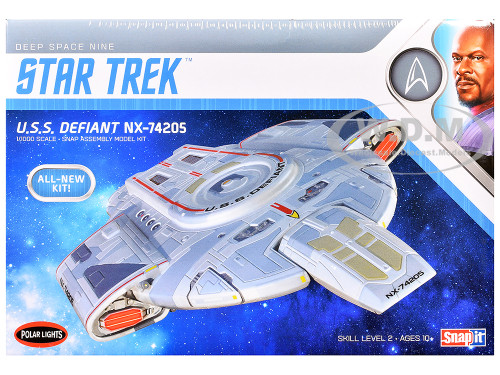
The station itself is a distinctive piece of Star Trek technology and architecture. The series also features the USS Defiant, a compact and heavily armed Starfleet vessel that becomes important to the station's defense and exploration missions.
The Defiant's compact proportions and more aggressive design set it apart from many Federation exploration ships. For collectors, the combination of Deep Space Nine's station and the Defiant offers an alternative to collections centered exclusively on the Enterprise.
Klingon Bird-of-Prey
The Klingon Bird-of-Prey is one of the most recognizable non-Federation spacecraft in Star Trek. Its angular profile, forward-swept wings, and birdlike appearance reflect the Klingon Empire's distinctive visual identity.
Bird-of-Prey vessels appear in several Star Trek productions, most notably in Star Trek III: The Search for Spock and Star Trek IV: The Voyage Home. The ship's ability to operate in different combat and mission roles makes it an enduring fixture of the franchise.
Its design contrasts sharply with the smoother, more exploration-oriented appearance of many Federation vessels. Fans who collect ships from different factions may appreciate the Bird-of-Prey as a visually distinctive addition.
Other Notable Star Trek Vessels
The franchise includes many additional ships and spacecraft that appeal to collectors, including:
-
Romulan Warbirds: Large vessels associated with the Romulan Star Empire, known for their imposing designs and role in Federation-Romulan relations.
-
Borg Cubes: Distinctive geometric vessels representing the Borg Collective and its relentless drive to assimilate other civilizations.
-
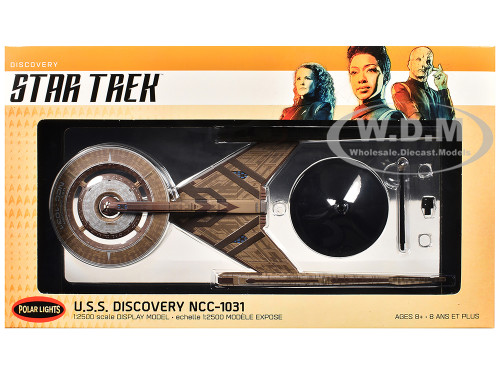
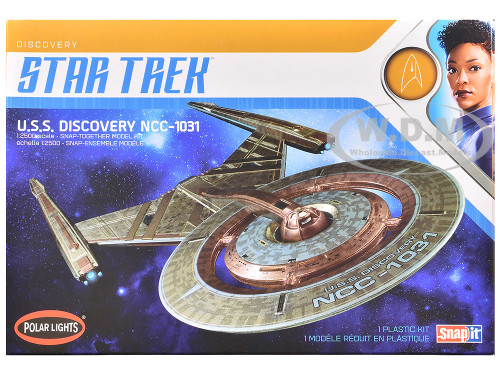
USS Discovery: The central ship in Star Trek: Discovery, featuring an experimental design and stories spanning different periods of the franchise.
-
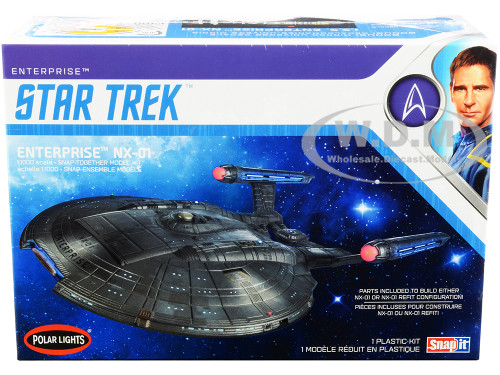
USS Enterprise NX-01: The early Starfleet vessel featured in Star Trek: Enterprise, set before the original series.
-
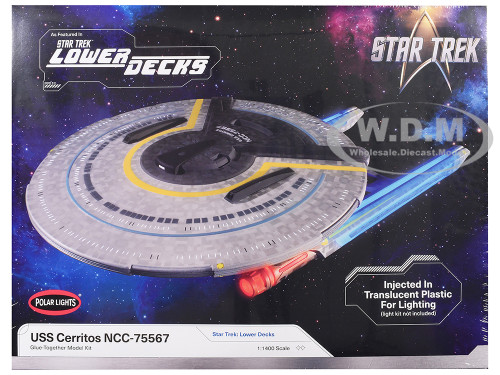
USS Cerritos: The California-class starship featured in the animated comedy Star Trek: Lower Decks.
Not every vessel or variation will necessarily be represented in the available product selection. Check individual listings for the exact ship and version depicted.
Star Trek Television Series and Their Collecting Appeal
The Star Trek universe spans multiple generations of television storytelling. Each series introduces its own crews, spacecraft, uniforms, and visual style, giving collectors many ways to organize a themed display.
The Original Series
Star Trek: The Original Series established the franchise's classic look, with Captain Kirk, Spock, Dr. McCoy, Lieutenant Uhura, Scotty, Sulu, and Chekov serving aboard the original USS Enterprise. Its colorful uniforms, familiar bridge design, and early vision of Starfleet technology remain central to Star Trek's identity.
Original-series collectibles appeal to fans who appreciate the franchise's beginnings and the designs that shaped its earliest years.
The Next Generation
Star Trek: The Next Generation introduced Captain Jean-Luc Picard and the crew of the USS Enterprise-D. Its seven-season run developed the franchise's exploration themes through new civilizations, scientific mysteries, and complex ethical dilemmas.
The Enterprise-D, Enterprise-E, and other ships associated with this era are popular subjects for fans who prefer the larger starships and distinctive visual design of the 24th-century setting.
Deep Space Nine and Voyager
Star Trek: Deep Space Nine explored politics, religion, war, and cultural identity through its space-station setting and ensemble cast. Star Trek: Voyager returned to a more traditional starship format while placing its crew far from familiar Federation territory.
Together, these series broadened the franchise's storytelling and introduced memorable ships and settings beyond the Enterprise. Their collectibles can complement a collection focused on the wider Star Trek universe.
Enterprise and Discovery
Star Trek: Enterprise explored the early days of human deep-space travel, following Captain Jonathan Archer and the crew of the NX-01 before the establishment of the United Federation of Planets as depicted in later series.
Star Trek: Discovery introduced another chapter in Starfleet history, featuring the USS Discovery and stories that cross different eras. The two series offer contrasting spacecraft designs and perspectives on the development of Starfleet.
Modern Star Trek
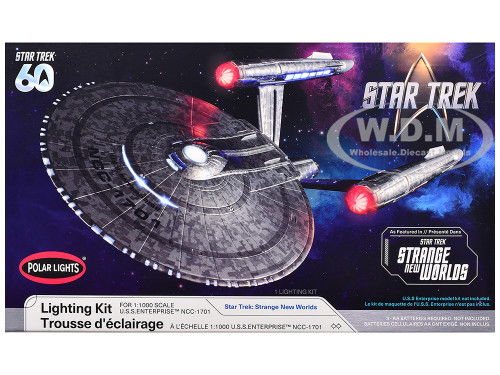
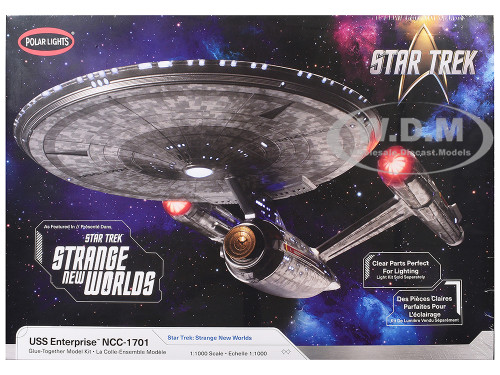
More recent productions have continued the franchise with new characters, returning favorites, and different approaches to science-fiction storytelling. Star Trek: Picard revisited Jean-Luc Picard's later life, while Star Trek: Strange New Worlds returned to the Enterprise under Captain Christopher Pike. The animated series Star Trek: Lower Decks brought humor to the lives of Starfleet support officers.
For collectors, modern productions provide additional ship designs and character themes to explore. When selecting a model, check the product description to identify the specific series, vessel class, and version represented.
Star Trek Feature Films
Star Trek's theatrical history has introduced new starships, alternate designs, and memorable cinematic moments. The original cast returned in a series of films beginning with Star Trek: The Motion Picture in 1979, followed by movies including The Wrath of Khan (1982), The Search for Spock (1984), and The Voyage Home (1986).
The films featuring the Next Generation cast continued the story of Picard and his crew, including Generations (1994), First Contact (1996), Insurrection (1998), and Nemesis (2002).
A separate film series beginning with Star Trek in 2009 introduced an alternate timeline featuring younger versions of Kirk, Spock, and the original crew. Follow-up films included Star Trek Into Darkness (2013) and Star Trek Beyond (2016).
These different film eras offer a range of ship designs and interpretations of familiar characters. Collectors may prefer the classic Enterprise, the Enterprise-D, vessels from the later television series, or spacecraft associated with the alternate-timeline films. Because ship designs and details can differ between productions, checking the individual product description is important when choosing a specific version.
Star Trek Model Collecting: Scale, Detail, and Display
Star Trek collectibles can take several forms, from detailed spacecraft replicas to character-focused merchandise and other franchise memorabilia. When shopping for a starship model, consider how it will fit into your existing collection and the level of detail you prefer.
Choosing the Right Scale
Scale describes a model's size relative to the fictional or real-world subject it represents. Star Trek spacecraft are fictional designs, and collectible products may use different scales or display formats. Some products may instead be made to a stated length without specifying a conventional scale.
Before purchasing, review:
-
Dimensions: Check the stated length, width, and height to understand how much display space the model requires.
-
Scale: Confirm the listed scale when one is provided; similarly named ships can be offered in very different sizes.
-
Construction: Check whether the product is described as diecast metal, plastic, resin, or a combination of materials.
-
Detail and finish: Examine the listing for information about paintwork, surface details, windows, markings, and other features.
-
Display support: Determine whether a stand or base is included and whether the model is intended for shelf display.
-
Version accuracy: Verify the ship class, series, film, and configuration so that the model matches the version you want to collect.
Not every Star Trek spacecraft model is a diecast metal model, and materials, dimensions, and included accessories vary by product. Use the individual listing as the authoritative source for the item's specifications.
Building a Starship Display
A Star Trek collection can be organized in several ways. Some collectors group ships by television series or film, while others arrange them by faction, starship class, or fictional timeline.
A Starfleet-focused display might feature several Enterprise versions alongside Voyager, the Defiant, and other Federation vessels. A broader science-fiction collection could include Klingon, Romulan, Borg, and other spacecraft to represent the diversity of the franchise.
For a clean display, consider the relative sizes of the models and the space needed for their stands. Larger ships may benefit from a dedicated shelf, while smaller models can be arranged in groups. Keeping packaging and product information can also help collectors identify ship versions and preserve details for future reference.
Star Trek Collectibles for Fans and Gift Shoppers
Star Trek merchandise appeals to longtime fans, science-fiction enthusiasts, model collectors, and people who appreciate imaginative spacecraft design. Its combination of recognizable starships, memorable characters, and a rich fictional history makes the franchise well suited to themed collections.
A few approaches can help when choosing a collectible:
-
For a longtime fan: Consider a ship or character connected to the series or film they enjoy most.
-
For a starship enthusiast: Look for a vessel with a distinctive silhouette, recognizable markings, or a place in Starfleet history.
-
For a new collector: A favorite ship can be an accessible starting point before expanding into other series and factions.
-
For an experienced collector: Confirm the exact version, dimensions, materials, and features to avoid purchasing a duplicate or a variation that does not fit the collection.
-
For a display-focused hobbyist: Consider the model's overall size, stand, and compatibility with existing shelves or display cases.
Star Trek gifts can celebrate a favorite captain, a memorable spacecraft, or the franchise's enduring vision of exploration. As with any collectible, verify the product description and current availability before ordering.
Explore the Star Trek category at DiecastModelsWholesale.com to discover available spacecraft models and other franchise collectibles, revisit the ships that made science-fiction history, and find a new addition to your collection.