Texaco diecast models combine American petroleum history, vintage automotive advertising, motorsports, classic vehicles, and one of the most recognizable logos in automotive culture. At DiecastModelsWholesale.com, the Texaco collection features scale model cars, trucks, racing vehicles, commercial vehicles, and other collectibles decorated with the iconic Texaco star, period graphics, and automotive liveries.
Texaco models can appeal to collectors for several different reasons. Some are interested in the history of American service stations and petroleum brands, while others collect classic cars, racing vehicles, commercial trucks, or specific Texaco liveries. The combination of recognizable branding and historically significant vehicles also makes Texaco models particularly useful for automotive displays and dioramas.
The Texaco collection is part of the broader Oil & Gas and Livery Models categories, where collectors can explore additional petroleum, lubricant, racing, and advertising-themed scale models.
Shop Texaco Diecast Models
The Texaco category includes models in several popular scales, with current and recent products ranging from compact 1:64 scale vehicles to larger 1:24 and 1:18 scale models. Other scales are also available depending on the manufacturer and subject.
Current DMW listings include:
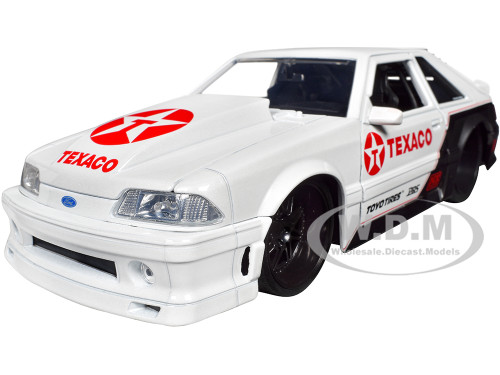
- 1989 Ford Mustang GT "Texaco" models by Jada in 1:24 scale
- 2023 Ram 2500 Pickup "Texaco" by Greenlight in 1:64 scale
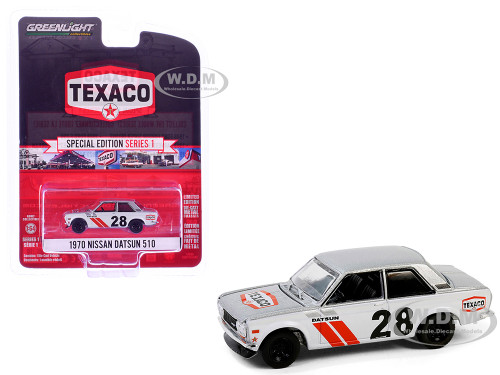
- 1970 Nissan Datsun 510 #28 "Texaco" by Greenlight in 1:64 scale
- 1982 Ford Mustang GT #1 "Texaco" from Greenlight's Running on Empty series in 1:64
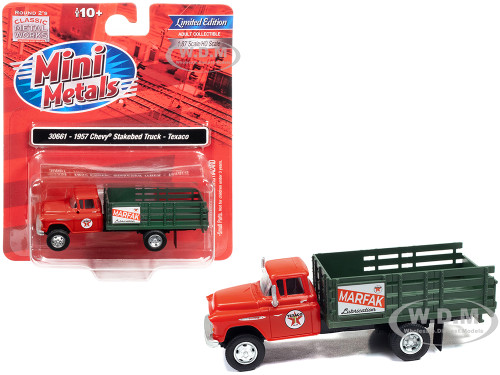
- 1957 Chevrolet Stakebed Truck "Texaco - Marfak Lubrication" in 1:87 HO scale by Classic Metal Works
- 1939 Dodge Airflow Texaco Tanker by Auto World in 1:38 scale
- BMW 635 CSi #12 "Texaco" from the 1985 24 Hours of Spa in 1:18 scale by Minichamps
These examples show the variety within the category, from vintage advertising and commercial trucks to racing cars and modern pickups. Product availability changes over time, so individual product pages should be checked for the current scale, manufacturer, specifications, production information, and packaging.
The History of Texaco
Texaco traces its origins to Beaumont, Texas, in 1902, when the company was established as The Texas Company. The name "Texaco" developed from an abbreviation used for the company and eventually became the public-facing brand. Texaco introduced its first five-pointed star logo in 1903, establishing the visual identity that would become closely associated with the company.
The Texaco star is one of the most important reasons the brand translates so well into collectible scale models. Its distinctive design can be immediately recognized on automobiles, trucks, service-station equipment, fuel tankers, and racing vehicles.
Texaco also developed a strong connection with automotive lubricants. The company acquired the Indian Refining Company in 1931, bringing the Havoline motor-oil brand into the Texaco family. Texaco introduced products such as Fire Chief gasoline in 1932 and Sky Chief gasoline in 1938, reflecting its emphasis on fuel performance and automotive products.
For collectors, these historical connections provide useful context when identifying vintage Texaco-themed models and understanding the graphics represented on them.
Texaco and Vintage Automotive Advertising
One of the strongest themes within Texaco collecting is vintage automotive advertising.
During the development of automobile culture, petroleum companies were highly visible through gasoline stations, fuel pumps, roadside signs, tanker trucks, delivery vehicles, lubricants, and service businesses. Vehicles carrying company graphics were part of that commercial landscape.
Texaco's star logo, red-and-white branding, and product names such as Havoline, Fire Chief, and Sky Chief became recognizable parts of American roadside culture. Period-style scale models recreate some of this visual history in miniature.
This is why Texaco models are not limited to race cars. A vintage stakebed truck, tanker, pickup, or passenger car can be just as interesting to an advertising or automotive-history collector as a competition vehicle.
Collectors interested in this aspect of the category can also explore Gas Pumps and Garages, Stations & Shops to create a more complete period automotive display.
Texaco and Motorsport
Texaco has also appeared extensively in motorsports, making its livery particularly relevant to racing collectors.
The current DMW selection demonstrates several different approaches to Texaco racing models. The 1970 Datsun 510 #28 Texaco connects the brand with a classic Japanese performance car, while the BMW 635 CSi #12 Texaco represents a European touring and endurance-racing subject from the 1985 24 Hours of Spa.
This variety makes it possible to collect Texaco models by racing discipline rather than by one particular vehicle manufacturer.
Explore Racing Models for additional competition vehicles, including categories for Daytona, Le Mans, NASCAR, Indy Car, Grand Prix, Rally, and other racing subjects.
Texaco Racing Liveries
A racing livery identifies much more than the sponsor. The combination of sponsor graphics, race number, driver, team, vehicle, and competition series can establish a particular historical moment.
For collectors, this means a Texaco racing model can be researched and collected according to:
- Driver
- Race number
- Team
- Racing series
- Vehicle
- Season or year
- Motorsport era
- Sponsor livery
This approach is particularly useful when building a collection around racing history rather than simply accumulating vehicles.
Texaco, Cars, Trucks, and Commercial Vehicles
Texaco branding appears particularly well suited to commercial vehicles because petroleum distribution depended on trucks and other working vehicles.
The current collection includes a 1939 Dodge Airflow Texaco Tanker, a 1957 Chevrolet Stakebed Truck with Texaco Marfak Lubrication graphics, and modern vehicles such as the 2023 Ram 2500 Texaco pickup. These models represent very different periods and vehicle roles while maintaining the common Texaco identity.
Commercial subjects can be especially useful in dioramas because they can establish the setting of a particular scene. A Texaco tanker can represent fuel transportation, while a Texaco-branded pickup or stakebed truck can add period detail to a service-station, garage, or roadside display.
For additional commercial subjects, explore Trucks and Pickup Trucks.
Texaco and the Datsun 510
The 1970 Datsun 510 #28 Texaco is an example of how Texaco's branding can intersect with Japanese automotive history.
The Datsun 510 has become an important collectible and enthusiast vehicle in its own right, and a Texaco-liveried racing version adds another layer of interest. At 1:64 scale, this type of model is also practical for collectors who enjoy building collections around JDM and racing subjects without requiring a large display area.
Collectors interested in Japanese performance vehicles can explore JDM & Import Tuners for additional related models.
Choosing the Right Texaco Diecast Scale
Texaco models are available in several scales, and choosing the right one depends on your display space and collecting style.
1:64 Texaco Diecast Models
1:64 scale is well suited to collectors who want to build a larger themed collection. Several Texaco vehicles can be displayed together to show different vehicle types, racing eras, or liveries.
The current DMW collection includes Texaco models in 1:64 from Greenlight, including the Ram 2500, Datsun 510, and Mustang GT.
1:24 Texaco Diecast Models
1:24 scale provides more physical presence and makes larger graphics and exterior details easier to appreciate. The Jada Texaco Ford Mustang GT models are current examples of this format.
1:18 Texaco Diecast Models
1:18 scale provides an even larger display format and can work especially well for collectors focused on racing cars and individual feature models. The Minichamps BMW 635 CSi Texaco 24 Hours of Spa model is an example of this type of racing subject.
1:87 HO and Other Scales
1:87 HO scale is particularly useful for model railroad layouts and compact dioramas. The Texaco Marfak Chevrolet Stakebed Truck from Classic Metal Works is an example of a Texaco-themed HO-scale vehicle. The category also includes unusual scales such as 1:38, demonstrating why checking the individual product specifications is important before purchasing.
Building a Texaco Diecast Collection
There are several ways to organize a Texaco collection.
Collect by Vehicle
You can focus on classic cars, muscle cars, Japanese vehicles, pickups, commercial trucks, tankers, or racing cars.
Collect by Motorsport
A racing-focused collection can concentrate on a particular series, event, team, or period. This is especially useful when the model includes a race number and identifiable competition history.
Collect by Era
Vintage Texaco graphics and modern Texaco liveries can look very different. Collecting by decade or automotive era provides a way to document those changes.
Collect by Scale
Keeping your collection within 1:64, 1:24, 1:18, or another preferred scale creates a consistent display.
Collect by Livery
Collectors interested primarily in automotive branding can focus on Texaco's distinctive star and compare it with other petroleum brands. The Livery Models category provides a broader selection of vehicles decorated with recognizable company graphics and sponsorships.
Texaco Models for Displays and Dioramas
Texaco models are particularly effective in automotive-themed displays because the brand can represent a recognizable roadside setting.
A Texaco tanker or service truck can be paired with gas pumps and garage equipment. A racing car can become the centerpiece of a motorsports display. Smaller 1:64 vehicles can be grouped into a miniature service-station or roadside scene.
Collectors building larger displays can explore Displays & Accessories, including Gas Pumps, display cases, tools, vehicle lifts, and other accessories.
A Texaco vehicle can also be combined with other petroleum brands from the Oil & Gas collection to create a broader historical or automotive display.
What to Look For When Buying Texaco Diecast Models
When comparing Texaco models, consider the following:
- Vehicle: Check the exact year, make, model, body style, and configuration.
- Livery: Look at the Texaco star, sponsor graphics, product names, racing numbers, and other markings.
- Scale: Make sure the model fits your existing collection and accessories.
- Manufacturer: Different manufacturers can vary in construction, materials, detailing, and packaging.
- Racing history: For competition models, verify the driver, team, race, series, and year when those details matter to your collection.
- Production information: Some releases identify a specific production quantity or limited-edition status.
- Display purpose: Consider whether the model is intended for a shelf, cabinet, diorama, garage, or model railroad.
- Finished model or kit: Confirm whether the product is a completed collectible or a buildable model kit.
Limited-edition production numbers describe a particular release and do not automatically mean that a model will become rare or increase in value. Collecting based on the vehicles, historical subjects, liveries, and eras you enjoy can provide a more meaningful long-term approach.
Explore Texaco Diecast Models
Texaco diecast models offer a distinctive combination of petroleum history, vintage advertising, motorsports, classic automobiles, commercial vehicles, and recognizable Texaco star branding. From 1:64 racing cars and modern pickups to larger-scale racing models, vintage tankers, and HO-scale commercial vehicles, the collection offers several ways to explore automotive history in miniature.
Browse the Texaco diecast models at DiecastModelsWholesale.com to explore available cars, racing vehicles, trucks, tankers, pickups, and vintage Texaco-liveried collectibles, compare scales and subjects, and find the right model for your collection or display.