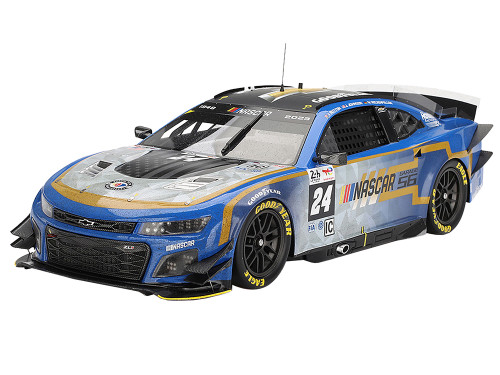
NASCAR racing models bring the history of American stock car racing to life through detailed scale replicas of race cars, drivers, teams, sponsors, and memorable racing seasons. This category features NASCAR diecast models representing the cars that competed in one of the most recognizable forms of motorsport in the United States.
From early stock cars and classic Chevrolet, Ford, Plymouth, Pontiac, Buick, Oldsmobile, and Dodge racers to modern Cup Series machines, NASCAR models allow collectors to explore decades of changing automotive design and racing technology. Models can represent specific drivers, car numbers, teams, manufacturers, races, championships, or iconic liveries.
Whether you collect a favorite driver, follow a particular team, build a manufacturer-focused collection, or simply appreciate the history of American racing, NASCAR diecast cars offer many ways to create a meaningful motorsport display.
Shop NASCAR Diecast Models
NASCAR race cars are particularly distinctive because the appearance of an individual car often tells a story. A combination of driver, car number, team, sponsor, manufacturer, season, and race can identify a specific competition entry.
A NASCAR diecast model may reproduce details such as the body shape, racing graphics, sponsor logos, wheels, spoilers, grille, headlights, windows, and other features associated with a particular era. The same driver can also be represented by very different cars over the course of a career as manufacturers, teams, sponsors, regulations, and generations of stock cars change.
For collectors, this creates opportunities to organize a collection chronologically, by driver, by team, or around significant races and championships.
The History of NASCAR
NASCAR's roots date to the late 1940s. On December 14, 1947, Bill France Sr. and other stock car racing figures met at the Streamline Hotel in Daytona Beach, Florida, to discuss creating a unified organization for the sport. NASCAR was formally incorporated in February 1948.
NASCAR's first race took place on February 15, 1948, on the Daytona Beach road course, where Red Byron won driving a Ford. The following year, NASCAR introduced the Strictly Stock division, the predecessor of today's NASCAR Cup Series. The first Strictly Stock race was held at Charlotte Fairgrounds Speedway on June 19, 1949, with Jim Roper taking the victory.
The cars have changed dramatically since those early races. NASCAR's official stock-car evolution traces the development from early strictly stock automobiles through successive generations of increasingly specialized racing machines and, eventually, the modern Next Gen car.
NASCAR Racing Through the Generations
Early Stock Cars
NASCAR's earliest competition featured automobiles that were much closer to production vehicles than today's race cars. The first generation, covering the early years through 1966, used largely stock frames and bodies, with racing modifications introduced primarily for safety and performance.
Cars such as the Hudson Hornet, Ford Galaxie, Chevrolet models, and other American automobiles became part of the developing stock-car landscape.
These early NASCAR diecast models are especially appealing to collectors interested in the origins of the sport and the classic appearance of mid-century American automobiles.
The 1960s and 1970s
During the second generation, from 1967 through 1980, NASCAR cars retained production-based bodies while using increasingly modified chassis. Manufacturers and specialized race shops played a larger role in developing competition cars.
This era produced some of the most recognizable American stock cars, including the Ford Fairlane, Dodge Charger, Plymouth Road Runner, Chevrolet Monte Carlo, and other muscle-era models. Aerodynamics also became increasingly important as teams searched for additional performance.
Collectors interested in this period can explore NASCAR models representing classic body styles, legendary drivers, period sponsors, and the distinctive liveries of 1960s and 1970s stock car racing.
The 1980s
The third generation, introduced in 1981, brought a shorter 110-inch wheelbase and bodies designed to better resemble contemporary showroom automobiles. Ford Thunderbird, Buick Regal, Pontiac Grand Prix, Chevrolet Monte Carlo, and other models became recognizable NASCAR subjects during this period.
The 1980s also produced some of the sport's most memorable aerodynamic designs, including the Monte Carlo SS Aerocoupe and other competition-oriented body styles.
NASCAR diecast from this era can be especially attractive to collectors who enjoy the combination of classic American car styling and increasingly sophisticated stock-car engineering.
The 1990s and Early 2000s
The fourth generation, spanning 1992 through 2006, marked another major change. NASCAR describes these cars as highly modified racing machines, with teams using extensive aerodynamic development and wind-tunnel testing. Their body panels were based on production counterparts but were designed specifically for competition.
This period included Chevrolet Monte Carlo, Ford Taurus, Pontiac Grand Prix, and other recognizable NASCAR models. It also coincided with the careers of drivers such as Jeff Gordon, Dale Earnhardt, Dale Jarrett, Mark Martin, Rusty Wallace, Terry Labonte, and Bobby Labonte.
For collectors, 1990s and early-2000s NASCAR diecast models offer a large selection of drivers, teams, sponsors, championship cars, and memorable race liveries.
The Modern NASCAR Era
NASCAR continued evolving through several generations of race cars. The fifth-generation cars introduced in 2007 brought additional safety developments and common chassis elements, while later generations placed renewed emphasis on manufacturer-specific body designs.
The Next Gen car debuted in competition in 2022. NASCAR's description of the Next Gen design highlights features including symmetrical body construction, 18-inch aluminum wheels with a single lug nut, a sequential shifter, and independent rear suspension.
Modern NASCAR diecast models therefore provide collectors with an opportunity to document the current era alongside historic stock cars.
Collect NASCAR Models by Driver
Driver-focused collecting is one of the most popular ways to build a NASCAR collection. A single driver can be represented by cars from multiple teams, manufacturers, sponsors, and periods of a career.
Depending on the products available, collectors may encounter models associated with legendary and modern NASCAR drivers such as:
- Richard Petty
- Dale Earnhardt
- Jeff Gordon
- Dale Earnhardt Jr.
- Jimmie Johnson
- Darrell Waltrip
- Bill Elliott
- Rusty Wallace
- Mark Martin
- Bobby Labonte
- Tony Stewart
- Kyle Busch
- Kevin Harvick
- Chase Elliott
- Other Cup Series drivers
A driver collection can focus on championship seasons, famous victories, specific car numbers, or the evolution of a driver's racing career.
Collect by Team, Manufacturer, and Car Number
NASCAR models can also be organized around teams and manufacturers. This approach can be especially interesting when comparing how different manufacturers participated in the sport across different decades.
Common manufacturer subjects include:
- Chevrolet
- Ford
- Dodge
- Pontiac
- Plymouth
- Buick
- Oldsmobile
- Toyota
- Mercury
Collectors may also focus on individual teams, race shops, or car numbers. Because NASCAR cars are strongly identified by their numbers and liveries, a group of models with the same number can create a particularly cohesive display.
NASCAR Race and Championship Models
Another approach is to collect cars associated with specific races or championship seasons.
The Daytona 500 is one of the most recognizable events in NASCAR. The inaugural Daytona 500 was held on February 22, 1959, at Daytona International Speedway, with Lee Petty declared the winner following a close finish.
Collectors can also build displays around other major NASCAR events and tracks, including Talladega, Darlington, Charlotte, Martinsville, Bristol, Daytona, and other historic venues.
A championship-focused collection can combine cars from multiple seasons to illustrate how NASCAR race cars, liveries, manufacturers, and drivers changed over time.
NASCAR Models by Scale
Scale is an important consideration when choosing a NASCAR diecast model, particularly when building a collection around many drivers or seasons.
1:18 NASCAR Models
1:18 models provide a larger format for collectors who want to showcase body details, wheels, interiors, graphics, and other features. They work well as individual centerpiece models.
1:24 NASCAR Models
1:24 is a widely used scale for NASCAR diecast cars and is particularly well suited to collections featuring multiple drivers, teams, and seasons. It offers a practical balance between display size and detail.
1:64 NASCAR Models
1:64 models provide a compact way to collect a large number of NASCAR subjects. They are useful for collectors who want to represent many drivers, races, teams, or liveries while conserving display space.
Other scales may also be available depending on the manufacturer and individual product. Always check the product specifications for exact scale and dimensions.
Build a NASCAR Display
NASCAR diecast cars can be displayed individually or arranged into larger motorsport scenes. A collection can be organized chronologically, by manufacturer, by driver, or around a particular team or racing era.
For a broader selection of motorsport subjects, explore Racing Models. Collectors can also combine NASCAR cars with Dioramas & Scenes, Figures & Figurine Sets, and Accessories to create a more detailed racing environment.
For displaying and protecting individual cars, Display Cases and Display Stands & Turntables can help create an organized presentation.
Explore NASCAR Racing History
From the early strictly stock automobiles of the 1940s and 1950s to the muscle-era racers of the 1960s and 1970s, aerodynamic stock cars of the 1980s and 1990s, and today's Next Gen machines, NASCAR racing models reflect decades of change in American motorsport.
Whether your collection centers on a favorite driver, iconic car number, legendary manufacturer, championship season, famous race, or a particular generation of stock cars, NASCAR diecast models provide a way to preserve those subjects in scale.
Browse the NASCAR racing models at DiecastModelsWholesale.com to find diecast race cars representing the drivers, teams, manufacturers, races, and eras that make NASCAR history distinctive.