1/1200 scale diecast models offer collectors a compact way to display ships, vessels, aircraft, and other large subjects while preserving the visual character of the original prototype. With a scale ratio of 1/1200, every 1,200 units of the real object are represented by one unit on the model. For example, a 1,200-foot vessel would measure approximately 12 inches long at 1/1200 scale, while a 600-foot ship would measure about 6 inches.
The 1/1200 scale is particularly associated with miniature ship collecting and maritime display. It has a long history in small-scale ship modeling, with early 1/1200 models becoming important for naval identification, comparison, and collecting. Today, the scale remains attractive to collectors who want to represent large vessels without requiring the substantial display space needed by larger scales.
What to Expect in 1/1200 Scale
The 1/1200 category is best suited to collectors looking for compact representations of large prototypes. Depending on current product availability, shoppers may encounter subjects such as:
- Battleships and other warships
- Aircraft carriers
- Cruisers and destroyers
- Submarines
- Commercial ships and ocean liners
- Historical and naval vessels
- Passenger and transportation ships
- Aircraft and other specialized subjects
- Fleet or multi-model collections
Because the same scale is used across a collection, models can be compared directly by size. A large aircraft carrier will naturally be much longer than a destroyer, while both remain correctly proportioned to the same 1/1200 scale.
A Scale with a Strong Maritime Tradition
Small-scale ship modeling developed alongside the growing importance of naval planning and identification in the late 19th and early 20th centuries. Consistent scales allowed ships of different classes to be represented together for comparison, tactical exercises, and display. The 1/1200 scale became particularly associated with British and American ship and harbor models.
The scale also has a notable connection to historic diecast and miniature ship collecting. Early 20th-century manufacturers produced small metal and wooden ships representing naval and commercial vessels, helping establish the tradition of collecting fleets at compact scales. Museum collections also preserve examples of 1/1200 ship models from the early and mid-20th century.
For today's collector, that history adds another dimension to the appeal of 1/1200 scale models. They are not simply small replicas; they belong to a long-standing tradition of miniature maritime collecting.
1/1200 Ships and Naval Models
Ships are one of the most natural subjects for 1/1200 scale. Large real-world vessels can become surprisingly manageable display pieces at this ratio.
For example:
| Prototype Length | Approximate 1/1200 Model Length |
|---|
| 1,200 feet |
12 inches |
| 1,000 feet |
10 inches |
| 800 feet |
8 inches |
| 700 feet |
7 inches |
| 600 feet |
6 inches |
| 500 feet |
5 inches |
| 300 feet |
3 inches |
| 200 feet |
2 inches |
| 100 feet |
1 inch |
This makes 1/1200 especially useful for collectors interested in large vessels, naval fleets, famous ocean liners, and historical ships. A collection can include several different classes of vessels without requiring a large cabinet or extensive shelf space.
Military collectors may find 1/1200 particularly useful for building fleet displays. Aircraft carriers, battleships, cruisers, destroyers, submarines, amphibious vessels, and support ships can be arranged together to illustrate the relative size and composition of a naval force.
Commercial Ships and Ocean Liners
The scale is not limited to military subjects. Commercial and passenger ships can also make excellent 1/1200 display models.
Famous ocean liners, cruise ships, passenger vessels, cargo ships, and other large commercial vessels can be represented in a compact format. This makes the scale appealing to collectors who focus on maritime history, transportation, famous ships, or individual vessels rather than military collections.
For an ocean-liner collection, 1/1200 can also provide a practical way to compare vessels from different generations. A compact display can show how the size and proportions of famous ships changed over time without requiring a separate large-scale model for every subject.
1/1200 vs. Other Small Scales
Scale comparison is important when building a collection. A model with a smaller denominator is physically larger when the real prototype is identical.
For example, a 1/1000 model is 20% larger linearly than a 1/1200 model. A 1/600 model is twice the linear size of a 1/1200 model, while a 1/700 model is approximately 71% larger linearly.
The nearby 1/1250 scale is particularly relevant to miniature ship collectors. A 1/1200 model is approximately 4.2% larger linearly than the same prototype represented at 1/1250. That difference is relatively small, but it can become noticeable when models are placed side by side.
Collectors should therefore check the stated scale before purchasing if maintaining a strictly consistent fleet is important.
Display and Collection Ideas
One of the biggest advantages of 1/1200 scale is the ability to create a substantial collection in a relatively small area.
Collectors can organize models by:
- Navy or country
- Historical period
- Ship class
- Individual vessel
- Commercial shipping line
- Ocean-liner era
- World War I or World War II
- Modern naval fleets
- Aircraft carriers and carrier groups
- Merchant and passenger fleets
A fleet display can be particularly effective because the scale allows multiple vessels to be arranged together while maintaining proportional relationships. Models can also be displayed individually on shelves, in display cases, or as part of a larger maritime scene.
For historical displays, grouping ships by period can help tell a story. A collection might focus on World War II-era warships, postwar naval development, famous ocean liners, or modern vessels.
Choosing the Right 1/1200 Model
When shopping for a 1/1200 scale model, start with the prototype and then consider how the model fits into your existing collection.
Check the scale carefully. A 1/1200 model is not interchangeable with 1/1250, 1/1000, or 1/700 if you want precise scale consistency.
Consider the prototype's actual size. A 1/1200 model of a large aircraft carrier can still be considerably longer than a model of a small destroyer or patrol vessel.
Think about display space. Measure your available shelf or cabinet before purchasing especially large vessels or multi-model sets.
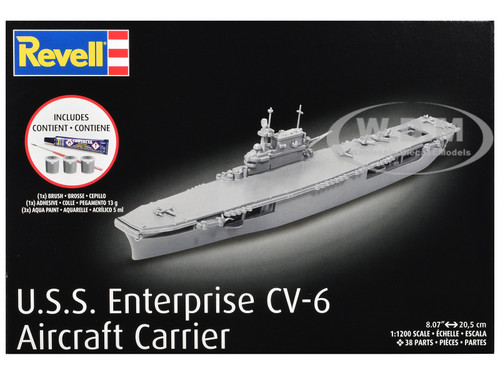
Look at the model format. Depending on the product, models may be finished collectibles or model kits requiring assembly. Product details should be reviewed carefully to determine what is included.
Consider your collection theme. Matching scale, historical era, country, ship class, manufacturer, or subject can make a collection more cohesive.
Why Collect 1/1200 Scale Models?
1/1200 scale strikes a useful balance between recognizable detail and compact size. Larger scales can provide more room for fine features, but they also require considerably more display space. At 1/1200, collectors can represent large ships and fleets without turning a display cabinet into a single-model showcase.
The scale is especially appealing to maritime enthusiasts who enjoy comparing different vessels. A collection of correctly scaled ships can provide an immediate visual understanding of the differences between battleships, carriers, cruisers, destroyers, submarines, liners, and commercial vessels.
It is also a practical choice for collectors building larger thematic collections. Instead of choosing only a handful of ships because of limited space, 1/1200 allows many subjects to be displayed together.
Find 1/1200 Scale Diecast Models
Whether you are building a naval fleet, collecting famous ocean liners, exploring maritime history, or simply looking for compact scale models with strong display appeal, 1/1200 offers an interesting combination of scale consistency and space-efficient collecting.
Browse the available 1/1200 scale diecast models at DiecastModelsWholesale.com and explore the ships, vessels, aircraft, and other compact collectibles currently available for your collection.

 $15.49
