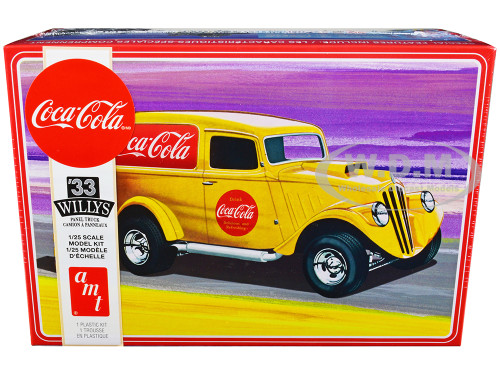
Panel Truck Diecast Models
Panel trucks are enclosed commercial vehicles built with a solid body and enclosed cargo area behind the driver's compartment. Unlike pickup trucks with open beds, panel trucks provide protected space for tools, merchandise, equipment, and deliveries. Their practical design made them an important part of local transportation and commercial fleets throughout the 20th century.
The Panel category at DiecastModelsWholesale.com features scale models representing these distinctive commercial vehicles. Panel truck diecast models can appeal to collectors of classic vehicles, commercial transportation, delivery trucks, service vehicles, vintage advertising vehicles, and historically significant American and European vans and trucks.
Panel trucks occupy an interesting place between passenger vehicles and larger commercial trucks. Some were based on pickup-truck platforms, while others were developed as purpose-built commercial vehicles. Their enclosed bodies also provided an ideal surface for company names, advertising graphics, fleet markings, and period-correct paint schemes, making them especially interesting subjects for diecast collecting.
What Is a Panel Truck?
A panel truck is a light-duty commercial vehicle with an enclosed cargo compartment and solid body panels instead of side windows in the cargo area. The driver and passenger area is located at the front, while the rear section is designed primarily for transporting goods, tools, or equipment.
Traditional American panel trucks were often derived from pickup truck chassis. Manufacturers could use a common cab and chassis while replacing the open pickup bed with an enclosed commercial body. This allowed businesses to use a relatively compact vehicle for local deliveries and service work.
Panel trucks differ from several related vehicle types:
- Pickup trucks have an open cargo bed.
- Box trucks generally use a larger, separate-style enclosed cargo body and are commonly built for heavier commercial applications.
- Cargo vans typically have a more integrated van-style body designed around passenger-car-like or commercial van architecture.
- Panel trucks traditionally have a truck-based configuration with enclosed side panels and a dedicated cargo area.
The terminology can overlap, particularly as vehicle designs evolved. For collectors, the historical identity and body configuration of a particular model can be just as important as its modern classification.
A Brief History of Panel Trucks
Panel trucks developed alongside the growth of motorized commercial transportation during the early 20th century. Before motor vehicles became widespread, businesses relied on horse-drawn wagons, carts, and specialized delivery vehicles to move merchandise locally.
As automobiles and trucks became more practical for commercial use, manufacturers began adapting light trucks for business transportation. Enclosed bodies provided an important advantage: goods could be protected from weather, road debris, and public view while the vehicle remained compact enough for city streets and local delivery routes.
During the 1920s and 1930s, panel-bodied commercial trucks became increasingly familiar in American cities and towns. They were used by grocers, tradespeople, manufacturers, utilities, retailers, and other businesses that needed dependable local transportation.
After World War II, the growth of suburban communities, consumer retailing, and service businesses created additional demand for light commercial vehicles. Panel trucks appeared in increasingly diverse configurations, including delivery vehicles, service trucks, utility vehicles, and promotional vehicles.
By the 1960s and 1970s, traditional pickup-based panel trucks increasingly shared the commercial market with purpose-built cargo vans. Nevertheless, older panel trucks remained an important part of automotive and commercial-vehicle history.
Classic Panel Trucks
Classic panel trucks are particularly popular among collectors because they combine practical commercial design with the styling of their era.
American manufacturers produced panel versions of numerous light-duty truck lines. Depending on the period, collectors may encounter classic Chevrolet, Ford, Dodge, GMC, International, and other commercial vehicles.
The styling changed considerably over the decades. Early examples often featured simple bodies, upright cabins, and separate fenders. Postwar designs became more streamlined, while later vehicles incorporated more integrated bodywork and modern cab designs.
Collectors may be drawn to a particular panel truck because of its:
- Year and historical era
- Manufacturer and model
- Body styling
- Original or period-inspired colors
- Company or advertising graphics
- Wheels and tires
- Interior details
- Commercial equipment
- Historical application
Panel Trucks as Delivery Vehicles
One of the most important roles of the panel truck was local delivery. Businesses needed vehicles capable of transporting merchandise from warehouses, stores, and distribution points to customers and other businesses.
The enclosed cargo compartment was especially useful for goods that needed protection from weather and theft. Deliveries could include groceries, bakery products, pharmaceuticals, hardware, tools, clothing, appliances, and countless other products.
Panel trucks were also useful because their relatively compact dimensions allowed them to navigate urban streets and residential neighborhoods more easily than larger commercial trucks.
For collectors interested in delivery vehicles, the Delivery category offers related commercial truck models, while the Box category focuses on larger enclosed cargo trucks and box-body configurations.
Panel Trucks for Service Businesses
Not every panel truck was used to deliver merchandise. Many served as mobile work vehicles for tradespeople and service companies.
Electricians, plumbers, mechanics, telephone companies, appliance repair businesses, contractors, and other professionals could use enclosed trucks to carry tools, replacement parts, and equipment.
The enclosed body effectively created a mobile storage area. Shelving, drawers, tool racks, and other equipment could be installed inside, while company graphics on the exterior turned the vehicle into a moving business advertisement.
This commercial history gives panel truck diecast models another collecting dimension. A model with period-correct company markings can represent not only a vehicle but also the type of business and service culture associated with its era.
Advertising and Promotional Panel Trucks
Panel trucks provided a large, relatively uninterrupted exterior surface for advertising. Businesses could display names, logos, telephone numbers, slogans, product illustrations, and other graphics on the side panels.
These decorated vehicles became an important part of local commercial culture. Before modern digital advertising, a company vehicle traveling around town could function as a highly visible mobile advertisement.
For diecast collectors, this makes liveries especially significant. Two models based on the same basic truck can have very different collecting appeal when one represents a plain factory vehicle and another reproduces a recognizable period advertising scheme.
Features to Look For in Panel Truck Models
Detailed panel truck models can reproduce many of the features that made the full-size vehicles distinctive.
Enclosed Cargo Body
The defining feature is the solid-sided cargo compartment. Pay attention to the shape of the body, roofline, rear doors, and side panels.
Cab and Chassis
The cab design can help identify the truck's era and manufacturer. Grilles, headlights, bumpers, mirrors, fenders, and other details often changed significantly from one generation to another.
Rear and Side Doors
Depending on the full-size vehicle, the cargo body may feature rear doors, side access doors, or other openings. On some scale models, these features may be represented with particularly fine detailing or functional components.
Commercial Markings
Company names, logos, advertising graphics, fleet numbers, and other markings can make a model especially distinctive.
Wheels and Tires
Period-correct wheels and tires contribute significantly to the overall appearance of a classic commercial truck. These details can also help establish the vehicle's era and intended use.
Panel Trucks in Diecast Collections
Panel truck models can fit into several types of collections. A collector interested in classic American trucks may use them to represent commercial vehicles from different decades. A delivery-vehicle collector may focus on fleet and advertising liveries, while a broader automotive collector may appreciate panel trucks as examples of everyday working vehicles.
They can also provide historical variety in a collection dominated by passenger cars. A panel truck represents the commercial side of automotive history and shows how familiar vehicle platforms were adapted to serve businesses and communities.
Collectors may organize panel truck models by:
- Manufacturer
- Vehicle model
- Era
- Scale
- Commercial application
- Company or fleet livery
- Advertising theme
- Original versus customized appearance
Choosing the Right Scale
Panel trucks are available in several scales depending on the individual model and manufacturer. Common diecast scales for cars and light commercial vehicles include 1/18, 1/24, 1/32, 1/43, and 1/64.
Larger scales generally provide more room for body, grille, interior, and graphics detail. Smaller scales allow collectors to display more vehicles together and are particularly useful when building a large historical or commercial fleet collection.
If you are adding a panel truck to an existing display, comparing its scale with nearby models can help maintain consistent proportions.
Panel Trucks and Commercial Truck History
Panel trucks are an excellent representation of the transition from traditional local delivery methods to modern commercial transportation. They helped businesses move products and equipment efficiently while providing the protection and advertising space that an open pickup could not offer.
Their history also illustrates how vehicle design responds to changing business needs. As delivery routes became more specialized and commercial vans became increasingly sophisticated, the traditional panel truck gradually gave way to newer body styles. Nevertheless, classic panel trucks remain recognizable symbols of American commercial and automotive history.
For collectors, these vehicles offer the opportunity to preserve a small-scale representation of an era when local businesses, tradespeople, and delivery companies depended on distinctive working trucks.
Building a Commercial Vehicle Display
Panel truck diecast models work especially well in displays centered around commercial transportation. A collection might combine classic panel trucks with pickups, delivery trucks, box trucks, service vehicles, and other working vehicles.
A period-themed display can be particularly effective. For example, several vehicles from the same general era can be arranged to show the differences between passenger cars, pickup trucks, panel trucks, and larger commercial vehicles.
Collectors can also combine panel trucks with models from the broader Truck category to create a more varied commercial-vehicle collection.
Shop Panel Truck Diecast Models
Panel trucks represent an important chapter in the history of local delivery, service businesses, and light commercial transportation. Their enclosed cargo bodies, classic truck styling, and often distinctive advertising graphics make them appealing subjects for diecast collectors and automotive enthusiasts.
Browse the Panel category at DiecastModelsWholesale.com to explore available panel truck models and find vehicles that match your preferred era, style, scale, or collection theme. Add a classic commercial vehicle to your display and continue exploring related truck and delivery models to build a collection that reflects the history of working vehicles.