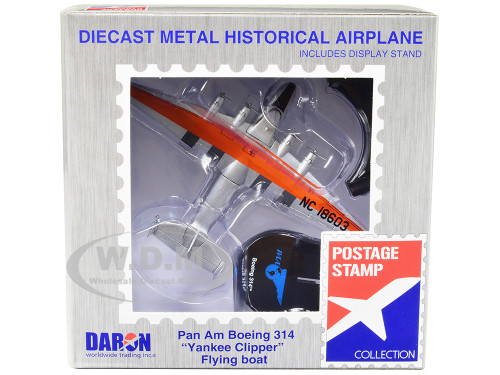
Pan American World Airways, widely known as Pan Am, was one of the most influential airlines in commercial aviation history. Recognized for its blue globe logo, distinctive aircraft liveries, and pioneering international routes, Pan Am helped shape the public image of long-distance air travel throughout much of the 20th century. Its aircraft became symbols of the jet age and the growth of global passenger transportation.
Pan Am Airways diecast airplane models appeal to aviation enthusiasts, airline memorabilia collectors, and anyone interested in the history of commercial flight. These collectible aircraft reproduce the appearance of airplanes associated with Pan Am, allowing collectors to display the airline's iconic markings and remember an era when its name was closely associated with international travel.
Depending on the products available, this category may include models representing different generations of Pan Am aircraft, from classic propeller-driven airliners to the large jetliners that transformed long-distance flying. Each model offers a way to explore the airline's history through its aircraft, distinctive branding, and place in aviation culture.
The History and Legacy of Pan American World Airways
Founded in 1927, Pan American World Airways began with international airmail service between Key West, Florida, and Havana, Cuba. The company expanded into passenger transportation and became a major force in developing international air routes. During the following decades, Pan Am helped make overseas air travel increasingly practical and familiar to travelers.
Pan Am developed a reputation for connecting destinations across the Caribbean, Latin America, Europe, Asia, and other international markets. Its growth was closely linked to advances in aircraft technology, navigation, airport infrastructure, and the expansion of long-distance commercial aviation.
The airline became especially prominent during the postwar era, when larger aircraft and improved engines made international passenger service more accessible. Pan Am's aircraft and branding appeared in airports around the world, and its name became closely associated with premium international travel and aviation innovation.
The introduction of jet aircraft brought another major change. Jetliners could fly faster and carry more passengers than many earlier airliners, transforming expectations for international travel. Pan Am operated several aircraft types that became defining examples of this transition, making the airline an important subject for collectors interested in the evolution of commercial aviation.
Pan Am ceased operations in December 1991. Despite its closure, the airline remains one of the most recognizable names in aviation history. Its aircraft, globe emblem, uniforms, advertising, and route network continue to attract interest from collectors and enthusiasts.
Iconic Pan Am Aircraft to Know
Pan Am operated a wide range of aircraft during its history. Understanding the major types can help collectors identify the period and aviation developments represented by a particular model.
Boeing 707
The Boeing 707 was one of the aircraft that helped establish the jet age in commercial passenger travel. Pan Am introduced Boeing 707 service on transatlantic routes in 1958, bringing jet-powered international travel into a new era. Its swept wings, four engines, and long, narrow fuselage make it one of the most recognizable early jetliners.
A Pan Am Boeing 707 model is particularly relevant to collections focused on the transition from propeller airliners to jet aircraft. It represents the period when faster flights and growing international networks changed the airline industry.
Boeing 747
The Boeing 747 became one of the most famous aircraft associated with Pan Am. The airline played a major role in the development and introduction of the original 747, which entered commercial service with Pan Am in 1970. Its distinctive upper-deck hump, wide fuselage, and four engines made it instantly recognizable.
The 747 helped increase passenger capacity on major international routes and became an enduring symbol of long-haul aviation. For collectors, a Pan Am Boeing 747 model can serve as a centerpiece in a display of classic commercial airliners.
Different 747 variants appeared throughout the aircraft's long production history. When comparing models, check the specific variant and the livery depicted, since details such as the upper deck, engine nacelles, and fuselage configuration can differ.
Boeing 727
The Boeing 727 was a three-engine jetliner developed primarily for shorter and medium-range routes. Pan Am operated 727 aircraft through its domestic and regional operations, adding another type to the airline's diverse fleet.
Its distinctive tail-mounted engines and three-engine configuration make it easy to distinguish from the 707 and 747. A Pan Am 727 model can add variety to a collection that otherwise focuses mainly on long-haul aircraft.
Airbus A300
The Airbus A300 was a wide-body twin-engine airliner introduced during the 1970s. Pan Am operated A300 aircraft during a later period of its history, reflecting the industry's shift toward efficient twin-engine wide-body designs.
Collectors interested in the development of modern commercial aircraft may find this type a useful contrast to Pan Am's earlier four-engine jetliners.
Boeing 737
The Boeing 737 became one of the world's most widely used commercial aircraft families. Pan Am operated 737s, including through its domestic operations, as part of its broader network. Its smaller size compared with the 747 makes it an interesting choice for collectors building a display of aircraft across different passenger capacities and route types.
The aircraft types listed above are historical examples associated with Pan Am. Their inclusion does not mean that every type or variant is currently available as a model in this category.
Pan Am's Iconic Blue Globe Livery
One of the most recognizable elements of Pan Am aircraft was the airline's blue globe emblem. The logo, often paired with clean white and blue aircraft finishes, became an internationally recognized symbol of the company.
For collectors, the livery can be just as important as the aircraft type. Pan Am used different paint schemes during its decades of operation, so a model's markings can help identify the period it represents. Details such as the globe logo, lettering, tail design, and registration contribute to the model's historical character.
When choosing a Pan Am diecast airplane, consider whether you are interested in a particular aircraft, a specific era, or the airline's overall visual identity. Collectors sometimes focus on one aircraft family in several liveries, while others build collections around a single airline across multiple decades.
Choosing the Right Pan Am Diecast Airplane Model
Pan Am aircraft models can suit different collecting goals, from a single display piece to a broader collection of historic airlines. A few considerations can help you choose the right model.
-
Aircraft type: Decide whether you prefer early jetliners such as the Boeing 707, iconic wide-body aircraft such as the 747, or other types from Pan Am's fleet.
-
Historical period: Consider whether you want to represent the early jet age, the expansion of wide-body international travel, or the airline's later operations.
-
Scale: Scale describes the model's size relative to the real aircraft. Common aircraft model scales include 1:200, 1:400, and 1:500, but availability varies by product.
-
Display space: Larger models generally need more shelf space, while smaller scales can make it easier to display several aircraft together.
-
Model details: Review the product listing for information about materials, landing gear, display stands, and other features. Specifications vary among manufacturers and models.
-
Livery and variant: Check the aircraft version, airline markings, and registration where provided, especially if historical accuracy is important to your collection.
Diecast airplane models are popular with experienced aviation collectors and newcomers alike. They can complement displays of other historic airlines, aircraft manufacturers, or major milestones in commercial aviation. A Pan Am model can also make a thoughtful gift for an aviation enthusiast, a former traveler, or someone with an interest in the golden age of international air travel.
Collect Pan Am Airways Aviation History
Pan American World Airways left a lasting mark on commercial aviation through its international routes, pioneering role in the jet age, and association with aircraft such as the Boeing 707 and Boeing 747. Its distinctive globe emblem and classic liveries remain familiar to aviation enthusiasts decades after the airline ceased operations.
Browse the available Pan Am Airways diecast airplane models at Diecast Models Wholesale to find a collectible that celebrates this historic airline and adds a distinctive piece of commercial aviation history to your display.