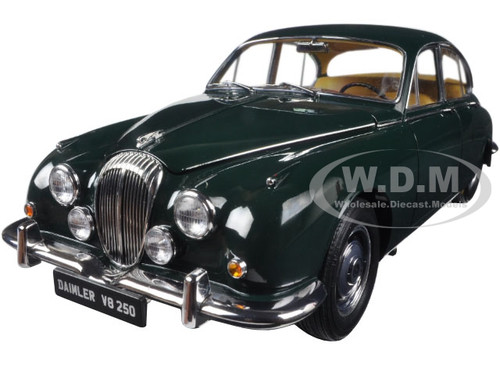
Daimler diecast models represent an important chapter in the history of the automobile, commercial vehicles, and motorized transportation. The Daimler name is closely associated with Gottlieb Daimler, one of the pioneers of the modern automobile, and with the companies that eventually became part of the Mercedes-Benz and Daimler commercial-vehicle story.
The Daimler category at DiecastModelsWholesale.com is intended for collectors looking for Daimler scale models, including historic Daimler automobiles, early motor vehicles, commercial trucks, buses, and other vehicles connected with Daimler's long engineering history. Depending on the individual model, collectors may encounter subjects from the earliest days of automobile development through later Daimler-Benz and Daimler commercial-vehicle history.
Because the Daimler name has been used across different companies and periods, understanding the history behind the name is particularly useful when collecting these models.
Gottlieb Daimler and the Birth of the Automobile
Gottlieb Daimler and engineer Wilhelm Maybach were central figures in the development of the high-speed internal-combustion engine. During the 1880s, they worked toward an engine that could be used as a compact power source for different forms of transportation.
In 1886, Daimler installed his engine in a carriage, creating what Mercedes-Benz history identifies as the first four-wheeled automobile. Daimler's vision extended beyond automobiles: his engines were also adapted for boats and, later, aircraft applications.
This early engineering work makes Daimler models particularly interesting to collectors of automotive history. A scale model representing one of these early vehicles can illustrate just how different the earliest automobiles were from the cars that followed only a few decades later.
Daimler Motor Carriage
The Daimler Motor Carriage of 1886 is one of the most historically significant subjects associated with the Daimler name. Based on a modified carriage and powered by Daimler's compact engine, it demonstrated the potential for a gasoline-powered vehicle to move independently of horses.
For collectors, early Daimler models are valuable primarily as representations of automotive history rather than conventional model cars. They can serve as centerpiece pieces in collections focused on the origins of the automobile, early engineering, or the evolution of transportation.
Daimler-Motoren-Gesellschaft
Daimler's commercial activities eventually developed into Daimler-Motoren-Gesellschaft (DMG). Wilhelm Maybach became an important technical figure within the company and contributed to the development of increasingly sophisticated engines and automobiles.
Daimler's engineering philosophy was unusually broad for its time. The company explored applications for engines in road vehicles, marine craft, and aviation. This makes the Daimler name relevant to collectors beyond passenger automobiles.
Early Daimler vehicles can therefore be collected alongside other pioneering cars, motorcycles, and transportation models to illustrate the rapid development of mechanical transportation during the late 19th and early 20th centuries.
The Mercedes Connection
The history of Daimler is inseparable from the development of Mercedes and eventually Mercedes-Benz.
One of the most important early Mercedes automobiles was the Mercedes 35 hp, developed by Wilhelm Maybach around 1900–1901. Its low center of gravity, long wheelbase, and performance-oriented design represented a major step toward the modern automobile. The car also achieved notable success at the 1901 Nice racing week.
The Mercedes name subsequently became one of the most recognizable names in automotive history. The three-pointed star associated with Daimler was later combined with the Benz identity following the merger of Daimler-Motoren-Gesellschaft and Benz & Cie.
In 1926, the two companies merged to form Daimler-Benz AG, bringing the Daimler and Benz engineering traditions together. The Mercedes-Benz brand and its distinctive emblem emerged from this merger.
For diecast collectors, this history is important because some models may be cataloged under Daimler while others from closely related periods may be identified as Mercedes or Mercedes-Benz.
Daimler and Early Performance Cars
Daimler's history also includes some of the most significant performance automobiles of the prewar era.
The Mercedes S, SS, SSK, and SSKL models of the late 1920s and early 1930s became famous for their combination of powerful supercharged engines, long proportions, and competition success. The SSK in particular has become one of the iconic sports cars of the period.
These cars are especially appealing to collectors interested in:
- Prewar European automobiles
- Classic Mercedes racing cars
- Supercharged sports cars
- Historic Grand Prix racing
- Mille Miglia competition
- Early performance engineering
- Automotive design history
A Daimler-related collection can therefore extend well beyond the earliest motor carriage to include some of the most sophisticated automobiles of the interwar period.
Daimler Commercial Vehicles and Trucks
Daimler's contribution to transportation was not limited to passenger automobiles. The company also played an important role in the development of the motor truck.
In 1896, Daimler delivered one of the world's earliest motorized trucks. The vehicle used a four-horsepower, two-cylinder Phoenix engine and had a payload of approximately 1.5 tonnes.
This early truck is especially significant to commercial-vehicle collectors because it demonstrates that the idea of using gasoline-powered vehicles for freight transportation emerged almost simultaneously with the automobile itself.
Over the following decades, Daimler and its successor organizations developed increasingly capable commercial vehicles, eventually leading to the broad Mercedes-Benz truck range.
Daimler and the Unimog
Another important vehicle associated with the Daimler commercial-vehicle story is the Unimog.
The Unimog was originally developed as a versatile agricultural and utility vehicle after World War II. Daimler-Benz acquired the Unimog operation in 1951 and established production at Gaggenau. The vehicle subsequently became one of the best-known examples of a highly adaptable off-road utility vehicle.
Unimog models are particularly interesting to collectors because they bridge several categories at once. Depending on configuration, the vehicle can represent agriculture, forestry, municipal service, construction, military support, emergency response, or off-road transportation.
A Daimler collection featuring a Unimog alongside passenger cars or conventional trucks can therefore show the diversity of the company's commercial-vehicle engineering.
Daimler Trucks and Freightliner
The Daimler commercial-vehicle story eventually expanded internationally.
In 1981, Daimler-Benz acquired Freightliner, an American heavy-duty truck manufacturer. Daimler's resources helped Freightliner expand substantially during the following decade. The broader organization later added or developed other commercial-vehicle brands and businesses, including Western Star and Thomas Built Buses.
This history makes the Daimler name relevant to collectors of North American trucks as well as European vehicles. However, the exact manufacturer or brand represented by a particular scale model should always be checked in the product specifications.
Daimler's commercial-vehicle history also includes Mercedes-Benz Trucks, buses, coaches, and specialized vehicles. Today, the commercial-vehicle business operates separately as Daimler Truck, following its 2021 spin-off from the former Daimler AG.
What to Look for When Collecting Daimler Models
Because Daimler covers such a long period of automotive history, collectors may want to organize models according to vehicle type and historical era.
Important subjects can include:
- Daimler Motor Carriage — one of the earliest four-wheeled automobiles
- Early Daimler automobiles — pioneering vehicles from the late 19th and early 20th centuries
- Mercedes 35 hp — an important early Mercedes design
- Mercedes S, SS, SSK and SSKL — iconic prewar performance cars
- Early Daimler trucks — significant commercial-vehicle history
- Unimog — versatile utility and off-road vehicles
- Mercedes-Benz commercial vehicles — later developments from the Daimler-Benz tradition
- Daimler-associated trucks and buses — depending on the manufacturer and model represented
Collectors should pay close attention to the exact manufacturer designation, vehicle name, year, and scale because the Daimler name spans numerous companies and generations.
Scale and Display Considerations
Daimler models can appear in a wide range of scales depending on the vehicle and manufacturer. Passenger cars are commonly represented in scales such as 1/12, 1/18, 1/24, 1/43, and 1/64, while trucks, buses, and utility vehicles may be available in scales including 1/18, 1/24, 1/43, 1/50, and 1/87.
The best scale depends on the type of collection being built.
A 1/18 classic Daimler or Mercedes can make an effective centerpiece because the larger size allows details such as bodywork, wheels, engine components, and interiors to be more easily appreciated. Smaller scales such as 1/43 and 1/64 make it easier to build a chronological collection containing many different vehicles.
For trucks and utility vehicles, 1/50 is particularly useful for collectors who want to display detailed commercial vehicles without requiring the space needed for larger models.
Before purchasing, check the individual product specifications for:
- Exact vehicle name and designation
- Production or model year
- Scale
- Manufacturer
- Vehicle type
- Materials
- Dimensions
- Livery or markings
- Display stand or accessories
- Whether the model represents Daimler, Mercedes, Mercedes-Benz, or another related brand
Building a Daimler Automotive History Collection
Daimler provides an unusual opportunity to build a collection that follows the development of transportation over more than a century.
A chronological display could begin with an early Daimler motor carriage, progress to early Mercedes automobiles, and then move into the powerful SSK era. Later models could represent Mercedes-Benz passenger cars, commercial trucks, Unimog utility vehicles, and other Daimler-related vehicles.
Another approach is to focus exclusively on Daimler engineering milestones. This might include early automobiles, pioneering engines, performance cars, commercial vehicles, and off-road utility machines.
Either approach gives the collection a strong historical narrative rather than simply assembling vehicles based on appearance.
Find Daimler Diecast Models
From Gottlieb Daimler's pioneering motor carriage to historic Mercedes performance cars and the development of commercial trucks and utility vehicles, the Daimler name is connected with some of the most important developments in automotive history.
Browse the Daimler diecast collection at DiecastModelsWholesale.com to explore available scale models and find a historically significant Daimler vehicle for your collection, whether your interest is early automobiles, classic European cars, racing history, trucks, or commercial vehicles.

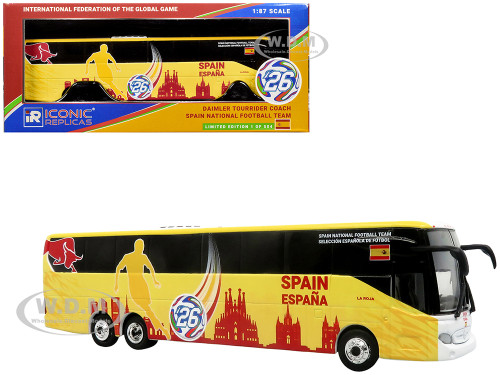 $49.95
 $49.95