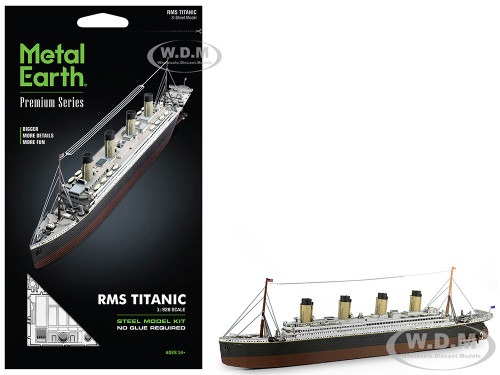
1/928 scale diecast models are highly compact scale collectibles representing real-world subjects at 1/928 of their full-size linear dimensions. This is an uncommon and highly specialized scale, making it particularly interesting to collectors looking for unusual miniature models or subjects that are difficult to display in larger scales.
At 1/928 scale, even very large real-world subjects can be reduced to remarkably small display models. The scale may be encountered in specialized aviation, transportation, maritime, military, or other miniature subjects, depending on current manufacturer and product availability.
Because 1/928 is considerably less common than established scales such as 1/400, 1/500, 1/600, 1/700, or 1/1000, shoppers should review each product listing carefully for the exact prototype, dimensions, materials, and construction.
What Does 1/928 Scale Mean?
The 1/928 scale ratio means that one unit of measurement on the model represents 928 of the same units on the original subject.
For example:
- A 928-foot prototype would be approximately 12 inches long.
- A 700-foot prototype would be approximately 9.05 inches long.
- A 500-foot prototype would be approximately 6.47 inches long.
- A 300-foot prototype would be approximately 3.88 inches long.
- A 200-foot prototype would be approximately 2.59 inches long.
- A 100-foot prototype would be approximately 1.29 inches long.
These examples illustrate why 1/928 can be useful for representing large prototypes in a very compact format.
The actual size of an individual model depends on the dimensions of its full-size counterpart. Two models can both be exactly 1/928 scale while having very different finished dimensions.
A Specialized Compact Scale
Unlike major diecast scales such as 1/18, 1/24, 1/43, and 1/64, 1/928 is not a mainstream scale for general automotive collecting. It is better viewed as a specialized scale that may appear in particular product lines or for specific subjects.
Depending on current availability, shoppers may encounter 1/928 models associated with:
- Aviation and aircraft
- Transportation
- Maritime subjects
- Military subjects
- Specialty vehicles
- Historical subjects
- Other large-scale real-world prototypes represented as miniature models
The selection can be limited compared with more established scales, so the individual product listing should always be considered the definitive source for the subject and specifications.
Why Use Such a Small Scale?
The primary advantage of 1/928 is space efficiency.
A full-size aircraft carrier, ocean liner, large transport aircraft, or other substantial prototype can become difficult to display when modeled at a larger scale. A much smaller ratio allows the collector to represent the same subject while using considerably less shelf or cabinet space.
This can be particularly useful for collectors who want to:
- Display numerous large prototypes together
- Build a fleet or transportation collection
- Create a compact historical display
- Represent subjects from multiple categories
- Preserve shelf space for additional models
- Collect unusual or specialized scales
For large prototypes, the difference between scales can have a major effect on the final display footprint.
Understanding the Size of 1/928 Models
Consider a large 1,000-foot prototype. At 1/928 scale, it would be approximately 12.93 inches long.
A 900-foot prototype would measure approximately 11.64 inches, while a 600-foot prototype would be approximately 7.76 inches.
This demonstrates an important point about scale collecting: a model's scale alone does not tell you its exact finished dimensions.
A relatively small vehicle could produce a tiny 1/928 model, while a very large ship could still produce a model approaching a foot or more in length.
For that reason, shoppers should check the listed dimensions before selecting a display location.
1/928 Compared With Nearby Scales
Collectors interested in an uncommon scale often want to know how it compares with more familiar ratios.
1/900 Scale
1/900 is slightly larger than 1/928. An equivalent 1/900 model is approximately 3.1% larger linearly than a 1/928 model.
The difference is relatively small and may not be immediately obvious when viewing individual models, but it matters when maintaining strict scale consistency.
1/1000 Scale
1/1000 is smaller than 1/928. An equivalent 1/928 model is approximately 7.8% larger linearly than a 1/1000 model.
For a 1,000-foot prototype, the difference would be approximately 12.93 inches at 1/928 compared with 12 inches at 1/1000.
1/800 Scale
1/800 is noticeably larger. An equivalent 1/800 model is approximately 16% larger linearly than a 1/928 model.
For large subjects, this difference can become significant when planning a display.
1/700 Scale
1/700 is substantially larger than 1/928. An equivalent 1/700 model is approximately 32.6% larger linearly.
This is especially important for collectors of large ships and other subjects where several inches of additional model length can make a significant difference in available display space.
1/928 Scale and Large Prototypes
Uncommon compact scales can be particularly effective when the prototype itself is large.
A large vessel, for example, may be hundreds of feet long in reality. At 1/928, its model can remain small enough for a shelf while still providing a physical representation of the prototype.
The same principle can apply to large aircraft, military equipment, transportation subjects, and other substantial prototypes.
For collectors, this creates an opportunity to focus on the subject rather than the physical size of the model. A compact model can still represent an historically significant or visually distinctive full-size machine.
Choosing a 1/928 Scale Model
When shopping for a 1/928 scale collectible, there are several factors worth checking.
Verify the Exact Prototype
Make sure the listing identifies the correct aircraft, vehicle, vessel, or other subject. This is especially important when collecting historical subjects or different versions of the same basic design.
Check the Finished Dimensions
The prototype's actual size determines how large the finished model will be. Always compare the listed dimensions with the available shelf, cabinet, or display case space.
Check the Materials
The term "diecast model" does not necessarily mean that every component is metal. Depending on the product, models may incorporate diecast metal, plastic, etched components, or other materials.
Review the individual product specifications for the construction details.
Check Whether It Is Ready to Display
Some miniature products are fully assembled collectibles, while others may be model kits or require some degree of assembly. Product descriptions should be reviewed carefully before ordering.
Collecting Uncommon Scales
One of the attractions of an uncommon scale such as 1/928 is the opportunity to build a collection around unusual subjects and formats.
Collectors do not necessarily need to limit themselves to the most popular scales. A specialized scale can be useful when:
- The subject is only available in that scale
- Display space is limited
- The collector wants a particularly large prototype in compact form
- The model has historical or personal significance
- The scale complements an existing miniature display
For a scale-specific collection, however, it is best to keep 1/928 models separate from significantly different scales if accurate proportions are important.
A 1/928 model and a 1/700 model of the same prototype will have noticeably different physical dimensions. They may still look good in the same collection, but they should not be interpreted as being the same scale.
Displaying 1/928 Scale Models
The compact dimensions of many 1/928 models make them suitable for smaller display areas.
Potential display approaches include:
- Dedicated scale-specific shelves
- Glass display cabinets
- Desktop displays
- Historical collections
- Transportation-themed displays
- Fleet or group displays
- Compact dioramas
For a larger collection, organizing models by prototype, manufacturer, country, historical period, or subject type can make the display easier to explore.
Because 1/928 is uncommon, a collection built around the scale can also provide an interesting contrast to displays dominated by more familiar scales.
Shop 1/928 Scale Models
The 1/928 scale is a specialized choice for collectors who appreciate compact models, unusual scale ratios, and the opportunity to represent large real-world subjects without requiring a large display footprint.
Browse the available 1/928 scale models at DiecastModelsWholesale.com, review each product's subject and specifications, and find a distinctive miniature model that fits your collection and display space.