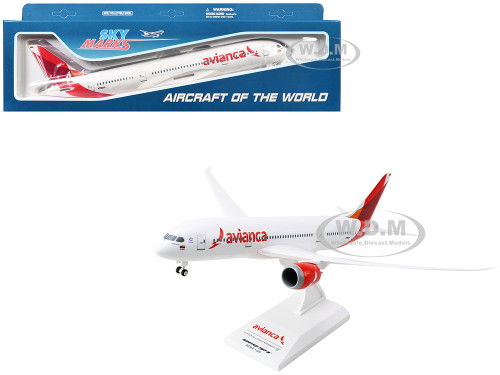
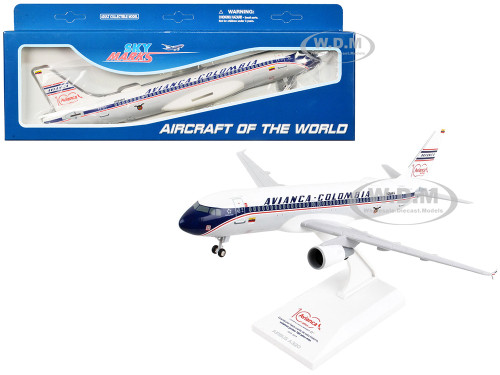
Avianca is one of Latin America's best-known airlines, with roots in Colombia and a history stretching back to 1919. Its aircraft have connected Colombia with destinations across the Americas, Europe, and other international markets for generations. From early propeller-driven airliners to modern Airbus narrowbody jets and Boeing 787 Dreamliners, Avianca's history reflects the development of commercial aviation throughout Latin America.
Avianca Airlines diecast airplane models appeal to collectors interested in Colombian aviation, Latin American airlines, international passenger aircraft, and distinctive airline liveries. Whether you collect aircraft by airline, country, manufacturer, or historical period, an Avianca model can add an important South American carrier to your collection.
This category is for shoppers looking for collectible scale airplane models representing Avianca. Aircraft types, liveries, registrations, scales, and manufacturers depend on the individual products available. Check each listing for the exact aircraft represented, its dimensions, construction, and included accessories.
The History of Avianca
Avianca traces its origins to December 5, 1919, when Sociedad Colombo Alemana de Transporte Aéreo (SCADTA) was founded in Colombia. The company began operating aircraft in the early years of commercial aviation, helping establish air services in a country where mountainous terrain and long distances made transportation between some communities challenging.
SCADTA initially operated early aircraft, including Junkers designs, and developed routes connecting Colombian cities. During the following decades, aviation technology advanced rapidly, and the airline's operations evolved alongside the introduction of newer aircraft and expanding passenger demand.
In 1940, Avianca was formally established through the integration of SCADTA and Servicio Aéreo Colombiano. The airline continued expanding its domestic and international network, linking Colombian cities with destinations elsewhere in Latin America and eventually with North America and Europe.
The arrival of jet aircraft marked another major stage in Avianca's development. The airline introduced the Boeing 707 in 1960 and subsequently operated other jet families as commercial aviation moved toward faster, higher-capacity services. In 1976, Avianca became the first Latin American airline to operate the Boeing 747, adding the iconic jumbo jet to its fleet.
In later decades, the airline incorporated aircraft such as the Boeing 767 and Airbus A320 family, followed by the Boeing 787 Dreamliner. These aircraft represented successive generations of technology, from early long-range jet travel to modern, fuel-efficient passenger operations.
Avianca has also undergone significant corporate changes and regional integration over its long history. Today, the Avianca brand operates within Avianca Group International Limited, part of Abra Group, and continues to play an important role in connecting Latin America with international destinations.
For collectors, this long history provides opportunities to explore different periods of airline design. An early Avianca aircraft represents the pioneering era of commercial aviation, while a modern Airbus or Boeing replica reflects the airline's contemporary operations.
Avianca's Recognizable Passenger Aircraft
Avianca has operated aircraft from several major manufacturers over the years. Its fleet history includes early propeller aircraft, classic jetliners, narrowbody passenger jets, and modern widebody aircraft. The following types are especially relevant to collectors researching Avianca aircraft models.
Boeing 787 Dreamliner
The Boeing 787 Dreamliner represents a modern generation of long-haul commercial aircraft. Designed around advanced aerodynamics, modern engines, and extensive use of lightweight composite materials, the 787 was developed to improve operating efficiency while supporting passenger comfort on long-distance routes.
Avianca received its first Boeing 787-8 in December 2014. The aircraft gave the airline a modern widebody type for international services and became an important part of its long-haul identity.
The 787-8 has a distinctive appearance, with swept wings, large engine nacelles, and a streamlined fuselage. Its modern design makes it an appealing subject for collectors of contemporary airliners. An Avianca Boeing 787 diecast model can also be displayed alongside 787 replicas from other airlines to compare how different operators apply their liveries to the same aircraft family.
Airbus A320 Family
The Airbus A320 family has played a major role in Avianca's more recent passenger operations. These single-aisle aircraft are widely used for domestic and regional routes, offering a practical combination of capacity and range.
The family includes the A319, A320, and A321, which differ primarily in fuselage length and passenger capacity. Avianca has used aircraft from this family to serve destinations throughout Colombia and across the wider Americas.
For model collectors, the A320 family offers a useful way to compare aircraft proportions and airline markings. The shorter A319, standard-length A320, and longer A321 share a recognizable design but have different silhouettes. Always verify the precise variant when selecting a model, as similar-looking aircraft can represent different versions.
Boeing 747 Jumbo Jet
The Boeing 747 holds an important place in Avianca's history. The airline began operating the type in 1976, becoming the first airline in Latin America to introduce the jumbo jet. Its use of the 747 reflected the growth of long-distance air travel and the increasing need for aircraft capable of carrying large numbers of passengers between major international destinations.
The 747 is instantly recognizable by its upper-deck profile, broad fuselage, and four-engine configuration. Although Avianca's 747 operations belong to an earlier period, replicas of the aircraft can be particularly interesting to collectors who focus on historic airline fleets and classic widebody jets.
A model representing an earlier Avianca livery can also help illustrate how the airline's visual identity changed across different generations of aircraft.
Avianca's Distinctive Livery and Colombian Identity
Avianca's aircraft markings are an important part of the airline's appeal to collectors. The brand's red identity and bird-inspired emblem help make its aircraft recognizable, while changes to the logo, typography, and overall paint scheme distinguish different periods in the airline's history.
For collectors, comparing older and newer Avianca liveries can be as interesting as comparing aircraft types. A classic Boeing 747 in a historic paint scheme represents a different era from a modern Airbus A320 or Boeing 787 wearing contemporary Avianca branding.
When selecting an Avianca airplane model, consider these details:
-
Livery era: Check whether the model represents a historic or more recent paint scheme.
-
Aircraft registration: Registration markings can help identify the specific aircraft depicted.
-
Aircraft variant: Confirm the precise Boeing or Airbus model rather than relying on the general aircraft family name.
-
Manufacturer and finish: Construction, paint application, and exterior detail vary between model makers and releases.
-
Scale and dimensions: Make sure the model fits your display and works with the rest of your collection.
Avianca's long operating history makes it particularly suitable for collections organized by period. Collectors can focus on the airline's early aviation heritage, classic jet age, or modern fleet, depending on the models they find.
Avianca Cargo and the Wider World of Aviation
Avianca's aviation story also extends beyond passenger transportation. Its cargo operations have developed into a dedicated business serving freight markets across the Americas and other destinations. Cargo aircraft transport goods such as perishables, pharmaceuticals, textiles, and technology products, supporting international commerce and supply chains.
Avianca Cargo has operated dedicated freighter aircraft, including Airbus A330 freighters. These aircraft differ from passenger versions because they are configured to transport freight rather than passengers. Their large fuselages and cargo-loading arrangements give them a distinctive role in commercial aviation.
For collectors interested in more than passenger jets, cargo aircraft offer another perspective on the airline industry. However, Avianca passenger aircraft and Avianca Cargo freighters may be represented in separate product categories or listings. Check the specific product information to confirm the operator, aircraft configuration, and livery of any model.
Choosing the Right Scale for Your Avianca Model
Scale is an important consideration when buying a diecast airplane. It indicates how the replica's dimensions compare with those of the full-size aircraft and helps determine how much display space you will need.
1:400 Scale
The 1:400 scale is a popular choice for airline collectors who want to display multiple aircraft in a limited space. It is suitable for collections featuring different countries, airlines, and aircraft families. A compact Avianca model can fit alongside other Latin American carriers or replicas of the same aircraft type operated by airlines worldwide.
1:200 Scale
A 1:200 scale model is larger and generally more prominent in a display. Its size can make the aircraft's proportions and airline markings easier to appreciate. It also requires more shelf or cabinet space, particularly for widebody aircraft such as the Boeing 787 or historic 747.
Other Scales and Product Features
Other scales may be offered depending on the model manufacturer and release. These are general examples of scales used in aircraft collecting, not a guarantee that Avianca models are available in each size.
Before purchasing, review the product listing for:
-
Overall length and wingspan
-
Construction materials
-
Landing gear configuration
-
Whether a display stand is included
-
Aircraft registration and livery details
-
Packaging and any special presentation features
Product specifications vary, so use the individual listing to determine exactly what is included.
Avianca Airplane Models for Collectors and Gift Shoppers
Avianca diecast airplane models can appeal to aviation enthusiasts at different stages of collecting. Experienced collectors may be interested in a particular aircraft registration, historical livery, or aircraft variant. Newer collectors may simply want to represent Colombia's flagship airline in a broader display of international carriers.
These models can be a good fit for:
-
Colombian aviation enthusiasts interested in the history of commercial flight in Colombia.
-
Latin American airline collectors building a display of carriers from South and Central America.
-
Airbus and Boeing collectors comparing aircraft families and their airline liveries.
-
Historic airline enthusiasts exploring the transition from early airliners to the jet age.
-
Modern aviation fans interested in contemporary aircraft such as the Boeing 787 Dreamliner.
-
Gift shoppers looking for a collectible for someone interested in aircraft, airlines, or Colombia.
If you are purchasing a model as a gift, consider the recipient's preferred scale and existing collection. A model representing a particular aircraft or livery can be especially meaningful to someone who has traveled with Avianca or has a personal connection to Colombia.
Avianca's century-long history gives its aircraft a place in collections covering both the development of commercial aviation and the modern airline industry. Browse the available Avianca Airlines diecast airplane models at Diecast Models Wholesale to find a replica for your collection, display, or next aviation-themed gift.