Fiat diecast model cars bring more than a century of Italian automotive history to the collector’s shelf. Founded in Turin in 1899 as Fabbrica Italiana Automobili Torino, Fiat became one of Italy’s most influential automobile manufacturers, producing everything from compact city cars and family vehicles to sports cars, rally machines, and distinctive performance models. Today, Fiat remains closely associated with practical design, Italian styling, and memorable automobiles that have become important parts of automotive culture.
A Fiat diecast model is an opportunity to collect a miniature representation of that history. Depending on the product, collectors may find classic Fiat automobiles, compact European cars, sports models, modern Fiat 500 variants, racing-inspired vehicles, and other memorable designs. Fiat model cars are particularly appealing to collectors interested in Italian automobiles, European automotive history, classic cars, and distinctive small-car design.
A Brief History of Fiat
Fiat was established in Turin on July 11, 1899. The company began automobile production at the start of the 20th century, with the Fiat 3½ HP among its earliest vehicles. From its beginnings, Fiat combined automobile manufacturing with engineering, industrial production, and participation in motorsports.
Fiat's early racing history is also worth remembering when collecting its models. The Fiat S61 Corsa, introduced in the early 20th century, was a two-seat racing car and is one of the significant early examples of Fiat's connection with competition. Fiat continued developing performance and racing vehicles as the company expanded its passenger-car range.
One of Fiat's greatest contributions to automotive history was its development of affordable, compact automobiles intended for everyday transportation. These cars helped establish Fiat as a defining name in Italian motoring and made many of its small cars recognizable well beyond Italy.
Fiat 500 Topolino
The original Fiat 500, better known as the Topolino, is one of the most important Fiat models for collectors. Introduced in 1936, the small two-seat automobile was designed by Dante Giacosa and became an important part of Italy's early mass motorization. Its compact proportions and rounded styling led to the affectionate nickname "Topolino," meaning "little mouse."
The Topolino evolved through several versions, including the 500 B and 500 C. The later Giardiniera Belvedere provided additional practicality with a larger rear area and four-seat configuration. Production of the Topolino family continued until the mid-1950s, making it an especially interesting subject for collectors of prewar and postwar European automobiles.
A Fiat Topolino diecast model can add an entirely different character to a collection compared with the larger sports cars and muscle cars commonly represented in scale-model collecting. Its historical importance, small dimensions, and unmistakable Italian styling make it a natural choice for collectors of classic European cars.
The Fiat 500 and Italian Motoring
In 1957, Fiat introduced the Nuova 500, replacing the original Topolino concept with a completely new compact automobile. Designed by Dante Giacosa, the Nuova 500 used a rear-mounted, air-cooled two-cylinder engine and a lightweight monocoque construction. It quickly became one of the defining small cars of postwar Italy.
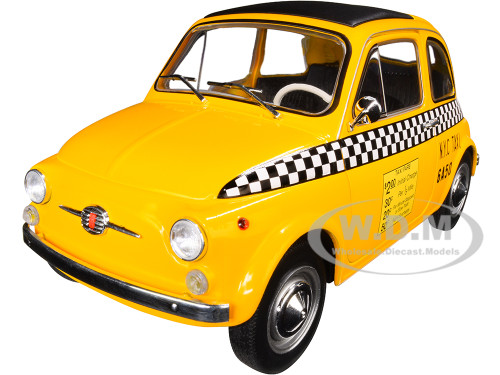
The classic Fiat 500 is one of the most recognizable subjects in Fiat diecast collecting. Its simple proportions, rounded body, compact footprint, and wide range of historical versions make it suitable for collections focused on Italian classics, European automobiles, or iconic small cars.
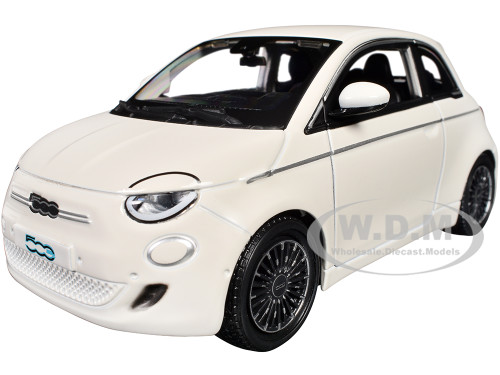
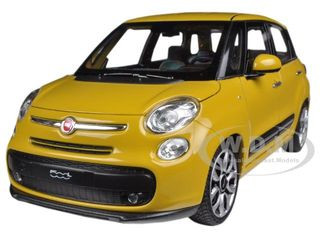
Modern Fiat 500 models also provide a connection between classic and contemporary Fiat design. The modern 500 draws clear inspiration from the visual character of the 1957 automobile while incorporating modern engineering and equipment. For collectors, this creates an interesting opportunity to display different generations of Fiat 500 models together.
Other Notable Fiat Models
The Fiat 500 is only one part of the company's extensive automotive history. Collectors may also encounter scale models representing several other significant Fiat vehicles.
Fiat 600
Introduced in 1955, the Fiat 600 played an important role in Fiat's postwar expansion of practical small automobiles. It helped bring affordable transportation to a broader audience and became an important European compact car.
Fiat Dino
The Fiat Dino is particularly interesting for collectors because of its connection to Ferrari engineering. Developed during the 1960s, the Fiat Dino used a Ferrari-derived 2.0-liter V6 engine and was offered as both a coupe and spider. It represents a fascinating intersection between Fiat's mainstream automobile production and Italy's performance-car heritage.
Fiat 127
The Fiat 127, introduced in 1971, represented another important step in the evolution of Fiat's compact cars. Its efficient packaging and modern design helped establish a new generation of practical small automobiles.
Fiat Panda
Introduced in 1980, the Fiat Panda became one of Fiat's best-known practical cars. Its simple, functional design and versatility made it an important part of European automotive history. Fiat Heritage identifies the Panda alongside the 500 as one of the company's defining Italian utility cars.
Other Fiat subjects that may interest collectors include the 124, 125, 126, 128, Uno, Punto, Barchetta, X1/9, Coupe, 124 Spider, and later 500-family models. Availability, body style, trim, and scale vary by manufacturer and release.
Fiat Diecast Models for Collectors
When selecting a Fiat diecast model, consider the automobile itself as well as how the model will fit into your collection. A collector specializing in classic European cars may prefer a Topolino, 500, 600, Dino, or 124, while someone interested in modern Italian automobiles may look for contemporary 500 models, 124 Spider variants, or other newer Fiat designs.
Important details to compare include:
- Fiat model and generation – Different generations of the same Fiat can have substantially different designs.
- Production era – Prewar, postwar, 1960s, 1970s, 1980s, and modern Fiat models can create very different collecting themes.
- Body style – Look for coupes, sedans, convertibles, hatchbacks, wagons, and other configurations when available.
- Scale – Choose a scale that fits your existing display and other models.
- Color and trim – Colors, wheels, interiors, bumpers, badges, and other details can distinguish different releases.
- Manufacturer – Different diecast manufacturers may use different levels of detailing, materials, opening features, and presentation.
- Display purpose – A highly detailed larger-scale model can serve as a centerpiece, while smaller models make it easier to build a broader Fiat or European-car collection.
Fiat Diecast Model Car Scales
Fiat model cars are produced in several popular scales, although the exact selection depends on the particular vehicle and manufacturer.
1/12 scale models provide a large display presence and allow room for considerable exterior and interior detail. They can be particularly attractive for iconic Fiat sports or classic models when available.
1/18 scale is one of the most popular choices for serious automotive collectors. It provides a useful balance between display size and detail and works well for comparing different Fiat models side by side.
1/24 scale offers an excellent option for collectors who want recognizable proportions and detailing while using less display space. This scale is especially useful for building a collection across several Fiat generations.
1/43 scale is ideal for collectors who want to represent a wider range of Fiat history in a compact display. It is particularly well suited to collecting multiple models from different decades.
Because availability varies by model and manufacturer, collectors should always check the individual product specifications for the exact scale, dimensions, features, and configuration.
Building a Fiat Diecast Collection
A Fiat collection can be organized in several ways. Some collectors concentrate on the evolution of the Fiat 500, beginning with the Topolino and continuing through the Nuova 500 and later generations. Others build a broader timeline covering Fiat's most important compact cars, sports cars, and family vehicles.
Another approach is to focus on a particular era. A display of 1950s and 1960s Fiat models can highlight the company's role in postwar European mobility, while a collection of 1970s and 1980s models can showcase the development of compact front-wheel-drive automobiles and changing Italian design.
Collectors interested in performance can also explore Fiat's sporting heritage, including the Fiat Dino and other competition-oriented or enthusiast-focused vehicles. Combining different scales is possible as well, although maintaining a consistent scale generally creates a more cohesive display.
Shop Fiat Diecast Model Cars
Whether you are looking for a classic Fiat 500 Topolino, the iconic Nuova 500, a Fiat Dino, a compact European classic, or a later Fiat model, Fiat diecast cars offer an engaging way to preserve a piece of Italian automotive history in miniature.
Explore the Fiat diecast model car collection at DiecastModelsWholesale.com and compare available models by vehicle, scale, style, and manufacturer to find the right Fiat for your collection or display.


 $24.99Was $29.99Save 16%
 $22.49Was $26.99Save 16%
 $1,298.99

 $23.99Was $28.99Save 17%
 $19.49Was $23.99Save 18%
 $19.49Was $23.99Save 18%