Austin / Morris diecast models bring together two of the most important names in British automotive history. From practical family cars and compact economy vehicles to sports cars, commercial vehicles, and iconic models such as the Mini, Austin and Morris helped put affordable transportation on British roads while also creating automobiles that became cultural icons.
This category is for collectors looking for Austin model cars, Morris diecast models, Austin Morris scale models, and other classic British automobiles associated with the Austin and Morris marques and their shared history. Depending on current availability, collectors may find models representing different eras, body styles, generations, and variations of these historic British vehicles.
Austin and Morris are particularly interesting to collectors because their histories eventually became closely intertwined. Understanding that relationship helps explain why models carrying either badge can belong naturally in the same collection.
The Origins of Austin and Morris
The two companies began as independent British automobile manufacturers.
The Austin Motor Company was founded by Herbert Austin in 1905 in Longbridge, Birmingham. The company initially produced larger automobiles before expanding into more affordable cars and commercial vehicles. Austin eventually became one of Britain's best-known automobile manufacturers, producing everything from small economy cars to luxury automobiles, sports cars, taxis, and trucks.
Morris Motors was founded by William Morris, later Lord Nuffield, in Oxford. Morris began by building and selling automobiles before expanding manufacturing operations and becoming one of Britain's largest car producers.
Although Austin and Morris competed with one another for much of their early history, changing economic conditions eventually brought the two companies together.
Austin and Morris Become British Leyland
In 1952, Austin Motor Company and Morris Motors were brought together through the formation of the British Motor Corporation (BMC). This merger created one of Britain's largest automobile manufacturers and brought a wide range of marques under common corporate ownership.
The Austin and Morris names continued to appear on automobiles even though the companies were now part of the same larger organization. This period produced some of the most recognizable British vehicles of the 1950s and 1960s.
BMC later became part of the complicated series of mergers and reorganizations that eventually created British Leyland in 1968. Austin and Morris products continued to be developed and sold alongside other British marques, including MG, Riley, Wolseley, Triumph, and Jaguar.
For diecast collectors, this history is important because an Austin or Morris badge does not always tell the complete story of the vehicle's engineering or corporate origins.
The Austin Mini and Morris Mini
No Austin / Morris collection would be complete without considering the Mini.
Developed by BMC designer Alec Issigonis, the Mini was introduced in 1959 and originally sold under both Austin and Morris names. The Austin version was known as the Austin Seven, while the Morris version was called the Morris Mini-Minor.
The basic concept was brilliantly simple: a very compact exterior, front-wheel drive, a transversely mounted engine, and wheels positioned near the corners of the car. This created an unusually spacious interior relative to the Mini's small footprint.
The Mini quickly became one of Britain's most important small cars. Its influence extended far beyond ordinary transportation, however. The car became associated with motorsport, fashion, popular culture, and British design.
Mini Cooper and Cooper S
The Mini's performance potential became even more apparent when John Cooper developed competition versions of the car. The Mini Cooper and later Cooper S transformed the small economy car into a genuine performance icon.
Mini achieved major motorsport success, particularly in the Monte Carlo Rally, where the Mini Cooper S became famous for defeating much larger and more powerful competitors.
For collectors, Mini models offer many possibilities. Austin and Morris Mini versions can be collected alongside Cooper and Cooper S models, rally cars, later classic Minis, and special editions.
Because the Mini was sold under both Austin and Morris badges, it also provides one of the clearest connections between the two marques.
Austin-Healey and British Sports Cars
Austin's history also includes an important connection to the Austin-Healey sports-car marque.
The Austin-Healey partnership was established in 1952 between the Austin division of BMC and Donald Healey. The resulting cars combined Austin mechanical components with Healey's sports-car engineering and design expertise.
The Austin-Healey 100 was introduced in 1953 and became the foundation for a highly successful series of British sports cars. Later models included the Austin-Healey 3000, which became one of the best-known British sports cars of the 1960s.
Although Austin-Healey became a separate marque rather than simply an Austin model line, its connection to Austin makes these cars relevant to collectors interested in the broader Austin automotive story.
The Austin-Healey Sprite also became an important small British sports car. Its compact dimensions, simple construction, and distinctive styling gave it a character very different from larger sports cars of the period.
Austin Seven and Classic Small Cars
The Austin Seven name has a particularly interesting history. The original Austin 7 was introduced in 1922 and became one of Britain's most influential small cars. It helped make car ownership accessible to a much broader section of the population and was produced in numerous forms.
Decades later, the Austin Seven name was revived for the Austin-badged version of the original Mini.
Collectors should therefore pay attention to the exact vehicle represented by a model. An Austin 7 from the 1920s and an Austin Seven Mini from the late 1950s may share a name but are completely different automobiles from very different periods.
Both, however, represent important milestones in Austin's history.
Morris Minor
The Morris Minor is another cornerstone of British automotive collecting.
Designed under the direction of Alec Issigonis, the postwar Morris Minor was introduced in 1948. Its modern design, compact dimensions, and practical layout helped establish it as one of Britain's best-known family cars.
The Minor evolved through several versions, including the Series MM, Series II, Minor 1000, Traveller estate, Tourer convertible, and commercial derivatives.
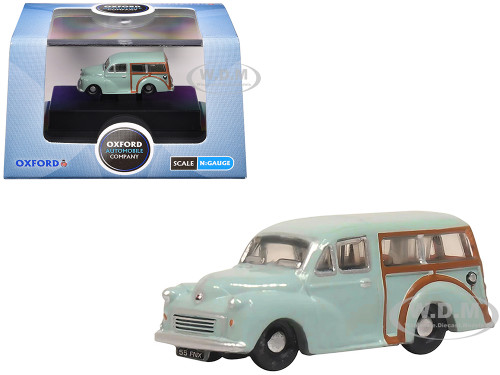
The Morris Minor Traveller is particularly recognizable because of its wood-framed rear body structure. It has become a symbol of postwar British motoring and is a popular subject for model collectors.
A Morris Minor diecast model can work particularly well in a display focused on British everyday automobiles because it represents a very different aspect of British automotive history from the Austin-Healey sports cars or Mini Cooper.
Morris Marina and Later British Cars
The Morris Marina was introduced in 1971 as part of British Leyland's effort to compete in the highly competitive family-car market. Available in several body styles, including saloon, coupe, estate, and pickup derivatives, the Marina became a familiar sight on British roads.
The Marina illustrates another important aspect of collecting Austin and Morris models: not every historically important car has to be a sports car or luxury vehicle.
Everyday cars such as the Morris Marina, Austin Allegro, Austin Maxi, and other British Leyland products help tell the story of how ordinary people traveled, worked, and lived during the second half of the 20th century.
For collectors interested in automotive history rather than only performance cars, these vehicles can be just as interesting as the famous models.
Austin and Morris Commercial Vehicles
Austin and Morris were also major producers of commercial vehicles.
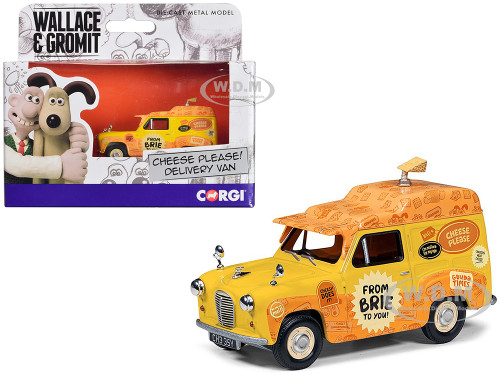
Their commercial ranges included vans, light trucks, delivery vehicles, taxis, and other utility automobiles. Models such as the Morris J-type and Morris LD became familiar working vehicles, while Austin produced numerous vans and commercial derivatives based on passenger-car and dedicated commercial platforms.
These vehicles are particularly useful for collectors building historical street scenes, delivery dioramas, British commercial displays, or collections focused on working vehicles.
An Austin or Morris commercial model can also be displayed alongside a classic passenger car from the same period to create a more complete representation of British road life.
Austin / Morris Diecast Models for Collectors
Austin / Morris model cars appeal to collectors for several different reasons. Some are attracted by the history of British automotive manufacturing, while others may be interested in a specific model such as the Mini, Morris Minor, Austin-Healey, or Austin Seven.
When selecting a model, consider:
- Marque: Determine whether the model represents Austin, Morris, or a related marque such as Austin-Healey.
- Model and generation: Many Austin and Morris names were used for different vehicles over time.
- Body style: Saloon, estate, convertible, sports car, van, pickup, and commercial versions can have substantially different appearances.
- Historical period: Prewar Austin and Morris vehicles look very different from the postwar cars and British Leyland-era models.
- Badge and livery: Particularly important for Mini models and commercial vehicles.
- Scale: Choose a scale that works with the rest of your collection.
Popular Austin / Morris Scales
Austin and Morris diecast models can be found in several automotive scales depending on the particular model and manufacturer.
1/18 Scale
1/18 scale provides a larger display format with enough space to appreciate classic bodywork, interiors, wheels, grilles, and other details. It works particularly well for iconic vehicles such as the Mini, Morris Minor, and classic sports cars.
1/24 Scale
1/24 scale offers a useful balance between physical size and detail. It is a practical choice for collectors who want to display several British automobiles together without requiring the space of a large-scale collection.
1/43 Scale
1/43 scale is especially useful for chronological collections. Its compact dimensions allow collectors to display many different Austin and Morris models from different decades.
1/12 Scale
1/12 scale is substantially larger and can make an especially impressive display when available. It is best suited to collectors with sufficient display space who want a highly prominent model.
Building an Austin / Morris Collection
There are many ways to organize an Austin / Morris diecast collection.
A Mini collection could include Austin and Morris versions of the original Mini, followed by Cooper, Cooper S, rally, and other variations.
A British family-car collection could feature the Morris Minor, Austin A-series automobiles, Morris Marina, Austin Allegro, and other everyday vehicles from different decades.
A British sports-car collection could include Austin-Healey models alongside other British performance cars.
Collectors interested in commercial vehicles can focus on Austin and Morris vans, trucks, taxis, and delivery vehicles, creating period-correct working scenes.
Another approach is chronological collecting. Starting with early Austin and Morris automobiles and progressing through the BMC, British Leyland, and later eras creates a visual history of British automotive manufacturing.
Why Austin / Morris Models Are Collectible
The appeal of Austin and Morris extends beyond rarity or prestige. These marques represent the automobiles that shaped everyday British motoring, from affordable prewar transportation to postwar family cars, compact Minis, sports cars, commercial vehicles, and the complex British Leyland era.
Their vehicles also demonstrate how automotive design changed over time. Large upright prewar automobiles gave way to streamlined postwar cars, compact front-wheel-drive vehicles, practical estates, and increasingly modern family cars.
For collectors, that variety makes Austin / Morris diecast models useful both as individual collectibles and as pieces of a larger historical display.
Browse the Austin / Morris diecast models available at DiecastModelsWholesale.com to discover classic British model cars and add a piece of Austin and Morris automotive history to your collection or display.

 $29.99Was $30.99Save 3%