IH Farmall diecast tractor models celebrate one of the most recognizable names in American agricultural history. From compact utility tractors and classic row-crop machines to powerful tractors that helped transform farm work, Farmall models represent generations of agricultural engineering and rural life. Their distinctive red paint, familiar model names, and long history on farms make them popular with tractor collectors, farming enthusiasts, and diecast hobbyists.
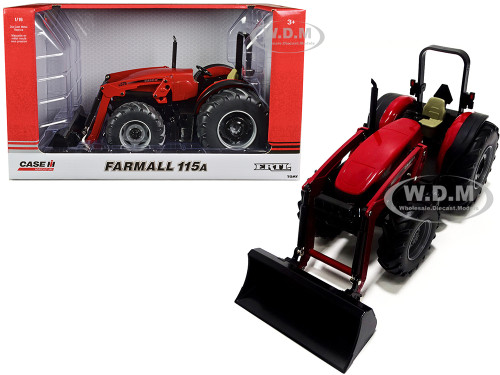
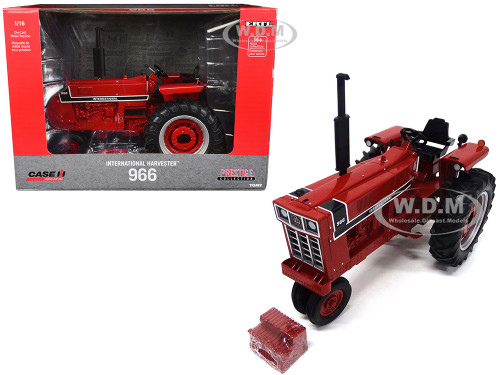
The IH Farmall category at DiecastModelsWholesale.com features collectible scale models representing Farmall tractors associated with International Harvester (IH). Depending on the individual products available, collectors may find replicas of classic Farmall tractors, later International Harvester models, and agricultural machines designed to represent different periods of farming. Possible scales include 1/16, 1/18, 1/24, 1/12, 1/43, and 1/64, although the actual scale depends on the specific model and release.
Whether you grew up around Farmall tractors, collect vintage agricultural machinery, or want a miniature tractor for a farm-themed display, IH Farmall diecast models offer a way to preserve the history of these important machines.
The History of Farmall and International Harvester
Farmall's history is closely connected to International Harvester, the American agricultural machinery manufacturer formed in 1902 through the merger of several companies, including McCormick Harvesting Machine Company and Deering Harvester Company.
The Farmall name emerged in the 1920s as International Harvester developed tractors intended to perform more than one type of farm task. Rather than being limited to pulling heavy implements, Farmall tractors were designed to work between crop rows, cultivate fields, and handle a variety of everyday agricultural jobs.
The original Farmall, introduced in 1924, helped establish the row-crop tractor as an important category of farm machinery. Its relatively narrow front end, elevated chassis, and ability to work between rows made it well suited to cultivating crops such as corn and cotton. The concept was particularly useful for farms that needed one tractor to handle multiple operations throughout the growing season.
Farmall tractors became widely associated with American farming during the 1930s, 1940s, and 1950s. International Harvester continued to refine the design and expand the lineup, introducing tractors for farms of different sizes and a wide variety of agricultural applications.
For collectors, the Farmall name represents more than a single tractor. It covers a long succession of machines that reflect the development of mechanized farming, from early row-crop tractors to postwar models that became familiar fixtures on American farms.
Classic Farmall Tractors
Farmall produced several generations of tractors, with model designations that remain familiar to agricultural machinery enthusiasts. Some of the best-known examples include the Farmall F-series, Letter Series, and numbered Super Series tractors.
Farmall Regular
The Farmall Regular, introduced in the 1920s, was an important early model in the development of the Farmall concept. It helped establish International Harvester's approach to row-crop tractors and became a landmark in the company's agricultural history.
A model of the Regular is particularly suitable for collectors interested in the early years of tractor mechanization and the origins of the Farmall name.
Farmall F-12, F-14, F-20, and F-30
The F-series tractors represented successive developments in Farmall's early row-crop lineup. Models such as the F-12, F-14, F-20, and F-30 served different farm requirements and reflected changes in engine design, power, and tractor size.
Their period styling, narrow front ends, and exposed mechanical components make these tractors distinctive subjects for vintage farm-model collections.
Farmall Letter Series: A, B, C, H, and M
Introduced around the late 1930s and into the 1940s, the Farmall Letter Series became one of the most recognizable families of International Harvester tractors.
Farmall A:A compact row-crop tractor designed for smaller farms and lighter field work.
Farmall B:A related compact tractor with a different operator and wheel arrangement.
Farmall C:A versatile row-crop tractor positioned between smaller and larger models in the range.
Farmall H:A widely used mid-sized tractor associated with general field work and cultivation.
Farmall M:A larger and more powerful tractor suited to heavier farm tasks.
These tractors are especially appealing to collectors because each model has recognizable proportions and a clear place in the Farmall lineup. A Farmall H and Farmall M, for example, can make a useful pair in a display showing different tractor sizes from the same era.
Farmall Super Series
International Harvester later developed improved versions of several Letter Series tractors. The Super A, Super C, Super H, and Super Mcarried forward familiar designs with engineering updates and other refinements.
The Super Series is useful for collectors interested in comparing closely related tractors across successive generations. Although some models share a similar overall appearance with their predecessors, differences in details and equipment can help distinguish one version from another.
Farmall Numbered Series and Later International Harvester Tractors
As farm equipment evolved, International Harvester expanded beyond the original Letter Series with numbered tractor families and updated designs. These machines reflect the transition from the classic Farmall era toward more modern agricultural equipment.
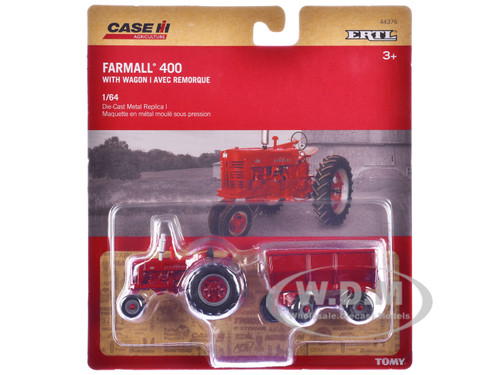
Notable models and families include the Farmall 300, 350, 400, 450, 560, 656, 706, 806, and 1066. The exact model range spans different generations, power levels, and intended uses, so these names should be considered examples of the broader International Harvester tractor heritage rather than one single series.
The Farmall 560, introduced in the late 1950s, represented a move toward more powerful tractors for larger farm operations. Later models such as the 806 and 1066 became recognizable examples of International Harvester's larger tractor lineup.



 $12.99
 $12.99
 $93.99
 $75.99