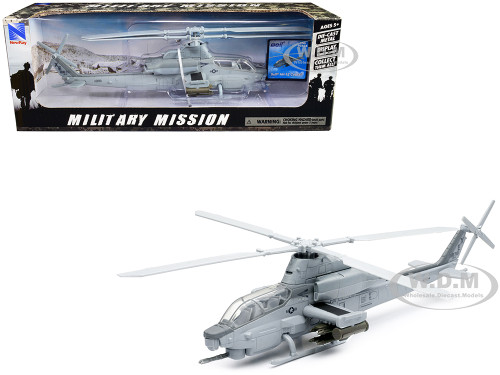
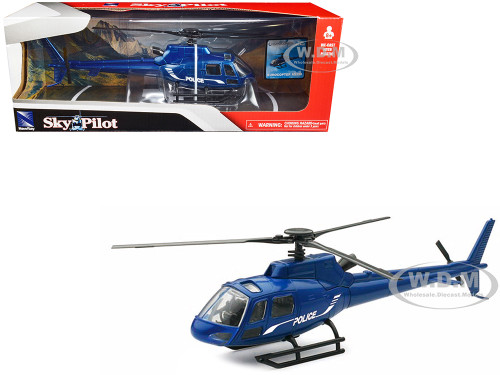
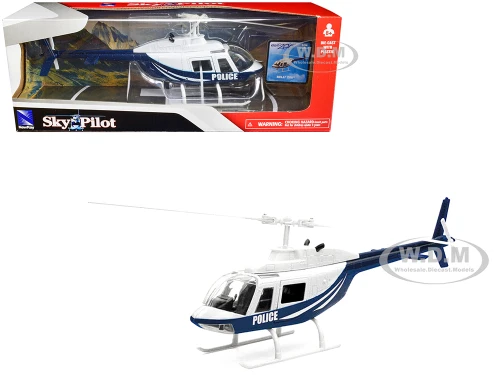
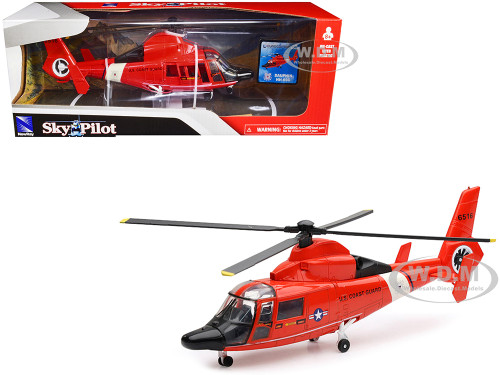
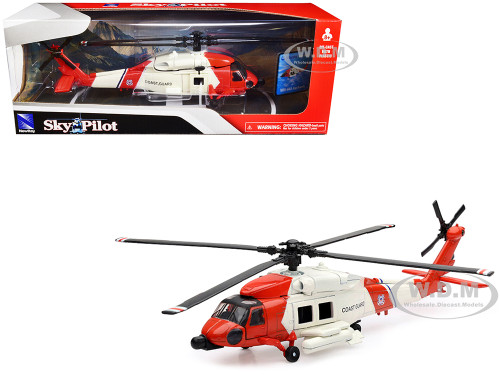
Helicopter diecast models bring the distinctive shape and engineering of rotary-wing aircraft into scale form. Unlike fixed-wing airplanes, helicopters generate lift with rotating blades and can operate without a conventional runway, making them useful for military operations, emergency services, transportation, utility work, law enforcement, firefighting, offshore operations, and many other applications.
The Helicopter category at DiecastModelsWholesale.com includes scale helicopter models representing a wide range of aviation subjects. Depending on the individual model, collectors may find military helicopters, civilian helicopters, rescue and emergency aircraft, transport helicopters, utility aircraft, and historically significant rotorcraft.
Helicopters also complement a broader aviation collection. Explore the Aircraft & War Planes collection for fixed-wing aircraft, or browse Military models for additional military vehicles and equipment.
What Is a Helicopter?
A helicopter is a rotary-wing aircraft that uses one or more powered rotors to generate lift and control the aircraft in flight. The rotor system allows a helicopter to take off and land vertically, hover, move laterally, and operate in locations where a conventional airplane may not be practical.
The most familiar helicopter configuration has a large main rotor above the fuselage and a smaller tail rotor used to counter the torque produced by the main rotor. Other configurations use tandem main rotors, coaxial rotors, or other arrangements.
Important helicopter components commonly represented on scale models include:
- Main rotor and rotor blades
- Rotor hub and mast
- Fuselage
- Cockpit and cabin windows
- Tail boom
- Tail rotor
- Landing skids or wheels
- Engine air intakes and exhausts
- Doors and access panels
- External fuel tanks or mission equipment
- Winches, hoists, rescue equipment, or weapons on specialized aircraft
These features make helicopters particularly recognizable even at smaller scales.
A Brief History of Helicopters
The idea of vertical flight is much older than the modern helicopter. Engineers and inventors experimented with rotary-wing concepts for decades before engines, materials, and flight controls became capable of producing a practical aircraft.
The Smithsonian's National Air and Space Museum documents early work by Emile and Henry Berliner, whose experimental helicopters in the 1920s represented some of the earliest significant American progress toward practical rotary-wing flight.
Igor Sikorsky became one of the most important figures in the development of the practical helicopter. His work on rotary-wing aircraft began decades before his most successful design, and his VS-300 made its first successful flight in 1939. The Smithsonian identifies it as the world's first successful helicopter.
The VS-300's development helped establish the basic single-main-rotor and tail-rotor configuration that became familiar on many later helicopters. The Library of Congress notes that by 1940 the successful VS-300 had become a model for modern single-rotor helicopters.
The Sikorsky R-4
One of the most important early production helicopters was the Sikorsky R-4. Developed from the VS-300 program, the R-4 became the world's first production helicopter and was the first helicopter to see active military service. The Smithsonian records that the XR-4 first flew in January 1942 and that the design led to the R-4 production program.
The R-4's military and rescue applications demonstrated that helicopters could perform tasks that were difficult or impossible for conventional aircraft, helping establish rotary-wing aviation as a practical part of modern aviation.
Military Helicopter Models
Military helicopters are an important part of helicopter collecting. Their designs have evolved in response to changing requirements for transport, reconnaissance, rescue, observation, attack, and specialized missions.
Early military helicopters were relatively simple compared with later aircraft. As helicopter technology matured, manufacturers developed larger cabins, more powerful engines, improved rotor systems, advanced avionics, armor, weapons systems, and specialized mission equipment.
Military helicopter models may represent aircraft such as:
- Transport helicopters
- Utility helicopters
- Observation helicopters
- Attack helicopters
- Search-and-rescue aircraft
- Medical evacuation helicopters
- Special operations aircraft
- Naval and maritime helicopters
- Heavy-lift helicopters
- Historic military rotorcraft
The helicopter's military importance expanded substantially after World War II. The FAA's historical account notes that the Korean War demonstrated the helicopter's potential for search and rescue, resupply, and medical evacuation, while helicopters became an especially prominent military asset during the Vietnam War.
For collectors, military helicopter models can therefore represent particular aircraft, eras, missions, and historical developments rather than simply a generic type of aircraft.
Civilian Helicopter Models
Helicopters are not limited to military use. Civilian operators use rotary-wing aircraft for a wide variety of specialized activities.
Civilian helicopter subjects can include:
- Emergency medical services
- Search and rescue
- Law enforcement
- Firefighting
- Utility and infrastructure inspection
- News gathering
- Offshore transportation
- Construction support
- Agricultural operations
- Passenger transportation
- Private and corporate aviation
- Flight training
This variety makes civilian helicopters an interesting category for collectors who want aviation models outside the traditional military and airline subjects.
A civilian helicopter can also have a particularly strong connection to its operator. Company colors, emergency-service markings, police liveries, registration numbers, and other graphics can make a specific model identifiable as a particular aircraft rather than simply a representation of a helicopter type.
Famous Helicopter Manufacturers
Helicopter history includes a wide range of manufacturers and designers. Depending on the individual model, collectors may encounter names such as:
- Sikorsky
- Bell
- Boeing
- Hughes
- McDonnell Douglas
- Eurocopter
- Airbus Helicopters
- AgustaWestland
- Leonardo
- Kaman
- Piasecki
- Mil
The companies and names represented in a collection can help illustrate the development of helicopter technology across different countries and generations.
Sikorsky is particularly important historically because of Igor Sikorsky's role in developing the VS-300 and R-4. Bell became another major name in helicopter development, with aircraft such as the Bell 47 helping establish helicopters in civilian aviation after World War II.
Helicopter Types and Configurations
Not all helicopters have the same mechanical layout. Collectors can identify different designs by examining the rotor arrangement, fuselage, landing gear, and overall proportions.
Single-Main-Rotor Helicopters
The conventional single-main-rotor design uses a large primary rotor for lift and a tail rotor to counter torque and provide directional control. This configuration is common across military, civilian, utility, and emergency-service helicopters.
The Sikorsky VS-300 and XR-4 were important milestones in establishing this general configuration.
Tandem-Rotor Helicopters
Tandem-rotor helicopters use two large rotors positioned along the aircraft's length. This arrangement eliminates the need for a conventional tail rotor and can provide substantial lifting capability.
Large transport helicopters are particularly associated with this configuration.
Coaxial-Rotor Helicopters
Coaxial helicopters use two main rotors mounted on the same axis and rotating in opposite directions. The arrangement eliminates the need for a separate anti-torque tail rotor and allows a compact overall design.
Specialized Rotorcraft
Some helicopters are designed for particularly demanding missions, including heavy lifting, maritime operations, rescue work, or military attack. Their specialized equipment can make them especially interesting subjects for scale modeling.
Helicopter Diecast Models for Collectors
Helicopter models offer several ways to build a collection. Some collectors focus on a particular manufacturer or aircraft family, while others collect by mission, country, military branch, operator, or historical era.
When selecting a helicopter diecast model, consider:
- Aircraft type: Identify the specific helicopter represented.
- Era: Early rotorcraft, Cold War aircraft, modern military helicopters, and contemporary civilian aircraft have very different designs.
- Operator: Military units, police agencies, rescue organizations, airlines, and private companies can all have distinctive liveries.
- Livery: Colors, logos, registration numbers, squadron markings, and emergency-service graphics can be important details.
- Configuration: Compare rotor arrangement, landing gear, doors, windows, and external equipment.
- Scale: Match the helicopter to other aircraft or vehicles in the collection.
- Display space: Rotor diameter can make a helicopter occupy more horizontal space than its fuselage length suggests.
Details That Matter on a Helicopter Replica
Because helicopters have many exposed components, even relatively small models can reproduce a surprising amount of mechanical detail.
The main rotor is usually one of the most noticeable features. Rotor blade length and shape can dramatically affect the appearance of a model. The rotor hub, mast, and blade configuration can also help identify the aircraft.
The tail boom and tail rotor are equally important on conventional helicopters. A detailed model may reproduce the vertical stabilizer, tail rotor assembly, exhausts, and other components.
The cockpit and cabin can provide another level of detail. Clear windows, pilot seats, doors, instrument panels, and interior components can make a scale model more representative of the actual aircraft.
Mission-specific equipment can be even more distinctive. Rescue helicopters may have hoists and external equipment, while military helicopters may feature weapons, sensors, external tanks, or other specialized systems.
Helicopter Scale Models
Helicopter diecast models are produced in a range of scales depending on the manufacturer and aircraft. Common aviation scales include 1/18, 1/32, 1/48, 1/72, 1/100, 1/144, 1/200, and 1/400, although availability varies considerably by helicopter type and manufacturer.
Larger scales can provide greater room for cockpit, rotor, landing gear, and fuselage detail. Smaller scales are useful for collectors who want to display multiple helicopters or combine rotorcraft with airplanes, military vehicles, and airport or military-base scenes.
When choosing a helicopter model, it is important to compare the stated scale rather than relying on the model's apparent size. Helicopters vary significantly in real-world dimensions, so two models in the same scale can have very different physical footprints.
Building an Aviation Collection
Helicopter diecast models can be displayed on their own or incorporated into a broader aviation collection. A military display might combine helicopters with fighter aircraft, transport aircraft, and military vehicles, while a civilian display could include rescue helicopters, utility aircraft, airliners, and general aviation subjects.
Helicopters can also provide an interesting contrast with fixed-wing aircraft. Their ability to hover and operate from confined locations has resulted in fundamentally different fuselage, landing gear, rotor, and control-system designs.
For collectors interested in aviation history, combining early helicopters with later military and civilian aircraft can illustrate how rapidly rotary-wing technology developed during the 20th century.
Explore Helicopter Diecast Models
From historic rotorcraft such as the Sikorsky R-4 to modern military, rescue, utility, and civilian helicopters, scale models offer collectors a way to explore the distinctive technology and history of rotary-wing aviation.
Browse the Helicopter category at DiecastModelsWholesale.com to explore available helicopter scale models and find aircraft that fit your aviation collection, display, or diorama.