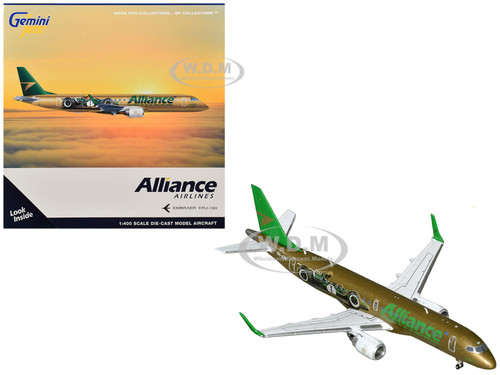
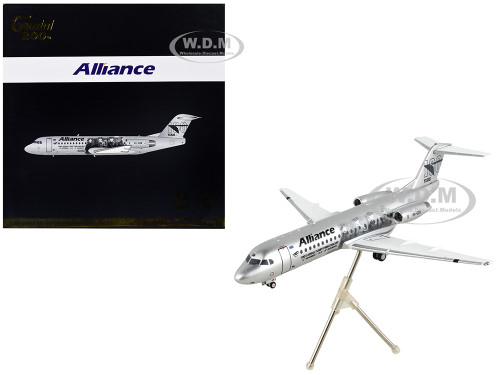
Alliance Airlines is an Australian aviation company known for specialized charter services, fly-in fly-out (FIFO) transportation, and regional airline operations. Its aircraft serve industries and communities that depend on reliable air connections, making Alliance Airlines diecast models an interesting subject for collectors who want to explore aviation beyond the major international passenger airlines.
Alliance Airlines scale airplanes can appeal to enthusiasts of Australian aviation, regional aircraft, and commercial airline liveries. Depending on current availability, this category may include collectible models representing aircraft associated with Alliance Airlines and its operations. Check each product listing for the specific aircraft type, scale, manufacturer, livery, and included accessories.
Unlike airlines focused mainly on large international passenger networks, Alliance Airlines has developed a business around charter flying, contracted air services, and regional transportation. This operational focus gives its aircraft a distinctive place in the wider story of commercial aviation. For collectors, Alliance Airlines model airplanes can complement displays of Australian carriers, regional airliners, and aircraft used to transport workers to remote industrial locations.
The History and Role of Alliance Airlines
Alliance Airlines was established in Australia in 2002 and began operations in 2002. The company developed a specialized aviation business providing charter and contracted passenger services, with an emphasis on connecting workforces and regional communities to destinations that may not be served by large scheduled airlines.
A significant part of its business has involved fly-in fly-out transportation. In Australia's mining and resources industries, FIFO services help move employees between major population centers and remote work locations. These operations require aircraft and schedules suited to the needs of businesses working across large distances, often in regions where road travel would be impractical or time-consuming.
Alliance Airlines has also operated charter services for corporate, government, tourism, and other customers. Its operations illustrate how airlines serve a variety of needs beyond standard ticketed passenger routes. Aircraft may be deployed according to contracts and operational requirements, so fleet composition and service patterns can change over time.
The airline has developed a recognizable role in Australian regional aviation. Its operations have included jet aircraft suitable for transporting groups of passengers, and its fleet history reflects the demand for dependable aircraft that can support charter and regional services.
For aviation collectors, Alliance Airlines provides an opportunity to represent a specialized segment of the industry. Its aircraft tell a different story from those of global network carriers: one shaped by charter contracts, regional connections, and the practical demands of Australia's geography and resource sectors.
Aircraft Associated with Alliance Airlines
Alliance Airlines is particularly associated with the Fokker 70, Fokker 100, and Embraer 190. These aircraft have different designs and operating characteristics, giving aviation enthusiasts several interesting subjects to explore when collecting Alliance Airlines scale airplanes.
Fokker 100
The Fokker 100 is a twin-engine regional jet developed by the Dutch aircraft manufacturer Fokker. It features two engines mounted at the rear of the fuselage and a T-tail, creating a distinctive profile compared with modern aircraft that use underwing engines.
Designed for short- and medium-haul passenger services, the Fokker 100 can accommodate approximately 100 passengers in a typical high-density configuration. Its combination of passenger capacity and regional operating capability has made it useful for charter operations and routes serving regional destinations.
Alliance Airlines has operated the Fokker 100 extensively, including for fly-in fly-out services and other contracted flights. This aircraft is an especially relevant subject for collectors interested in Australian aviation and the continuing operation of classic regional jets.
A Fokker 100 model can stand out in a display because of its compact proportions, rear-mounted engines, and distinctive tail. It also provides an interesting comparison with newer regional aircraft such as the Embraer 190.
Fokker 70
The Fokker 70 is a shorter member of the Fokker regional jet family. It shares the general design of the Fokker 100 but has a shorter fuselage and lower passenger capacity.
Alliance Airlines has used the Fokker 70 for charter and resource-sector transportation, including services to remote locations. Its operating role illustrates how regional jets can support specialized routes where reliability, passenger capacity, and the ability to serve particular airports are important considerations.
For collectors, the Fokker 70 is a distinctive aircraft to display alongside the Fokker 100. The two share a family resemblance, but their different fuselage lengths provide a clear visual comparison. This makes them appealing to enthusiasts who appreciate aircraft variants and the evolution of regional jet design.
Embraer 190
The Embraer 190, commonly abbreviated as E190, is a twin-engine regional jet developed by Brazilian aircraft manufacturer Embraer. It belongs to the E-Jet family, which was designed to offer the comfort and capabilities of a larger passenger jet in a smaller aircraft category.
Unlike the Fokker 70 and 100, which have engines mounted near the rear of the fuselage, the E190 has its engines mounted beneath the wings. It also has a different wing and tail design, giving it a more contemporary appearance.
Alliance Airlines added the Embraer 190 to complement its Fokker aircraft and support its charter, regional, and aircraft-leasing operations. The type offers collectors an opportunity to represent a newer generation of regional jet alongside the airline's established Fokker fleet.
An Alliance Airlines Embraer 190 model may appeal to collectors who focus on modern regional aircraft, Australian airline liveries, or comparisons between different aircraft manufacturers.
Aircraft models and variants available in this category can change over time. Review the current listings to confirm which Alliance Airlines aircraft are offered.
Alliance Airlines Liveries and Aircraft Details
An airline's livery is an important part of a scale aircraft's identity. The colors, logos, titles, and tail markings help distinguish the aircraft from models operated by other airlines.
Alliance Airlines aircraft are associated with the company's own branding, while aircraft used under charter, wet-lease, or other arrangements may appear in different operator or customer liveries. For collectors, this makes it important to identify the exact aircraft and paint scheme represented by a particular model.
A standard Alliance Airlines livery can complement a collection of Australian commercial aircraft. Models representing different aircraft types can also highlight how the same airline identity appears on aircraft with different fuselage lengths, wing shapes, engines, and tail configurations.
When evaluating a model, consider:
-
Airline markings: Check the logo, aircraft titles, and tail design shown in the listing.
-
Aircraft type: Confirm whether the model represents a Fokker 70, Fokker 100, or Embraer 190.
-
Historical context: Determine whether the model represents a particular period or aircraft configuration when that information is provided.
-
Model details: Review the finish, landing gear, stand, and other features described by the manufacturer.
Not every aircraft operated by Alliance Airlines will necessarily be available as a scale model. Product photographs and descriptions provide the most reliable way to confirm the specific release.
Choosing an Alliance Airlines Scale Airplane
Scale is an important consideration when choosing an Alliance Airlines model. It affects the model's dimensions, display requirements, and compatibility with other aircraft in your collection.
1:400 Scale Models
The 1:400 scale is popular with airline collectors who want to display multiple aircraft in a relatively compact area. Models in this scale can be arranged together to represent a small airline fleet or a regional airport scene.
This scale is useful for comparing different aircraft types without requiring a large display cabinet. Fine details, construction materials, and accessories vary by manufacturer and release.
1:200 Scale Models
A 1:200 scale aircraft is larger and can serve as a focal point in an aviation display. It may be a suitable choice if you want to feature a particular Alliance Airlines aircraft or give a favorite livery more visual prominence.
Before purchasing, check the model's listed dimensions and ensure you have enough space for its wingspan and fuselage length.
Comparing Scales and Product Features
Other scales and formats may be available depending on the manufacturer and release. When comparing Alliance Airlines model airplanes, consider:
-
Display space: Larger models need more room, while smaller scales make it easier to build a broad fleet.
-
Aircraft proportions: The Fokker 70 and Fokker 100 have similar designs but different fuselage lengths.
-
Level of detail: Compare the product images and descriptions rather than assuming all models offer the same features.
-
Construction: Materials and finishes depend on the individual product.
-
Accessories: Check whether a display stand or landing gear is included.
-
Collection compatibility: Matching the scale of your existing models can create a consistent display.
A model's scale does not automatically determine its quality or accuracy. Product-specific details are the best guide when selecting an aircraft.
Building an Australian Regional Aviation Collection
Alliance Airlines models can be the foundation of a collection devoted to Australian aviation or complement a wider display of regional and commercial aircraft.
A collection focused on Alliance Airlines could compare the Fokker 70, Fokker 100, and Embraer 190 to show differences in aircraft design. A broader collection might include aircraft from Australian passenger airlines, regional operators, and international carriers.
Collectors can organize their displays by aircraft family, airline, scale, or historical period. Some prefer a consistent scale for all their aircraft, while others choose individual models based on their significance or visual appeal.
Regional aviation also provides an opportunity to explore a part of the airline industry that receives less attention than large international passenger services. Charter aircraft connect communities, support industries, and provide transportation tailored to specific needs. Models representing Alliance Airlines help illustrate this specialized role.
Alliance Airlines Models for Collectors and Gifts
An Alliance Airlines diecast model airplane can be a thoughtful gift for aviation enthusiasts, Australian airline collectors, and anyone interested in regional jet aircraft. The airline's combination of Fokker and Embraer aircraft makes it especially relevant to collectors who appreciate differences between aircraft generations and manufacturers.
For experienced collectors, a particular aircraft type or livery may fill a gap in an existing display. For someone new to the hobby, a regional jet model offers a way to explore aircraft that may be less familiar than the Boeing and Airbus aircraft used by major passenger airlines.
If you are choosing a model as a gift, check the aircraft variant, scale, dimensions, livery, and included accessories. Matching the recipient's existing collection or interest in Australian aviation can help you select a suitable addition.
Browse the available Alliance Airlines diecast models and scale airplanes at Diecast Models Wholesale to explore the aircraft and collectible releases currently offered in this category.