Dump trucks are among the most recognizable vehicles in construction, mining, quarrying, road building, agriculture, and other heavy-duty industries. Designed to carry loose materials and unload them efficiently, these trucks combine a heavy-duty chassis with a specialized dump body that can be raised to discharge its load.
Dump Diecast Models represent these hardworking vehicles in miniature, from conventional road-going dump trucks to massive off-highway machines used at mines and quarries. Their functional appearance, heavy-duty components, distinctive body shapes, and construction equipment styling make them popular with diecast collectors, construction enthusiasts, and anyone building realistic work-site displays.
At DiecastModelsWholesale.com, the Dump category is part of the broader Truck vehicle type. Depending on the model, shoppers may find dump trucks representing different manufacturers, vehicle sizes, applications, and scales.
What Is a Dump Truck?
A dump truck is a truck designed to transport loose material and discharge it by raising or tilting its cargo body. The body is typically operated by a hydraulic hoist that lifts one end, allowing gravity to move the load out of the truck.
Dump trucks commonly carry materials such as:
- Sand
- Gravel
- Crushed stone
- Soil
- Asphalt
- Demolition debris
- Construction aggregate
- Rock
- Coal and other mined materials
The basic principle is simple, but dump trucks vary considerably according to their intended environment. A compact dump truck working on a construction site has very different requirements from an enormous mining haul truck carrying material over unpaved mine roads.
For collectors, these differences make the category particularly diverse.
Types of Dump Truck Diecast Models
Conventional Dump Trucks
Conventional dump trucks are built on truck chassis and are commonly used on public roads as well as construction sites. The cab is positioned ahead of the dump body, with the body mounted behind the cab.
These trucks are frequently used for construction, road maintenance, landscaping, excavation, and aggregate transportation. Their familiar proportions make them excellent additions to general construction and transportation collections.
Heavy-Duty Dump Trucks
Heavy-duty dump trucks are designed for larger loads and demanding operating conditions. They can feature reinforced chassis components, larger axles, substantial tires, and more powerful engines.
Scale models of these trucks often emphasize the mechanical character of the vehicle, with detailed chassis, wheels, dump bodies, exhaust systems, and other heavy-duty components.
Articulated Dump Trucks
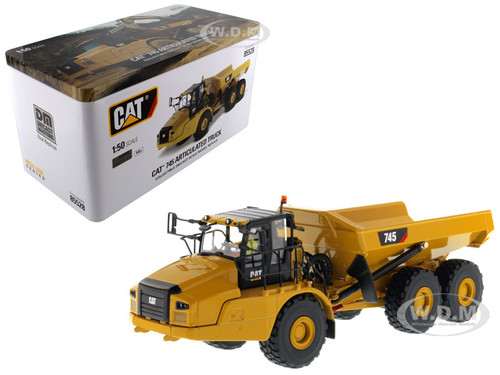
An articulated dump truck, or articulated hauler, uses a pivoting articulation joint between the front cab section and rear dump body. This allows the vehicle to maneuver over rough and uneven terrain.
Articulated haulers are particularly associated with construction, quarrying, mining, and large earthmoving projects. Their flexible chassis and large off-road tires give them a distinctive appearance that separates them from conventional rigid-frame dump trucks.
Collectors interested specifically in articulated haulers can also explore the Articulated category.
Off-Highway Mining Dump Trucks
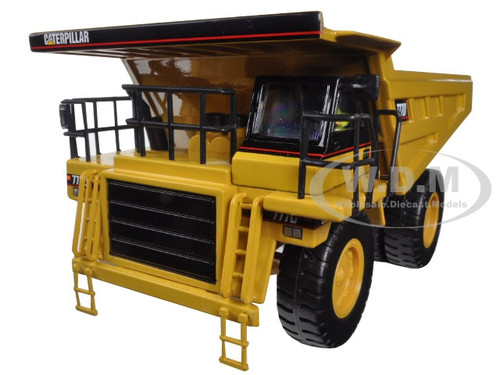
Mining haul trucks are among the largest dump vehicles ever built. They are designed specifically for moving enormous quantities of material within mines and quarries rather than traveling on ordinary public roads.
Their enormous tires, high ground clearance, massive dump bodies, and oversized chassis make them especially impressive subjects for scale modeling. A mining truck model can also provide a dramatic centerpiece for a construction or mining equipment display.
Mini and Compact Dump Trucks
Smaller dump trucks are useful in landscaping, utility construction, residential construction, agriculture, and other locations where maneuverability is important.
Compact equipment models can be particularly useful for dioramas because they can be displayed alongside excavators, loaders, skid steers, compact tractors, and other smaller machines.
How Dump Trucks Work
The defining feature of a dump truck is its ability to unload material without requiring workers to manually remove the cargo.
A typical dump truck includes several major components:
Dump Body
The dump body is the large container mounted behind the cab. It is designed to withstand the weight and abrasion of materials such as gravel, soil, rock, and construction debris.
Bodies vary in shape and construction depending on the truck's intended application. Some are optimized for general construction material, while mining bodies are engineered for extremely heavy loads and severe operating conditions.
Hydraulic Hoist
Hydraulic cylinders provide the lifting force needed to raise the dump body. As the front of the body rises, the material slides toward the rear and exits through the open tailgate or rear of the body.
On a scale model, the hydraulic equipment may be represented by small cylinders or structural components beneath the dump body.
Chassis and Axles
The chassis must support both the truck itself and the load carried in the dump body. Heavy-duty dump trucks therefore use robust frames, axles, suspension systems, and tires.
Tailgate
Many dump bodies use a tailgate to contain the load during transportation. The design varies according to the type of material being carried and the dumping method.
Cab and Operator Station
Modern dump trucks can include enclosed cabs with visibility features, operator controls, suspension seats, electronic displays, and safety equipment. Older trucks have much simpler cab designs, making historical dump truck models easy to distinguish from contemporary machines.
A Brief History of Dump Trucks
The concept of a vehicle that could carry and unload bulk material predates the modern truck. Horse-drawn dump wagons and carts were used for agricultural, construction, and municipal work long before powered vehicles became widespread.
The development of motor trucks during the early 20th century transformed this process. Internal-combustion trucks could carry heavier loads and travel farther than horse-drawn equipment, while specialized bodies allowed manufacturers and operators to adapt trucks to specific jobs.
Hydraulic lifting systems became increasingly important as dump trucks evolved. Rather than relying solely on manual or mechanical unloading methods, hydraulic equipment provided a practical way to raise increasingly large bodies and unload heavy materials.
As highway construction, suburban development, mining, and large infrastructure projects expanded during the 20th century, dump trucks became essential pieces of equipment. At the same time, manufacturers developed specialized off-highway dump trucks and articulated haulers for increasingly demanding terrain and payload requirements.
The result is the broad range of dump vehicles represented in today's construction and heavy-equipment industry.
Dump Trucks in Construction
Dump trucks are closely connected to earthmoving operations. Excavators, loaders, dozers, graders, scrapers, and compactors may all work together on the same project, with dump trucks transporting excavated or processed material between locations.
For example, an excavator can load soil or rock into a dump truck, which then transports the material to another part of a construction site. A dozer or grader may subsequently spread and shape the material, while a roller compacts the finished surface.
This makes dump truck diecast models especially useful when building realistic construction scenes. A collector can create a miniature work site showing multiple stages of the earthmoving process rather than displaying each machine independently.
Related equipment categories include Excavator, Loader, Dozer, Grader, and Road Roller.
Dump Trucks in Mining and Quarrying
Mining and quarrying require specialized equipment capable of moving enormous quantities of material under demanding conditions. Off-highway dump trucks and articulated haulers are commonly used alongside excavators, wheel loaders, and other large machines.
Mining dump truck models can be particularly appealing to collectors because of their unusual proportions. Their oversized tires and large dump bodies make them visually different from ordinary highway trucks.
For a mining-themed diorama, a dump truck can be combined with large excavators, loaders, dozers, and other heavy equipment to create a convincing representation of a quarry or open-pit mining operation.
What to Look for in Dump Diecast Models
The best model for a collection depends on the collector's interests, but several details are worth considering when comparing dump trucks.
- Dump body: Look at its shape, proportions, side walls, tailgate, and overall construction.
- Chassis: Heavy frames, axles, suspension, and drivetrain details help distinguish different truck classes.
- Hydraulic equipment: Cylinders and lifting mechanisms can add realism to a dump truck model.
- Tires and wheels: Off-road and highway dump trucks use very different tire designs.
- Cab design: The cab can help identify the manufacturer and production era.
- Livery and markings: Construction companies, municipal fleets, mines, and manufacturers may have distinctive graphics.
- Operating configuration: Consider whether the model represents a rigid dump truck, articulated hauler, or off-highway mining truck.
- Scale: Match the model with other equipment in the collection or planned display.
Choosing a Scale
Dump trucks are produced in a variety of scales depending on the manufacturer and type of vehicle. Common construction-equipment scales include 1/18, 1/24, 1/32, 1/43, 1/50, 1/64, and 1/87.
1/50 scale is particularly common among detailed construction and heavy-equipment models, while smaller scales such as 1/64 and 1/87 can be useful for larger scenes containing multiple vehicles.
Larger models provide more physical space for details such as hydraulic components, dump bodies, wheels, cabs, and chassis. Smaller models make it easier to assemble extensive construction or mining fleets.
Collecting Dump Truck Diecast Models
Dump trucks can be collected according to manufacturer, vehicle type, era, scale, or application.
A manufacturer-focused collection might concentrate on brands such as Caterpillar, Komatsu, Volvo, Mack, Kenworth, Peterbilt, International, Freightliner, Bell, or John Deere, depending on the models available.
Another approach is to build a collection around a particular industry. Construction collectors might favor conventional dump trucks and articulated haulers, while mining enthusiasts may focus on large off-highway haul trucks.
Collectors interested in transportation history can also compare older dump trucks with modern designs. Changes in cab styling, engine technology, suspension, tires, hydraulic systems, and dump-body design provide an interesting visual record of how heavy trucks have evolved.
Building a Construction Equipment Display
A dump truck rarely works alone on a real construction site, which makes it an excellent addition to a larger equipment collection.
A realistic display could include an excavator loading a dump truck, a dozer moving material, a grader shaping a roadway, and a road roller compacting the finished surface. A loader can represent aggregate handling, while an articulated hauler can show off-road material transportation.
Because dump trucks are available in both road-going and off-highway forms, they can also bridge the gap between conventional truck collections and construction-equipment collections.
Whether you prefer classic work trucks, modern construction machines, articulated haulers, or enormous mining vehicles, Dump Diecast Models offer a practical and visually distinctive subject for scale-model collecting.
Browse the Dump Diecast Models category at DiecastModelsWholesale.com to find dump trucks and heavy-duty hauling vehicles for your collection, construction diorama, or transportation display.

 $314.95