Hyundai diecast models bring the evolution of one of South Korea's best-known automotive manufacturers to your collection. From practical compact cars and family sedans to performance-oriented sports cars, SUVs, rally vehicles, and modern electric vehicles, Hyundai has developed a diverse lineup that reflects major changes in the global automotive industry.
The Hyundai category at DiecastModelsWholesale.com is for collectors and enthusiasts looking for scale model vehicles representing the Hyundai brand. Depending on the individual releases available, the selection may include passenger cars, sporty coupes, SUVs, racing-inspired vehicles, and other notable Hyundai designs. Models can vary by generation, exterior color, trim, manufacturer, scale, and level of detail.
Whether you collect modern Korean cars, enjoy rally motorsport, follow Hyundai's performance models, or are building a collection of international automobiles, Hyundai diecast models offer an interesting mix of everyday vehicles and distinctive performance cars.
The History of Hyundai
Hyundai Motor Company was established in South Korea in 1967. Its first production car, the Hyundai Cortina, was assembled in cooperation with Ford, giving the company an early foothold in automobile manufacturing. Hyundai subsequently developed its own vehicles and expanded its engineering and production capabilities.
A major milestone came in 1975 with the introduction of the Hyundai Pony, the company's first mass-produced model developed specifically for Hyundai. Designed with help from international automotive specialists, the Pony became an important part of the growth of South Korea's domestic automobile industry. It also helped establish the foundation for Hyundai's expansion into international markets.
Hyundai entered the United States passenger-car market in 1986 with the Excel, which attracted attention for its accessible pricing. Over the following decades, the company expanded its lineup and invested heavily in design, engineering, manufacturing, and vehicle quality. Models such as the Sonata and Elantra became important parts of its global range, while the Santa Fe and Tucson helped Hyundai compete in the growing SUV market.
The company also expanded into performance and motorsport. Its N performance division introduced road cars developed with an emphasis on handling, power, and driver engagement, while Hyundai's participation in international rallying strengthened the brand's connection with competition vehicles.
For diecast collectors, this history provides several distinct themes: early Hyundai models, familiar everyday vehicles, modern SUVs, performance cars, and rally-inspired designs.
Hyundai Passenger Cars and Classic Models
Hyundai's passenger-car history includes compact hatchbacks, family sedans, coupes, and models that helped establish the company in overseas markets.
Hyundai Pony
The Hyundai Pony is one of the most historically significant vehicles in the company's history. Introduced in 1975, it represented Hyundai's move toward developing its own passenger-car identity. Its angular styling and compact proportions reflect the design language of the 1970s.
A Pony scale model can appeal to collectors interested in early Korean automotive history and the development of Hyundai as an international manufacturer.
Hyundai Excel
The Excel played a major role in Hyundai's introduction to the United States market during the 1980s. Its compact dimensions and straightforward design made it an important entry-level automobile of its era.
Collectors interested in cars from the 1980s and early 1990s may find this period especially appealing because it represents Hyundai's early growth in overseas markets.
Hyundai Sonata
The Sonata became one of Hyundai's most recognizable midsize sedans. Across successive generations, the model evolved from a conventional family car into a more design-focused vehicle featuring updated styling, technology, and powertrain options.
Sonata diecast models can fit naturally into collections of modern sedans or displays organized by automotive generation.
Hyundai Elantra
The Elantra, known as the Avante in South Korea and certain other markets, is a long-running compact car with a range of sedan and hatchback variants across different generations and markets. Its changing design makes it a useful subject for collectors who enjoy comparing how one model name evolves over time.
Hyundai Coupe and Tiburon
Hyundai's sporty coupes, including the Coupe and Tiburon, introduced a more expressive side of the brand. Depending on the market and generation, these names refer to related versions of Hyundai's front-wheel-drive sports coupe.
Their distinctive bodywork makes them interesting additions to collections featuring affordable sports cars and coupes from the late 1990s and 2000s.
Hyundai Performance Cars and N Models
Hyundai's development of performance-oriented vehicles has created another important collecting category. The company's N performance division, named after Namyang, South Korea, where Hyundai's global research and development center is located, develops vehicles with a stronger emphasis on handling, acceleration, braking, and track capability.
Hyundai Veloster and Veloster N
The Hyundai Veloster stands out for its unusual asymmetrical door layout and sporty hatchback design. The high-performance Veloster N added a more powerful engine, performance suspension, and distinctive styling details.
Veloster models are appealing to collectors who enjoy modern compact performance cars rather than traditional rear-wheel-drive sports cars. The N version is particularly relevant to enthusiasts interested in Hyundai's newer performance identity.
Hyundai i30 N and Elantra N
The i30 N helped establish Hyundai N as a serious competitor in the hot-hatch segment, particularly in Europe and other markets where the i30 is sold. The Elantra N brought the performance formula to a compact sedan, combining practical bodywork with track-oriented engineering.
Availability of scale replicas varies by generation and manufacturer, so check each product listing to confirm the specific version represented.
Hyundai IONIQ 5 N
The IONIQ 5 N represents Hyundai's move into high-performance electric vehicles. Based on the IONIQ 5 electric crossover, the N version combines electric power with performance-focused chassis and control systems.
For collectors, this model illustrates how the Hyundai performance lineup has expanded beyond combustion-engine vehicles. It can also complement collections focused on contemporary electric cars and the changing direction of automotive performance.
Hyundai Rally and Motorsport Models
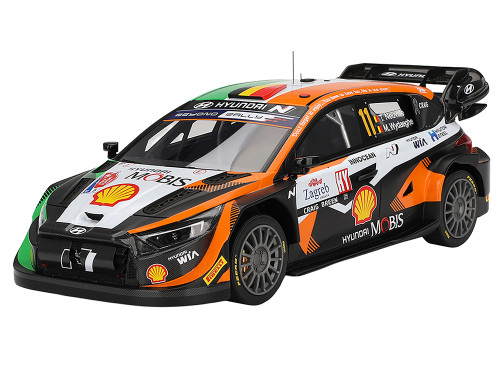
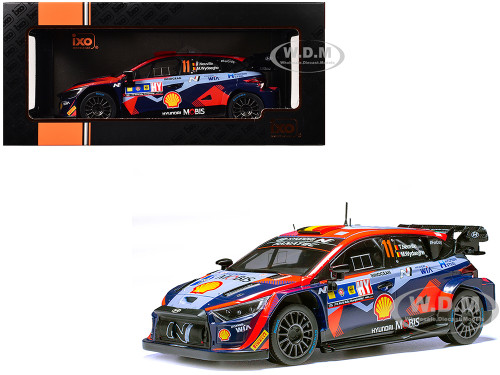
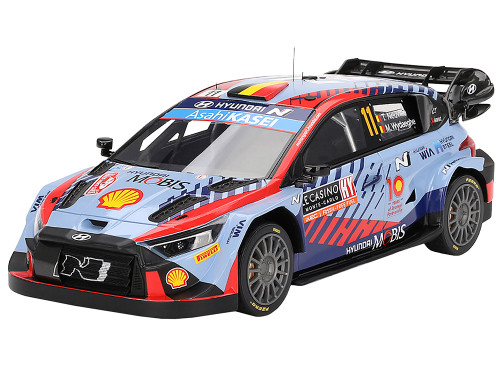
Hyundai has established a significant presence in international motorsport, particularly in rally competition. Its involvement in the World Rally Championship has helped bring performance engineering, distinctive liveries, and competition versions of familiar Hyundai models to a worldwide audience.
The company's modern rally program has featured cars based on models such as the i20, including World Rally Car and Rally1-era competition machines. These vehicles differ considerably from their road-going counterparts, with specialized bodywork, aerodynamic components, competition suspension, and rally-specific graphics.
Hyundai's motorsport history also includes touring-car and circuit-racing programs. Depending on the model release, collectors may find replicas of competition vehicles, racing liveries, or road cars associated with Hyundai's performance development.
When choosing a Hyundai racing model, consider:
-
The specific competition series and season
-
The driver and co-driver, where identified
-
The rally or racing event represented
-
The car's livery and sponsor graphics
-
The underlying model and competition regulations
-
The scale and manufacturer
Rally models are especially attractive to collectors who enjoy displaying cars in action-inspired configurations alongside standard road versions. A road-going i20 or performance Hyundai, for example, can look quite different from its rally counterpart even when both share a model name.
Hyundai SUVs and Crossovers
SUVs and crossovers have become a major part of Hyundai's lineup. These vehicles provide additional collecting opportunities for enthusiasts who prefer practical, modern designs over sports cars.
Hyundai Santa Fe
The Santa Fe was introduced in 2000 and became an important part of Hyundai's expansion into the SUV market. Over successive generations, it developed from a relatively conventional crossover into a larger, more distinctive family SUV.
Hyundai Tucson
The Tucson is a compact crossover that has evolved through multiple generations. Its changing styling makes it an interesting subject for collectors who want to compare automotive design across different periods.
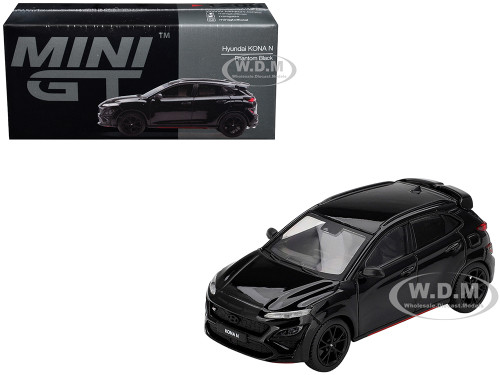
Hyundai Kona
The Kona added a smaller crossover to Hyundai's range, with both conventional and electrified versions offered in different markets. Its distinctive proportions and bold styling separate it from the company's larger SUVs.
Hyundai Palisade
The Palisade represents Hyundai's entry into the larger three-row SUV segment. Its size, upscale positioning, and family-oriented design make it relevant to collectors interested in modern utility vehicles.
Not every Hyundai model is available as a diecast replica, and releases may differ by market. If you are searching for a specific SUV, generation, or powertrain, use the individual product details to verify that the model matches your interests.
Hyundai Electric Vehicles and the IONIQ Family
Hyundai's electric-vehicle development is another important part of the brand's modern history. The IONIQ name began with an electrified passenger car offered with hybrid, plug-in hybrid, and fully electric powertrains, before becoming the name of a dedicated electric-vehicle family.
The IONIQ 5 introduced a distinctive retro-futuristic design, while the IONIQ 6 adopted a streamlined sedan-like profile focused on aerodynamic efficiency. The IONIQ 5 N subsequently added a high-performance interpretation of Hyundai's electric platform.
These vehicles offer a contemporary alternative to classic cars and traditional performance models. Collectors interested in automotive technology may enjoy building a display that compares Hyundai's early compact cars with its modern electric lineup.
When looking for Hyundai EV models, check the product description carefully to distinguish between the standard IONIQ 5, IONIQ 5 N, IONIQ 6, and any other specific version represented.
Why Collect Hyundai Diecast Models?
Hyundai diecast cars appeal to collectors for several reasons. The brand has evolved from a relatively young manufacturer into a global automaker with vehicles across multiple segments, making its history suitable for a diverse collection.
-
Automotive history: Early models such as the Pony and Excel represent Hyundai's development and expansion into international markets.
-
Performance vehicles: The Veloster N, Elantra N, and other N models appeal to enthusiasts of sporty road cars.
-
Motorsport: Hyundai rally models bring competition liveries and specialized racing designs into a collection.
-
SUVs and crossovers: Tucson, Santa Fe, Kona, and Palisade models represent the brand's utility-vehicle lineup.
-
Electric vehicles: IONIQ models provide a way to collect modern electric-car designs.
-
International variety: Hyundai models can complement collections of Japanese, European, and American vehicles.
You can collect Hyundai models by model name, generation, body style, color, or automotive era. Another option is to combine road cars and motorsport replicas to show how a production vehicle's design can be adapted for competition.
Choosing a Hyundai Diecast Scale
Scale affects a model's size, display requirements, and potential level of detail. Hyundai diecast vehicles may be produced in different scales depending on the specific car, manufacturer, and release.
1/18 scale models offer a larger display presence and can provide room for visible interior details, body features, and other finishing elements.
1/24 scale is a practical middle ground for collectors who want recognizable detail without using as much shelf space as a larger model.
1/43 scale is well suited to compact displays and collections containing many different makes or generations.
Other scales may be available for particular Hyundai models. Do not assume that every vehicle is offered in every scale; confirm the scale and dimensions in the individual listing.
When comparing products, consider the model year, body style, exterior color, manufacturer, construction, and whether the replica represents a standard road car, a performance version, or a competition vehicle. Features such as opening doors, detailed interiors, steering, and other moving components vary by release.
Building a Hyundai Model Car Collection
A Hyundai collection can be organized around the brand's evolution. You might start with a Pony or Excel, add a Sonata or Elantra to represent its mainstream passenger cars, and then include a Veloster N or Elantra N for a performance-focused contrast.
Alternatively, a motorsport collection could focus on Hyundai's rally vehicles and compare them with road-going models from the same family. Collectors interested in newer technology could concentrate on the IONIQ range, while SUV enthusiasts might prefer Tucson, Santa Fe, Kona, and Palisade replicas where available.
The key is to select models that reflect your interests rather than trying to collect every Hyundai ever produced. Checking each listing for the exact model, generation, scale, and finish will help you make informed choices and create a display that feels cohesive.
Browse the Hyundai category at DiecastModelsWholesale.com to explore available scale model cars. Whether you prefer classic Hyundai vehicles, modern performance cars, rally machines, SUVs, or electric models, find a collectible that fits your interests and adds variety to your collection.