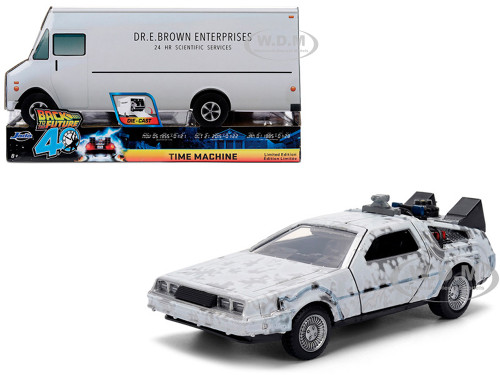
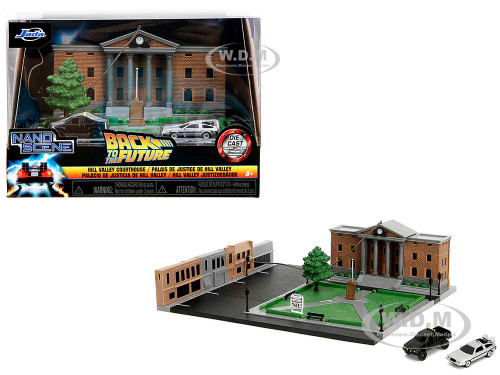
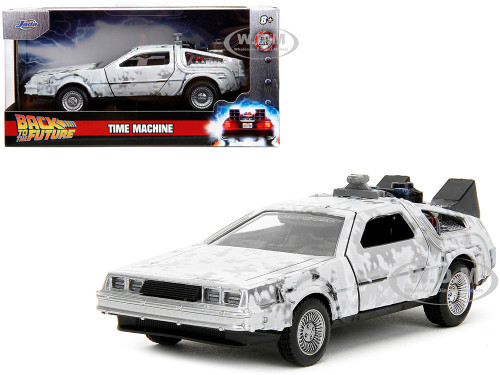
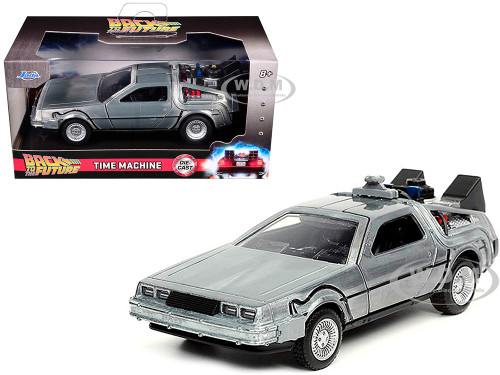
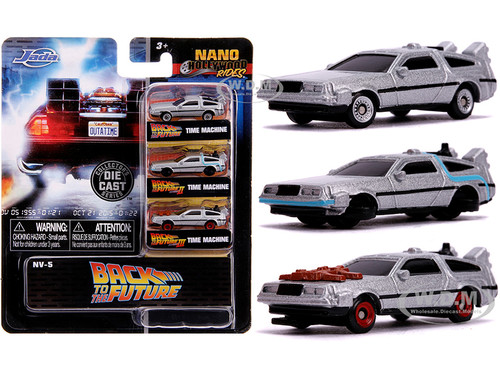
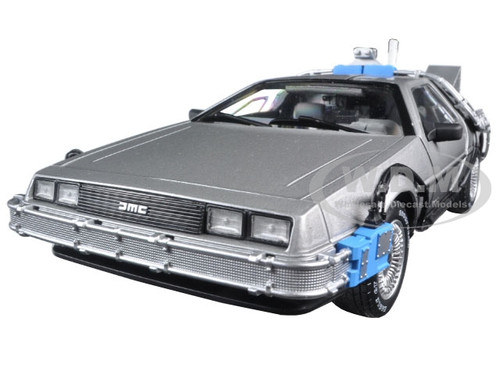
Back to the Future (1985) introduced audiences to one of the most recognizable science-fiction adventures in movie history. Directed by Robert Zemeckis and produced by Steven Spielberg, the film follows teenager Marty McFly and eccentric inventor Dr. Emmett Brown as they discover the possibilities—and dangers—of traveling through time.
For collectors, the original film is especially famous for the DeLorean time machine, a stainless-steel sports car transformed into a vehicle capable of traveling through history. Its distinctive design, fictional flux capacitor, and memorable role in the story have made it one of cinema's most iconic movie cars.
The Back to the Future Part I category at Diecast Models Wholesale is intended for fans looking for collectibles inspired by the original 1985 film, particularly DeLorean time-machine replicas and movie-related vehicle models. Current product selection may vary, so check individual listings for the exact vehicle version, scale, features, and availability.
Whether you're a longtime fan revisiting a favorite film, a diecast collector building a movie-car display, or a shopper searching for a gift for a science-fiction enthusiast, Back to the Future Part I collectibles offer a connection to a film that continues to entertain audiences across generations.
The Story Behind Back to the Future (1985)
Marty McFly and Doc Brown
The original Back to the Future stars Michael J. Fox as Marty McFly, a high-school student whose life changes when he becomes involved in the experiments of his friend, Dr. Emmett Brown, played by Christopher Lloyd.
Doc Brown develops a time machine using a DeLorean DMC-12. During a demonstration, Marty accidentally travels from 1985 to 1955, where he encounters younger versions of his parents. His actions disrupt the events that originally brought them together, creating a race against time to restore the future and return home.
The film blends science fiction, comedy, adventure, and coming-of-age storytelling. Its carefully connected plot, memorable performances, and inventive use of time travel helped establish it as a defining movie of the 1980s.
The DeLorean is central to the story rather than simply a vehicle used by the characters. Its design and fictional technology give the time-travel concept a tangible visual identity, making it one of the most memorable elements of the film.
A Film That Launched a Trilogy
The success of the original movie led to two sequels: Back to the Future Part II in 1989 and Back to the Future Part III in 1990. Together, the three films follow Marty and Doc through different time periods, alternate timelines, and increasingly unusual adventures.
Each installment presents the DeLorean in a different context, making the vehicle a natural focus for collectors. The first film establishes the original time-machine design, while the sequels introduce additional modifications and new settings.
For fans building a collection around the trilogy, the 1985 movie represents the beginning of the story and the version of the DeLorean that introduced the world to the franchise's signature vehicle.
The DeLorean Time Machine: An Icon of Movie History
The Real DeLorean DMC-12
The fictional time machine is based on the DeLorean DMC-12, a real sports car known for its stainless-steel body panels, wedge-shaped profile, and distinctive gull-wing doors.
The production car was developed by the DeLorean Motor Company and designed with significant contributions from automotive designer Giorgetto Giugiaro. Its unusual appearance made it stand out from many other sports cars of its era.
Although the DMC-12's original production run was relatively short, its appearance in Back to the Future gave it lasting cultural recognition. Today, the DeLorean is closely associated with movie-car collecting, 1980s nostalgia, and science-fiction memorabilia.
The film also introduced audiences to a fictionalized version of the car equipped with the technology needed for time travel. This combination of a real automobile and imaginative science fiction is a major reason the DeLorean remains popular with both automotive enthusiasts and movie fans.
What Makes the Original Movie DeLorean Special?
The DeLorean featured in the first film has a distinctive appearance that separates it from the modified versions seen in the sequels. Its exterior equipment, time-machine components, and overall presentation are closely connected to the original story.
Collectors interested in an accurate representation of the 1985 film should look for products specifically identified with the first movie. Not every Back to the Future DeLorean replica represents the same version.
Important details to compare include:
-
Exterior design: The stainless-steel appearance, body shape, and gull-wing doors are defining characteristics of the real DMC-12.
-
Time-machine equipment: The fictional flux capacitor, time circuits, and other modifications distinguish the movie car from a standard DeLorean.
-
Film-specific configuration: The original movie version may differ from the flying DeLorean in Part II or the Western-inspired version in Part III.
-
Model detailing: Interior features, wheels, accessories, and opening components depend on the individual product.
-
Display size: Scale and dimensions determine how the model fits into a collection.
Review product descriptions and photographs carefully when comparing replicas, especially if you're collecting different versions of the time machine.
The DeLorean and the Film's Most Memorable Scenes
Several scenes from the original Back to the Future have become enduring parts of movie history. The DeLorean is central to these moments, connecting the film's science-fiction premise with its action and comedy.
The First Time-Travel Experiment
Doc Brown's demonstration establishes the DeLorean as a time machine and introduces the fictional technology that makes the story possible. The scene sets up the vehicle's role as both an invention and a key part of the plot.
For collectors, this original configuration represents the beginning of the franchise's most famous vehicle design.
The Journey to 1955
When Marty travels back to 1955, the DeLorean becomes a modern object in an earlier era. Its futuristic appearance contrasts with the period's cars, clothing, and surroundings, reinforcing the film's central idea of a person out of place in time.
The 1955 setting also gives the movie a strong connection to mid-century American culture, making it appealing to fans of classic cars and 1950s nostalgia.
The Lightning Clock-Tower Sequence
The film's climactic sequence involves Marty and Doc attempting to harness a lightning strike to provide the energy needed for time travel. The DeLorean's role in the carefully timed plan creates one of the trilogy's most recognizable moments.
The scene illustrates how the car is more than a collectible prop: it is essential to the film's storytelling, suspense, and visual identity.
Back to the Future Part I Diecast Models
Diecast models offer collectors a way to display the original movie's iconic vehicle in a compact format. A replica of the 1985 DeLorean time machine can serve as a centerpiece for a science-fiction collection, a movie-car display, or a broader assortment of collectible automobiles.
Model construction, size, and detailing vary by product. Understanding these differences can help you select a piece that suits your collection.
Choosing a Scale
Scale indicates how a model's dimensions compare with the real vehicle. For example, a 1:18 scale replica is generally larger than a 1:43 or 1:64 scale model of the same car.
Larger models may provide more visible detail, depending on the manufacturer and design. They also require more shelf or display-case space. Smaller models are often easier to arrange alongside other movie cars and collectible vehicles.
When choosing a Back to the Future Part I model, consider:
-
The available space in your display area.
-
Whether you want a single centerpiece or several models in a coordinated collection.
-
The scale of your existing DeLorean or movie-car replicas.
-
The model's listed dimensions and level of detail.
Always verify the scale and measurements in the individual listing rather than estimating size from product photographs.
Detailing and Features
Diecast models can differ in materials, finish, interior detailing, accessories, moving parts, and packaging. Some are designed primarily for display, while others include additional features that allow collectors to examine the vehicle more closely.
For the original DeLorean time machine, movie-specific equipment is particularly important. Check whether the product description identifies the first-film configuration and specifies any included accessories or special features.
Avoid assuming that all replicas have opening doors, removable parts, or identical detailing. These characteristics depend on the particular release.
Collecting the Complete Back to the Future Trilogy
The original film provides the foundation for a collection that can expand to include Part II and Part III. Each movie features a different stage of Marty and Doc's adventures and presents the DeLorean in a distinct context.
A trilogy collection can focus on comparing the time machine across all three films. Alternatively, collectors may combine the DeLorean with other movie vehicles, science-fiction models, and recognizable cars from classic cinema.
The original 1985 version is especially useful as the starting point for this kind of display because it establishes the car's familiar appearance before the modifications introduced in the sequels.
If you're collecting multiple versions, compare each product's movie association, scale, and dimensions to make sure the models work together visually. A consistent scale can create a coordinated display, while different sizes may be appropriate when a particular version is available only in a different format.
Back to the Future Collectibles for Gifts
Back to the Future Part I collectibles can make memorable gifts for science-fiction fans, movie enthusiasts, diecast collectors, and automotive hobbyists. The DeLorean has broad appeal because it connects a recognizable production car with a fictional invention that has become a cultural icon.
For a longtime fan, a model representing the original film may be a meaningful addition to an existing trilogy collection. For someone who appreciates classic automobiles, the DeLorean offers a distinctive design with an unusual place in automotive and movie history.
Before purchasing a gift, consider the recipient's preferred scale, available display space, and interest in the original film versus the sequels. Review the product listing for dimensions, materials, features, and packaging to make an informed choice.
Displaying and Caring for Your DeLorean Model
A well-planned display can highlight the unique features of a Back to the Future DeLorean. Consider placing the model alongside other movie cars or arranging it with the versions featured in Parts II and III.
To help preserve your collectible:
-
Keep it away from direct sunlight, excessive heat, and moisture.
-
Handle small accessories and detailed components carefully.
-
Follow any care instructions provided with the product.
-
Store original packaging in a clean, dry location if you want to preserve it.
-
Check the model's dimensions before selecting a display case or shelf.
Some models are designed primarily for display and may contain delicate components. Follow the product's care guidance to help maintain its appearance over time.
Shop Back to the Future Part I Collectibles
The original Back to the Future film introduced audiences to Marty McFly, Doc Brown, and the legendary DeLorean time machine. Its blend of science fiction, comedy, automotive design, and 1980s nostalgia continues to attract new fans and collectors.
Browse the available Back to the Future Part I collectibles at Diecast Models Wholesale to find a movie-inspired model for your collection, begin a trilogy display, or choose a gift for a fan. Check individual product listings for current availability, scale, and features to find the right addition to your collection.