The Iraq War category at DiecastModelsWholesale.com features military diecast models and scale representations associated with the 2003 invasion of Iraq and the subsequent Iraq conflict. For collectors, this category focuses primarily on the military equipment used during Operation Iraqi Freedom, the coalition campaign that began in March 2003, and the years of military operations that followed.
The Iraq War was significantly different from the 1990–1991 Gulf War. The earlier Gulf War centered on Iraq's invasion of Kuwait and the international coalition that liberated Kuwait. The 2003 Iraq War began with the invasion of Iraq by a U.S.-led coalition and was followed by a prolonged period of counterinsurgency, security operations, convoy protection, urban combat, and rebuilding efforts. These different phases produced a wide variety of military vehicles, aircraft, helicopters, and support equipment.
For collectors, Iraq War models can include American, British, and other coalition equipment as well as vehicles and aircraft operated by Iraqi forces. The category is particularly relevant to collectors interested in modern military history, U.S. Army and Marine Corps equipment, British forces, armored vehicles, helicopters, military aviation, and modern military dioramas.
Understanding the Iraq War
The Iraq War began in March 2003 when coalition forces launched military operations against the government of Saddam Hussein. The initial invasion was comparatively rapid, with coalition ground forces advancing toward Baghdad while coalition aircraft conducted extensive air operations.
Baghdad fell in April 2003, and the Iraqi government was subsequently removed. However, the end of the initial invasion did not mark the end of the conflict. Coalition forces remained in Iraq for years while confronting an increasingly complex insurgency and conducting security, counterinsurgency, training, and stabilization operations.
The United States formally ended its military mission and withdrew most remaining combat forces from Iraq in December 2011. Because equipment and military tactics changed significantly throughout this period, the Iraq War provides collectors with many different subjects and configurations.
Operation Iraqi Freedom
Operation Iraqi Freedom was the name used for the U.S.-led military operation beginning in 2003. The initial campaign involved large formations of U.S. Army and U.S. Marine Corps ground forces supported by coalition air and naval power.
The operation demonstrated the capabilities of modern armored formations, precision-guided weapons, satellite communications, night-vision systems, unmanned aerial vehicles, helicopters, and advanced command-and-control networks.
Military diecast models from this period can therefore represent both traditional combat equipment and the increasingly technology-driven nature of modern warfare.
Iraq War Tanks and Armored Vehicles
Armored vehicles are among the most recognizable subjects associated with the Iraq War. Coalition forces used tanks and armored vehicles during the invasion and continued to employ them in urban and security operations.
M1 Abrams
The M1 Abrams was the principal U.S. Army main battle tank during the Iraq War. M1A1 and M1A2 variants were deployed in large numbers, with later vehicles receiving upgrades intended to improve protection, communications, sensors, and battlefield effectiveness.
The Abrams is an important collecting subject because its appearance changed over the course of the war. Additional armor, storage equipment, thermal sights, communications equipment, and urban-operation modifications can distinguish vehicles from different periods.
M2 Bradley
The M2 Bradley infantry fighting vehicle played a major role alongside Abrams tanks. Its combination of tracked mobility, protected troop transport, cannon armament, and anti-tank capability made it an important component of mechanized formations.
An M2 Bradley model pairs naturally with an M1 Abrams when building a display representing a U.S. armored or mechanized unit.
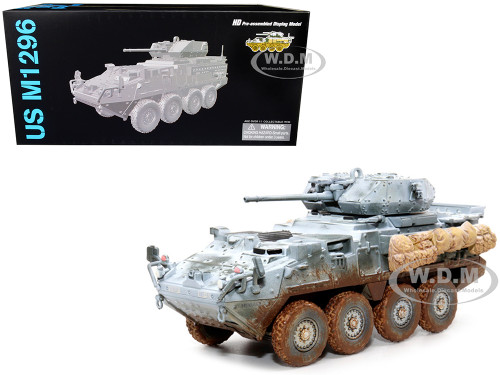
Stryker
The Stryker became particularly associated with the later phases of the Iraq War. The eight-wheeled armored vehicle was used in numerous configurations, including infantry carrier, command, reconnaissance, medical, and other specialized roles.
Stryker models are especially useful for collectors interested in the transition from traditional tracked armored formations toward highly mobile wheeled forces.
Humvee and MRAP Vehicles
The HMMWV, commonly known as the Humvee, was one of the most widespread American military vehicles in Iraq. It served as a troop carrier, command vehicle, communications platform, weapons carrier, and general-purpose utility vehicle.
As the insurgency developed, protection against roadside bombs became increasingly important. This contributed to the rapid deployment of more heavily protected vehicles and ultimately to the widespread use of MRAP (Mine-Resistant Ambush Protected) vehicles.
These vehicles represent an important shift in military vehicle design during the Iraq conflict, when protection against improvised explosive devices became a major operational requirement.
U.S. Marine Corps Vehicles
The U.S. Marine Corps played a major role during the invasion and subsequent operations. Marine units operated a variety of vehicles, including M1 Abrams tanks, LAV-25 light armored vehicles, AAV amphibious assault vehicles, and Humvees.
The LAV-25 is particularly recognizable because of its eight-wheel configuration and role in reconnaissance and armored operations. AAV models can also represent the Marine Corps' amphibious heritage while showing how the vehicle was used during land operations in Iraq.
Marine aviation also contributed extensively to the campaign, providing close air support, transport, reconnaissance, and attack capabilities.
Iraqi Military Vehicles
The Iraqi military inherited large quantities of Soviet- and Chinese-designed equipment before the 2003 invasion. By the time of the conflict, many of these systems were older than the equipment operated by coalition forces.
Iraqi military subjects associated with the era can include T-55, T-62, and T-72 tanks, BMP infantry fighting vehicles, BTR armored personnel carriers, military trucks, artillery, and other Soviet-influenced equipment.
These models provide an important historical contrast with the Abrams, Bradley, Stryker, and other modern coalition vehicles.
Collectors interested in the broader history of Iraqi military equipment may also find connections with the Military and Gulf War categories.
Iraq War Aircraft
Air power played a major role throughout the Iraq War. Coalition aircraft performed air superiority, precision strike, close air support, reconnaissance, electronic warfare, transportation, aerial refueling, and other missions.
F-15 Eagle
The F-15 Eagle continued to serve as a major U.S. air-superiority and multirole aircraft. Its long-range capabilities and advanced sensors made it an important component of coalition air operations.
F-16 Fighting Falcon
The F-16 Fighting Falcon performed a wide range of strike and support missions. Its versatility made it one of the most important multirole aircraft throughout the conflict.
F/A-18 Hornet and Super Hornet
U.S. Navy and Marine Corps F/A-18 Hornets operated from aircraft carriers and land bases, performing fighter, strike, and close-air-support missions.
The newer F/A-18E/F Super Hornet also became part of U.S. naval aviation during the later stages of the conflict.
A-10 Thunderbolt II
The A-10 Thunderbolt II was especially important for close air support. Its ability to operate against ground targets and support troops in contact made it a familiar aircraft throughout operations in Iraq.
The aircraft's distinctive twin-engine layout, straight wings, and 30 mm cannon make the A-10 one of the most recognizable subjects in modern military aviation collections.
B-1B, B-2, and B-52
Strategic bombers also participated in coalition operations. The B-1B Lancer, B-2 Spirit, and B-52 Stratofortress provided long-range strike capabilities and demonstrated the global reach of modern air power.
For collectors, these aircraft offer a dramatic contrast in design, from the enormous conventional appearance of the B-52 to the distinctive stealth configuration of the B-2.
Iraq War Helicopters
Helicopters were indispensable during the Iraq War. They provided close air support, troop transport, reconnaissance, medical evacuation, command and control, and logistical support.
AH-64 Apache
The AH-64 Apache became one of the best-known attack helicopters associated with the Iraq War. Apache units performed armed reconnaissance and attacks against ground targets while supporting coalition ground forces.
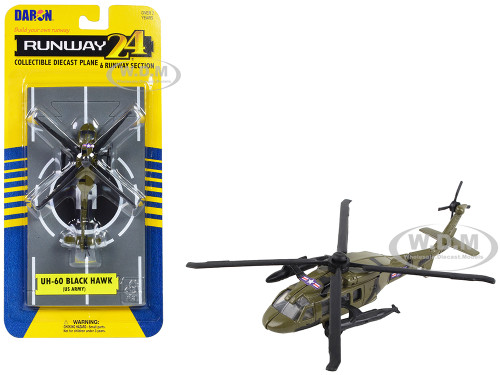
UH-60 Black Hawk
The UH-60 Black Hawk was widely used for troop transport, utility missions, medical evacuation, and other operations. Its extensive use made it one of the defining helicopters of the conflict.
CH-47 Chinook
The CH-47 Chinook provided heavy-lift transportation and was particularly important for moving troops, equipment, and supplies.
AH-1W Super Cobra
The AH-1W Super Cobra was heavily used by the U.S. Marine Corps. Its role as an armed escort and close-support helicopter makes it an important subject for collectors focusing on Marine aviation.
Other helicopters associated with Iraq operations include the OH-58 Kiowa Warrior and various transport and utility helicopters.
British and Coalition Forces
Although the United States provided the largest military force, the Iraq War involved other coalition members, with the United Kingdom making a major contribution.
British forces deployed Challenger 2 main battle tanks, Warrior infantry fighting vehicles, Land Rovers, helicopters, and aircraft. British Army aviation included Apache helicopters, while Royal Air Force aircraft such as the Tornado and Harrier participated in operations.
Other coalition nations also contributed personnel, aircraft, naval forces, and support capabilities at different stages of the conflict.
For collectors, this international involvement provides opportunities to create displays representing individual national forces or the broader coalition.
The Evolution of Military Vehicles in Iraq
One of the most interesting aspects of Iraq War collecting is how military equipment changed during the conflict.
The initial invasion emphasized speed, mobility, armored formations, and precision strike capabilities. As the conflict shifted toward counterinsurgency and urban security operations, vehicle requirements changed.
Protection against roadside bombs and improvised explosive devices became increasingly important. Additional armor, reinforced hulls, protected turrets, electronic countermeasure equipment, and other modifications became common.
This means that two models of the same basic vehicle can represent very different periods of the Iraq War. Collectors interested in historical accuracy should pay attention to the specific vehicle configuration, markings, camouflage, and equipment shown on a model.
Military Trucks and Logistics
Behind every combat operation was an extensive logistical network. Military trucks transported fuel, ammunition, food, water, spare parts, and other supplies across long distances.
Vehicles such as the HEMTT, MTVR, cargo trucks, fuel tankers, and heavy transporters played essential roles but are sometimes overlooked when the Iraq War is represented only by tanks and fighter aircraft.
For collectors building realistic dioramas, support vehicles can add significant context to combat vehicles and aircraft.
Unmanned Aircraft and Modern Warfare
The Iraq War also marked an important period in the increasing use of unmanned aerial systems.
The RQ-1 Predator was used extensively for surveillance and reconnaissance, while later versions and related systems became increasingly associated with armed unmanned operations.
The growth of unmanned aircraft during the conflict illustrates the broader transformation of military technology during the early 21st century. For collectors interested in modern military history, UAVs provide an interesting contrast with conventional fighter aircraft and helicopters.
Iraq War Collecting Themes
Because the conflict lasted for many years and involved multiple phases, collectors can organize an Iraq War collection around a particular theme.
Popular themes include:
- Operation Iraqi Freedom
- U.S. Army Iraq War vehicles
- U.S. Marine Corps Iraq War models
- British military Iraq models
- Iraq War tanks
- Iraq War helicopters
- Iraq War aircraft
- Modern armored vehicles
- Humvee and MRAP models
- Iraqi military equipment
- Iraq War aviation
- Modern military support vehicles
- Urban warfare and convoy vehicles
A collection can also focus on a particular year or operational phase. Models from the initial 2003 invasion will often have a different appearance and operational context from vehicles used several years later during the counterinsurgency period.
Choosing the Right Scale
Military diecast models are produced in a range of scales, allowing collectors to select models based on display space and the desired level of visual impact.
Common vehicle scales include 1/18, 1/24, 1/32, 1/35, 1/43, 1/48, 1/50, and 1/64.
Aircraft may be available in 1/48, 1/72, 1/100, 1/144, 1/200, and 1/400 scales.
Larger scales can showcase features such as armor, weapons, wheels, tracks, sensors, and external equipment. Smaller scales make it easier to build collections containing several aircraft or vehicles and are well suited to larger diorama scenes.
Building an Iraq War Display
An Iraq War collection can be built around individual vehicles or expanded into a complete operational scene.
An M1 Abrams, M2 Bradley, and Humvee can represent a U.S. Army mechanized formation, while a LAV-25 or AAV can provide a Marine Corps perspective. An AH-64 Apache or UH-60 Black Hawk can add the helicopter component, while an F-16, F/A-18, A-10, or F-15 can represent coalition air operations.
For a later-war display, an MRAP or Stryker can demonstrate how military vehicles evolved in response to the changing operational environment.
Collectors can also create a multinational display featuring American, British, and Iraqi subjects. Combining vehicles from different services can help illustrate the complexity of the conflict and the wide variety of equipment used over nearly a decade.
The Iraq War remains an important subject for modern military collectors because it represents a major transition in military technology, vehicle protection, air power, and battlefield operations. Browse the Iraq War collection at DiecastModelsWholesale.com to discover scale aircraft, helicopters, tanks, armored vehicles, military trucks, and other subjects associated with the 2003 invasion and subsequent Iraq conflict.





 $44.99

