McDonnell Douglas Diecast Aircraft Models
Explore the history of American aviation through McDonnell Douglas diecast aircraft models. McDonnell Douglas was one of the most influential aerospace manufacturers of the 20th century, producing military aircraft, commercial airliners, and spaceflight hardware that helped shape modern aviation. For collectors, its legacy offers a wide range of subjects, from iconic supersonic fighters and carrier-based naval aircraft to large passenger jets that served airlines around the world.
The McDonnell Douglas category at Diecast Models Wholesale is intended for aviation enthusiasts, military aircraft collectors, commercial aviation fans, and hobbyists interested in historically significant aircraft. Depending on current availability, models associated with McDonnell Douglas may include fighter jets, attack aircraft, transport aircraft, and commercial airliners in different liveries, configurations, and scales.
Whether you collect aircraft by manufacturer, military service, airline, aircraft family, or historical era, McDonnell Douglas provides a rich subject for building a focused aviation collection.
The History of McDonnell Douglas
McDonnell Douglas was formed in 1967 through the merger of McDonnell Aircraft Corporation and the Douglas Aircraft Company. The two companies had already established important reputations in aviation, with Douglas known for its commercial transports and military aircraft and McDonnell recognized for its work in fighter and naval aviation.
The merger brought together expertise in military aircraft, commercial aviation, engineering, and aerospace development. The resulting company produced aircraft that served the United States military and armed forces around the world, as well as passenger jets operated by major airlines. Its aircraft became familiar sights at airports, military installations, and aircraft carriers.
In 1997, McDonnell Douglas merged with The Boeing Company. Although the McDonnell Douglas name is no longer used as an independent aircraft manufacturer's brand, many of its aircraft remain in service or continue to attract interest from aviation historians and collectors.
For diecast collectors, this history makes McDonnell Douglas an especially interesting manufacturer to explore. Its aircraft represent several distinct areas of aviation, including the development of jet fighters, the evolution of carrier-based combat aircraft, and the growth of commercial jet travel.
Iconic McDonnell Douglas Military Aircraft
McDonnell Douglas developed numerous military aircraft recognized for their distinctive designs, operational histories, and engineering achievements. Diecast models of these aircraft appeal to collectors interested in military aviation, aircraft development, and the history of air forces and naval aviation.
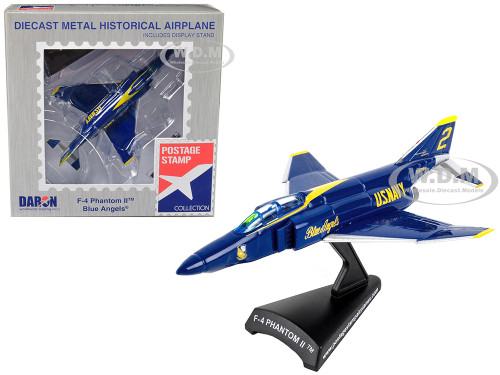
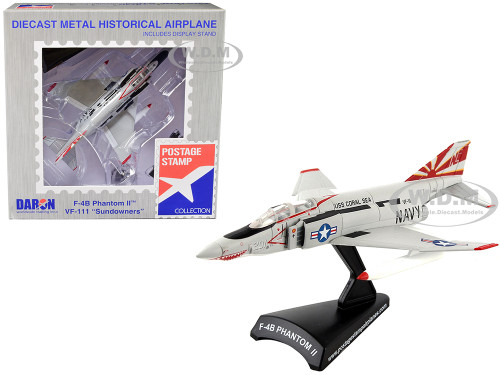
F-4 Phantom II
The F-4 Phantom II is among the best-known aircraft associated with McDonnell Douglas. Developed initially for the United States Navy, this twin-engine, two-seat supersonic fighter became a major aircraft for the Navy, Marine Corps, and Air Force. It also served with numerous international operators.
The Phantom II is notable for its large airframe, twin engines, tandem cockpit, and distinctive wing and tail configuration. It performed a variety of missions, including air superiority, interception, ground attack, and reconnaissance in different versions.
For collectors, the F-4 Phantom II offers substantial variety. Models may represent different service branches, national air forces, squadron markings, camouflage schemes, and historical periods. Its recognizable silhouette also makes it a strong centerpiece for a military aircraft display.
F-15 Eagle
The F-15 Eagle is a twin-engine fighter developed for air superiority. Its design emphasizes speed, maneuverability, and the ability to operate effectively in demanding combat environments. The aircraft entered United States Air Force service in the 1970s and became one of the most recognizable modern fighter designs.
F-15 models are popular subjects for collections focused on contemporary military aviation. Depending on the particular version represented, a model may feature different tail markings, squadron insignia, national insignia, or external stores.
The F-15 family later expanded to include multirole variants, notably the F-15E Strike Eagle, which added significant strike capabilities. When choosing a model, collectors may want to distinguish between air-superiority versions and strike variants, as their equipment and mission configurations differ.
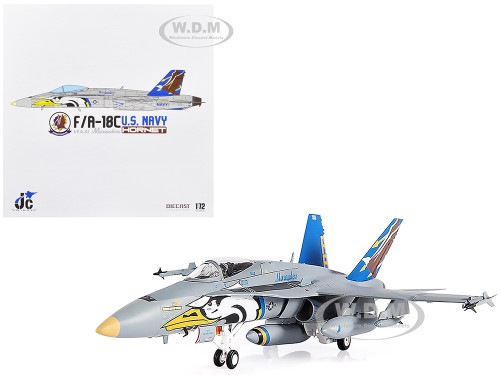
F/A-18 Hornet
The F/A-18 Hornet became a major component of United States naval aviation. Designed as a multirole fighter, it can perform both air-to-air and air-to-ground missions. Its compact twin-engine design, twin vertical stabilizers, and carrier-operating capability make it visually distinctive.
The Hornet has also served with other countries and appears in a variety of national and squadron markings. Collectors may be interested in aircraft associated with carrier air wings, operational squadrons, training units, or demonstration teams.
One important distinction is that the original F/A-18 Hornet was developed by McDonnell Douglas in partnership with Northrop. The later F/A-18E/F Super Hornet is a substantially redesigned derivative developed under the McDonnell Douglas and Boeing lineage. Collectors looking for a specific aircraft should check the model's designation rather than relying on the general Hornet name alone.
A-4 Skyhawk and Other Naval Aircraft
McDonnell Aircraft, one of the two companies that formed McDonnell Douglas, produced several important naval aircraft before the merger. The A-4 Skyhawk, developed by Douglas, is another notable aircraft for collectors of the broader company's historical product lineage.
The Skyhawk was a compact attack aircraft used by the United States Navy and Marine Corps and by several international air forces. Its relatively small size, straight-wing design, and long service history make it a recognizable subject in military aviation collections.
Other aircraft associated with the companies' combined heritage include the F-101 Voodoo, F-3H Demon, and F2H Banshee. These aircraft help illustrate the transition from early jet fighters to increasingly capable supersonic designs. When collecting these subjects, it is useful to distinguish between aircraft developed by the original Douglas or McDonnell companies and those designed after the 1967 merger.
McDonnell Douglas Commercial Airliners
McDonnell Douglas also played a major role in commercial aviation. Its passenger aircraft helped airlines expand domestic and international networks, and many became familiar features of airport operations from the 1960s through the early 2000s.
DC-9
The DC-9 was a short- to medium-range jet airliner designed for efficient operation on shorter routes. Its rear-mounted engines and T-tail gave it a distinctive profile compared with many larger airliners of its era.
The DC-9 family became widely used by airlines, and its design influenced later aircraft in the MD-80 and MD-90 series. Diecast models of the DC-9 can appeal to collectors interested in classic airline fleets, regional and domestic aviation, and the development of twin-engine passenger jets.
MD-80 Series
The MD-80 family evolved from the DC-9 and became a familiar sight in commercial aviation during the 1980s and 1990s. These aircraft were operated by airlines around the world and were used extensively on domestic and medium-range routes.
Models from the MD-80 series are especially interesting to airline enthusiasts because different operators used distinct paint schemes, logos, and fleet markings. Collectors may choose aircraft from airlines they remember flying with, historic carriers, or particular periods in aviation history.
MD-90
The MD-90 developed the DC-9 family further with updated engines and other improvements. It retained the recognizable general layout of the series while incorporating changes intended to improve performance and efficiency.
For collectors, the MD-90 represents another stage in the evolution of the short- and medium-haul jet airliner. It can complement DC-9 and MD-80 models in a collection focused on the development of a single aircraft family.
MD-11
The MD-11 is a widebody, three-engine airliner developed for long-distance passenger and cargo operations. Its distinctive configuration, with two engines mounted under the wings and a third at the base of the vertical tail, makes it easy to identify.
The MD-11 was operated by passenger airlines and later became particularly prominent in cargo service. Diecast models may appeal to collectors interested in international airline history, long-haul aircraft, and air freight operations.
DC-10
The DC-10 was a widebody, three-engine commercial aircraft introduced before the McDonnell Douglas merger by the Douglas Aircraft Company. It later became part of McDonnell Douglas's commercial aircraft lineup and served passenger and cargo operators.
With its wide fuselage and three-engine configuration, the DC-10 represents an important period in the growth of widebody air travel. Collectors may be drawn to models representing historic airline liveries, cargo conversions, and aircraft associated with particular routes or aviation eras.
The DC-10 and MD-11 are often collected together because they illustrate the progression of three-engine widebody aircraft. However, they are distinct designs, and collectors should check the exact aircraft designation when comparing models.
DC-8
The DC-8 was one of Douglas's important early jet airliners, entering service in the late 1950s. It helped airlines transition from piston-engine airliners to jet-powered commercial travel and was operated in passenger and cargo roles.
Although the DC-8 predates the formation of McDonnell Douglas, it belongs to the Douglas aircraft heritage that became part of the merged company's history. It is a relevant subject for collectors building a broader collection of aircraft associated with the McDonnell Douglas lineage.
Choosing McDonnell Douglas Diecast Aircraft Models
When shopping for McDonnell Douglas aircraft models, consider the aircraft type, scale, markings, and intended display. These factors help you choose a model that fits your interests and complements your existing collection.
Choose by Aircraft Type
A practical way to organize an aviation collection is by mission or aircraft family:
-
Military fighters: F-4 Phantom II and F-15 Eagle models for collections focused on fighter development and military aviation.
-
Naval and carrier aircraft: F/A-18 Hornet and other naval aviation subjects for collectors interested in carrier operations.
-
Classic jet airliners: DC-8 and DC-9 models representing the early decades of commercial jet travel.
-
Commercial passenger aircraft: MD-80 and MD-90 models representing the evolution of short- and medium-haul aviation.
-
Widebody and cargo aircraft: DC-10 and MD-11 models for collections focused on long-haul passenger service and air freight.
Availability varies by product, so a specific aircraft, airline, squadron, or paint scheme may not always be offered.
Understand Aircraft Model Scales
Scale indicates the size of a model relative to the full-size aircraft. For example, a 1:200 scale model is one two-hundredth the length of the real aircraft. Scale is especially important when planning a display or combining models of different aircraft types.
Common aircraft model scales include:
-
1:72 scale: Often selected by military aircraft collectors who want visible cockpit, wing, and surface details.
-
1:100 scale: A useful option for some aircraft collections where a larger display model is preferred.
-
1:144 scale: Popular for many military aircraft and selected airliner models.
-
1:200 scale: Common in commercial aviation collecting, offering a balance between display size and detail.
-
1:400 scale: Well suited to collectors who want to display numerous airliners in a relatively compact space.
These are general collecting conventions rather than a guarantee that every McDonnell Douglas aircraft is available in every scale. Always check the individual product specifications for the exact scale, materials, dimensions, and included display stand.
Diecast Metal, Details, and Display
Diecast aircraft models are typically made using metal components, often combined with plastic parts for features such as landing gear, antennas, or other fine details. Construction varies by manufacturer and model.
Before purchasing, consider whether you prefer a display model with landing gear installed, a version with a stand for an in-flight presentation, or a more detailed aircraft intended for a dedicated showcase. Some models emphasize exterior finish and airline markings, while others focus on military configurations and aircraft-specific details.
Collectors should also review product photographs and descriptions carefully to confirm the model's configuration. Differences in tail markings, squadron insignia, airline logos, engine arrangement, and aircraft variant can matter when building a historically focused collection.
Building a McDonnell Douglas Aviation Collection
One advantage of collecting McDonnell Douglas aircraft is the variety of subjects available across military and commercial aviation. A collection can focus narrowly on a single aircraft, such as the F-4 Phantom II, or cover the company's broader heritage from early jet airliners to modern military aircraft.
Consider these collecting approaches:
-
By manufacturer history: Include aircraft associated with both Douglas and McDonnell Douglas to follow the companies' development and merger.
-
By aircraft family: Collect different versions or generations of the DC-9, MD-80, and MD-90 series.
-
By military service: Focus on aircraft operated by the United States Navy, Marine Corps, Air Force, or international military services.
-
By airline: Build a collection around the liveries of a favorite airline or a particular era of commercial aviation.
-
By scale: Choose a consistent scale to create a balanced display and make comparisons between aircraft easier.
A well-planned collection can combine aircraft with different missions while maintaining a clear theme. For example, a display featuring the F-4 Phantom II, F-15 Eagle, and F/A-18 Hornet can illustrate the development of American military aviation, while a selection of DC-8, DC-9, MD-80, DC-10, and MD-11 models can highlight the evolution of commercial jet travel.
Shop McDonnell Douglas Models at Diecast Models Wholesale
McDonnell Douglas aircraft represent an important part of aviation history, from supersonic military fighters to passenger jets that connected cities around the world. Their distinctive designs, historical significance, and variety of operators make them appealing subjects for aircraft model collectors and aviation enthusiasts.
Browse the McDonnell Douglas category at Diecast Models Wholesale to explore available aircraft models and find subjects that suit your interests. Whether you're adding a familiar fighter to a military collection, searching for a classic airliner, or expanding a display devoted to aerospace history, compare the aircraft designation, scale, markings, and product details to find the right addition.