Discover Mitsubishi diecast model cars inspired by one of Japan's most recognizable automotive manufacturers. From rally-bred performance sedans and iconic Japanese sports cars to classic coupes and off-road vehicles, Mitsubishi has produced a diverse range of automobiles that appeal to enthusiasts, motorsport fans, and diecast collectors.
The Mitsubishi category at Diecast Models Wholesale is for collectors looking for miniature replicas of notable Mitsubishi vehicles. Depending on current product availability, the selection may include Mitsubishi Lancer Evolution models, Eclipse sports cars, 3000GT coupes, Galant performance sedans, Starion sports cars, and Pajero off-road vehicles.
Mitsubishi has a particularly strong connection with Japanese performance-car culture and international rallying. The Lancer Evolution became famous for its turbocharged engine and all-wheel-drive system, while the 3000GT and Eclipse represented different approaches to sports-car performance. The Pajero, meanwhile, established its own reputation through off-road competition and long-distance rally events.
Available diecast models may include scales such as 1:12, 1:18, 1:24, and 1:43. These options can suit collectors who prefer larger display replicas as well as those building compact collections of Japanese cars.
Whether you're a fan of JDM performance cars, classic Japanese sports coupes, rally racing, or Mitsubishi's off-road heritage, this category offers an opportunity to explore miniature versions of vehicles with distinctive automotive histories.
The History of Mitsubishi Automobiles
Mitsubishi's automotive history developed alongside the broader growth of Japan's motor industry. Mitsubishi Motors became an independent automotive company in 1970, drawing on a longer history of vehicle engineering and manufacturing within the Mitsubishi industrial group.
Over the decades, the company developed a wide range of vehicles, including compact cars, family sedans, sports coupes, four-wheel-drive vehicles, and SUVs. This diversity is reflected in Mitsubishi diecast collecting, where different models represent very different approaches to automotive design.
During the 1980s and 1990s, Mitsubishi gained particular attention through performance-oriented vehicles and international motorsport. Technologies associated with turbocharging, four-wheel drive, suspension development, and vehicle control helped shape several memorable models.
The company's participation in international rallying was especially influential. Models such as the Galant VR-4 and Lancer Evolution reflected the relationship between competition engineering and production vehicles. Mitsubishi also developed performance coupes that became recognizable in Japanese and international sports-car culture.
For diecast collectors, these developments provide several ways to build a Mitsubishi collection. Some enthusiasts focus on rally legends, others collect Japanese sports cars from the 1990s, and others prefer a broader display spanning several generations of Mitsubishi vehicles.
Mitsubishi Lancer Evolution Diecast Models
The Mitsubishi Lancer Evolution is one of the most sought-after subjects among enthusiasts of Japanese performance cars. Introduced in 1992, the Evolution was developed from the Lancer platform with a focus on rally competition and high-performance road driving.
Its combination of a turbocharged engine, all-wheel drive, and performance-oriented chassis helped establish its distinctive character. Across successive generations, Mitsubishi refined the vehicle's powertrain, suspension, body structure, and aerodynamics.
The Lancer Evolution became closely associated with rally driver Tommi Mäkinen, who won four consecutive World Rally Championship drivers' titles from 1996 through 1999. Mitsubishi also won the manufacturers' championship in 1998. These achievements helped cement the Evolution's place in motorsport history.
Mitsubishi Lancer Evolution I–III
The early Lancer Evolution models established the foundation for the car's rally-bred identity. Based on the Lancer sedan, they featured aggressive styling, prominent rear spoilers, functional hood openings, and a performance-focused stance.
Evolution I, introduced in 1992, was developed to meet rally competition requirements. Later versions incorporated improvements to handling, stability, and engine performance.
For diecast collectors, early Evolution models represent the beginning of an important Japanese performance-car lineage. Their compact sedan proportions and distinctive period styling can complement other 1990s Japanese sports cars.
Mitsubishi Lancer Evolution IV–VI
The Evolution IV introduced a major redesign, including a new platform generation and further changes to the performance package. Subsequent versions refined the concept, developing the combination of turbocharged power and all-wheel-drive capability.
The Evolution VI is particularly recognizable among collectors, especially the Tommi Mäkinen Edition. This special version celebrated Mäkinen's rally achievements and featured distinctive styling details associated with the commemorative model.
When choosing a Lancer Evolution IV, V, or VI diecast replica, compare the front bumper, headlights, wheels, rear wing, and other generation-specific features. These details help distinguish models that may appear similar at first glance.
Mitsubishi Lancer Evolution VII–X
Later Evolution generations continued to develop the performance formula with revised styling, updated technology, and changes to the drivetrain and chassis.
The Evolution X, introduced in 2007, represented the final generation of the Lancer Evolution. Its sharper body design, prominent front grille, sculpted hood, and modern performance styling distinguish it from the earlier models.
A diecast replica of the Evolution X can complement a collection of classic 1990s Japanese sports cars or represent the later period of Mitsubishi's performance-car development.
Collectors may also look for different exterior colors, special editions, or competition-inspired liveries, depending on the available models.
Mitsubishi Eclipse Diecast Model Cars
The Mitsubishi Eclipse became a recognizable sports coupe after its introduction in 1989 for the 1990 model year. Developed through the Diamond-Star Motors partnership between Mitsubishi and Chrysler, the Eclipse gained attention for its sporty appearance and available turbocharged powertrains.
The first generation became especially familiar to enthusiasts of 1990s Japanese and import performance cars. Its low coupe body, pop-up headlights, and available all-wheel-drive turbo models helped establish a distinct identity.
Later generations changed the Eclipse's styling and mechanical specifications, moving toward a more rounded appearance before the model eventually ended production after the 2012 model year.
First-Generation Mitsubishi Eclipse
The first-generation Eclipse is a popular subject for collectors interested in classic 1990s sports coupes. Its angular bodywork, pop-up headlights, and period styling make it immediately recognizable.
Models depicting turbocharged or all-wheel-drive versions may be especially interesting to enthusiasts who appreciate the original performance-oriented Eclipse lineup. Exact trim and drivetrain specifications vary by model year, so collectors should confirm the vehicle represented by a particular replica.
Second-Generation Mitsubishi Eclipse
The second-generation Eclipse introduced more rounded styling and a different exterior design while retaining the model's sporty character. Its sweeping body lines and distinctive front end set it apart from the earlier coupe.
For diecast collectors, the second-generation Eclipse offers a contrast with the first generation and other Japanese sports cars of the same era. Different colors and trim details can make these models useful additions to a generation-by-generation collection.
Mitsubishi 3000GT and GTO Sports Cars
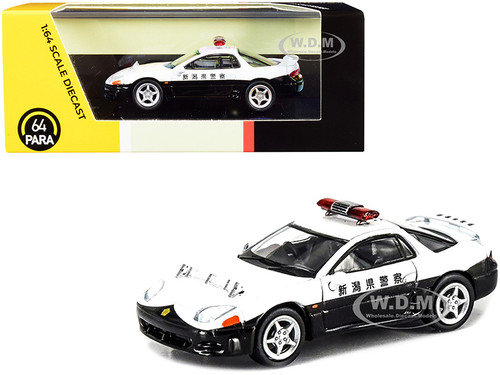
The Mitsubishi 3000GT, known as the GTO in Japan, was introduced in 1990 and became one of Mitsubishi's most technically ambitious sports cars. It featured a powerful V6 engine and, in higher-performance VR-4 versions, technologies including twin turbocharging, all-wheel drive, and active aerodynamics.
Its combination of a wide body, sculpted bonnet, distinctive headlights, and substantial rear styling gave the car a memorable appearance. The advanced features available on certain versions also made the 3000GT a notable example of Japanese sports-car engineering in the 1990s.
For diecast collectors, the 3000GT is appealing because it represents a different kind of performance car from the compact, rally-oriented Lancer Evolution. It offers a wider coupe silhouette and a design focused on high-speed grand touring.
When choosing a Mitsubishi 3000GT model, look for the correct generation, front-end styling, rear spoiler, wheel design, and exterior finish. If you're interested in the high-performance version, confirm whether the replica represents the VR-4 or another trim.
Mitsubishi Galant VR-4
The Mitsubishi Galant VR-4 is another important vehicle in the manufacturer's performance history. Developed during the late 1980s, the VR-4 combined a turbocharged engine with all-wheel drive and served as a foundation for Mitsubishi's growing rally program.
Before the Lancer Evolution became the company's best-known rally-related performance sedan, the Galant VR-4 played a significant role in Mitsubishi's international competition efforts. Its larger body and four-door design provide an interesting contrast with the more compact Lancer Evolution.
A Galant VR-4 diecast model can complement a display of Japanese performance sedans and help illustrate the development of Mitsubishi's all-wheel-drive technology.
Collectors who enjoy comparing vehicles by generation may appreciate the transition from the Galant VR-4 to the Lancer Evolution, which continued Mitsubishi's rally-inspired engineering in a different vehicle platform.
Mitsubishi Starion and FTO Models
Mitsubishi Starion
The Mitsubishi Starion was a rear-wheel-drive sports coupe produced during the 1980s. With its long bonnet, compact cabin, angular styling, and available turbocharged engine, the Starion reflected the design trends of that decade.
The car has a distinctive appearance compared with later Mitsubishi sports models. Its period-correct proportions and squared-off bodywork make it an appealing subject for collectors of 1980s Japanese performance cars.
A Starion replica can add variety to a collection otherwise dominated by the rounded coupes of the 1990s or the sharper styling of later performance sedans.
Mitsubishi FTO
Introduced in Japan in 1994, the Mitsubishi FTO was a compact sports coupe with a distinctive front end and curving bodywork. It was developed as a sporty, relatively accessible model within the Mitsubishi lineup.
The FTO became known for its compact proportions and handling-focused character. For diecast collectors, it represents another side of Mitsubishi's 1990s performance-car history beyond the better-known Eclipse and Lancer Evolution.
When comparing FTO replicas, consider the particular version, front bumper design, wheels, paint finish, and other details that distinguish individual variants.
Mitsubishi Pajero and Off-Road Models
Mitsubishi's heritage extends beyond sports cars. The Pajero, sold as the Montero in some markets and the Shogun in others, became one of the company's best-known four-wheel-drive vehicles.
Introduced in 1982, the Pajero combined off-road ability with the comfort and usability needed for regular driving. Its development was closely connected with rally-raid competition, particularly the Dakar Rally.
The Pajero achieved its first overall Dakar Rally victory in 1985 and went on to record 12 overall victories for Mitsubishi in the event. This competition history helped establish the vehicle as a recognizable symbol of the manufacturer's off-road engineering.
For collectors, Pajero replicas can offer an alternative to Mitsubishi's road-going sports cars. Standard road versions, depending on availability, may suit collections focused on classic SUVs, while competition-inspired models can fit into a display of rally and off-road vehicles.
If collecting a rally Pajero model, pay attention to the represented competition period, racing number, livery, and vehicle configuration. These details help distinguish a competition vehicle from a standard production SUV.
Why Collect Mitsubishi Diecast Model Cars?
Mitsubishi models offer collectors a varied selection of automotive subjects, each with a different historical or design appeal.
-
JDM performance heritage: The Lancer Evolution, Eclipse, 3000GT, and Galant VR-4 represent different chapters of Japanese performance-car culture.
-
Motorsport history: Mitsubishi's rally achievements provide a strong connection between production cars and international competition.
-
Distinctive styling: From the angular Starion to the wide-bodied 3000GT and compact Evolution sedans, Mitsubishi vehicles offer a broad range of designs.
-
Generational variety: Collectors can compare multiple Lancer Evolution generations or trace the development of the Eclipse.
-
Off-road engineering: Pajero models introduce a different side of the marque's history, including its achievements in rally-raid competition.
A Mitsubishi collection can focus on a single model family or span several decades to show how the manufacturer's vehicles changed in size, performance, and styling.
Choosing the Right Mitsubishi Diecast Model
Select the Vehicle and Generation
Start by identifying which Mitsubishi interests you most. The Lancer Evolution is a natural choice for rally enthusiasts, while the Eclipse and 3000GT may appeal to collectors of Japanese sports coupes. The Starion represents 1980s performance-car design, and the Pajero suits those who appreciate off-road vehicles.
When collecting a specific model family, check the generation and trim rather than relying on the name alone. Exterior details can vary significantly even between related versions.
Choose a Scale That Fits Your Display
Mitsubishi diecast cars may be available in several scales, depending on the manufacturer and product selection.
-
1:12 scale: A relatively large model that can make a prominent display centerpiece.
-
1:18 scale: A popular size for collectors who want a substantial miniature with visible exterior and interior details.
-
1:24 scale: A practical option for collections that balance display presence with limited shelf space.
-
1:43 scale: A compact choice for collectors building displays with multiple vehicles.
Always review the stated dimensions and features for the specific model. Scale alone does not determine quality, construction, or the level of detail.
Review Paint, Trim, and Model Features
Color, wheels, spoilers, body kits, and other trim can significantly influence a model's appearance. This is particularly important for Mitsubishi performance cars, where different generations and special editions often have distinctive exterior details.
Check the product description and photographs when available. Materials, opening components, display accessories, and packaging vary by manufacturer and model.
Product availability may change, and not every Mitsubishi vehicle or scale will necessarily be available at all times. Individual product listings provide the best confirmation of the model and its specifications.
Mitsubishi Diecast Cars for Collectors and Gift Buyers
Mitsubishi diecast model cars can appeal to Japanese car enthusiasts, motorsport fans, JDM collectors, and anyone who appreciates the manufacturer's distinctive designs.
A Lancer Evolution model can be a meaningful addition for someone who follows rally history, while a 3000GT or Eclipse replica may appeal to a fan of 1990s sports coupes. A Starion can suit a collection of 1980s performance cars, and a Pajero can introduce off-road heritage to a broader automotive display.
These models can also make thoughtful gifts for automotive enthusiasts. Matching the vehicle generation, color, scale, and collecting interests of the recipient is a good way to choose an appropriate miniature.
Explore Mitsubishi Diecast Model Cars
From the rally-bred Lancer Evolution and classic Eclipse to the advanced 3000GT, distinctive Starion, and rally-proven Pajero, Mitsubishi's history offers a wide variety of collectible vehicles.
Browse the Mitsubishi category at Diecast Models Wholesale to compare available models, explore different generations and scales, and find a distinctive diecast car for your collection.





 $109.99