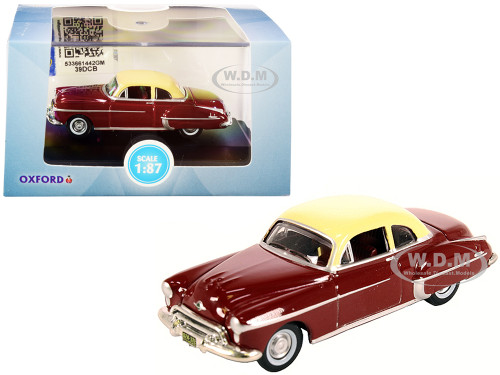
Discover Oldsmobile diecast model cars inspired by one of America's most influential historic automobile brands. From the pioneering Curved Dash and elegant Rocket 88 to the muscle-car-era 442, iconic Cutlass, and distinctive Toronado, Oldsmobile produced vehicles that helped shape American automotive history.
The Oldsmobile category at Diecast Models Wholesale is for classic-car collectors, muscle-car enthusiasts, and hobbyists looking for miniature replicas of historic Oldsmobile automobiles. Depending on current product availability, models may include vintage sedans, classic convertibles, muscle cars, luxury coupes, station wagons, and later passenger cars from the brand's long production history.
Oldsmobile is especially interesting to collectors because its vehicles represent several important periods in American automotive development. The brand introduced notable engineering innovations, produced some of the most recognizable performance cars of the muscle-car era, and experimented with distinctive styling that set its vehicles apart from other General Motors brands.
From the powerful Oldsmobile 442 and Hurst/Olds performance cars to the streamlined Toronado and family-oriented Vista Cruiser, Oldsmobile models offer variety for collectors who appreciate American design, engineering, and automotive heritage.
Available diecast models may include scales such as 1:12, 1:18, 1:24, and 1:43, depending on the vehicle and manufacturer. Whether you prefer a large display replica, a classic American muscle car, or a compact miniature of a vintage Oldsmobile, these collectibles provide a way to celebrate a distinctive part of automotive history.
The History of Oldsmobile
Oldsmobile's history began in 1897, when Ransom E. Olds founded the Olds Motor Vehicle Company in Lansing, Michigan. The business became known for developing practical automobiles at a time when the American automobile industry was still in its early stages.
In 1901, Oldsmobile introduced the Curved Dash, a simple, lightweight vehicle that became one of the earliest commercially successful mass-produced American automobiles. Its manufacture helped demonstrate the potential of standardized automobile production.
General Motors acquired Oldsmobile in 1908, making it one of the company's original divisions. Throughout the following decades, Oldsmobile developed a reputation for combining mainstream passenger-car appeal with engineering innovations and performance-oriented features.
During the 1930s and 1940s, the brand produced a range of passenger cars with increasingly modern styling and mechanical designs. In 1940, Oldsmobile introduced the Hydramatic automatic transmission in its passenger cars, helping popularize automatic transmission technology in the American market.
The postwar period brought further developments, including the introduction of the Rocket V8 engine in 1949. This engine became an important part of Oldsmobile's performance identity and helped establish the foundation for later high-performance models.
During the 1950s and 1960s, Oldsmobile offered a diverse range of cars, from comfortable sedans and family vehicles to sporty coupes and powerful performance models. The Cutlass became one of the marque's most important nameplates, while the 442 developed a strong following among muscle-car enthusiasts.
In later decades, Oldsmobile introduced new designs such as the Toronado, Aurora, and Alero. General Motors announced plans to discontinue Oldsmobile in 2000, and the last Oldsmobile rolled off the assembly line on April 29, 2004.
For diecast collectors, this extensive history provides a wide range of subjects. A collection can focus on a particular period, such as 1950s American cars or 1970s muscle cars, or include models from different decades to illustrate the evolution of Oldsmobile styling and engineering.
Oldsmobile Rocket 88 Diecast Models
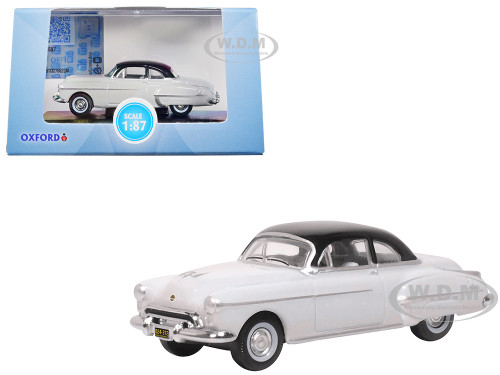
The Oldsmobile Rocket 88, introduced for the 1949 model year, is one of the most important vehicles in the brand's history. It combined a relatively lightweight body with Oldsmobile's new overhead-valve Rocket V8 engine, creating a car with a strong performance reputation.
The Rocket 88 became associated with the emerging American performance-car culture that developed after World War II. Its combination of V8 power and family-car practicality helped establish the appeal of powerful American passenger cars.
The model also developed a place in popular culture, particularly through its association with early rock-and-roll music and American car culture.
Why Collect the Rocket 88?
A Rocket 88 diecast model offers a connection to the beginning of Oldsmobile's postwar performance heritage. Its rounded bodywork, prominent grille, and period styling distinguish it from the later muscle cars that would follow.
For collectors of classic American automobiles, the Rocket 88 can complement other late-1940s and early-1950s vehicles. It also provides a useful comparison with the later Cutlass and 442, showing how Oldsmobile's performance image evolved over time.
When selecting a Rocket 88 replica, review the model year, body style, exterior finish, and trim. Convertible and hardtop versions, where represented, can look quite different despite sharing the same name.
Oldsmobile 442 Diecast Muscle Cars
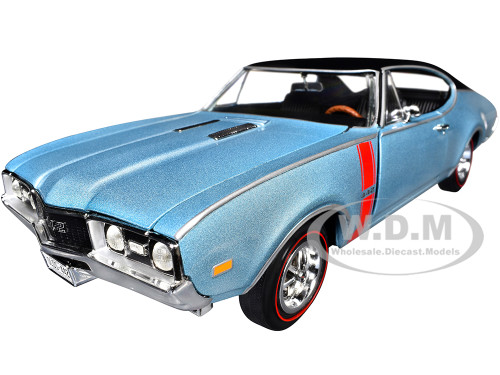
The Oldsmobile 442 is one of the most recognizable performance models associated with the brand. Introduced as a performance package for the 1964 model year, it became a defining part of Oldsmobile's muscle-car identity.
The 442 designation originally referred to the combination of a four-barrel carburetor, four-speed manual transmission, and dual exhausts. The meaning evolved as specifications changed, and the 442 eventually developed into a distinct performance model.
The car combined muscular styling with powerful V8 engines and performance-focused components. Its long bonnet, prominent grille, sculpted bodywork, and distinctive badges make it a popular subject for classic muscle-car collecting.
Oldsmobile 442 by Generation
The 442 evolved through several generations, with significant changes in body styling and mechanical specifications.
First-generation 442 models were based on the F-85 and Cutlass platforms. They introduced Oldsmobile enthusiasts to a more performance-focused version of the brand's mid-size cars.
Late-1960s models became more recognizable as the 442 developed its own identity. Revised bodywork, performance equipment, and larger engines helped establish the car among the leading muscle cars of the period.
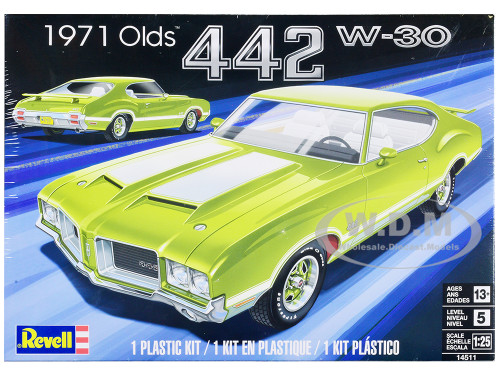
1970 Oldsmobile 442 is especially notable for its 455-cubic-inch V8 performance options. The W-30 package added further performance-oriented equipment and remains a significant part of Oldsmobile collecting.
Later 442 models continued the name through changing market conditions, with additional versions appearing in the 1980s and early 1990s.
Hurst/Olds Models
The Hurst/Olds is another important part of Oldsmobile's performance history. These special cars were developed through a collaboration between Oldsmobile and Hurst Performance, combining Oldsmobile powertrains with distinctive styling and performance equipment.
Hurst/Olds models are often recognizable by their special paint schemes, stripes, badges, wheels, and other exterior details. Their limited-production character and connection to the performance aftermarket make them particularly interesting to collectors.
A Hurst/Olds diecast model can complement a standard 442 in a muscle-car display, allowing collectors to compare two related but distinct performance traditions.
When shopping for these replicas, check the model year and edition carefully. Specific colors, stripes, wheels, and trim can vary across different Hurst/Olds versions.
Oldsmobile Cutlass Diecast Models
The Cutlass became one of Oldsmobile's most successful and recognizable nameplates. Initially introduced as an upscale member of the F-85 range, it eventually developed into a broad family of coupes, sedans, convertibles, and station wagons.
During the 1960s and 1970s, the Cutlass became central to Oldsmobile's lineup. Its combination of styling, comfort, and available performance features made it appealing to a wide range of buyers.
The Cutlass also provided the basis for several performance-oriented models, including the 442 during important periods of its development.
Oldsmobile Cutlass Supreme
The Cutlass Supreme was positioned as a more upscale offering within the Cutlass family. Depending on the generation, it was available in several body styles and featured more refined interior and exterior details.
For diecast collectors, the Cutlass Supreme represents a different side of Oldsmobile from the more aggressive 442. Its styling reflects changing American tastes during the 1960s, 1970s, and 1980s.
A Cutlass Supreme miniature can be a good choice for collectors interested in classic American coupes, personal luxury cars, or vehicles that represent a particular decade.
Oldsmobile Cutlass 442
The connection between the Cutlass and 442 is particularly important to collectors. Many 442s were based on Cutlass models, with performance upgrades and distinguishing exterior features that set them apart from standard versions.
If you're comparing Cutlass and 442 diecast models, review the exact version represented. A regular Cutlass, a Cutlass Supreme, and a 442 may share basic body proportions but differ in badges, wheels, bumpers, hood details, and other features.
Oldsmobile Toronado: A Distinctive American Coupe
Introduced for the 1966 model year, the Oldsmobile Toronado was a major departure from conventional American car design. It featured front-wheel drive and a dramatic body style with a long bonnet, hidden headlights, and a wide, sweeping profile.
The Toronado was particularly notable because it was the first American production car with front-wheel drive since the Cord 810 and 812 of the 1930s. General Motors developed a specialized drivetrain arrangement that allowed the large coupe to use front-wheel drive without sacrificing its powerful V8 engine.
The first-generation Toronado is especially recognizable for its clean body sides, retractable headlights, and substantial proportions. Later generations adopted different styling and engineering details while retaining the Toronado name.
Why Collect Toronado Models?
A Toronado diecast model is appealing to collectors because it represents a distinctive period of American automotive experimentation. Its front-wheel-drive layout and bold styling distinguish it from many other full-size American coupes of the era.
The Toronado also illustrates how Oldsmobile combined engineering innovation with personal-luxury styling. Collectors interested in unusual American vehicles may find it a useful addition to a display of classic coupes.
When choosing a Toronado replica, consider the generation, headlight arrangement, grille design, roofline, trim, and exterior color. These details help distinguish early models from later versions.
Oldsmobile Starfire and Classic Sports-Inspired Models
The Oldsmobile Starfire name appeared on several vehicles and came to represent a sportier, more luxurious side of the brand.
The 1960s Starfire was a personal-luxury coupe and convertible featuring V8 power, distinctive trim, and upscale styling. Its design reflected the growing popularity of American grand-touring cars that combined comfort with performance.
For diecast collectors, the Starfire offers a different character from the 442. Rather than focusing primarily on muscle-car performance, the Starfire emphasized a more refined appearance and comfortable driving experience.
Classic Starfire models can complement other full-size American coupes in a collection, especially those from the late 1950s and 1960s.
Oldsmobile Vista Cruiser Station Wagon Models
The Oldsmobile Vista Cruiser is one of the most distinctive station wagons associated with the brand. Introduced in 1964, it was known for its extended roofline and elevated glass roof section over the second-row seating area.
This design feature gave passengers additional light and created a recognizable silhouette that set the Vista Cruiser apart from conventional station wagons.
The Vista Cruiser became especially familiar during the 1960s and 1970s, when American station wagons served as practical family vehicles. Its unusual roof design and long body make it a memorable subject for diecast collectors.
A Vista Cruiser model can add variety to a collection that otherwise focuses on coupes and muscle cars. It can also represent the family-car side of Oldsmobile's history.
When choosing a miniature, review the generation and roof configuration. The styling and proportions of the Vista Cruiser changed over time, so the exact model year can matter.
Oldsmobile 98 and Classic Luxury Cars
The Oldsmobile 98, also known as the Ninety-Eight, was a full-size model positioned toward the upper end of the brand's passenger-car lineup. It was associated with spacious interiors, V8 power, and increasingly sophisticated styling.
Over several decades, the 98 evolved through different generations, from traditional postwar sedans to larger luxury-oriented coupes and sedans of the 1960s and 1970s.
For collectors, the 98 provides an opportunity to explore Oldsmobile's more luxurious designs. Its proportions and exterior details offer a contrast with the compact Cutlass and performance-focused 442.
A classic Oldsmobile 98 miniature can complement collections of American luxury cars, vintage sedans, or vehicles from the era of large V8-powered automobiles.
Later Oldsmobile Models: Aurora, Alero, and Bravada
Oldsmobile's later history included vehicles intended to modernize the brand's image and appeal to changing consumer preferences.
Oldsmobile Aurora
The Aurora, introduced in 1994 for the 1995 model year, represented a more modern luxury-oriented direction for Oldsmobile. Its streamlined body, Northstar-related V8 engineering heritage, and contemporary interior helped distinguish it from earlier traditional Oldsmobile designs.
For collectors, an Aurora miniature can represent the brand's efforts to introduce advanced styling and technology during the 1990s.
Oldsmobile Alero
The Alero was introduced for the 1999 model year and became the final new model nameplate launched by Oldsmobile. It was offered as a coupe and sedan, providing a more contemporary compact-car option within the lineup.
The Alero is historically notable because production of Oldsmobile-branded vehicles ended in 2004 with an Alero GLS sedan.
A diecast Alero model can appeal to collectors interested in the final years of the brand and its transition away from traditional full-size cars.
Oldsmobile Bravada
The Bravada was Oldsmobile's sport utility vehicle, introducing a different vehicle type to the brand's traditional sedan and coupe lineup. It shared aspects of its engineering with related General Motors SUVs while featuring Oldsmobile-specific styling and equipment.
For collectors, a Bravada miniature provides a contrast with classic Oldsmobile passenger cars and illustrates how the brand responded to the growing popularity of SUVs.
Availability of these later models varies by manufacturer and product selection.
Why Collect Oldsmobile Diecast Model Cars?
Oldsmobile diecast models appeal to collectors for several reasons:
-
American automotive heritage: Oldsmobile's long history includes pioneering early cars and significant developments in production engineering.
-
Classic muscle cars: The 442 and Hurst/Olds represent important chapters in American performance-car culture.
-
Distinctive engineering: The Toronado's front-wheel-drive layout and the Rocket V8's history set Oldsmobile apart.
-
Variety of body styles: From coupes and convertibles to station wagons and luxury sedans, the brand offers diverse collecting possibilities.
-
Generational variety: Collectors can explore Oldsmobile vehicles from the early 1900s through the brand's final production years in 2004.
A collection can focus on one model family, such as the Cutlass or 442, or represent several decades to show how Oldsmobile's styling, engineering, and market position changed over time.
Choosing the Right Oldsmobile Diecast Model
Identify the Vehicle and Model Year
Start by determining which Oldsmobile interests you most. A 442 is well suited to a muscle-car collection, while a Toronado highlights unusual engineering and styling. The Vista Cruiser, Metropolitan? No—Oldsmobile's Vista Cruiser is a station wagon, while the 98 represents full-size luxury cars.
Confirm the specific model name, generation, and body style. Closely related Oldsmobile models can look similar but feature different trim and performance equipment.
Choose a Scale That Fits Your Display
Oldsmobile diecast models may be available in scales such as 1:12, 1:18, 1:24, and 1:43, depending on the vehicle and manufacturer.
-
1:12 scale: A large miniature that can serve as a centerpiece where available.
-
1:18 scale: A popular size for collectors who want a substantial display model.
-
1:24 scale: A practical balance between display presence and space requirements.
-
1:43 scale: A compact option for collections containing several vehicles.
These are general scale comparisons, not a guarantee that every Oldsmobile model is offered in each size. Check the individual product dimensions before purchasing.
Review Paint, Trim, and Product Features
Exterior paint, wheel design, grille details, stripes, badges, and body style can distinguish one Oldsmobile miniature from another. Performance models often have specific exterior cues that collectors may want to verify.
Construction materials, opening components, interior details, display stands, and packaging also vary by manufacturer and product. Review the individual product listing to confirm the features included with the model.
Explore Oldsmobile Diecast Model Cars
From the pioneering Curved Dash and postwar Rocket 88 to the muscle-car-era 442, distinctive Toronado, practical Vista Cruiser, and later Aurora and Alero, Oldsmobile represents an important chapter in American automotive history.
Browse the Oldsmobile category at Diecast Models Wholesale to compare available replicas, explore different models and scales, and find a distinctive addition to your classic-car or diecast collection.



 $144.95




 $39.99