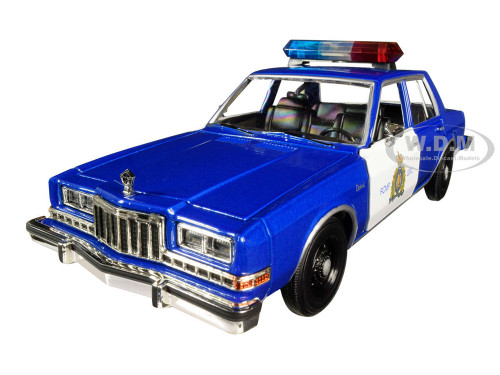
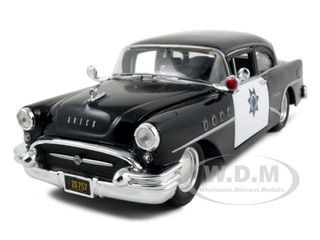
Police Diecast Model Cars
Discover police diecast model cars representing the vehicles used by law enforcement agencies, highway patrols, sheriffs, municipal police departments, and other public-safety organizations. From classic patrol cars and highway pursuit vehicles to modern police interceptors and specialized law-enforcement vehicles, this category brings together miniature versions of automobiles that have played an important role in the history of policing and the automobile.
Police cars are particularly interesting to collectors because their appearance is closely tied to the agency, region, era, and vehicle manufacturer. A black-and-white patrol car from an earlier decade can look dramatically different from a modern marked police interceptor, while details such as emergency lighting, department graphics, push bars, wheels, antennas, and equipment can help identify a particular vehicle and period.
At DiecastModelsWholesale.com, the Police category is designed for collectors of emergency vehicles, automotive enthusiasts, diecast hobbyists, and anyone looking for a miniature police car for a display or collection.
What You Can Find in Police Diecast Models
Police vehicles have been built from many different types of automobiles. Depending on the models available, collectors may find replicas representing:
- Police patrol cars
- Highway patrol and state police vehicles
- Sheriff vehicles
- Municipal police cars
- Police pursuit vehicles
- Police SUVs and utility vehicles
- Special-service law-enforcement vehicles
- Classic police cars
- Modern police interceptors
- Police motorcycles and related emergency vehicles
- Fictional or movie-inspired police vehicles
Many police diecast models are based on recognizable production automobiles. Ford, Chevrolet, Dodge, Plymouth, and other manufacturers have supplied vehicles for law-enforcement use, creating a large variety of police cars for collectors to explore.
A Brief History of Police Cars
The development of the automobile changed police work by giving officers a faster and more flexible way to patrol larger areas. The Henry Ford notes that the automobile transformed policing in the United States and contributed to the development of new traffic laws and agencies, including the California Highway Patrol.
By the early 20th century, automobiles were already appearing in police service. Historical records from The Henry Ford document police use of Ford vehicles during the 1920s and 1930s. In 1931, for example, a New York City Police Department parade included 244 Ford Model A roadsters.
The automobile's increasing performance also made it useful for patrol and pursuit. The Henry Ford's collection documents 1939 Ford V-8 police cars and notes that the model's V-8 engine and performance made it well suited to police service at the time.
From Patrol Cars to Police Interceptors
As automobiles became more capable, police departments increasingly required vehicles adapted for demanding service. Police vehicles could be equipped with heavier-duty components, specialized electrical systems, cooling systems, suspension components, communications equipment, emergency warning systems, and other equipment.
The federal definition of a law-enforcement vehicle has historically recognized features such as heavy-duty electrical, cooling, and suspension systems for passenger vehicles used in law enforcement.
This evolution is reflected in diecast collecting. A classic patrol car and a modern police interceptor may be based on completely different generations of automotive engineering, yet both represent an important stage in the development of police vehicles.
Types of Police Diecast Cars
Classic Police Cars
Classic police car models represent earlier generations of law-enforcement automobiles. These vehicles can feature period-correct body styles, department markings, emergency lights, wheels, and other details.
Classic police models are particularly useful for collectors building historical displays or collections centered on a specific decade.
Highway Patrol Cars
Highway patrol vehicles are often associated with high-performance automobiles designed for extended road patrol and traffic enforcement. State and provincial highway patrol agencies have used a wide variety of sedans, coupes, SUVs, and specialized vehicles over the years.
A police diecast based on a highway patrol vehicle can therefore represent both a particular automobile and the history of the agency that operated it.
Police Pursuit Vehicles
Police pursuit vehicles are designed around the demanding requirements of law-enforcement service. Modern examples have included performance-oriented sedans and utility vehicles.
One well-known example is the Ford Crown Victoria Police Interceptor, which served many American law-enforcement agencies. The Henry Ford collection includes a 2011 Crown Victoria Police Interceptor used by the California Highway Patrol.
The Crown Victoria is also an excellent example of how a production automobile can develop a separate identity among collectors because of its widespread use as a police vehicle.
Police SUVs
Modern law enforcement uses more than traditional sedans. SUVs can provide additional interior capacity, equipment space, and versatility for different operational requirements.
For collectors, police SUV models provide an opportunity to expand beyond traditional police sedans while maintaining a law-enforcement theme.
Sheriff and Special-Service Vehicles
Sheriff departments and other law-enforcement agencies can have distinctive markings and vehicle configurations. Models representing these vehicles can be collected by agency, geographic region, vehicle manufacturer, or historical period.
Police Vehicle Details Collectors Notice
One of the attractions of police diecast models is the large number of details that can distinguish one vehicle from another.
When comparing models, collectors may want to look at:
- Police department or agency markings
- Vehicle identification numbers and graphics
- Emergency light configuration
- Push bars and exterior equipment
- Wheels and tires
- Grilles and bumpers
- Antennas
- Mirrors
- Interior details
- Vehicle color and paint scheme
- Model year or body generation
- Police equipment specific to the vehicle
- Opening or moving components, when specified
These details can be especially important when collecting several police cars based on the same production automobile.
Collecting Police Diecast Models
Police cars offer several natural ways to organize a collection. You can collect by vehicle manufacturer, agency, era, vehicle type, geographic region, or scale.
Collect by Manufacturer
A manufacturer-based collection can follow the evolution of police versions of familiar automobiles. Ford, Chevrolet, Dodge, Plymouth, and other manufacturers have produced vehicles used in law enforcement.
This approach allows collectors to compare civilian and police versions of related automobiles and observe how styling changed from one generation to the next.
Collect by Police Agency
Agency-focused collecting is another popular approach. A collection might concentrate on city police departments, county sheriff's offices, state highway patrols, or other law-enforcement organizations.
Department markings can make two otherwise similar vehicles visually distinct, which gives agency-specific models additional collecting interest.
Collect by Era
Police cars changed substantially as automotive design evolved. Collectors can create displays around the 1930s, postwar era, 1960s and 1970s, 1980s and 1990s, or modern police vehicles.
An era-based collection can demonstrate changes in body styles, lighting equipment, vehicle technology, and police livery.
Collect by Vehicle Type
Another option is to collect different types of police vehicles rather than focusing on a single manufacturer. A collection could include classic sedans, muscle cars, pursuit vehicles, SUVs, highway patrol cars, and specialized police vehicles.
Police Cars and Automotive History
Police vehicles are also a useful way to explore broader automotive history. Automobiles selected for police service often reflected the capabilities and priorities of their era.
Early patrol vehicles were based on relatively straightforward production cars. Later vehicles benefited from improvements in engines, transmissions, braking systems, suspension, communications equipment, and electrical systems.
The history of police cars therefore overlaps with the history of the automobile itself. A collection of police diecast models can serve as a miniature timeline showing how American and international automobiles changed over the decades.
Police Diecast Models and Emergency Vehicle Collections
Police models can be displayed alongside other emergency vehicles. Collectors interested in public-safety transportation may combine police cars with fire and rescue vehicles, ambulances, emergency trucks, and other service vehicles.
A mixed emergency-vehicle display can highlight the different vehicle types used by public agencies while maintaining a consistent scale and theme.
Police models can also be displayed alongside ordinary diecast automobiles. Putting a police version next to its civilian counterpart can make the differences in equipment, graphics, wheels, lighting, and body configuration easier to appreciate.
Police Diecast Scales
Scale is an important consideration when choosing police diecast models. Common scales for collectible police cars include 1/12, 1/18, 1/24, 1/32, and 1/43, although the exact scale available depends on the manufacturer and vehicle.
1/12 Police Cars
1/12 police car models are relatively large and provide considerable space for exterior and interior detailing. They can work particularly well as centerpiece models.
1/18 Police Cars
1/18 police diecast models offer a substantial display size while remaining practical for many collectors. This scale is useful for detailed individual police vehicles and larger automotive displays.
1/24 Police Cars
1/24 police car models provide a balance between size, detail, and display space. Collectors can display several vehicles without requiring the shelf space of larger scales.
1/43 Police Cars
1/43 police models are useful for collectors building larger collections around agencies, manufacturers, or historical periods because their smaller dimensions allow more vehicles to be displayed together.
When expanding a collection, choosing a consistent scale can help create a more cohesive display.
Police Car Models for Collectors and Enthusiasts
A police diecast model can appeal to different types of collectors. Automotive enthusiasts may appreciate the underlying production car, while emergency-vehicle collectors may focus on the police equipment and markings.
Others may collect models connected with a particular department, state highway patrol, vehicle manufacturer, decade, or body style.
Police vehicles can also have significance as examples of working automobiles rather than purely recreational cars. Their history connects automotive manufacturing with transportation, public service, traffic enforcement, and the development of specialized vehicles.
Choosing a Police Diecast Model
Before adding a model to your collection, consider the subject as well as the miniature itself. If you are collecting historically, verify the vehicle's approximate year and agency markings. If appearance is the priority, compare the model's body style, graphics, emergency lights, wheels, and equipment.
For scale-focused collections, check that the new model matches the scale of the vehicles already on display.
Collectors may also want to decide whether their collection will focus on classic police cars, modern police vehicles, highway patrol cars, specific agencies, manufacturers, or a combination of themes.
Shop Police Diecast Model Cars
Explore the Police category at DiecastModelsWholesale.com to find collectible police diecast model cars representing different eras, vehicle types, agencies, and automotive manufacturers. Whether you are building an emergency-vehicle collection, looking for a classic patrol car, or adding a detailed police vehicle in 1/18, 1/24, 1/12, or 1/43 scale, browse the available models and find the police car that fits your collection.