Trailer diecast models represent the wide variety of trailers used to transport freight, equipment, vehicles, agricultural products, recreational gear, and specialized loads. Unlike a truck tractor, which provides the engine and driving controls, a trailer is an unpowered vehicle designed to be pulled by a truck, tractor, or other towing vehicle.
At DiecastModelsWholesale.com, the Trailer category brings together scale models representing different types of commercial and specialty trailers. These models can be collected individually, paired with a compatible truck tractor, or incorporated into larger transportation and diorama displays. From enclosed freight trailers and flatbeds to heavy-haul equipment trailers and other specialized designs, trailers add an important dimension to a scale trucking collection.
For collectors building complete combinations, browse the Truck Diecast Models and Tractor Diecast Models categories to find compatible towing vehicles.
What Is a Trailer?
A trailer is an unpowered vehicle designed to carry a load while being towed by another vehicle. Commercial trailers can range from relatively simple utility platforms to highly specialized equipment engineered for particular types of freight.
A highway semi-trailer is different from a conventional full trailer because it is designed so that part of its weight is supported by the towing tractor. The tractor connects to the trailer through a fifth wheel, while the trailer's rear axle assembly supports the back of the load.
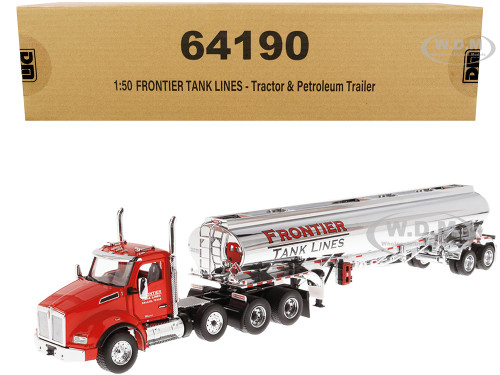
Trailer designs vary according to their intended purpose. An enclosed dry van protects general freight from weather, while a flatbed provides an open platform for oversized or irregularly shaped cargo. A refrigerated trailer uses insulated construction and temperature-control equipment for perishable goods, while a lowboy or other specialized heavy-haul trailer is designed to carry large construction and industrial equipment.
These differences make scale trailer models especially interesting for collectors because each configuration tells a different story about transportation and the type of cargo it was built to carry.
A Brief History of Trailers
The basic concept of using a separate vehicle to carry cargo predates the automobile. Horse-drawn wagons, carts, and other vehicles already used detachable or separately configured equipment to transport different types of loads.
The development of motor vehicles created new possibilities for trailers. One notable early example is associated with Alexander Winton, whose automobile manufacturing operation experimented with a trailer for transporting vehicles around the turn of the 20th century. As motorized transportation expanded, trailers became increasingly useful for moving larger and more varied loads.
One of the most influential developments in American commercial trailer history came from August Fruehauf. In 1914, he developed a trailer for hauling a boat, followed by designs used for transporting lumber and other commercial loads. The Fruehauf Trailer Company subsequently became an important name in the development of American trucking equipment.
The spread of better roads and highways accelerated trailer development. During the 20th century, improvements in tires, brakes, suspension, materials, coupling systems, and trailer construction made it possible to transport heavier loads over longer distances.
The expansion of the U.S. Interstate Highway System beginning in the 1950s further strengthened the role of tractor-trailer transportation. Standardized freight equipment and increasingly specialized trailers helped trucking become an essential part of modern distribution.
Types of Trailer Diecast Models
One of the advantages of collecting trailer models is the variety of configurations available. Different trailer designs reflect different cargo requirements and periods in transportation history.
Dry Van and Box Trailers
Dry van trailers are enclosed trailers used for general freight. Their enclosed body protects cargo from weather and provides a large, secure loading area.
These trailers are among the most recognizable pieces of highway freight equipment. Scale models may reproduce rear doors, side panels, landing gear, wheels, refrigeration-style units on certain variants, and detailed company graphics.
Dry van trailers are particularly well suited to pairing with conventional and sleeper-cab truck tractor models.
Flatbed Trailers
Flatbed trailers feature an open cargo deck without a permanent enclosed body. Their design makes them useful for loads that are too large, tall, or irregular to fit inside a conventional enclosed trailer.
Typical cargo can include construction materials, machinery, steel products, lumber, and other equipment.
For collectors, flatbed models can be especially visually interesting because the open deck makes it possible to display cargo or construction equipment alongside the trailer.
Explore Flatbed Truck Diecast Models for additional open-cargo truck subjects.
Lowboy and Heavy-Haul Trailers
Heavy-haul trailers are designed for transporting large and heavy machinery that cannot be moved efficiently using conventional freight trailers.
Lowboy trailers position the cargo deck relatively close to the road surface, helping accommodate tall equipment while maintaining practical overall clearance. Specialized configurations can include detachable goosenecks and other systems designed to make loading heavy equipment easier.
These trailers are closely associated with construction, mining, industrial transportation, and equipment-moving operations, making them natural additions to a construction-themed diecast display.
Refrigerated Trailers
Refrigerated trailers, commonly called reefers, are insulated trailers equipped with temperature-control systems. They are used to transport products that require controlled temperatures, including food and other temperature-sensitive freight.
A reefer trailer can usually be recognized by the refrigeration unit mounted at the front of the trailer. That equipment creates another distinctive detail for collectors to look for when comparing different trailer models.
Double-Pup and Specialized Trailers
Some freight operations use shorter trailers in combinations such as double-pup configurations. These arrangements are particularly associated with certain regional freight and less-than-truckload operations.
Other specialized trailer designs can include equipment for transporting specific commodities, industrial components, agricultural products, or unusually shaped loads.
The wide range of commercial trailer configurations provides collectors with opportunities to build collections around particular industries rather than simply around truck manufacturers.
Trailer Details Collectors Can Compare
A trailer model may look relatively straightforward, but detailed scale models can contain many features worth examining.
Trailer Body
The body shape is usually the most obvious characteristic. Collectors can compare enclosed vans, open platforms, low decks, specialized tanks, and other configurations.
Axles and Wheels
Trailer axle configurations can vary according to the intended application and load requirements. Wheel and tire details also contribute significantly to the overall appearance of a scale trailer.
Landing Gear
Semi-trailers normally have landing gear near the front. When the trailer is disconnected from its tractor, the landing gear supports the front of the trailer.
Rear Doors
Enclosed freight trailers may feature different rear-door arrangements. Door styles, hinges, handles, bumpers, and warning markings can add considerable visual detail.
Graphics and Fleet Identity
Commercial trailers frequently display company names, logos, advertising graphics, safety markings, and other identifying details. For collectors, a particular livery can be just as important as the trailer's physical design.
A trailer representing a recognizable freight company, manufacturer, racing organization, or other business can become an important part of a themed collection.
Matching Trailers With Truck Tractors
One of the most rewarding ways to collect trailer models is to create complete tractor-trailer combinations.
When pairing models, scale is the first consideration. A 1/50-scale tractor generally looks most natural with a 1/50-scale trailer, while a 1/64-scale tractor should be paired with a trailer in the same approximate scale.
Collectors can also consider the era and style of the vehicles. A classic long-nose tractor paired with a vintage-style trailer can create a period-specific display, while a modern aerodynamic sleeper looks appropriate with contemporary freight equipment.
The fifth-wheel height, trailer connection, wheel position, and overall proportions can also affect how convincing the completed combination looks.
Trailer Models by Scale
Trailer diecast models are produced in several scales, with 1/50 and 1/64 being particularly useful for commercial trucking collections. Other scales may also be available depending on the manufacturer and specific subject.
Common scales encountered in truck and trailer collecting include:
- 1/18 scale – large display models with room for substantial detail
- 1/24 scale – popular for larger vehicle displays
- 1/32 scale – useful for detailed commercial vehicle collections
- 1/43 scale – compact display scale with a long history in vehicle collecting
- 1/50 scale – especially common for detailed commercial trucks and heavy equipment
- 1/64 scale – compact and well suited to building larger trucking scenes
The scale should be considered when expanding an existing collection, particularly if you plan to connect trailers with truck tractors.
Building a Commercial Trucking Collection
Trailers provide an easy way to expand a collection beyond individual trucks. A collector might begin with a single tractor and add different trailers representing different freight operations.
Another approach is to build a collection around a particular type of trailer. A heavy-haul collection might include lowboys and equipment trailers alongside construction machinery. A freight-focused collection could feature dry vans, reefers, and other commercial configurations.
Fleet-livery collecting is another possibility. Different trailers carrying company graphics can represent the changing appearance of commercial transportation over time.
For dioramas, trailers can also help create realistic distribution centers, truck stops, construction sites, loading docks, freight terminals, and highway scenes.
Trailers and Construction Equipment
Specialized trailers play an important role in moving construction and industrial equipment between job sites. Excavators, dozers, loaders, graders, compactors, and other machinery often require equipment trailers or heavy-haul combinations.
Collectors interested in creating a construction transportation scene can combine trailer models with Construction Diecast Models to create a more complete display.
What Makes Trailer Models Appealing to Collectors?
Trailers represent an often-overlooked part of the commercial vehicle world. While the truck tractor usually receives the most attention, the trailer determines how the cargo is carried and often reveals what type of transportation operation the combination performs.
For collectors, trailers offer:
- A wide variety of body styles
- Different cargo applications
- Distinctive fleet graphics and liveries
- Opportunities to create complete tractor-trailer combinations
- Additional variety within a trucking collection
- Subjects spanning classic and modern transportation
- Excellent possibilities for transportation and industrial dioramas
They can also make a collection feel more complete by showing the entire working vehicle combination rather than the tractor alone.
Shop Trailer Diecast Models
Whether you are looking for an enclosed freight trailer, flatbed, heavy-haul equipment trailer, refrigerated trailer, or another commercial configuration, trailer diecast models offer many ways to expand a scale transportation collection.
Browse the Trailer category at DiecastModelsWholesale.com to explore available scale trailer models, find a trailer to complement your truck tractor, or discover a specialized subject that adds something new to your collection.



 $75.99




 $43.99Was $49.49Save 11%


